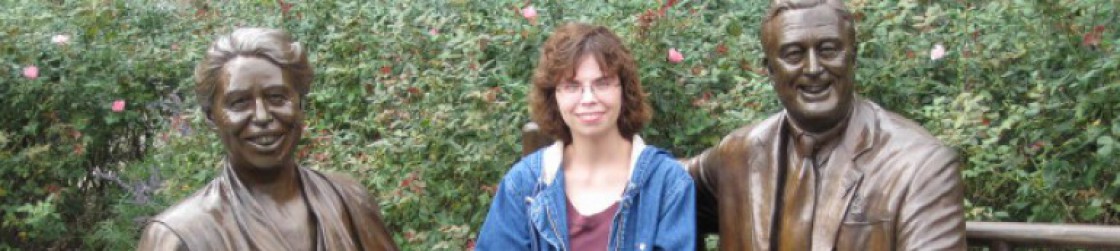
Growing up as Samuel Clemens: The Childhood of Mark Twain

If Mark Twain were still alive, he would be celebrating his birthday this Wednesday. You are probably familiar with his name because of his fiction writing, which included The Adventures of Tom Sawyer and The Adventures of Huckleberry Finn. But how much do we know about the man behind the writing, whose real name was Samuel Langhorne Clemens? (Mark Twain was a pseudonym, or pen name that Clemens used in his writings).

Twain was born in the ironically named town of Florida, Missouri. Although his family left the small town of about 300 people when Twain was a small child, there were some things that he learned there which would influence his writing. His uncle had slaves and Twain would often listen to their stories. One slave in particular, called Uncle Dan, told scary ghost stories. Twain looked up to him as a father figure because his relationship with his own father was strained. While Twain and his mother’s side of the family enjoyed singing, parties and a good joke, Twain’s father had no sense of humor.

Both Twain and his mother felt the loss of their extended family when they left Florida for Hannibal, Missouri; however, Twain’s maternal uncle bought a farm nearby where Twain and his siblings spent their summers. In fact, Twain had so much fun on the farm that he didn’t mind going to school a few days a week though he tried to avoid school at all costs when at home. In his autobiography Twain admits that his younger brother Henry was much better behaved but believed that “the unbroken monotony of his goodness and truthfulness and obedience would have been a burden for her [his mother] but for the relief and variety which I furnished in the other direction.” Given his mother’s sense of humor, that statement might have some truth in it, though she probably didn’t appreciate his daredevil attempt to catch the measles from his friend or his skating adventure on ice that was not completely frozen and might have resulted in his drowning.

During the summers Twain reconnected with Uncle Dan and the other slaves owned by his uncle. In his autobiography, Twain says “we had a faithful and affectionate good friend, ally and advisor in ‘Uncle Dan’l’…whose sympathies were wide and warm, and whose heart was honest and simple and knew no guile.” Later Dan became Twain’s inspiration for the character Jim in Huckleberry Finn. As a child, Twain was taught to accept slavery and saw nothing wrong with it, particularly since his uncle’s slaves were well treated. His father, however, beat a slave in front of his son. Throughout his writings, Twain struggled with these different impressions of slavery.

After his father died, Twain’s older brother Orion had him apprenticed to a printer. Eventually Twain worked for a Missouri paper that his brother owned, but the arrangement didn’t last. Twain wanted to write satire and humor, but Orion had no use for either. Twain felt trapped in a job where he could not express himself. He visited family in St. Louis where he made enough money to travel East. Now Twain was a young man determined to explore the world.


Childbirth in Aztec Society

If you’ve read about the Aztecs in your textbooks, you are probably familiar with their seemingly strange religious practices, which could include human sacrifice to pacify their gods. What you may not know is that the Aztecs often celebrated life, especially when a child was born. In fact, a Spanish priest who lived among the Aztecs said that he had never seen a society in which children were valued so much. A few months before the birth, the grandparents of the unborn baby would invite family members to a feast, which served as a kind of baby shower. Instead of gifts, however, the future grandparents selected a midwife to help the mother through her labor. They expressed their concern for the survival of the mother and the child to the midwife and urged her to do her duty.

On the day of the birth, the midwife returned to second feast with promises of her skill. After a successful delivery, the midwife gave the war cry, which meant that the mother had fought a good battle during labor. The Aztecs recognized the difficulty and pain of giving birth by comparing it to capturing an enemy in battle.

Both boys and girls were welcomed joyfully as the midwife compared the baby to precious items like jade and turquoise. Depending on the gender of the baby, the midwife recited their different roles. To a boy she said, “you are pledged, you are promised, you are sent to the field of battle. War is your destiny, your calling.” In contrast, a baby girl was told, “You are to prepare drink, you are to grind corn, you are to toil, you are to sweat, beside the ashes, beside the hearth.”

After the birth, the family brought in a soothsayer to tell the child’s fate. According to the Aztecs, the date and time of birth decided whether the child would be wealthy or poor, or have a good or bad character. If the child’s future seemed bleak, the family could wait to name the child on a more positive day, which would improve the child’s chances for a good life.

The child received its name during a bathing ceremony. During this ceremony, the midwife bathed the child and presented it with small symbols of its future tasks. For example, a boy received a small shield, bow and arrows. A girl was given tools used for spinning and weaving. After the bath, the baby was named. Aztec children were sometimes named for the day of their birth as in Ome Mazatl, which meant Two Deer. Names of flowers and other animals were also used, however. Regardless of their names or genders, all children in Aztec society enjoyed the love of their parents and extended family, as well as aid from their gods.


The Education of Aztec children

Although Aztec children didn’t go to school as quickly as most kids today, they learned a lot from their parents as they grew. By the young age of five, boys carried firewood and accompanied their fathers to the marketplace. The boys watched their parents exchange goods in the market. The market was also a place for boys to meet new people and learn how to behave around both adults and other children. At the age of five, their mothers taught girls how to weave cotton. In their preteen years, boys learned to fish while girls perfected their spinning and cooking skills.

Aztec parents valued hard work and humility. As their children’s first teachers, they tried to pass on these values. The Codex Mendoza, which was painted few years after the Spaniards arrived, says that parents “instructed and engaged them [children] in personal services…this was so that…they did not spend their time in idleness, and to avoid the bad vices that idleness tends to bring.”

The lessons of their parents helped boys endure their formal schooling, which for wealthy sons began at fifteen. They entered a school run by Aztec priests called the calmecac. Most of the boys who attended this school would become priests, though they occasionally chose other professions. Government jobs, for example, required an elite education. Physical work was part of the curriculum. In the mornings, boys swept the temple, collected firewood, and worked in the fields. They fasted and went on pilgrimages to satisfy their gods. Afternoons were devoted to the study of history, astrology, writing, and the law. They also learned some fighting techniques because priests often accompanied soldiers into battle.

Most Aztec boys, including commoners, attended the telpochcalli where they learned military skills. These boys also spent time doing physical work so they would be able to endure battles. One popular task was increasing the load of firewood a boy carried on his back to see if he would be able to carry the shield and other items he needed during a battle. Martial arts were also taught.

Teenage girls continued their education at home, though some had a public role as priestesses, called cihuatlamacazqui. Young priestesses were taught their temple duties and presided over religious ceremonies. Women were essential to certain Aztec religious festivals.  During the ceremony of Quecholli, priestesses dedicated to the goddess of corn dressed in feathers and painted their faces. They sang and paraded through the streets, tossing handfuls of corn into the crowds. The seeds were signs of a good harvest in the coming year. Most girls, however, were married around the age of fifteen. They married young men who had finished their formal education.


How was the First Thanksgiving Different from Today’s Celebrations?

If you live in the U.S., you are probably looking forward to Thanksgiving with your family. Maybe Grandma or Mom will serve turkey, cranberries, and pumpkin pie and you’ll watch football on TV. Although the first Thanksgiving included food, sports, and a large number of people, it was also different from present day celebrations.

While Americans today see Thanksgiving as a time to reconnect with family members, the Pilgrims had a very basic reason for giving thanks in 1621—the fact that they managed to survive in a strange land. When the Pilgrims arrived at Plymouth, they had little idea what crops would thrive there. They planted acres of wheat and peas, neither of which survived.

The Pilgrims’ survival depended on the aid of a Native American named Squanto. He taught them how to plant a new crop—corn–so that by harvest they had twenty acres of it. The colony’s governor William Bradford wrote that the Pilgrims “began to plant their own corn, in which service Squanto stood them in great stead, showing them both the manner how to set it, and after how to dress and tend it.” Squanto also told them how to fertilize their crop: “Also he told them, except they got fish and set with it in these old grounds it would come to nothing.” The first harvest wasn’t huge, but the Pilgrims could double each person’s food ration by adding corn.

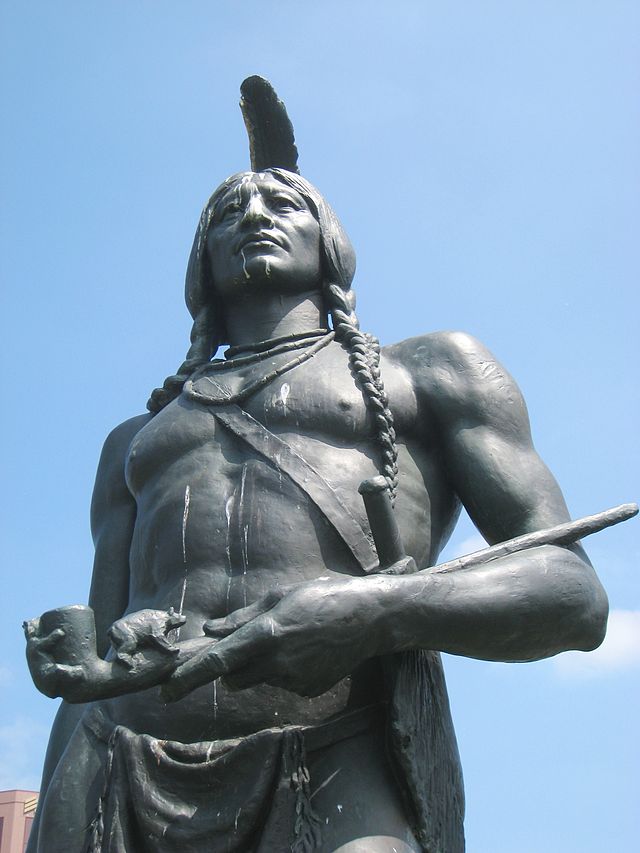
Massasoit,_KC_MO_-_detail

Chief Massasoit Sculpture Kansas City, MO

As a result of the successful harvest, the Pilgrims decided to celebrate. The colonists invited Squanto and members of neighboring Native American tribes, including the Wampanoag chief Massasoit. One colonist, Edward Winslow, described “many Indians coming amongst us, and amongst the rest their greatest king, Massasoit with some 90 men, whom for three days we entertained and feasted.” While Americans today celebrate for one day, the Pilgrims feasted for three days! The menu was large and included fowl (duck and goose) shot by the colonists and deer brought by the Native Americans. Seafood, corn bread, and greens were also served. For dessert, the participants ate wild fruit. Although turkey was available to the colonists, there is no evidence that it was eaten on the first Thanksgiving. There was no pumpkin pie, either, though pumpkins were available in their raw form.

Sports and games also were a part of the first Thanksgiving. The Pilgrims did not play football, but they engaged in other games with the Native Americans. They played a game similar to croquet and competed in running and jumping games. The English showed off their skill with guns, and the Native Americans showed their talent for shooting with bows and arrows.

When you see your relatives on Thanksgiving, see if they can guess what food was eaten and what sports played during the first Thanksgiving.


The Voyage of the Mayflower


You probably know that the Pilgrims sailed on the Mayflower and landed at Plymouth, Massachusetts. Maybe you’ve been told that they left England to gain religious freedom. But Plymouth was not where they planned to live, and the passengers on the Mayflower had many reasons for wanting to leave England.

One group of Pilgrims, who wanted to eliminate some of the religious rituals from the English Church which they felt were unnecessary, left England for Holland. They settled in the town of Leyden, where they expected to stay. Although they could practice their religion as they wished, life in Holland was rough. Most of the Pilgrims were farmers, but they now lived in an urban town. Since they did not have a trade or speak the Dutch language, their jobs did not pay well. Even William Bradford, the future governor of Plymouth, was only an apprentice to a silk weaver.

After over a decade of living in near poverty, the Pilgrims decided to move. William Bradford wrote, “the place they had thoughts on was some of those vast and unpeopled countries of America, which are fruitful and fit for habitation.” The Pilgrims heard of the success of the Jamestown colony in Virginia where colonists profited from growing tobacco so they planned to sail there. Forty-six Pilgrims left Holland on a small ship called the Speedwell in July 1620. Later they met up with a bigger ship, the Mayflower, which brought emigrants from England who would join the group. Not all of these men and women were Pilgrims; some didn’t care about religious freedom and sought only to make money in the New World.

The Speedwell kept leaking and two groups repeatedly stopped so it could be repaired. Finally they decided that the Speedwell couldn’t make the trip to America. Everyone who could fit on the Mayflower did so; others returned to England because there was not enough room. On September 6, the Mayflower set sail again.

Between the passengers and crew, the Mayflower carried about 140 people. Although better accommodations were available for the officers and wealthier passengers, most people slept in hammocks or on beds of canvas filled with straw. When they felt like eating, bacon, biscuits, and smoked fish were on board. Although they brought cabbages, onions, and turnips, they eventually ran out of vegetables and ate boiled mush and oatmeal instead.

The passengers on the Mayflower probably didn’t feel very hungry since, according to Bradford, the ship encountered “many…cross winds and met with many fierce storms, with which the ship was shaken.” Finally on November 10, the passengers sighted land off of Cape Cod. Although they planned to land near the Hudson River, the ship encountered more storms and so they went back to the Cape.

The colonists set foot at Plymouth on December 11. Bradford wrote, “Being thus arrived in a good harbor and brought safe to land, they fell upon their knees and blessed the God of heaven, who had brought them over the vast and furious ocean.” However, it was winter in Massachusetts and the passengers of the Mayflower would have more trials ahead as they tried to survive in an unfamiliar land.