
Training for the Olympic Games in Ancient Greece

“If you have worked in a manner worthy of coming to Olympia, and have done nothing in an offhand or base way, proceed with good courage; but as for those who have not so exercised, go away wherever you like.” These were the instructions given to athletes and their trainers at the Olympic games in ancient Greece. The ancient Greeks took sports very seriously. Like today, training was important for athletes if they wanted to be successful at the Olympics.

Male athletes (no women competed in the early Olympics) spent ten months training before arriving at the site for the games. Whether they competed in sprints, wrestling, boxing, or another sport, practicing for the Olympic games made it tough for a young man to get a full time job. If he won at the Olympics, however, he would have fame and fortune.

A typical day for an athlete training for the Olympics involved going to the gymnasium. The gymnasium was different from today’s gyms. Back then gyms housed a covered running track, but the other facilities were outdoors and open to the public. After an athlete arrived at the gym, he took all his clothes off and stored his belongings in the changing room. Then a paid “rubber” covered the athlete’s body in olive oil. The athlete performed warm-up exercises which were often accompanied by flutes. A coach supervised the athlete’s workout routine, which varied depending on the sport he competed in. For example, runners built up their strength by putting on heavy pieces of armor as they went around the track. Boxers practiced on punching bags made of animal skin and stuffed with grain or sand.

Coaches remain an important part of an athlete’s training to this day, but in ancient Greece a coach who trained a winning athlete was revered and received equal credit for his student’s accomplishments. The ancient poet Pindar described the crucial role of training to an athlete’s success: “not to be prepared beforehand is stupidity, for the minds of the unpractised [sic] are insubstantial things.” Most coaches were former athletes who not only instructed an athlete on his sport routines, but also focused on diet, hygiene, and physical therapy.

Like the athletes themselves, coaches were most concerned with winning and they used some interesting techniques to motivate their students. For example, one coach told his love-struck student that the girl would marry him if he won. Spurred on by this promise, the student beat out the competition. Another coach stabbed an athlete who gave up during a boxing match.

The ancient Olympics had no team games, and no second or third place finishers. Victory brought an athlete and his coach honor. Most of the Greek city states could also be counted on to reward their winning athletes with money and other special privileges, such as free food and tax-exemption.
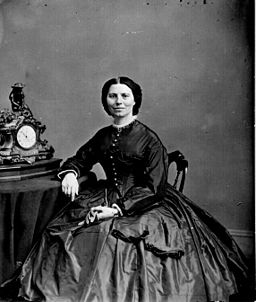
Clara Barton: Women’s Work during the Civil War

Clara Barton, 1865 by Matthew Brady

Clara Barton, 1865 by Matthew Brady

In the spring of 1861, the Massachusetts Sixth Regiment arrived in Washington, D.C. The troops were recruited to fight in the Civil War after the bombing of Fort Sumter. Clara Barton, who worked in Washington, D.C., watched the troops arrive. She knew some of men because she grew up in Massachusetts and also taught school there. Worried about “her boys,” she arrived at the Capital building where the troops were staying.

Collecting Supplies

She discovered that many of the soldiers lacked basic supplies like blankets and adequate food. She bought some items with her own money and appealed to others to donate. To a group of ladies in Worchester, Massachusetts Clara wrote, “It is said upon proper authority, that ‘our army is supplied.’ How this can be I fail to see.” Soon donations poured in, and Clara stored them in her apartment.

She collected and distributed supplies for one year, but felt that she was not doing enough to help the soldiers. After hearing stories of the soldiers’ suffering on the battlefields, she longed to join them but wondered if such work would be proper for a lady. Clara’s father encouraged her to follow her conscience. When he died, she petitioned leaders in the government and the army to bring food and medical supplies to the field hospitals and battle sites.

Going to the Battlefront

The first of her many trips to the Civil War battlefields occurred after the battle of Cedar Mountain in northern Virginia. Clara brought a wagon filled with supplies. Though she was unprepared for the number of wounded, she pinned up her skirt and moved among the men, distributing food as she went. The surgeon on duty was so grateful for the help that he wrote to his wife, “at a time when we were entirely out of dressing of every kind, she supplied us with everything, and while the shells were bursting in every direction…she staid [sic] dealing out shirts…and preparing soup.”

Clara put herself in danger many times during the war. For example, she did not stay with the regular medical units at the rear of the column at Antietam. Instead, she ordered the drivers of her supply wagons to pull ahead so she could be on hand when the battle started. While the battle raged, she and her helpers nursed and brought food to the soldiers. She seemed unconcerned about the danger and said, “I could run the risk; it made no difference to anyone if I were shot or taken prisoner.” Clara narrowly escaped death at Antietam when an enemy bullet hit a wounded soldier who lay in her arms.

Women’s Work

By the end of the war, Clara had served troops on nine different battlefields. Her courage and resourcefulness won her the admiration of doctors and generals who thought women would only create chaos during battle. General Benjamin Butler stated that Clara had “executive ability and kindheartedness, with an honest love of the work of reformation and care of her living fellow creatures.”

Clara was human—she enjoyed the praise she received for her work and rarely cooperated with other women’s groups during the war because she didn’t want to share credit. Yet most of Clara’s praise was earned. She worked without pay, bought many of her own supplies, and lived (and sometimes nearly died) alongside the Civil War soldiers.


The Childhood of Civil War General Robert E. Lee

Most history books show pictures of Robert E. Lee as an aging man with white hair and a beard. It’s almost impossible to imagine that this man was once a child. Like everyone else, the famous American Civil War general did have a boyhood, though it was not always happy.

The Lee Family Heritage

The potential for Robert E. Lee to be a great man started before his birth. Robert’s father, Henry Lee, served in the cavalry during the American Revolution. Henry impressed his general so much that he said Henry had “come out of his mother’s womb a soldier.” After the war, Henry served in the Continental Congress and encouraged his home state of Virginia to ratify the Constitution. By the nineteenth century, however, things started to go wrong for Henry Lee. He made bad investments and ended up in a debtor’s prison for a year.

His wife Ann Carter Lee gave birth to her son Robert in 1807, shortly before her husband’s imprisonment. She already had several children, and admitted to a friend that she did not want another child. Later on, however, when her husband left the family for the West Indies and never returned, Robert became her favorite.

Robert E. Lee Grows Up

Robert comforted his mother in her husband’s absence. He did household chores and served as a nurse to his ill sister and his mother. Though obedient to his mother, like most boys his age Robert enjoyed swimming and playing sports with his cousins. He especially loved tricking foxhunters by following hounds on foot. He became so good at taking shortcuts to find the foxes that when the adults arrived, Robert was already there. Even at a young age, Robert understood how to use geography and the element of surprise to his advantage—skills that would one day make him a great general.

Though Robert didn’t have a father, he did create a father image for himself. When the family moved to Alexandria, Virginia, http://www.alexandriava.gov/historic/default.aspx Robert and his siblings often visited President George Washington’s adopted son, George Washington Parke Custis. Custis told the children stories about Washington and showed them Washington’s pistols and uniforms. Though Washington had died many years earlier, the people of Alexandria cherished their connection to the former hero. Washington’s career may have partly inspired Robert to pursue a military career, but in reality there was little money available for him to go to college. Luckily, he had family connections that helped him get one of the 250 spots available for the West Point cadets.

Robert At West Point

The U.S. Military Academy at West Point had many rules, and Robert was one of the few cadets who followed them. Others, like Jefferson Davis, future president of the Confederacy, partied and drank on a regular basis. Robert was a serious student who graduated second in his class. He was not a snob, however, and made close friends at West Point. His friend Joseph E. Johnson remembered that Robert “was the only one of all the men I have known that could laugh at the faults and follies of his friends in such a manner as to make them ashamed without touching their affection for him, and to confirm their respect.” His military training and the ability to positively influence others would come in handy when the U.S. Civil War broke out.

The Childhood of Prince Philip

Unlike his future wife Queen Elizabeth II, Prince Philip did not have a stable childhood. His father, Prince Andrew of Greece, fought in a military campaign against the Turks in the 1920s. Philip was born during the campaign. Unfortunately for Andrew, the Greeks lost and he and other military leaders were blamed. Andrew’s wife Alice had ties to Britain, which she used to beg the British king to spare her husband’s life. Prince Andrew, Alice and the children reunited on the British ship HMS Calypso. While on shipboard, young Philip took his first steps.

Queen Elizabeth and Prince Phillip, Coronation Portrait

Queen Elizabeth and Prince Phillip, Coronation Portrait

From the time of his father’s exile from Greece, Philip’s family never had their own home. Instead Philip and his sisters stayed at the homes of relatives or other royal families in Europe. Philip’s parents took little interest in the raising of their son, but Nanny Roose remained a constant presence as the prince grew up. Since his nanny was British, English was Philip’s first language. She tried to train him as an English gentleman. She had her work cut out for her, since the prince delighted in teasing and pranks. For example, Philip loved to escape from his nanny at bath time. He ran naked through the halls of whatever castle he happened to be living in until someone finally caught him and brought him to the bathtub.

Philip’s outgoing personality and kindness helped him get along with the various cousins with whom he stayed. One cousin, Helene Foufounis, felt her mother paid Philip too much attention, but she still “thought he was a very nice little boy.” Helene’s sister had a hip injury and was often unable to play. When Philip received a toy from a family member who neglected to get one for his sick cousin “he came back with an armful of his own toys, and the new one, thrust them on her bed and said, ‘These are for you.’” Philip was not a snob, either. He knew he was a prince, but if an adult called him Prince Philip, he protested that he was “just Philip.”

The young prince attended several schools throughout Europe, but especially enjoyed Gordonstoun, a boarding school in Scotland. The school emphasized athletics and physical labor over subjects like math. Philip excelled there, later remarking that he was “one of those ignorant bums who never went to university—and a fat lot of harm it did me!” Despite the school’s strict rules Philip still pulled pranks—once he sewed up a teacher’s pajama bottoms—but nearly everyone, including the schoolmaster, liked him.

When he turned seventeen Philip left Gordonstoun for Dartmouth Royal Naval College to train for a career in the British Royal Navy. While in Dartmouth, one of his uncles arranged for him to meet thirteen-year-old Elizabeth. Though Philip was unimpressed by Elizabeth at first (after all, a lot of girls closer to his age found him attractive), Elizabeth adored him almost immediately. Several years later, they became secretly engaged.