Thanks to a MOOC, I Don’t Miss Taking College Classes Anymore

I’ve sometimes missed the simplicity and camaraderie that characterized my college years. One of my majors in college was English, so I thought, “wouldn’t it be fun to go back and be able to discuss books with other people?” Taking a MOOC (Massive Open Online Course) in historical fiction helped cure me of this feeling.

The one thing that the course confirmed for me was that college was much simpler than my current life as a writer. Why? Because other people told me what to read and write. And that was the situation I found myself in during my online class.

At one point during the course, I watched a recording of students at the university interacting with an author of a book we read. I had several issues with the novel, including the fact that it contained almost no dialogue.

256px-Bookstack

In my opinion, college should be teaching young people to think critically. And I had certain professors who encouraged students to share their honest opinions. Yet during this class discussion each of the students praised the visiting author’s work. They started their responses with phrases like “I thought it was really interesting that…” or “I really enjoyed…” Meanwhile I’m sitting at my desk thinking, Wait, you couldn’t ALL have enjoyed this book.

The students were asked by their professor to respond to what they read, but every one of them knew that they could not say that they disliked the book, or that it would make an excellent sleeping aid without the harmful side effects.

Perhaps losing a couple of hours of my time bothered me less in my early twenties. Back then, school was my primary job, and most jobs involve something that’s distasteful. Even though I love writing, there are aspects of it that I would rather skip, especially if footnotes are involved.

But please don’t ask me to spend my free time reading a book that I don’t like. Time is just too precious.

 

Two Gentlemen from Virginia: Surprising Facts about US Presidents Thomas Jefferson and James Madison

Thomas Jefferson

The third President of the United States had a personality that was similar to George Washington’s in many ways. Like Washington, Jefferson was fond of dancing at parties and tended to be shy. Instead of addressing Congress in person, Jefferson sent his messages in writing. This tactic showed off his writing skills and helped him avoid his fear of public speaking. Known as an intellectual for his scientific and architectural pursuits, he thought he was also a good violin player, though some people who heard him play thought otherwise!

Official Presidential Portrait of Thomas Jefferson, 1800

Official Presidential Portrait of Thomas Jefferson, 1800

Official dinners were conducted in a manner different from the presidents who preceded him. He insisted on dressing simply to the point that one guest thought he was a servant. The dinners were served on a circular table so that no guest would feel superior or inferior to another. Jefferson did not eliminate all luxury in the executive mansion, however. Fancy French food was served regularly during his presidency.

As many people know, he sent Meriwether Lewis and William Clark to explore “Louisiana country” west of the Mississippi River. Jefferson and Lewis had been neighbors in Virginia, so Jefferson already knew how seriously Lewis would take the job. With Lewis and Clark’s help Jefferson purchased the Louisiana territory. While Jefferson added land to the United States, he also scaled back on some government departments. In a move that would delight many people today, he temporarily got rid of the Internal Revenue Service.

James Madison

Like his close friend Jefferson, James Madison also tended to be shy in public. Madison had the additional disadvantage of being the shortest president in history (he was 5’4″). He was also one of the skinniest, which led some people to believe he was always at death’s door.

His personal qualities may not have made him noticeable to others, but his wife Dolley made up for Madison’s awkwardness. The outgoing Dolley was Thomas Jefferson’s hostess while the widower was president. This gave her opportunities to mingle with members of Congress who would decide whether or not to elect Madison when he ran for president. When Madison was elected, he and Dolley held the first inaugural ball at a hotel on Capital Hill.

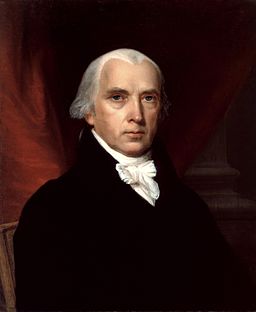
Portrait of James Madison, 1815

Portrait of James Madison, 1815

In many ways Madison served as Jefferson’s junior partner. He kept Jefferson informed of political matters in the states while Jefferson served as minster to France by writing coded letters to his mentor. Madison told Jefferson, “I shall always receive your commands with pleasure.” Yet Madison had his own opinions. While Jefferson was away, Madison helped draft the U.S. Constitution. His belief in a strong central government ran in opposition to Jefferson’s preference for individual rights. Madison did, however, have a flexible personality, which allowed him to see both sides of an issue. Just as he helped write the Constitution, Madison helped create the Bill of Rights that supported Jefferson’s individualistic views.

US Presidents in the News: President Warren G. Harding

I was planning to do my series of blog posts on the presidents in chronological order, but as President Harding’s personal affairs have been making headlines lately I decided to move him up.

Although his presidency was marred by scandal after his death, Warren Harding was a popular president in his day. Even as a young boy Harding avoided conflict in order to please his peers. That habit caught up with him when he became president.

Warren G. Harding, circa 1920

Warren G. Harding, circa 1920

Before he got into politics Harding was a successful businessman who bought a bankrupt newspaper and made it profitable. His wife Florence served as his business partner. He called her “The Duchess” and feared rather than loved her. Their complex relationship pushed him into politics. His new profession allowed him to be away for long periods; it also enabled him to have affairs with other women. Perhaps the photographs don’t do him justice because women seemed to think he was very attractive. He did possess a magnetic personality and a great speaking voice.

During the Republican national convention in 1920, the party could not decide on a candidate. Party leaders looked for a compromise, so they asked Harding if there was any reason they shouldn’t nominate him. Though he didn’t actually want to be president, Harding told them there was nothing in his past that would prevent him from running. In the first presidential election in which women could vote, Harding won.

Harding promised voters that his presidency would mark a return to “normalcy,” or to the days before the war. Fortunately the country didn’t face any major crisis during his presidency. Unlike President Wilson who always thought his opinion was the right one, Harding was indecisive. After listening to both sides of an issue he often thought that each side was just as right as the other. Even Harding admitted that he was in over his head as president. Later historians would agree with him when he remarked, “I never should have been here.” Still, Harding remained a popular president until he died of food poisoning during his third year in office.

After his death rumors about his private life and corruption in his cabinet came out. Harding had always been a womanizer, and one woman claimed he had fathered an illegitimate son. Recent DNA evidence revealed he had an illegitimate daughter named Elizabeth Ann with his mistress Nan Britton.

His desire to be popular had caused him to cover up rather than publicize the scandals that plagued his administration. An illegal oil-rigging scheme led to the eventual arrest of his former secretary of the interior. It was the first time a cabinet member had been convicted of a crime. Ironically, the president who wanted to be loved by everyone became one of the country’s least respected presidents.

John Adams: The Independent President

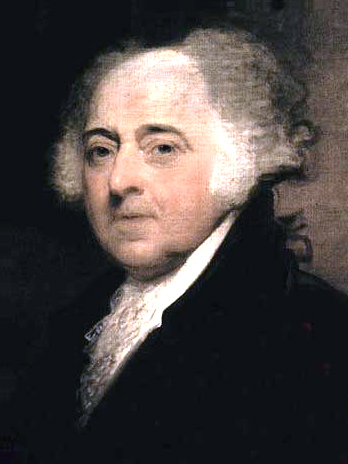
John Adams, like George Washington, did not enjoy his inauguration either, though for somewhat different reasons. His wife and political confidant, Abigail, was at home in Quincy, Massachusetts caring for John’s dying mother. In addition much of the attention that day was focused on Washington as people wept over the first president’s departure. Adams was also on the outs with his long time friend and now political enemy Thomas Jefferson.

John Adams, 1823 by Gilbert Stuart

John Adams, 1823 by Gilbert Stuart

Adams had reason to feel lonely on his inauguration day, but most of his public career characterized him as a “loner.” While his daughter expressed concern over his narrow election victory in a letter (he won 71 votes to Jefferson’s 68), he wrote back that he didn’t believe in “extravagant popularity.” Adams never quite trusted public opinion and felt that the more unpopular an idea was, the more likely it was to be right. Before the presidency he never held an administrative position and tended to take on causes that were unpopular with the public, such as defending British soldiers after the Boston Massacre.

Any politician who is unwilling to negotiate with others is unlikely to be successful for long, and Adams lost his re-election bid in 1800 to Thomas Jefferson. At the time, however, Adams was more concerned about family matters than election results. His son Charles, an alcoholic, had died. Since he was no longer president, John and Abigail would have more time to care for Charles’ widow and their grandchildren. Adams did live long enough, however, to see his son John Quincy Adams elected as President of the United States.

Surprising Facts about President George Washington

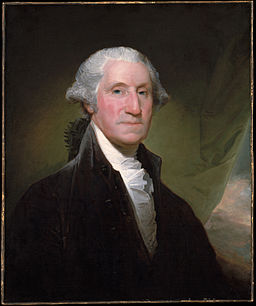
Though respected as a great general in the Revolutionary War, Washington was very self-conscious about his lack of education. Unlike the other colonists with whom he served in the Continental Congress, Washington never attended college. In fact, Washington had only an elementary school education. He did, however, attend dancing school at age fifteen. His dancing skills certainly came in handy when he became the first President of the United States and had many parties to attend.

George Washington, 1795 by Gilbert Stuart

George Washington, 1795
by Gilbert Stuart

Dancing was one of the few parts of formal gatherings that he enjoyed. He hated small talk and did not have a strong public speaking voice. He also didn’t like people to stand too close to him, partly because he felt that his false teeth made his face look swollen. Washington always took great pains to control his faults, particularly his temper. His reputation was so important to him that even as a young man he copied out rules of etiquette such as “sit not when others stand; speak not when you should hold your peace.”

Although some of his successors relished the challenges of the office, Washington was a reluctant president. Despite his personal popularity and the large number of people who turned out to greet him on his journey from Virginia to New York, the idea of being president made Washington cringe. Before he was inaugurated, Washington said he felt like “a culprit who is going to his place of execution.”

As president, Washington invented the presidential cabinet, filling it with men he felt had the best qualifications rather than picking personal friends or allies. He called his cabinet members, which included Thomas Jefferson and Alexander Hamilton, his “first characters.” Though he was the only president who never lived in the White House, Washington chose the site and the architect for the house. Before he died, Washington toured the nearly completed mansion.