
John Adams: The Independent President

John Adams, like George Washington, did not enjoy his inauguration either, though for somewhat different reasons. His wife and political confidant, Abigail, was at home in Quincy, Massachusetts caring for John’s dying mother. In addition much of the attention that day was focused on Washington as people wept over the first president’s departure. Adams was also on the outs with his long time friend and now political enemy Thomas Jefferson.
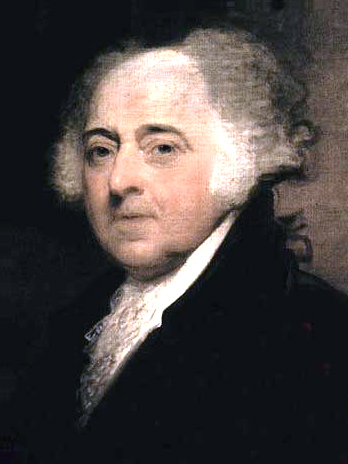
John Adams, 1823 by Gilbert Stuart

John Adams, 1823 by Gilbert Stuart

Adams had reason to feel lonely on his inauguration day, but most of his public career characterized him as a “loner.” While his daughter expressed concern over his narrow election victory in a letter (he won 71 votes to Jefferson’s 68), he wrote back that he didn’t believe in “extravagant popularity.” Adams never quite trusted public opinion and felt that the more unpopular an idea was, the more likely it was to be right. Before the presidency he never held an administrative position and tended to take on causes that were unpopular with the public, such as defending British soldiers after the Boston Massacre.

Any politician who is unwilling to negotiate with others is unlikely to be successful for long, and Adams lost his re-election bid in 1800 to Thomas Jefferson. At the time, however, Adams was more concerned about family matters than election results. His son Charles, an alcoholic, had died. Since he was no longer president, John and Abigail would have more time to care for Charles’ widow and their grandchildren. Adams did live long enough, however, to see his son John Quincy Adams elected as President of the United States.
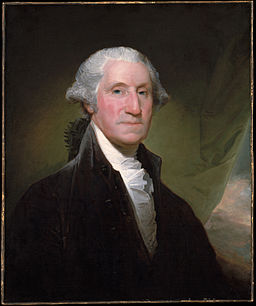
Surprising Facts about President George Washington

Though respected as a great general in the Revolutionary War, Washington was very self-conscious about his lack of education. Unlike the other colonists with whom he served in the Continental Congress, Washington never attended college. In fact, Washington had only an elementary school education. He did, however, attend dancing school at age fifteen. His dancing skills certainly came in handy when he became the first President of the United States and had many parties to attend.

George Washington, 1795 by Gilbert Stuart

George Washington, 1795
by Gilbert Stuart

Dancing was one of the few parts of formal gatherings that he enjoyed. He hated small talk and did not have a strong public speaking voice. He also didn’t like people to stand too close to him, partly because he felt that his false teeth made his face look swollen. Washington always took great pains to control his faults, particularly his temper. His reputation was so important to him that even as a young man he copied out rules of etiquette such as “sit not when others stand; speak not when you should hold your peace.”

Although some of his successors relished the challenges of the office, Washington was a reluctant president. Despite his personal popularity and the large number of people who turned out to greet him on his journey from Virginia to New York, the idea of being president made Washington cringe. Before he was inaugurated, Washington said he felt like “a culprit who is going to his place of execution.”

As president, Washington invented the presidential cabinet, filling it with men he felt had the best qualifications rather than picking personal friends or allies. He called his cabinet members, which included Thomas Jefferson and Alexander Hamilton, his “first characters.” Though he was the only president who never lived in the White House, Washington chose the site and the architect for the house. Before he died, Washington toured the nearly completed mansion.