
Before the Great Depression: President Herbert Hoover

Herbert Hoover was born in Iowa, which made him the first president to be born west of the Mississippi River. Though he was orphaned at age nine, he managed to get a geology degree from Stanford University. When he was evaluating mines in Australia, he sent a telegram with a marriage proposal to his future wife and Stanford graduate Lou. Lou had always wanted to marry someone who appreciated the outdoors, and Hoover did. Even as president he took time to go fishing.

During World War I, Hoover headed a relief effort for starving Belgian citizens. In Europe he was known as “the food czar.” Back in the states he also organized a relief effort after a massive flood along the Mississippi River. As secretary of commerce under Harding and Coolidge, he opened up new markets for business and helped standardize products like car tires.
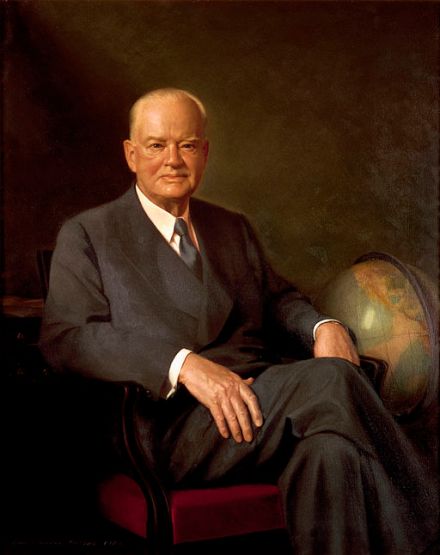
Hhoover

Official Presidential Portrait of Herbert Hoover

Hoover was so popular that he easily won the presidential election in 1928. Even he seemed to realize the possible dangers of people viewing him as “some kind of superman”, however. He worried that some catastrophe would occur during his time in office. When the stock market crashed and left many Americans unemployed and hungry, Hoover had the catastrophe he feared.

One of Hoover’s errors was his belief that local governments and volunteerism could stop the Great Depression. He opposed direct federal government aid for most of his presidency, though he did authorize loans for state and federal government projects in order to create jobs. Hoover also made some poorly thought out statements to the press that gave people the impression that the multimillionaire didn’t care about them.

To be fair, the depression continued for eight more years even with Franklin Roosevelt’s federal aid. Despite mistakes, Hoover’s administration introduced some progressive ideas. For example, he invited prominent black leaders to the White House, something his predecessors avoided. He also supported tax reductions for the poor.

Though he knew he would not win another term, Hoover’s love for America never wavered. After all, he had signed a law making The Star-Spangled Banner America’s national anthem.

U.S. President Calvin Coolidge

Calvin Coolidge had an appropriate birthday for a future president; he was born on the Fourth of July. As the son of a Vermont general store owner, he would shy away from strangers who came to his father’s shop. He remained distant and uncomfortable in social gatherings for the rest of his life.

Coolidge was visiting his father when he was awakened by the news of President Harding’s death. As Harding’s vice-president, he now had to lead the country. Since his father was a notary public, he performed the oath of office for his son.

512px-Ccoolidge

Official Presidential Portrait of Calvin Coolidge

Once president, Coolidge promoted the interests of big business. He believed “the more a man makes, the more he can pay his workmen.” Businesses were especially productive during the Coolidge administration. For the first time the middle class could afford to buy items like automobiles and washing machines.

His decisions on social issues were primarily negative; he upheld a strict immigration policy and believed the government should not help the poor. Yet after the scandals of the Harding administration, people admired his honesty. They also liked the fact that the economy was doing well.

Coolidge had many personal flaws. He was reluctant to speak at or even attend social gatherings, and when he did speak, what he said was often tactless. Fortunately for guests, his flaws were offset by the graciousness of his wife.

Though “Silent Cal” seemed like a cold fish to the outside world, Coolidge loved his family. He was devastated by his son Calvin’s death. He said “If I had not been President he would not have raised a blister on his toe…playing lawn tennis on the South grounds…which resulted in blood poisoning…When he went, the power and the glory of the Presidency went with him.”

Coolidge’s economic policies while in office would later inspire the administration of Ronald Reagan.

The Presidency of Warren Harding

Although his presidency was marred by scandal after his death, Warren Harding was a popular president in his day. Even as a young boy Harding avoided conflict in order to please his peers. That habit caught up with him when he became president.

Before he got into politics Harding was a successful businessman who bought a bankrupt newspaper and made it profitable. His wife Florence served as his business partner. He called her “The Duchess” and feared rather than loved her. Their complex relationship pushed him into politics. His new profession allowed him to be away for long periods. It also enabled him to have affairs with other women. He had a magnetic personality and a great speaking voice.

Wharding

Official Presidential Portrait of Warren Harding

During the Republican national convention in 1920, the party could not decide on a candidate. Party leaders looked for a compromise, so they asked Harding if there was any reason they shouldn’t nominate him. Though he didn’t actually want to be president, Harding told them there was nothing in his past that would prevent him from running. In the first presidential election in which women could vote, Harding won.

Harding promised voters that his presidency would mark a return to “normalcy,” or to the days before World War I. Fortunately the country didn’t face any major crisis during his presidency.

Unlike President Wilson who always thought his opinion was the right one, Harding was indecisive. After listening to both sides of an issue he often thought that each side was just as right as the other. Even Harding admitted that he was in over his head as president. Later historians would agree with him when he remarked, “I never should have been here.” Still, Harding remained a popular president until he died of food poisoning during his third year in office.

After his death rumors about his private life and corruption in his cabinet came out. Harding had always been a womanizer, and one woman claimed he had fathered an illegitimate son. His desire to be popular had caused him to cover up rather than publicize the scandals that plagued his administration.

An illegal oil-rigging scheme led to the eventual arrest of his former secretary of the interior. It was the first time a cabinet member had been convicted of a crime. Ironically, the president who wanted to be loved by everyone became one of the country’s least respected presidents.

U.S. President Woodrow Wilson

Since I did a post on Teddy Roosevelt’s successor and friend William Howard Taft last year, I decided to skip to Taft’s successor President Wilson.

Woodrow Wilson, whose real first name was Thomas, had an impressive rise in politics. He had only been governor of New Jersey for two years when he was approached by Democrats to run for president.

In another time period voters might have thought that the former president of Princeton University was a snob. Wilson always thought he was right. When a friend told him that there were two sides to every issue, he replied, “Yes, a right side and a wrong side.” His stubbornness would lead to trouble during his second term.

In the election of 1912, however, voters thought his commitment to high ideals refreshing. It also helped that Republican support was split between Taft and third party candidate Theodore Roosevelt.

512px-Presidentwoodrowwilson

Official Presidential Portrait of Woodrow Wilson

Wilson hoped to focus on domestic issues while president. His New Freedom programs included restraints on banks and big business as well as child labor laws. Yet in other ways he resisted change. Born a Southerner, Wilson gave cabinet positions to Southerners. He violated the rights of black workers by allowing several racist members of his cabinet to segregate their offices. Wilson was also slow to support women’s suffrage, though he eventually did so.

When World War I began in Europe, Wilson wanted to maintain peace. He was re-elected as the man who kept the country out of war. In 1917 Wilson finally decided that America needed to join its allies to “make the world safe for democracy.”

After the war ended, Wilson worked hard to ensure that the First World War would also be the last. He proposed a League of Nations in which countries would pledge to protect each other in the future. He travelled to Europe for the peace talks, making him the first president to visit that continent while in office. Wilson was not happy with the peace treaty and he still needed more support for the League.

Returning to the U.S., Wilson embarked on a speaking tour to promote the League of Nations. While on his trip Wilson suffered a stroke. Wilson became an invalid for the last year of his presidency, though he communicated with lawmakers by writing letters. Unfortunately, the Senate was still debating the League of Nations. His stroke made the stubborn president even less willing to compromise, and he refused to make any concessions on his beloved League. Though the Senate rejected the League of Nations, Wilson’s ideals live on in the United Nations.