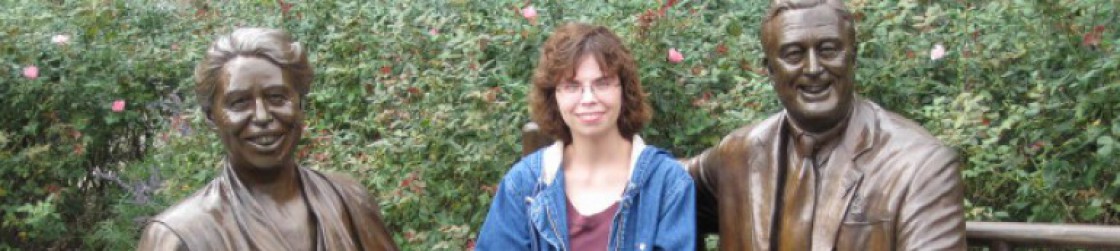
President Theodore Roosevelt and his Dogs

During President McKinley’s time in office, the White House was pretty quiet. He and his wife had no children and only two pets, a parrot and a cat. When Theodore Roosevelt came to the White House, he brought a zoo with him. Snakes, a coyote, and a zebra were among the Roosevelt’s many animals. However, dogs were the family’s most cherished pets.

The Roosevelt dogs ranged in size from Rollo, the enormous St. Bernard, to Manchu, a tiny Pekingese given to the president’s daughter by the Chinese Dowager Empress.

Rollo’s size did not stop him from being a loving friend to the kids. As one newspaper noted, “No doubt visitors to the White House or Sagamore Hill [Roosevelt’s home in Long Island, New York] were often startled to see the Roosevelt children racing across the lawn, pursued by the bounding Rollo, who looked like some huge beast, ready to destroy them. But Rollo was a children’s dog, and he protected the president’s children as efficiently as the Secret Service men.”

Most of Teddy Roosevelt’s dogs were not quite as large as Rollo. Roosevelt’s son Kermit had a Manchester terrier named Jack. Jack would have enjoyed his time at the White House much more if the cat hadn’t tormented him. The cat thought jumping on Jack was great fun.
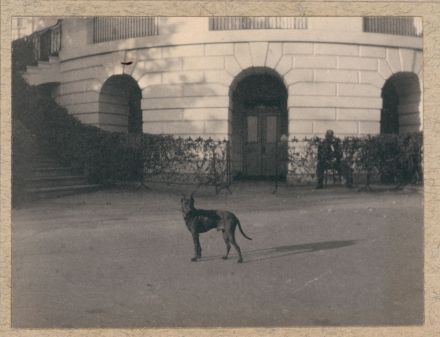
TR's dog Jack

Jack, the Roosevelt family dog at the White House, 1902. Library of Congress Prints and Photographs.


Though he never made friends with the cat, the rest of the family adored Jack. The president described Jack as “absolutely a member of the family.” He thought Jack was a gentleman, even though Jack sometimes chewed on the president’s books.

When Jack died, he was buried behind the White House. Roosevelt’s wife Edith refused to leave Jack there after her husband’s second term as president. She worried that Jack would be “beneath the eyes of presidents who might care nothing for little black dogs.” Jack’s little coffin was brought to the family home in Long Island, New York.

Roosevelt’s son Archie loved a dog named Skip. Skip may have been a rat terrier or a mutt. Teddy Roosevelt found the dog while he was on a bear hunt, and he probably liked Skip best. Roosevelt took pride in Skip’s courage. The dog stood his ground when facing a bear. Similarly, the president stood up to members of Congress.

President Roosevelt often took Skip on his hunting trips. When the dog’s short legs got tired, Roosevelt scooped him up and let Skip ride on his horse. On a typical evening, Skip raced down the halls of the White House with Archie. Once the kids fell asleep, Skip would find the president, who was usually reading. Skip climbed up on his master’s lap and snoozed. Skip died the year before the Roosevelt’s left the White House.
“We Like Ike”: The Presidency of Dwight Eisenhower

Dwight Eisenhower already had his famous nickname while growing up in Kanas. “Little Ike” also had such a temper that he once beat his fists against a tree until he started bleeding. His mother bandaged up his hands and tried to teach him to control his temper. Ike took the lesson to heart. Throughout his life Ike would reign in his emotions because he wanted people to like him.

He did not, however, share his mother’s pacifist views. The only time Ike remembered making his mother cry was when he left for West Point. After World War II, General Eisenhower returned home as a hero. Ike’s popularity was so great that both political parties wanted him to be their candidate for president. Ike didn’t want to declare his politics right away. By 1952, Eisenhower felt disenchanted with the policies of President Truman and agreed to run as a Republican.

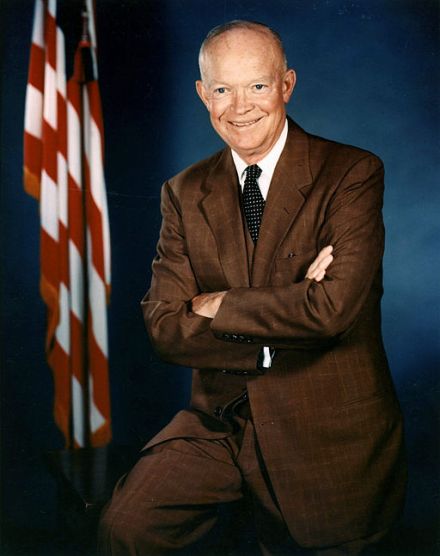
512px-Eisenhower_official

Official Portrait of Dwight Eisenhower

Unlike other presidential candidates, Eisenhower was not an intellectual. The only books he enjoyed were western novels. Instead of great speeches, Eisenhower preferred to use sayings such as “Everybody ought to be happy every day. Play hard, have fun doing it, and despise wickedness.” A war-weary public found his simple style appealing.

Eisenhower won the election by promising to end the Korean war. He even vowed to go there himself. Though he did end the fighting, he did so by stepping up aerial bombardment of North Korea and threatening to use the atomic bomb. Whether he would have used the bomb is questionable, but Eisenhower’s tough talk led to a peace agreement. From that point on Eisenhower liked to say he was “waging peace” by keeping America out of foreign wars.

The supposedly peace loving president allowed America to stockpile nuclear weapons, however. He also secretly authorized spying on Russian nuclear missile sites. Meanwhile, he invited Soviet Premier Nikita Khrushchev to a summit that would have limited nuclear testing. During the summit, an American spy plane was shot down by the Soviets. Eisenhower had to admit that he knew about the spy mission. An angry Khrushchev left the peace summit. No agreement on nuclear testing was reached.

Eisenhower’s administration has been criticized for failing to respond to domestic issues, especially civil rights. During his presidency the Supreme Court decided that public schools should be desegregated. Eisenhower didn’t believe that a law would change the hearts of Southern whites. When nine African American students tried to integrate a white high school in Little Rock Arkansas, a white mob threatened the students’ safety. Despite his disagreement with the Supreme Court, Eisenhower sent in the National Guard to protect the students.

Although Eisenhower believed in saving money, he also believed in many of the FDR’s programs. Eisenhower expanded the number of people eligible for Social Security and left labor laws in place. He also added a project of his own. The Federal Highway Act of 1956 pledged federal funds would be used to build interstate highways. The highways insured that the automobile became the primary means of travel for Americans instead of trains.


“Give-’em-hell-Harry” The Presidency of Harry Truman

Future president Harry Truman had a difficult childhood. A kid wearing glasses was a rare thing in the farm town of Independence, Missouri, and his schoolmates teased him. Since he was not very tall, they nicknamed him “little four eyes.”

Young Harry Truman also had different goals than most other children. He loved music and hoped to become a concert pianist. As a result of his father’s bad investments Truman could no longer receive piano lessons or even apply to college. Although he hated it, he worked the family farm until his father died. Truman then tried his hand at various business ventures, all of which failed.

Despite his poor eyesight and the fact that he was past the draft age, Harry managed to serve as a combat artillery captain in World War I. He discovered his ability to lead other people and gained the respect of his men. The experience boosted his confidence. He returned to Missouri as a war hero and married his sweetheart Bess Wallace.

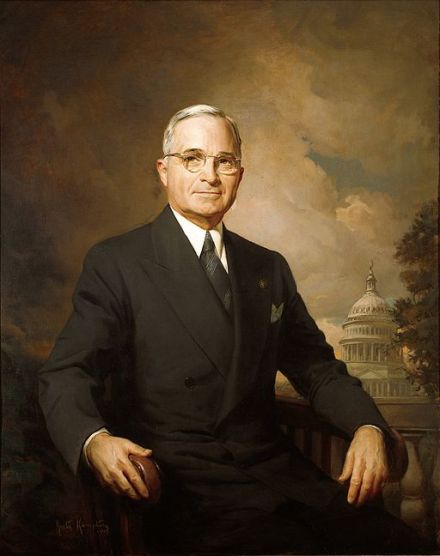
512px-HarryTruman

Official Presidential Portrait of Harry Truman

Truman needed to support his family and had to find work. After another business failure, he decided to try politics. It helped that he had kept in touch with the other veterans he served with during World War I. With the help of his friends and Democratic Party boss Tom Pendergast, Harry got elected first as a judge and later to other county offices. Despite his association with Pendergast, who had criminal ties, Harry became known for his honesty and his desire to help the common man during the Great Depression.

In 1934 Truman was elected to the U.S. Senate. He served as chairman of a committee that uncovered the Defense Department’s wasteful spending. The public found Truman’s honesty and even his swearing so refreshing that they nicknamed him “Give-’em-hell-Harry.”

During the 1944 presidential election Truman was selected as President Franklin Roosevelt’s vice-president. Only a few months after he became vice-president, Roosevelt died and Truman had to take over. At the time he thought, “There must be a million other men more qualified for the presidential task. But the work was mine to do, and I had to do it.”

Chief among Truman’s tasks was to bring World War II to a successful conclusion. Even after Germany surrendered, the fighting with Japan dragged on. Truman believed that if the war in the Pacific continued, up to 100,000 American soldiers could die. He decided that if Japan refused to surrender, he would use the new atomic bomb.

On July 26, 1945, Truman warned Japan that it would be destroyed if it continued to fight. The Japanese Emperor still would not give up. In August, the U.S. dropped two atomic bombs, one on the town of Hiroshima and one on Nagasaki. Finally, the Japanese Emperor surrendered and the war was over.

Truman received criticism in later years for using the atomic bombs, which mostly killed Japanese civilians. He never regretted his decision, however. As Truman put it “The greatest part of the president’s job is to make decisions…he can’t pass the buck to anybody.”

After World War II Truman turned his attention to stopping the spread of communism. The start of a nuclear arms race with the Soviet Union worried voters, and Truman’s popularity suffered. In 1948 he was probably the only person who thought he would be re-elected president. He took the campaign seriously and made hundreds of speeches throughout the country on his “Whistle-stop campaign” tour. Truman’s confidence proved to be prophetic when he won.

Truman’s second term was dominated by his decision to support South Korea when it was invaded by communist North Korea. He never asked Congress for a declaration of war because he feared the public would be reminded of World War II. As the war went on, Truman’s popularity took a nosedive.

Even though he had a poor approval rating, the public was still shocked when he announced that he didn’t plan to run for president again. He took delight in returning to Missouri and becoming “Mr. Citizen.” Truman lived to see much of his reputation restored. He became known not only for overseeing the end of World War II but also for desegregating the military and banning racial discrimination in the federal government.