History Book Review: When Marian Sang by Pam Muñoz Ryan

Instead of trying to tell the main character’s whole life story, this engaging picture book focuses on Marian Anderson’s singing. Readers follow Marian’s development from a young girl singing in her church to a professional performer. Elements of Marian’s personal life are only included if they influenced her singing. For example, we learn that Marian’s father died in an accident because his passing filled Marian’s voice with sadness.

From the illustrations the reader knows that Marian is African American, but she isn’t discriminated against until she tries to apply to a music school. While waiting in line, she hears the person behind the counter blurt out “We don’t take colored!” Despite this setback, Marian took private music lessons. She became a popular performer throughout the U.S. Still, she still had to travel in railroad cars that were separate and dirtier than the ones reserved for white people.

The most obvious example of discrimination came in 1939 when Marian attempted to perform at Constitution Hall in Washington, D.C. The manager refused and said only whites could perform there. When First Lady Eleanor Roosevelt heard about this, she publicly resigned from the organization that sponsored the hall. With the permission of President Franklin Roosevelt, Marian got to sing at the Lincoln Memorial on Easter Sunday. Her encore performance of “Nobody Knows the Trouble I See” silenced the crowd of 75,000 people.

256px-Marian_Anderson_-_NARA_-_559192

Painting of Marian Anderson by Betsy Graves Reyneau

Though Marian is portrayed as a determined person, the author also makes her human. For example, Marian was often nervous before her performances and sometimes sang with her eyes closed. Anyone who ever gave a presentation at school or work can relate to how Marian felt. Not everyone gets to study music in Europe as Marian did, but readers can still understand Marian’s homesickness.

The author points out that even though Marian was determined to achieve her dream of someday singing at the Metropolitan Opera, she had help along the way. Marian’s mother encouraged her to continue her private lessons when her daughter was rejected by the music school.

Famous music teacher Giuseppe Boghetti was less concerned with Marian’s skin color than with her talent. He told her that after two years with him, she would be able to sing anywhere. In addition, Marian’s church community helped out by paying for her lessons with Boghetti.

At the end of the story, Marian finally realizes her dream of singing for the Metropolitan Opera. She had to wait 16 years after her performance at the Lincoln Memorial, however. Readers can takeaway from this book that dreams can come true, but it might take time and some support from other people to accomplish them.

The back of the book contains a helpful timeline of important events in Marian’s life, including those the story doesn’t cover. I was disappointed that the CD that came with the book did not include Marian’s voice (it’s a narration of the book), but the bibliography says where readers can find recordings of her performances. Unfortunately the bibliography is hidden in the author’s notes at the back of the book, making it somewhat difficult to find.

In summary, this book does a wonderful job of introducing kids  and adults to a courageous African American woman who realized her dreams despite some people’s prejudices.
Book Review: The Life and Death of Adolph Hitler

The Life and Death of Adolph Hitler by James Giblin 223p.

Giblin’s middle grade biography traces Hitler’s life from nearly homeless artist to ruthless dictator.

The first chapter is short and sets up the story with what kids will know about Adolph Hitler: he once ruled Germany and he’s dead. Giblin explains that while young people might not know exactly who he was or what he did, they have older family members who were influenced by Hitler’s actions. Questions that kids might ask about Hitler, such as why didn’t people stop him sooner, are posed and the author promises to explore them in the book.

adolf hitler

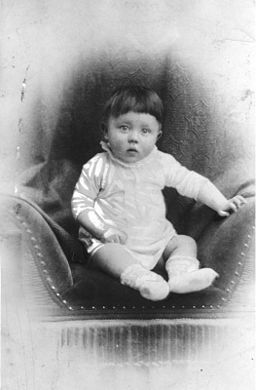
Adolph Hitler as a baby

Giblin’s straightforward storytelling of Hitler’s childhood makes him, at least at this point, more relatable to young people. For example, kids that tried out and didn’t make a sports team could understand Hitler’s disappointment when he didn’t get accepted to art school. Any one who has lost a family member can understand why Hitler didn’t want to accept his mother’s cancer diagnosis.

The book goes on to explain Hitler’s crushing disappointment after World War I. He had nearly gone blind trying to defend his country, but Germany lost anyway. Like other German soldiers, Hitler resented the Versailles Treaty which made Germany pay nations like Britain and France for the cost of the war. When the German army needed instructors to teach the evils of Communism and the importance of nationalism to the troops, they had little idea that they were helping to launch the career of a dictator. Through his speeches Hitler learned that he had the power to persuade audiences–a skill he would use again and again in the coming years.

Unlike other biographers, Giblin does not pretend to have all the answers. For example, while other biographers have speculated that Hitler may have disliked Jews because his mother’s doctor was a Jew, Giblin points out that Hitler only had kind words for the doctor. Giblin comes to the conclusion that there is no obvious reason for Hitler’s feelings but that hating Jews was a main feature of Hitler’s life from 1919 until his death.

The book points out why the Nazi party was popular with some Germans during the Great Depression. Hitler’s rise to power coincided with an increase in jobs and better working conditions. People were healthier, too. Hitler even suggested that an affordable car called the Volkswagen (the people’s car) be produced so that the middle class could drive around town and go on vacations. Though the lives of Jewish people were increasingly restricted, Hitler often didn’t emphasize his anti-Semitic beliefs in his pre-World War II speeches.

As Giblin explains, World War II came about because of serious misunderstandings between Hitler and the British and French. Britain and France didn’t want another war, so they stood by while Hitler took over territories like Austria and Czechoslovakia for Germany. Britain warned that it would stand by Poland, however. Hitler thought the British were bluffing and proceeded with his invasion only to find himself at war with Britain, France, and eventually the Soviet Union and U.S.

Although Giblin does talk about the Holocaust, his coverage of the extermination of the Jews is somewhat brief, perhaps because Hitler delegated the working of concentration camps to other Nazi officials. The book does quote Hitler’s book Mein Kampf which outlined his hatred for Jews. It also covers the laws restricting Jewish participation in society in the 1930s.

Giblin does a good job of incorporating stories from and about young people. He includes  members of the Hitler Youth, a group that indoctrinated young people in the policies of the Nazi Party. Hitler’s troubled relationship with his niece Geli and his odd romance with the young Eva Braun are explored. In addition, Giblin includes stories of young people like Sophie Scholl and her brother who bravely opposed Hitler’s political agenda.

Extensive photos help Giblin’s gifted storytelling come to life. Included are rare photos of Hitler in private, family photos and paintings, and photos of Hitler’s Nazi followers.

Readers would have benefited from short summaries of important people in Hitler’s political life. It can be hard for young readers to keep track of people with similar names, such as Himmler and Heydrich.

The book ends with a cautionary note: leaders like Hitler can still come to power under the right conditions, but hopefully future generations will use their knowledge of others’ mistakes to prevent such an event.

Overall, The Life and Death of Adolph Hitler provides young people with a solid introduction to the career of one of the most infamous men in history.

President Lyndon Johnson and his Dogs

When Lyndon Johnson became president, he brought two beagles named Him and Her to the White House. Both Him and Her attended official White House functions. Even though Him once left a puddle on a chair during a party, the president refused to make Him stay elsewhere while his master entertained. Both Him and Her had the run of the Oval Office. Johnson signed the law that created The Great Society–a set of programs that gave more rights to African Americans and poor people–in the presence of his dogs.

Johnson often combined press conferences with dog walks. Most of the time, these walks went well. The walks made good copy for reporters because the public loved seeing the president with his beagles. Johnson tried to get his dogs to do different tricks for the cameras. He stuffed his pockets with candy-coated doggy vitamins to get Him and Her to perform.

One act, however, made the American people and Johnson’s dogs howl. During a press conference, Johnson picked one of the beagles up by its ears. Animal rights groups complained that Johnson was mistreating the dogs. Suddenly Johnson and his dogs were front-page news. Other than that incident, however, Him and Her seemed to enjoy their time as presidential pups.

After Him and Her died, Johnson felt pretty lonely in that big house. Fortunately his daughter found a stray running along the highway. She stopped at a gas station to ask whom he belonged to, but no one knew. She decided to bring the little white dog to the White House.

Lyndon_B._Johnson's_family_Xmas_Eve_1968

Lyndon Johnson Family on Christmas Eve 1968. Johnson is holding Yuki


Johnson loved the little mutt and named him Yuki. Johnson said that Yuki was “the friendliest, the smartest, and the most constant in his attentions of all the dogs I’ve known.” The president took Yuki with him everywhere. He and the dog travelled together on Air Force One. Yuki attended cabinet meetings, though he did so under the table. Unlike President Harding’s dog Laddie Boy, Yuki did not sit in his own chair for cabinet meetings.

One of Johnson’s favorite things to do with Yuki was to howl with him. Johnson claimed that Yuki “had a Texas accent.” Yuki and the president howled together in the presence of important visitors like the Chancellor of Germany, who was a bit shocked at the performance!

The president needed the support of his loyal dog as protests against the Vietnam War increased.

Yuki went back to Johnson’s Texas ranch after his master retired from the presidency. He was at Johnson’s side in 1973 when the former president died.