Dana is an African American woman living in the present day, which when Butler was writing her novel was 1976. On June 9th, the day of Dana’s birthday, she and her husband Kevin unpack books in their new house in California. Dana suddenly feels nauseated and dizzy. Kevin disappears from her sight.
Though she doesn’t know it on this first trip, Dana is pulled back into the nineteenth century, specifically antebellum Maryland. She discovers that she gets pulled out of the 1970s and into the 1800s every time a white ancestor of hers is in danger. Since this ancestor is a troublemaker, Dana is called to him several times. She witnesses what it was like to be a slave on the Waylon plantation. Though she’s treated somewhat better than the others because of her healing abilities (she knows basic things like CPR and how to keep a wound from getting infected that doctors in the 1800s don’t), she still faces her share of danger. As a reader I wondered if she would have a chance to live with her husband in the 1970s and if she would come back to him in one piece.
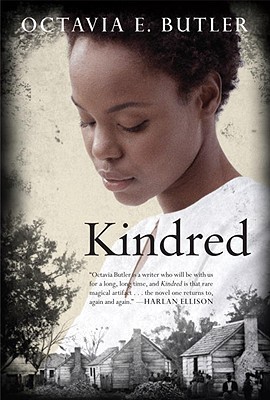
I listened to this book on audio. The one criticism I had is that sometimes the narrator doesn’t make the voices of the characters distinct enough. Butler’s writing had me riveted, though. Kindred was described to me as science fiction for people who aren’t sure they like science fiction. I knew that I enjoyed books that travel back in time, so I thought this book would be a good choice. Kindred was a good choice for me, though I won’t use the word enjoyable to describe it. Dana and the reader witness the evils of slavery. African American characters are whipped, sold away from family members and sometimes contemplate suicide, among other horrors.
As I read Kindred in the year 2021, I felt like I was witnessing two historical time periods: the antebellum South and 1976. I laughed when Kevin and Dana couldn’t use the Internet to look up information, though they did pretty well with books. Also, although race relations were obviously better in 1976 than the 1800s, more progress has been made in the twenty-first century. For example, the South African apartheid that Dana hears about on the radio no longer exists. That’s not to say that we don’t need to make more progress on issues of race today, however.
Kindred reminded me of what an African American character on the TV show Timeless said. He said that he couldn’t think of a time in history that would be safe for him to go back to visit. He was right, but I also think that one of the worst times in history to return to for an African American would involve a time in which slavery existed.
Kindred will introduce readers to the realities of slavery in the nineteenth century as well as a bit of the 1970s. I wanted Dana to describe a bit more of her surroundings on the plantation, but I think her understandable terror explains the sometimes lackluster descriptions. I definitely recommend Kindred by Octavia Butler for ages 14 and up.
 Heather on History