
American First Lady Ida Saxon McKinley grew up in one of the wealthiest families in Canton, Ohio. Her father believed in women’s education, so Ida received a college degree. Yet he wanted his daughter’s education to be “more practical than ornamental.” As a result, Ida worked in her father’s bank, first as a teller and then as a manager. In addition to her work and college studies, Ida loved long walks, shopping, and going to concerts and the theater.
She met William McKinley at her father’s bank. Completely smitten, McKinley proposed in the fall of 1870. They had very different personalities, which some friends thought would be an obstacle. McKinley was reserved while Ida was impulsive and adventurous. Yet their love lasted throughout the years. A friend later said, “the relationship between them was one of those rare and beautiful things that live only in tradition.” The happy couple married in January 1871.
By Christmas, Ida gave birth to a daughter named Catherine. In fall of 1872 Ida was pregnant again, but both mother and daughter fell ill. Daughter Ida died of cholera after only five months. After this loss, Ida experienced a combination of symptoms, most notably epileptic seizures. McKinley was determined not to shut Ida up in a mental institution, though epilepsy was thought to be a psychiatric disorder. Unfortunately, more sadness followed. Their first daughter developed scarlet fever and died.
The loss of a second child nearly destroyed Ida, so McKinley offered to give up his political ambitions for her. Ida, however, wouldn’t hear of it. “I have no fear that your choice in life will leave you as you are in the things that make you dear to me,” Ida told him. With his wife’s encouragement, McKinley ran for Congress in 1876 and won.
Whether he was in Congress or home in Ohio, McKinley remained devoted to Ida. While in Congress, Ida sometimes called him out of meetings on trivial matters, such as his opinion on her clothes. When he left town for any reason, McKinley wrote letters to Ida that opened with “My own precious darling.”
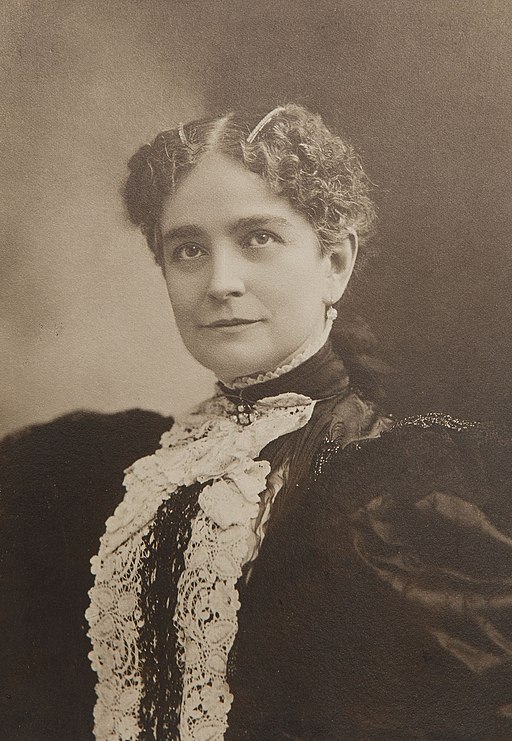
Ida’s health would sometimes improve for long stretches, and the couple took advantage of these times by traveling together. Ida loved to travel and managed two trips to California with her husband.
In 1897, William McKinley became president of the United States. Considering her illness, Ida might have given the duties of first lady to someone else, but she refused. Nevertheless, she had limitations. For example, Ida stood in receiving lines to greet White House guests but a chair was always placed behind her in case she became tired. She enjoyed hosting luncheons for members of Congress though she had to pace herself. Both she and McKinley wanted Ida to partake of society as much as possible despite her seizures. William Howard Taft remembered talking with them when he noticed “a peculiar hissing sound” coming from Ida. McKinley walked over to her, draped his handkerchief over her face, and continued the conversation.
Despite her limitations, Ida McKinley put her own stamp on the White House. She crocheted slippers which she gave to charities who them sold them at inflated prices. Her love of music and theater as a young woman continued during her time as first lady. Ida brought pop music like ragtime to White House social events. When she was well she attended comedies in Washington theaters and invited actors to the White House to discuss their craft. Unlike previous first ladies, she met with Susan B. Anthony and supported suffrage by speaking with suffrage organizations.
Though usually supportive of his career, Ida didn’t want McKinley to run for a second term as president. “I thought he had done enough for the country…and when his term expires he will come home and we will settle down quietly and he will belong to me,” Ida told a reporter. Her reasons for opposing a second term weren’t entirely selfish. Ida also feared that McKinley would be assassinated, since anarchists all over the world adopted assassination as a recent means of protest. McKinley refused to give up his reelection bid, however.
Sadly, Ida was right to worry. McKinley was shot, though his first concern was for Ida. “My wife–be careful how you tell her. Oh be careful,” McKinley told a secretary.
When Ida was told, she fainted but recovered quickly. She said, “Tell me all, keep nothing from me! I will be brave–yes, I will be brave for his sake!” Ida did as promised, comforting her husband with hardly any breakdowns. Others assumed the shock of the president’s death would instantly kill Ida, but it did not. At home in Canton, Ohio, she created a shrine to her husband. Ida McKinley passed away in 1907 at age 59.
Sources:
Merry, Robert. President McKinley: Architect of the American Century.
Miller, Scott. The President and the Assassin.
O’Brien, Cormac. Secret Lives of the First Ladies.
 Heather on History