How Native American Jim Thorpe Became an Olympic Gold Medalist

Jim Thorpe’s mixed race parents Hiram and Charlotte lived on the Sac and Fox Indian reservation in present-day Oklahoma. As young boys, Jim and his twin brother Charlie fished, hunted small game, and did chores around their father’s farm. At the 1912 summer Olympics, American Jim Thorpe won two gold medals. One of his competitions, the decathlon, required competitors to participate in ten track and field events. Thorpe’s victories were even more remarkable because he couldn’t particpate in organized sports for many years.

The boys’ relatively unregimented lifestyle ended when their parents insisted that Jim and Charlie attend the nearby boarding school run by whites. At the age of six, Jim started classes at the government school.  The school offered no sports, so Jim and his friends made up their own games. One of their favorites was “prairie baseball.” According to Jim, “teams would be chosen and the game would be played out in the field…we were also interested in basketball, but we had no track. Only the Indians participated in this type of activity and it was of an unofficial nature.” Both boys learned the basics of reading, writing, and arithmetic at boarding school, but Jim missed the freedom of the reservation.

The death of Jim’s twin brother Charlie from pneumonia made Jim even more rebellious and he often ran away from school. His father grew tired of Jim’s antics and sent him to the Haskell Institute, a Native American school in Kansas. Though discipline at his new school was strict, Jim started to learn more about organized sports. He and his friends learned the basics of football from one of the school staff members, but Jim also watched the varsity football team practices. One player noticed Jim on the sidelines and, impressed with the younger boy’s knowledge, made him a football out of leather straps sewn together and stuffed with rags. Thrilled with this new gift, Jim organized football games among his classmates.

Jim abruptly left school when he heard his father was injured, but by the time he got home Hiram had recovered. After a few months, however, Jim’s mother passed away. Jim ran away again, but when he returned his father enrolled him in the local school so he could help with the farm. Accounts differ on how he ended up attending the Carlisle Indian School in Pennsylvania, but at age sixteen he left home again for vocational school.

Carlisle played an important role in Jim’s sports career. The school had a strong football team, but Jim was too small to play on the varsity squad. Instead, he played on an intramural team. Carlisle’s sports coach Glenn Warner soon noticed the future Olympian. On the way to one of his games, Jim saw the varsity track team practicing the high jump. They couldn’t clear the bar, which was set at five feet nine inches. Jim asked if he could try and succeeded on his first attempt.

The next day, Coach Warner asked Jim if he knew what he had done. Jim said, “Nothing bad I hope.” Warner replied, “Boy, you’ve just broken the school record!” Warner put Jim on the track team—his first experience with organized sports. Jim participated in a variety of sports at Carlisle, but that day marked the start of an amateur career that would eventually lead him to the Olympics as a decathlete.

The Childhood of Female Aviator Amelia Earhart

As a young girl, Amelia Earhart, or Meelie as her family called her, lived with her grandparents most of the year in Atchison, Kansas. Her father worked as a claims agent for the railroads, and her mother traveled with him often. Amelia and her younger sister Muriel spent the summers with their parents. In her autobiography, Amelia looked back on her early childhood as a very happy time because family members who loved her and cousins who served as playmates always surrounded her. One of Amelia’s favorite games, called bogie, involved crouching in an old carriage in her grandparents’ barn while pretending to travel to foreign countries.

Though she didn’t travel to other continents until she started flying, she did travel a lot as she grew up. Amelia said, “Because I selected a father who was a railroad man it has been my fortune to roll.” When Amelia and her sister were old enough to go to school, their parents took them on their dad’s business trips. As a result, Amelia traveled throughout the country, visiting states as far away as California. The Earharts thought traveling to new places taught Amelia and Muriel more than they learned sitting in school, though the girls still got good grades despite missing classes.

The family’s trip to the fair in St. Louis sparked Amelia’s interest in new inventions. She was so thrilled by the roller coaster at the fair that she built her own back in Atchison. Meelie and her cousins constructed a track from the roof of the woodshed down to the ground. The “car” was a board placed on roller skates. Amelia went down in the car, which flipped over as it hit the ground. She was less concerned about falling than on fixing her invention, but she had to give up because her mother and grandmother thought it was too dangerous. As one of Amelia’s childhood friends recalled, Meelie was the “the instigator” who would “dare anything; we would all follow along.”

Being the daughter of a railroad man, especially one who was careless with money and soon started drinking, meant that Amelia didn’t live in one place for very long. In 1906, when Amelia was eleven, the family moved to Des Moines, Iowa. At the Iowa State fair the following year, Amelia saw her first airplane. She described it as “a thing of rusty wire and wood.” The plane didn’t impress her at the time, but she had yet to see one in motion. Other moves throughout the Midwest followed, challenging Amelia’s spirit and giving her a reputation as “the girl in brown who walks alone.”

Amelia escaped her family’s problems somewhat by attending a boarding school near Philadelphia. There she made new friends and started to enjoy her classes. Though she didn’t know exactly what she wanted to do with her life, Amelia kept a scrapbook of accomplished women who were the first or only women in their fields. Later as she embarked on her aviation career, other girls would admire Amelia Earhart as the first woman to fly solo across the Atlantic Ocean.

The Childhood of Crazy Horse, Native American Warrior

Crazy Horse, 1877

Crazy Horse, 1877

Although his actual birthday is unknown, most historians agree that Crazy Horse was born around 1840 in present-day South Dakota. From the day he was born, Crazy Horse’s hair and skin was much lighter than the other boys in the Lakota tribe. His mother called him Light Hair, which was the name he kept until he proved himself in battle. Then his father called him Crazy Horse. The name didn’t mean that he was crazy but that he had spirit and energy.

Like other kids who look different than their peers, Crazy Horse probably endured a lot of teasing. His father’s work also made Crazy Horse stand out in a community that valued athletic jobs. According to some accounts, his father did not have the traditional Lakota occupation of hunter/warrior. Instead, Crazy Horse’s father worked as a medicine man.

Instead of feeling hurt by his peers, their teasing only made Crazy Horse want to excel in whatever area he could. As he grew, his uncles and other members of the Lakota community helped him develop the skills of a good hunter. One day he received the gift of a bow and was taught how to carry it, maintain it, and shoot it properly. The first living things he shot at were grasshoppers. His teachers wanted him to learn to learn to shoot precisely, and grasshoppers, being small and fast, presented a challenge for the young boy. Shooting grasshoppers taught Crazy Horse patience and humility. Eventually, his arrows came closer to hitting their targets.

Crazy Horse’s skill and patience caused a great hunter/warrior named High Back Bone to notice him. After asking for his father’s permission, High Back Bone became the boy’s teacher. By age twelve, Crazy Horse’s skill with the bow was nearly perfect. His arrows killed many grasshoppers. He also knew how to wait patiently for deer until the animal got close enough for him to kill it with one shot.

The Lakota tribe moved according to the seasons, following the animals they depended on for food. They especially prized the buffalo. Crazy Horse went along on buffalo chases, but as a boy he could only watch the more experienced hunters. Since he couldn’t participate in the adults’ buffalo hunts, Crazy Horse imitated the hunters with his friend Lone Bear. One of the boys pretended to be the buffalo and galloped away on his horse from the other who acted as the hunter. The hunter chased the buffalo with a blunt arrow, but even without the dangers of real arrows or a buffalo herd, the game taught the boys to stay on their horses during a chase.

Crazy Horse thought he would someday use his skills as a horseman and expert marksman to fight other Indian nations that were his tribe’s enemies. Horn Chips, one of Crazy Horse’s contemporaries, stated, “when we were young all we thought about was going to war with some other nation; all tried to get their names up to the highest…and Crazy Horse wanted to get the highest rank.” Though no one knew it at the time, most of the skills Crazy Horse learned as a boy would be needed for fighting an enemy he had not yet seen—the white man.

Independence Day and The History of Fireworks

Ever since the first anniversary of Independence Day, Americans celebrated the holiday with fireworks. When the Founding Fathers signed the Declaration of Independence in 1776, John Adams predicted that “this day will be celebrated…with parade, guns, bonfires, and fireworks, from one end of this continent to the other, from this time forward forever more.” The newly created United States was not the first country to use fireworks for special occasions, however.

Many historians believe that the Chinese invented fireworks by accident approximately 2,000 years ago. One legend claims that a cook mixed charcoal, sulfur, and saltpeter together (all common kitchen ingredients back then). The combination of these chemicals created gunpowder—the key ingredient in fireworks. Eventually someone stuffed gunpowder into bamboo shoots and threw them into the fire. The result was a large BOOM, and the first fireworks were invented. The Chinese used the loud noises to scare away evil spirits.

The explorer Marco Polo may have brought gunpowder back to Europe in the late 1200s after visiting China. In medieval England, using gunpowder to create fireworks became popular as a way to celebrate military victories. Later, they were used during various special events, such as King Henry VII’s wedding day.

By the 1500s, some Englishmen made a living by setting up fireworks displays to entertain audiences. These experts were called firemasters. Their assistants, known as Green Men for their green leaf caps and green costumes which helped them blend in with the displays, were responsible for setting off the fireworks. Green men also told jokes to crowds and tried to keep people from getting too close to the displays. Despite their humor, the Green Men were always in danger. They could be injured or killed if the fireworks failed to rise into the air or went off at the wrong time.

Fireworks experts from various European countries brought their knowledge to America. They quickly became part of Fourth of July celebrations, though some people complained about the noise. On July 4, 1866, a man living in Germantown Pennsylvania wrote, “July 4th is the most hateful day of the year, when the birth of democracy is celebrated by license and noise. All last night and all of today, the sound of guns and firecrackers around us never stopped.”

Throughout the early 1900s, many American adults and children suffered injuries or died from lighting fireworks. To prevent injuries to non-professionals, many states created laws that made setting off fireworks illegal. Professional displays like the one at the National Mall in Washington, D.C., however, are legal everywhere.

The Education of Queen Victoria of England

As a little girl, the future Queen of England already had a stubborn streak. She refused to behave and her mother described her as “unmanageable.” Fortunately, four-year-old Victoria’s first tutor, George Davys, came up with ways to make lessons interesting. Though Victoria resisted learning to read, her tutor decided to create a word game for his student. He wrote words on cards and hid them in the nursery. Victoria adored searching for the cards as Davys called out the name of each one. The princess learned quickly, but Davys noted that she still had “a will of her own.”

By age five, Victoria’s mother appointed Louise Lehzen as Victoria’s governess. The relationship did not always go smoothly, since Lehzen insisted that Victoria behave and practice her lessons. Victoria rebelled with tantrums. Once the princess threw scissors at the governess. The older woman proved as stubborn as Victoria though and she devoted hours to the child’s lessons, piano practice, and playtime with Victoria’s collection of dolls. Eventually Victoria began to like her governess. Victoria later said of Lehzen that, “I adored her, though I was greatly in awe of her.”

Lehzen remained an important part of Victoria’s life, but she as she grew she had tutors who specialized in certain subjects. The princess’ school day started at 9:30 and went to 11:30. Then she and ate until 3pm when lessons began again and lasted until 6pm. Victoria loved drawing, dancing, and history. She wrote to her uncle that, “I am very fond of making tables of the Kings and Queens.” In contrast, she hated practicing the piano. When she was told that she must practice, Victoria slammed the lid of the piano shut and declared, “There! There is no must about it.”

Despite her occasional outbursts, Victoria managed to concentrate on her studies, which included an increasingly wide range of subjects. She made progress in learning languages, including French, German, and English, though grammar was not her strong point.

Her education was very focused on the knowledge she would need as a future monarch and had little in common with other girls’ education in the nineteenth century. For example, instead of learning to sew, Victoria studied arithmetic. For many young ladies, beauty and the opinions of men mattered a lot, but Victoria spent little time worrying about her appearance or what others thought of her. In a letter to her half-sister, Victoria poked fun at her own portrait.

The emphasis that her mother and tutors placed on her education made the future queen inquisitive. As queen, Victoria refused to sit back and let her ministers advise her. Instead, she studied and asked questions about issues in England and foreign affairs, frequently surpassing her advisors with her knowledge. To date Queen Victoria is England’s longest reigning monarch, though she may be surpassed by Queen Elizabeth II.

Why Francis Scott Key Wrote the Star-Spangled Banner

Even though this year marks the 200th anniversary of the War of 1812, most students (and adults) don’t know much about the conflict. Perhaps that is because America’s second war with Britain ended in a draw and Americans like to celebrate victories. The war gave Americans at least one thing that they are all familiar with, however—the country’s national anthem.

In 1814, the British army burned the capital building at Washington, D.C. After that success, they decided to try to take the nearby city of Baltimore. Baltimore harbor was protected by Fort McHenry, and the American forces there were well prepared for an attack. The Americans built barricades and sunk boats around the fort so when the British vessels entered the harbor they struggled to get into firing range of the fort. British ships fired on Fort McHenry from a distance, though. More than eighteen hundred cannonballs hit Fort McHenry on the night of September 13, 1814.

Lawyer and amateur poet Francis Scott Key watched the bombardment from a boat eight miles away. At the time, he was on a British ship negotiating for the release of an American prisoner of war. Key opposed the war at first, but the British decision to burn the capital upset him. Though he would have liked to avoid war, he did not want his country to be defeated. On September 13, Key watched anxiously to see if the American flag still flew over Fort McHenry, but he couldn’t see because of the smoke.

The next morning the British stopped firing, unable to get their ships past the line of sunken ships around the fort. British shipman Robert Barrett wrote, “As the last vessel spread her canvas to the wind, the Americans hoisted a most superb and splendid ensign [flag] on their battery, and fired at the same time a gun of defiance.”

Francis Scott Key’s relief at seeing the flag moved him to write a few lines of poetry on the back of a letter that was in his pocket. This poem eventually became known as the Star-Spangled Banner. Years later, Key remembered the feelings that led him to write the famous song. He said, “Through the clouds of war, the stars of that banner still shone…Then, in that hour of deliverance and joyful triumph, my heart spoke, and ‘Does not such a country, and such defenders of their country, deserve a song?’ was its question. With it came an inspiration not to be resisted.” In 1931, the Star-Spangled Banner officially became America’s national anthem.

Training for the Olympic Games in Ancient Greece

“If you have worked in a manner worthy of coming to Olympia, and have done nothing in an offhand or base way, proceed with good courage; but as for those who have not so exercised, go away wherever you like.” These were the instructions given to athletes and their trainers at the Olympic games in ancient Greece. The ancient Greeks took sports very seriously. Like today, training was important for athletes if they wanted to be successful at the Olympics.

Male athletes (no women competed in the early Olympics) spent ten months training before arriving at the site for the games. Whether they competed in sprints, wrestling, boxing, or another sport, practicing for the Olympic games made it tough for a young man to get a full time job. If he won at the Olympics, however, he would have fame and fortune.

A typical day for an athlete training for the Olympics involved going to the gymnasium. The gymnasium was different from today’s gyms. Back then gyms housed a covered running track, but the other facilities were outdoors and open to the public. After an athlete arrived at the gym, he took all his clothes off and stored his belongings in the changing room. Then a paid “rubber” covered the athlete’s body in olive oil. The athlete performed warm-up exercises which were often accompanied by flutes. A coach supervised the athlete’s workout routine, which varied depending on the sport he competed in. For example, runners built up their strength by putting on heavy pieces of armor as they went around the track. Boxers practiced on punching bags made of animal skin and stuffed with grain or sand.

Coaches remain an important part of an athlete’s training to this day, but in ancient Greece a coach who trained a winning athlete was revered and received equal credit for his student’s accomplishments. The ancient poet Pindar described the crucial role of training to an athlete’s success: “not to be prepared beforehand is stupidity, for the minds of the unpractised [sic] are insubstantial things.” Most coaches were former athletes who not only instructed an athlete on his sport routines, but also focused on diet, hygiene, and physical therapy.

Like the athletes themselves, coaches were most concerned with winning and they used some interesting techniques to motivate their students. For example, one coach told his love-struck student that the girl would marry him if he won. Spurred on by this promise, the student beat out the competition. Another coach stabbed an athlete who gave up during a boxing match.

The ancient Olympics had no team games, and no second or third place finishers. Victory brought an athlete and his coach honor. Most of the Greek city states could also be counted on to reward their winning athletes with money and other special privileges, such as free food and tax-exemption.

Clara Barton: Women’s Work during the Civil War

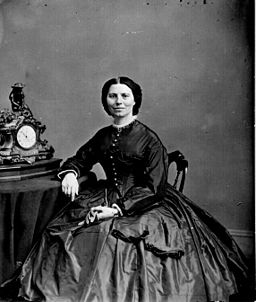
Clara Barton, 1865 by Matthew Brady

Clara Barton, 1865 by Matthew Brady

In the spring of 1861, the Massachusetts Sixth Regiment arrived in Washington, D.C. The troops were recruited to fight in the Civil War after the bombing of Fort Sumter. Clara Barton, who worked in Washington, D.C., watched the troops arrive. She knew some of men because she grew up in Massachusetts and also taught school there. Worried about “her boys,” she arrived at the Capital building where the troops were staying.

Collecting Supplies

She discovered that many of the soldiers lacked basic supplies like blankets and adequate food. She bought some items with her own money and appealed to others to donate. To a group of ladies in Worchester, Massachusetts Clara wrote, “It is said upon proper authority, that ‘our army is supplied.’ How this can be I fail to see.” Soon donations poured in, and Clara stored them in her apartment.

She collected and distributed supplies for one year, but felt that she was not doing enough to help the soldiers. After hearing stories of the soldiers’ suffering on the battlefields, she longed to join them but wondered if such work would be proper for a lady. Clara’s father encouraged her to follow her conscience. When he died, she petitioned leaders in the government and the army to bring food and medical supplies to the field hospitals and battle sites.

Going to the Battlefront

The first of her many trips to the Civil War battlefields occurred after the battle of Cedar Mountain in northern Virginia. Clara brought a wagon filled with supplies. Though she was unprepared for the number of wounded, she pinned up her skirt and moved among the men, distributing food as she went. The surgeon on duty was so grateful for the help that he wrote to his wife, “at a time when we were entirely out of dressing of every kind, she supplied us with everything, and while the shells were bursting in every direction…she staid [sic] dealing out shirts…and preparing soup.”

Clara put herself in danger many times during the war. For example, she did not stay with the regular medical units at the rear of the column at Antietam. Instead, she ordered the drivers of her supply wagons to pull ahead so she could be on hand when the battle started. While the battle raged, she and her helpers nursed and brought food to the soldiers. She seemed unconcerned about the danger and said, “I could run the risk; it made no difference to anyone if I were shot or taken prisoner.” Clara narrowly escaped death at Antietam when an enemy bullet hit a wounded soldier who lay in her arms.

Women’s Work

By the end of the war, Clara had served troops on nine different battlefields. Her courage and resourcefulness won her the admiration of doctors and generals who thought women would only create chaos during battle. General Benjamin Butler stated that Clara had “executive ability and kindheartedness, with an honest love of the work of reformation and care of her living fellow creatures.”

Clara was human—she enjoyed the praise she received for her work and rarely cooperated with other women’s groups during the war because she didn’t want to share credit. Yet most of Clara’s praise was earned. She worked without pay, bought many of her own supplies, and lived (and sometimes nearly died) alongside the Civil War soldiers.


The Childhood of Civil War General Robert E. Lee

Most history books show pictures of Robert E. Lee as an aging man with white hair and a beard. It’s almost impossible to imagine that this man was once a child. Like everyone else, the famous American Civil War general did have a boyhood, though it was not always happy.

The Lee Family Heritage

The potential for Robert E. Lee to be a great man started before his birth. Robert’s father, Henry Lee, served in the cavalry during the American Revolution. Henry impressed his general so much that he said Henry had “come out of his mother’s womb a soldier.” After the war, Henry served in the Continental Congress and encouraged his home state of Virginia to ratify the Constitution. By the nineteenth century, however, things started to go wrong for Henry Lee. He made bad investments and ended up in a debtor’s prison for a year.

His wife Ann Carter Lee gave birth to her son Robert in 1807, shortly before her husband’s imprisonment. She already had several children, and admitted to a friend that she did not want another child. Later on, however, when her husband left the family for the West Indies and never returned, Robert became her favorite.

Robert E. Lee Grows Up

Robert comforted his mother in her husband’s absence. He did household chores and served as a nurse to his ill sister and his mother. Though obedient to his mother, like most boys his age Robert enjoyed swimming and playing sports with his cousins. He especially loved tricking foxhunters by following hounds on foot. He became so good at taking shortcuts to find the foxes that when the adults arrived, Robert was already there. Even at a young age, Robert understood how to use geography and the element of surprise to his advantage—skills that would one day make him a great general.

Though Robert didn’t have a father, he did create a father image for himself. When the family moved to Alexandria, Virginia, http://www.alexandriava.gov/historic/default.aspx Robert and his siblings often visited President George Washington’s adopted son, George Washington Parke Custis. Custis told the children stories about Washington and showed them Washington’s pistols and uniforms. Though Washington had died many years earlier, the people of Alexandria cherished their connection to the former hero. Washington’s career may have partly inspired Robert to pursue a military career, but in reality there was little money available for him to go to college. Luckily, he had family connections that helped him get one of the 250 spots available for the West Point cadets.

Robert At West Point

The U.S. Military Academy at West Point had many rules, and Robert was one of the few cadets who followed them. Others, like Jefferson Davis, future president of the Confederacy, partied and drank on a regular basis. Robert was a serious student who graduated second in his class. He was not a snob, however, and made close friends at West Point. His friend Joseph E. Johnson remembered that Robert “was the only one of all the men I have known that could laugh at the faults and follies of his friends in such a manner as to make them ashamed without touching their affection for him, and to confirm their respect.” His military training and the ability to positively influence others would come in handy when the U.S. Civil War broke out.