Surprising Facts about U.S. President John Quincy Adams

Though he was the first son of a former president to be elected, John Quincy Adams’ presidency was undermined before he even got into office.

The 1824 election was crowded with four Republican candidates: Andrew Jackson, Adams, Henry Clay, and William Crawford. Jackson and Adams received the most votes but neither won outright, so the election results were decided in the House of Representatives where Clay was Speaker of the House. Clay threw his support behind Adams. Afterwards, Adams named Clay as his secretary of state. Jackson supporters claimed without proof that Adams had bribed Clay and did their best to discredit Adams.

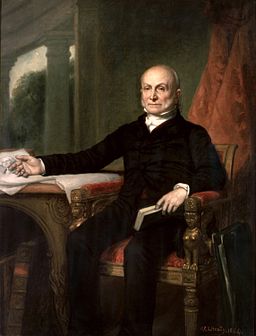
John Quincy Adams Official White House Portrait

John Quincy Adams Official White House Portrait

Adams had also inherited his father John Adams’ stubborn refusal to negotiate. His first annual message to Congress contained some good ideas, such as promotion of internal improvements and the creation of a national university. His insistence on broad federal powers and his assertion that government officials did not need to consider the opinions of their constituents made him very unpopular, however. As a result, Congress ignored President Adams’ domestic and foreign policies.

After being voted out of office and replaced by Andrew Jackson, Adams did not retire. Instead, he served as a member of the House of Representatives for 17 years. He was the only president to serve in the House after being president. His family objected to him serving in a lower office, but his election pleased him.

Nicknamed “Old Man Eloquent” for his speeches against slavery, Adams received more respect in the House than as president. He also accomplished more. For example, he helped repeal the gag rule that prevented the House from debating any criticisms of slavery.

Two Gentlemen from Virginia: Surprising Facts about US Presidents Thomas Jefferson and James Madison

Thomas Jefferson

The third President of the United States had a personality that was similar to George Washington’s in many ways. Like Washington, Jefferson was fond of dancing at parties and tended to be shy. Instead of addressing Congress in person, Jefferson sent his messages in writing. This tactic showed off his writing skills and helped him avoid his fear of public speaking. Known as an intellectual for his scientific and architectural pursuits, he thought he was also a good violin player, though some people who heard him play thought otherwise!

Official Presidential Portrait of Thomas Jefferson, 1800

Official Presidential Portrait of Thomas Jefferson, 1800

Official dinners were conducted in a manner different from the presidents who preceded him. He insisted on dressing simply to the point that one guest thought he was a servant. The dinners were served on a circular table so that no guest would feel superior or inferior to another. Jefferson did not eliminate all luxury in the executive mansion, however. Fancy French food was served regularly during his presidency.

As many people know, he sent Meriwether Lewis and William Clark to explore “Louisiana country” west of the Mississippi River. Jefferson and Lewis had been neighbors in Virginia, so Jefferson already knew how seriously Lewis would take the job. With Lewis and Clark’s help Jefferson purchased the Louisiana territory. While Jefferson added land to the United States, he also scaled back on some government departments. In a move that would delight many people today, he temporarily got rid of the Internal Revenue Service.

James Madison

Like his close friend Jefferson, James Madison also tended to be shy in public. Madison had the additional disadvantage of being the shortest president in history (he was 5’4″). He was also one of the skinniest, which led some people to believe he was always at death’s door.

His personal qualities may not have made him noticeable to others, but his wife Dolley made up for Madison’s awkwardness. The outgoing Dolley was Thomas Jefferson’s hostess while the widower was president. This gave her opportunities to mingle with members of Congress who would decide whether or not to elect Madison when he ran for president. When Madison was elected, he and Dolley held the first inaugural ball at a hotel on Capital Hill.

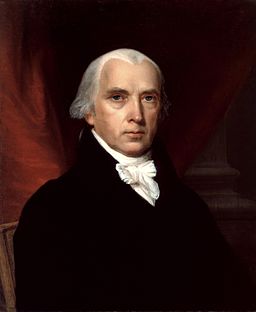
Portrait of James Madison, 1815

Portrait of James Madison, 1815

In many ways Madison served as Jefferson’s junior partner. He kept Jefferson informed of political matters in the states while Jefferson served as minster to France by writing coded letters to his mentor. Madison told Jefferson, “I shall always receive your commands with pleasure.” Yet Madison had his own opinions. While Jefferson was away, Madison helped draft the U.S. Constitution. His belief in a strong central government ran in opposition to Jefferson’s preference for individual rights. Madison did, however, have a flexible personality, which allowed him to see both sides of an issue. Just as he helped write the Constitution, Madison helped create the Bill of Rights that supported Jefferson’s individualistic views.

US Presidents in the News: President Warren G. Harding

I was planning to do my series of blog posts on the presidents in chronological order, but as President Harding’s personal affairs have been making headlines lately I decided to move him up.

Although his presidency was marred by scandal after his death, Warren Harding was a popular president in his day. Even as a young boy Harding avoided conflict in order to please his peers. That habit caught up with him when he became president.

Warren G. Harding, circa 1920

Warren G. Harding, circa 1920

Before he got into politics Harding was a successful businessman who bought a bankrupt newspaper and made it profitable. His wife Florence served as his business partner. He called her “The Duchess” and feared rather than loved her. Their complex relationship pushed him into politics. His new profession allowed him to be away for long periods; it also enabled him to have affairs with other women. Perhaps the photographs don’t do him justice because women seemed to think he was very attractive. He did possess a magnetic personality and a great speaking voice.

During the Republican national convention in 1920, the party could not decide on a candidate. Party leaders looked for a compromise, so they asked Harding if there was any reason they shouldn’t nominate him. Though he didn’t actually want to be president, Harding told them there was nothing in his past that would prevent him from running. In the first presidential election in which women could vote, Harding won.

Harding promised voters that his presidency would mark a return to “normalcy,” or to the days before the war. Fortunately the country didn’t face any major crisis during his presidency. Unlike President Wilson who always thought his opinion was the right one, Harding was indecisive. After listening to both sides of an issue he often thought that each side was just as right as the other. Even Harding admitted that he was in over his head as president. Later historians would agree with him when he remarked, “I never should have been here.” Still, Harding remained a popular president until he died of food poisoning during his third year in office.

After his death rumors about his private life and corruption in his cabinet came out. Harding had always been a womanizer, and one woman claimed he had fathered an illegitimate son. Recent DNA evidence revealed he had an illegitimate daughter named Elizabeth Ann with his mistress Nan Britton.

His desire to be popular had caused him to cover up rather than publicize the scandals that plagued his administration. An illegal oil-rigging scheme led to the eventual arrest of his former secretary of the interior. It was the first time a cabinet member had been convicted of a crime. Ironically, the president who wanted to be loved by everyone became one of the country’s least respected presidents.

John Adams: The Independent President

John Adams, like George Washington, did not enjoy his inauguration either, though for somewhat different reasons. His wife and political confidant, Abigail, was at home in Quincy, Massachusetts caring for John’s dying mother. In addition much of the attention that day was focused on Washington as people wept over the first president’s departure. Adams was also on the outs with his long time friend and now political enemy Thomas Jefferson.

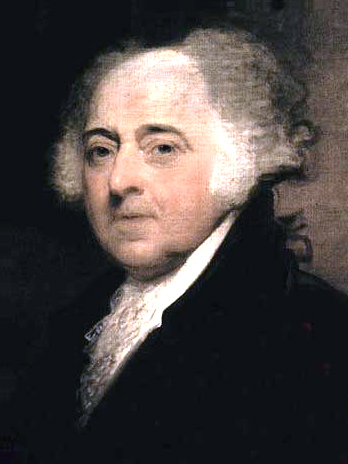
John Adams, 1823 by Gilbert Stuart

John Adams, 1823 by Gilbert Stuart

Adams had reason to feel lonely on his inauguration day, but most of his public career characterized him as a “loner.” While his daughter expressed concern over his narrow election victory in a letter (he won 71 votes to Jefferson’s 68), he wrote back that he didn’t believe in “extravagant popularity.” Adams never quite trusted public opinion and felt that the more unpopular an idea was, the more likely it was to be right. Before the presidency he never held an administrative position and tended to take on causes that were unpopular with the public, such as defending British soldiers after the Boston Massacre.

Any politician who is unwilling to negotiate with others is unlikely to be successful for long, and Adams lost his re-election bid in 1800 to Thomas Jefferson. At the time, however, Adams was more concerned about family matters than election results. His son Charles, an alcoholic, had died. Since he was no longer president, John and Abigail would have more time to care for Charles’ widow and their grandchildren. Adams did live long enough, however, to see his son John Quincy Adams elected as President of the United States.

Surprising Facts about President George Washington

Though respected as a great general in the Revolutionary War, Washington was very self-conscious about his lack of education. Unlike the other colonists with whom he served in the Continental Congress, Washington never attended college. In fact, Washington had only an elementary school education. He did, however, attend dancing school at age fifteen. His dancing skills certainly came in handy when he became the first President of the United States and had many parties to attend.

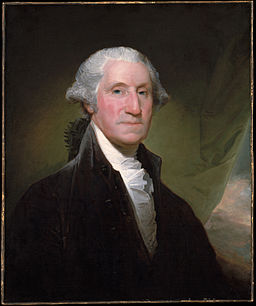
George Washington, 1795 by Gilbert Stuart

George Washington, 1795
by Gilbert Stuart

Dancing was one of the few parts of formal gatherings that he enjoyed. He hated small talk and did not have a strong public speaking voice. He also didn’t like people to stand too close to him, partly because he felt that his false teeth made his face look swollen. Washington always took great pains to control his faults, particularly his temper. His reputation was so important to him that even as a young man he copied out rules of etiquette such as “sit not when others stand; speak not when you should hold your peace.”

Although some of his successors relished the challenges of the office, Washington was a reluctant president. Despite his personal popularity and the large number of people who turned out to greet him on his journey from Virginia to New York, the idea of being president made Washington cringe. Before he was inaugurated, Washington said he felt like “a culprit who is going to his place of execution.”

As president, Washington invented the presidential cabinet, filling it with men he felt had the best qualifications rather than picking personal friends or allies. He called his cabinet members, which included Thomas Jefferson and Alexander Hamilton, his “first characters.” Though he was the only president who never lived in the White House, Washington chose the site and the architect for the house. Before he died, Washington toured the nearly completed mansion.

Surprising Facts about US Presidents Theodore Roosevelt and Franklin D Roosevelt

Theodore Roosevelt

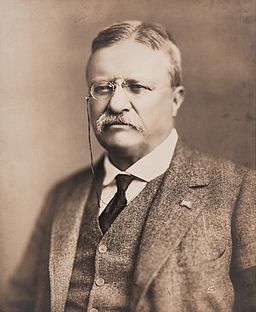
Theodore Roosevelt, 1918

Theodore Roosevelt, 1918

As a young boy, Theodore Roosevelt often struggled to breathe at night because of his asthma. Although modern doctors would be appalled, Roosevelt’s doctors suggested that the boy smoke cigars to improve his symptoms.

The family thought Roosevelt’s brother, Elliot, later father of Eleanor Roosevelt, was most likely to succeed. Elliot struggled with alcoholism, however. Theodore soon outpaced his brother both physically and mentally. He was a voracious reader and would read almost anywhere about almost any subject. Even as president he snuck a few minutes between appointments to read nature books.

While in office he expanded the authority of the president. Roosevelt believed that the president could do whatever the law didn’t specifically prohibit him from doing.

Roosevelt engaged in a number of presidential firsts. He was the first president to understand and use the press to gain public support for his programs. In fact, Roosevelt enjoyed talking with the press so much that he spoke to a reporter during his morning shave. Roosevelt was also the first president to invite an African American (Booker T. Washington), to dinner at the White House.

Although he enjoyed being president, Roosevelt was disappointed to preside over the country in a time of peace. He believed that he could not be a great president without steering the nation through a great crisis.

Franklin Roosevelt

Froosevelt

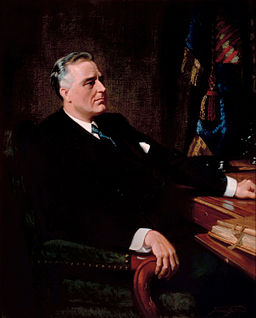
FDR’s Official Presidential Portrait

Though he was a Democrat and his distant cousin Theodore a Republican, Franklin always admired Theodore. Theodore gave his cousin Franklin his blessing on more than one occasion. He supported Franklin’s marriage to his niece, Eleanor. He also supported Franklin’s desire to become a politician. After Theodore’s death, animosity grew between the two branches of the Roosevelt family. Theodore’s sons saw themselves as the natural heirs to their father’s success, but none of them came close to Franklin’s political achievements.

After a series of political appointments, FDR was diagnosed with polio. In 2003, scientists called that diagnosis into question. They suggested that FDR might not have had polio, but Guillain-Barre syndrome, an aggressive form of neuropathy. Regardless of the medical cause, FDR’s paralysis made him terrified that he might become trapped in a fire. His home at Springwood near Hyde Park, NY has an elevator that FDR could operate by pulling ropes in case the electricity failed.

Like his cousin Theodore, FDR had a good relationship with the press as president. As a result, he was rarely photographed in his wheelchair. While trying to get the nation out of the Great Depression, he created a variety of government programs that became well-known. There was almost nothing FDR would not try in order to stimulate the economy. For example, he tried to move the Thanksgiving holiday backwards so that consumers would have more shopping days before Christmas.

How Thanksgiving Became a National Holiday

Although the 1621 Pilgrim celebration at Plymouth Colony in Massachusetts is usually regarded as the first Thanksgiving, other states disagree. Maine claims to have the held the earliest Thanksgiving fourteen years before the Plymouth holiday. The celebration had much in common with Plymouth’s, since English settlers shared a large meal with local Native Americans near the Kennebec River. Virginia held a religious service in 1619 after colonists landed safely at a place called Berkeley Hundred, located up the river from Jamestown. Neither the Maine nor the Virginia settlements survived, which is likely why the Plymouth Colony gets credit for the first Thanksgiving.

The colonists at Plymouth didn’t plan on making Thanksgiving an annual holiday, however. Instead, they held days of thanksgiving whenever they felt especially grateful to God. For example, in 1623, Plymouth’s crops withered. When rain fell, the colonists held a day of thanksgiving prayer. Basically, in bad times the Pilgrims fasted, and in good times they gave thanks.

Even in the eighteenth century, governors of various states proclaimed days of Thanksgiving irregularly. Some skipped the custom altogether. During the Revolutionary War, leaders in Congress sometimes proclaimed a day of thanksgiving following a military victory. As president, George Washington named November 26, 1789 as a day to give thanks for the new U.S. Constitution. For the most part, however, states chose when or if they wanted to hold a thanksgiving celebration.

Sarah Hale portrait

Sarah Hale Portrait by James Reid Lambdin

By the nineteenth century, Sarah Hale led a campaign for an annual Thanksgiving Day. Hale was the editor of Godey’s Lady’s Book, and she used her public position to write editorials and send letters to government officials. Gradually, governors of various states proclaimed annual days of thanksgiving. Even President Abraham Lincoln declared a day of thanksgiving after the Battle of Gettysburg.

Yet Sarah Hale still remained dissatisfied. She wanted Thanksgiving to be a national holiday, not one celebrated for military victories by the government or selected by individual states. She found a sympathetic listener in President Lincoln. He proclaimed a nationwide Thanksgiving Day for the last Thursday of November 1863. Lincoln’s proclamation stated, “I do, therefore, invite my fellow citizens in every part of the United States…to set apart and observe the last Thursday in November next as a day of Thanksgiving and praise to our beneficent Father who dwelleth in the heavens.” The new holiday offered hope for the future of a nation torn apart by civil war. After the war, the former Confederate states joined in the national celebration.

Only one president tried to change the date of Thanksgiving. In an effort to help the struggling economy, President Franklin Roosevelt moved Thanksgiving to the third Thursday in November of 1939 so consumers had more shopping days before Christmas. The public disagreed so strongly with the change that Congress adopted a resolution firmly establishing Thanksgiving on the fourth Thursday of November.

How was the First Thanksgiving Different from Today’s Celebrations?

If you live in the U.S., you are probably looking forward to Thanksgiving with your family. Maybe Grandma or Mom will serve turkey, cranberries, and pumpkin pie and you’ll watch football on TV. Although the first Thanksgiving included food, sports, and a large number of people, it was also different from present day celebrations.

While Americans today see Thanksgiving as a time to reconnect with family members, the Pilgrims had a very basic reason for giving thanks in 1621—the fact that they managed to survive in a strange land. When the Pilgrims arrived at Plymouth, they had little idea what crops would thrive there. They planted acres of wheat and peas, neither of which survived.

The Pilgrims’ survival depended on the aid of a Native American named Squanto. He taught them how to plant a new crop—corn–so that by harvest they had twenty acres of it. The colony’s governor William Bradford wrote that the Pilgrims “began to plant their own corn, in which service Squanto stood them in great stead, showing them both the manner how to set it, and after how to dress and tend it.” Squanto also told them how to fertilize their crop: “Also he told them, except they got fish and set with it in these old grounds it would come to nothing.” The first harvest wasn’t huge, but the Pilgrims could double each person’s food ration by adding corn.

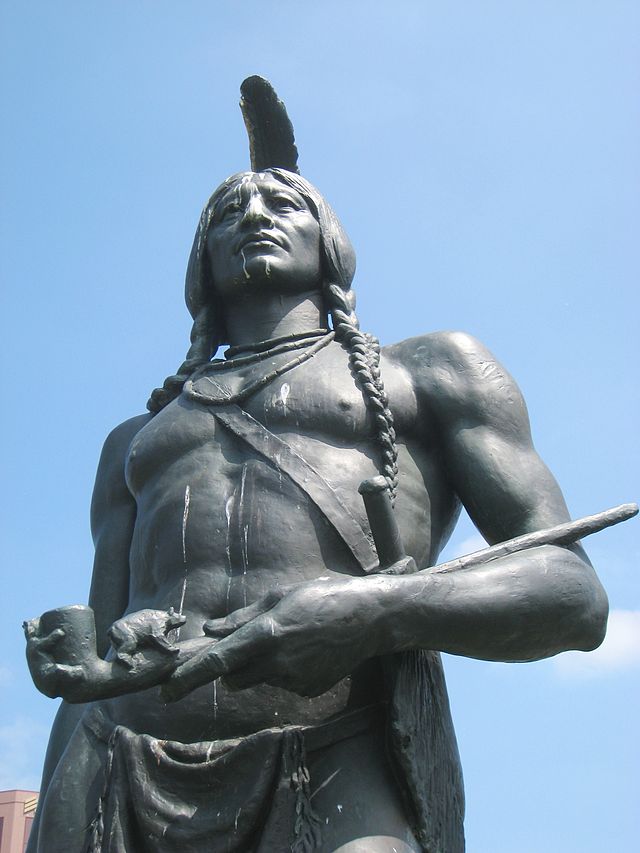
Massasoit,_KC_MO_-_detail

Chief Massasoit Sculpture Kansas City, MO

As a result of the successful harvest, the Pilgrims decided to celebrate. The colonists invited Squanto and members of neighboring Native American tribes, including the Wampanoag chief Massasoit. One colonist, Edward Winslow, described “many Indians coming amongst us, and amongst the rest their greatest king, Massasoit with some 90 men, whom for three days we entertained and feasted.” While Americans today celebrate for one day, the Pilgrims feasted for three days! The menu was large and included fowl (duck and goose) shot by the colonists and deer brought by the Native Americans. Seafood, corn bread, and greens were also served. For dessert, the participants ate wild fruit. Although turkey was available to the colonists, there is no evidence that it was eaten on the first Thanksgiving. There was no pumpkin pie, either, though pumpkins were available in their raw form.

Sports and games also were a part of the first Thanksgiving. The Pilgrims did not play football, but they engaged in other games with the Native Americans. They played a game similar to croquet and competed in running and jumping games. The English showed off their skill with guns, and the Native Americans showed their talent for shooting with bows and arrows.

When you see your relatives on Thanksgiving, see if they can guess what food was eaten and what sports played during the first Thanksgiving.