Mary Todd Lincoln: From Slaveholder’s Daughter to Antislavery Advocate

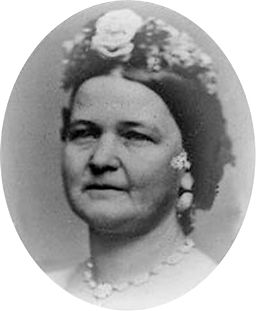
Mary Todd Lincoln

Mary Todd Lincoln

As one of her biographers wrote, “history has not been kind to Mary Lincoln.” In fact, she experienced unpopularity during her years in the White House, partly because of her spending habits, but also because she had relatives fighting for the Confederacy. Though Mary had faults, she was loyal to her husband and the Union, and she became increasingly opposed to slavery.

Mary learned about slavery growing up in Kentucky. Her father’s involvement in state politics meant that his children heard political issues debated at home. One of these issues was slavery. Robert Todd opposed the trading of slaves among whites, which tore them from their relatives. Naively, he hoped that the practice of holding slaves would eventually die out.

His convictions did not, however, keep him from owning a few household slaves. One of these slaves, Aunt Sally, was a mother figure for Mary when her own mother died. When Mary heard a knocking outside one night, Sally explained that she had made a mark on the Todd’s fence to signal to runway slaves that they could stop there for food. Although she knew helping runaway slaves was illegal, Mary was thrilled that Sally shared a secret with her and never told anyone. Her father’s politics and her relationship with Aunt Sally gave Mary an unfavorable view of slavery that became stronger later in her life.

Shortly after she became First Lady and moved to Washington, Mary struck up a friendship with her African American dressmaker and former slave Elizabeth Keckly. When former slaves came flocking to the capital during the Civil War without food or a place to sleep, Elizabeth made it her mission to help them. Mary wrote to her husband, President Abraham Lincoln asking him to support her friend’s charity. She also made contributions herself. In a letter to her husband, she wrote, “She [Elizabeth] says the immense number of contrabands in Washington are suffering intensely, many without bed covering and having to use any bits of carpet to cover themselves—Many dying of want…I have given her the privilege of investing $200 here in bed covering…this sum, I am sure, you will not object to being used in this way—The cause of humanity requires it.”

Unaware of Mary’s growing antislavery feelings, radical abolitionist Jane Swisshelm expected Mary Lincoln to be a Confederate sympathizer. When they met at the White House in 1863, however, Swisshelm believed that Mary was “more radically opposed to slavery” than the President. By listening to her African American friend’s descriptions of suffering, Mary took up the cause of helping former slaves. Through this cause, Mary gained a perspective on slavery that most whites, including the President, did not have.

Fort Sumter and the Start of the Civil War

Imagine that you have just become President of the United States. You gave your first speech to the nation and attended the inaugural ball. After the ball, you are handed a note that says that one of the remaining federal forts in the South is in danger. Abraham Lincoln had to deal with a crisis almost from the moment he became president.

The letter Lincoln read was from Major Robert Anderson, commander of the Federal troops at Fort Sumter in South Carolina. Members of the newly formed Confederacy had surrounded the fort with ships and cannon. Anderson implored Lincoln to send more supplies to the fort.

Members of Lincoln’s cabinet all gave different opinions as to what the President should do. Some said the fort should be evacuated to avoid a civil war with the South, while others said he should send extra troops to protect the fort. Lincoln decided to do neither—he would send a boat with supplies to the fort but troops and warships were instructed to stand by and respond only if the Confederates fired the first shot. He sent a messenger to inform the governor of South Carolina “to expect an attempt will be made to supply Fort Sumpter [sic] with provisions only; and that, if such attempt be not resisted, no effort to throw in men, arms, ammunition will be made…[except] in case of an attack on the Fort.”

The South Carolina Confederates, however, saw the fort as an example of a foreign nation (the Union) trying to stick around in the newly independent Confederate States. They also believed that war would bring the upper Southern States, like Virginia, to their aid. On April 12, 1861, Confederates opened fire on the fort. The supply ship had not yet arrived and other nearby boats were prevented from aiding Anderson’s men by the high seas. As a result, Federal forces were outmanned and had limited gun power. After over a day of bombardment that destroyed parts of the fort, Federal forces surrendered it to the Confederates. Ironically, no one was killed in the first confrontation of the Civil War that later took so many lives.

Lincoln’s Gettysburg Address

240px-Gettysburg_Address_at_Lincoln_Memorial At the Battle of Gettysburg, the Confederate dead, wounded, and missing numbered 28,000 with 23,000 for the Union. Following the battle that created more casualties than any other in American history, plans began for the dedication of a national cemetery at Gettysburg.

Despite the later fame of his Gettysburg Address, President Lincoln was not the first person asked to speak at the dedication. In addition to former U.S. Senator Edward Everett, several famous poets were invited, including Henry Wadsworth Longfellow. The poets declined, so an invitation was sent to the President of the United States. Still, Lincoln only needed to say “a few appropriate remarks” after Everett’s speech was over.

Lincoln didn’t mind keeping his speech short, but he took the task of speaking about the war in person seriously. Despite popular myth, the address was not written hastily on a train while Lincoln traveled to Gettysburg. Though he likely was still editing the speech in his mind, Lincoln’s secretary insisted that the train ride was too bumpy for Lincoln to write on it. Instead, Lincoln revised his well-thought out remarks at the home of his host in town.

On the morning of November 19, 1863, Everett and Lincoln were seated in front of a large crowd that had gathered for the dedication. Everett’s speech lasted two hours, so a rather tired audience prepared itself for a long oration from the President. Instead, they heard a two-minute speech that would be remembered nearly 150 years later.

In the address, Lincoln first asked the audience to recall the founding ideals of the nation, that all men are created equal. He viewed The Civil War as a test of those ideals: “Now we are engaged in a great civil war, testing whether…any nation so conceived and so dedicated, can long endure.” Lincoln then gave credit to what the soldiers had done for their country in the recent past, saying, “We have come to dedicate a portion of that field, as a final resting place for those who here gave their lives that that nation might live.”

The end of the address looked to the future and pointed out the responsibility of those who were still living: “we here highly resolve that these dead shall not have died in vain—that this nation, under God, shall have a new birth of freedom.” The new nation, Lincoln hoped, would result in a reunion of the states and the end of slavery.

Though the Gettysburg Address was not immediately popular, some discerning listeners recognized its significance. The next day Edward Everett wrote to Lincoln, “I should be glad…that I came as near to the central idea of the occasion, in two hours, as you did in two minutes.”

For the full text of the Gettysburg Address see http://avalon.law.yale.edu/19th_century/gettyb.asp

Image: Gettysburg Address at Lincoln Memorial

Abraham Lincoln’s Education

Abraham Lincoln, 1858

Abraham Lincoln, 1858

“What he has in the way of education, he has picked up.” Abraham Lincoln wrote this statement in a 3,000 word autobiography during his presidential campaign. At the age of ten, he attended school in Indiana, but school terms were far shorter than they are today. Abraham might attend school for one to three months in the winter and then he would be expected to help out on the family farm.

Trying to learn anything in just a few months each year was hard enough, but to make things worse country teachers were not always well educated. Lincoln remembered, “no qualification was ever required of a teacher, beyond readin, writin, and cipherin.” The educational system did not help most children become interested in learning. Abraham, however, was not like most children.

Though he did develop some talent for farm chores like chopping wood, Abraham was most interested in reading. He was not ashamed to beg others to let him take one of their books home with him. The chores he had meant that young Abe often stayed up late or got up early to read. Some of the books he read, like Robinson Crusoe and Aesop’s Fables, are still read by schoolchildren today. His stepmother, who supported his reading efforts, remembered that Abe had a scrapbook in which he would write down quotes that he liked and wanted to remember.

As he entered his teenage years, Abe also developed a talent for public speaking. When he attended church with his family, he would pay close attention to the sermon. After church, he would recite what the preacher said to a small audience of other children. Although no one could have predicted it at the time, Abraham’s habits of reading, writing and reciting would prove invaluable when he became president.