C.S. Lewis’s parents picked a relatively normal name for their first child Warren, known as Warnie, in 1895. On November 29, 1898, however, they gave their second and last child the name Clive Staples Lewis. Unsurprisingly, he insisted on being called Jack by his fourth birthday.
Lewis’s first books included The Tale of Squirrel Nutkin as well as other Beatrix Potter stories. He was fascinated by the human characteristics of Potter’s animals. C.S. and Warnie also spent time working on their own fantasy worlds. C.S. called his Animal-land and populated it with animals dressed as humans. There was no sense of another world within Animal-land like there was in his Narnia books, however. “My invented world was full (for me) of interest, bustle, humour and character. But there was no poetry, even no romance in it. It was almost astonishingly prosaic,” Lewis later wrote.
In 1905, the family moved to Little Lea, a large house outside of Belfast. Though the house had many design flaws, it was perfect for two young boys. An attic room at the end of a long corridor served as a hideaway for best friends C.S. and Warnie. Both of their parents were fond of books and Little Lea was full of them. Unfortunately, Warnie had little time to enjoy his new home. He was sent away to boarding school in England in spring of 1905.
Although he missed Warnie terribly, C.S. enjoyed reading books and writing stories while at Little Lea. He still preferred the time he spent with his brother on school holidays. Until 1908, C.S. had a childhood that protected him from reality.
In 1908, his mother Flora was diagnosed with cancer and required nurses night and day. C.S. felt ill one night, “crying both with headache and toothache and distressed because my mother did not come to me. That was because she was ill too…And then my father, in tears, came into my room and began to try to convey to my terrified mind things it had never conceived before,” Lewis wrote. Flora died in August 1908 during Warnie’s summer break.
Distraught over his wife’s death, the boys’ father began drinking excessively and yelled at his sons over minor things. Only a couple of weeks after his mother’s death, C.S. left for boarding school with Warnie. He would never forgive his father for sending him away.
Lewis hated Wynard School so much that he described it in his autobiography as a “concentration camp.” The mean headmaster Reverend Robert Capron beat his pupils indiscriminately with a cane. C.S. pleaded with his father to come home but the pleas went unheeded. Wynard closed after a lawsuit by another boy’s parents and C.S. was sent back to Ireland.
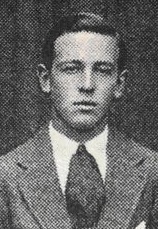
He went back to school after an illness to Cherbourg House, a small prep school in Malvern close to Warnie who was at Malvern College. Lewis’s new school had competent teachers and a stronger curriculum.
C.S. got a scholarship to Malvern College, which he also hated because the boys aged 13-14 acted as servants to the older boys aged 17-18. Though he didn’t fit in with the other boys, C.S. liked his Latin master Harry Wakelyn Smith who read poetry aloud to his students. Malvern also had a good library where Lewis read Yeats and discovered Celtic mythology. To C.S.’s relief, he was withdrawn from the school to continue his education under father’s great master, William Kirkpatrick.
In 1914 Warnie went to war in France and Jack went to Surrey to meet Kirkpatrick, who tutored him to pass his Oxford exams. During his time with Kirkpatrick, C.S. discovered Greek literature and history as well as Dante. He read Phantastes by fantasy writer George MacDonald and loved it. In a letter that Lewis discovered years later, Kirkpatrick wrote to his father that C.S. would be useless in any career except a scholar or a writer. As it turned out, Lewis became both.
Sources:
C.S. Lewis: A Life by Michael White
C.S. Lewis: A Biography by A.N. Wilson
 Heather on History