Dynamic First Lady Abigail Adams

Abigail Adams (1744-1818), born Abigail Smith, was an early advocate for women’s rights in America through her extensive correspondence with her husband John Adams. Throughout her husband’s political career Abigail took on some roles that were traditional for women at the time and some that were not. Abigail was the second woman to serve as first lady and the first to occupy the executive mansion in Washington, D.C. She was also the first woman to become the wife and mother of U.S. presidents, though she did not live long enough to see her son John Quincy Adams get elected.

Abigail Smith was born on November 22, 1744, in Weymouth, Massachusetts—a farming community 14 miles southeast of Boston. Her parents, William and Elizabeth Smith, nicknamed her Nabby. Though she was small and frail as a child, Abigail was also stubborn. Abigail and her sisters did not go to school because the local ones were only for boys. Their father, who was the village parson, encouraged them instead to read from his extensive library. Abigail loved reading Shakespeare, Pope and Locke. The combination of her father’s encouragement and her love of reading made Abigail one of the best-read women of her time. Abigail’s mother Elizabeth disapproved of both her daughter’s stubbornness and her fondness for reading. She sent Abigail on visits to her maternal grandmother Elizabeth Quincy, who encouraged rather than corrected her granddaughter’s opinions.

John Adams and Abigail Smith met at a party when Abigail was fifteen. John was unimpressed by Abigail and her older sister Mary. He wrote that the Smith girls were “not fond, not frank, not candid.” Over time, John got to know Abigail better. He was basically forced into her company because his friend Richard Cranch courted Mary. At 17, Abigail was very attractive. She was tall and thin, with a dark complexion and dark hair and eyes. John was also impressed with her desire to learn. He brought Abigail books which they discussed. After a few years of courting, Abigail and John married on October 25, 1764, at William Smith’s parsonage. They moved into a cottage next door to John’s childhood home at Braintree.

The marriage was a love match as well as an intellectual one. Abigail said their hearts were “cast in the same mould [sic].” Abigail’s intelligence meant that they could converse on almost any topic. John recognized that his wife was the superior letter writer. “If I could write as well as you, it would be so, but, upon my word, I cannot.” 
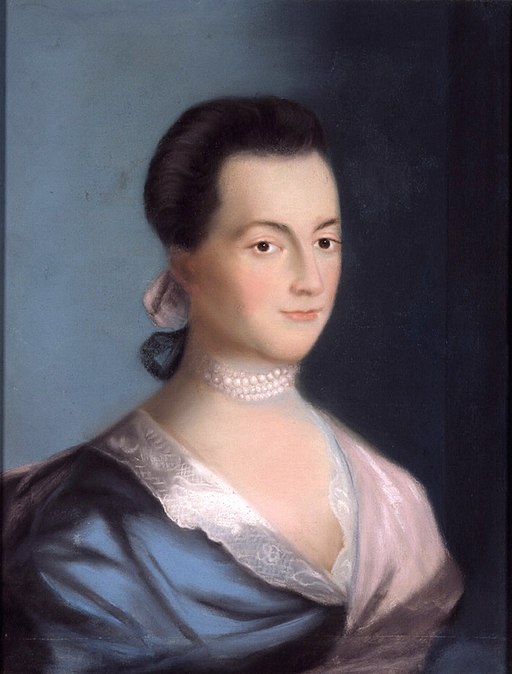
Abigail Adams, Portrait by Benjamin Blyth, 1766

At the beginning of their marriage, Abigail was busy with traditional wifely duties such as caring for her children. Daughter Abigail (Nabby) was born in 1765, followed by John Quincy in 1767, Susanna in 1768 who died after one year, Charles in 1770 and Thomas in 1772. Abigail was responsible for the physical and moral well-being of her children while John worried about making more money on the circuit as a lawyer.

In June 1774 the Massachusetts legislature elected John to the Continental Congress. Abigail and John would be farther away from each other than ever. After John left for Philadelphia, Abigail confided that “the great anxiety I feel for my Country, for you and for our family renders the day tedious, and the night unpleasant.”

While John was gone, Abigail had even more responsibilities. For example, she made sure hired men on the farm did their jobs and she made decisions about harvesting crops. Abigail took so well to her farming tasks that a family friend said she “was like to outshine all the farmers.” In addition, Abigail saw to the children’s education. Dissatisfied with the schools around Braintree, she got a tutor for John Quincy. Abigail was also in some danger from the British who were quartered in Boston. John depended on her observations during the battles of 1775 and sometimes showed her letters to fellow delegates.

In the middle of all her other responsibilities, Abigail wrote John letters about women’s rights. She wrote: “I desire you would Remember the Ladies and be more generous and favorable to them than your ancestors. Do not put such unlimited power in the hands of the Husbands. Remember all men would be tyrants if they could. If particular care and attention is not paid to the Ladies, we are determined to foment a Rebellion, and will not hold ourselves bound by any laws in which we have no voice, or Representation.” In the eighteenth century, men had legal power over their wives. Women could not legally own property and some were in physically abusive marriages.

Abigail also wanted better education for women, who still did not attend school. She wrote, “If we mean to have Heroes, Statesman and Philosophers, we should have learned women.” John agreed on the education of women; after all, he married one of the most intelligent women of the time. He was not prepared to go any further for fear that everyone regardless of age, gender, or property ownership would demand equal rights. Independence from Britain would have to be won first.  

Before John returned from Philadelphia, Abigail received a letter stating that he was elected commissioner to France. John took ten-year-old John Quincy with him, leaving the Adams farm even lonelier for Abigail. Both she and John had a great sense of public duty, but the lack of reliable letters from her husband depressed Abigail. She wrote of her “cruel destiny” and herself “siting in my solitary chamber, the representative of the lonely love.”  

Despite her loneliness Abigail took on some unladylike pursuits on the home front. She managed the family finances. She acquired land when able and even started her own importation business. At first John sent her goods from France like handkerchiefs and linens that she consigned to her uncle. Later Abigail wrote to the merchants abroad herself and told them what she wanted. She used the profits for the taxes needed to fund the war or bartered for local goods.

By 1784 both John and Abigail were fed up with their separation and Abigail made plans to join John in Paris with Nabby. As a diplomat’s wife first in Paris and then in London, Abigail had a more public role to play in John’s career. She was expected to accompany him on all ceremonial and social occasions. Living in Europe gave Abigail an education in entertaining on a budget, since American diplomats were not paid as much as their European counterparts. She also managed to visit the wives of 15-20 government officials or foreign ministers each week.

Abigail and John returned home to Braintree in 1788, the same year that John was elected the first vice president of the United States. Abigail’s training in Europe helped her ease into the role of the vice president’s wife. She hosted a weekly levee, an open house where residents came and paid their respects. With time she managed to invite every senator and congressman to dinner.

After eight years as George Washington’s vice president, John was elected president in 1797. Before the election, Abigail worried about her ability to be as popular as Washington’s quieter wife Martha. “I have been so used to a freedom of sentiment that I know not how to place so many guards about me, as will be indispensable, to look at every word before I utter it, and to impose a silence upon myself, when I long to talk.” John thought she would do an excellent job and once elected, urged her to leave Massachusetts and come to him in Philadelphia.

As she had when John was vice president, Abigail organized her social routine as first lady, a term that had not been coined yet. The family ate breakfast together at 8am, and Abigail received visitors from 12-2 or 3pm. Dinner was at 3pm except on Tuesdays and Thursdays when she hosted company. After dinner she visited others. She was home by 7pm to spend time with family before an early bedtime. Abigail’s company dinners meant inviting 30-40 guests at a time. She could invite all the senators in one dinner but had a series of dinners for House members.

Her main complaint about entertaining came from a tradition George Washington started. On July 4th, all Congress and state officials were invited to the president’s residence. Washington was wealthier than the Adams family and Abigail resented the amount of cake, wine and punch she had to serve. She reported that guests ate 200 pounds of cake!

In addition to her traditional social duties, Abigail offered John political advice and helped promote his agenda. For example, she sent letters supportive of John’s presidential policies to friendly newspaper editors. Often these letters came from her son John Quincy. Abigail also received requests from office seekers asking her to influence John, many of which she answered.

Though mostly an asset to John’s work, Abigail erred in her support of the 1788 Alien and Sedition Acts. These laws permitted the arrest of newspaper editors publishing statements against the government and allowed the deportation of foreigners accused of seditious activities. Eager to protect her husband against the pro-French republican opposition led by Thomas Jefferson, Abigail was much more in favor of the acts than John. In fact, she wanted them to be harsher. She wrote that “they have had a salutary effect, weak as they are.” John later acknowledged that signing the acts was a mistake, but they remain a dark part of his legacy.

John and Abigail were the first president and first lady to move into the president’s house in Washington, D.C. Abigail was not impressed with the house since it was large and drafty. She described it as “a castle of a house” built “for ages to come.” In the meantime, it was impractical to live in. Abigail kept 13 fires going all day and used the east room to hang her laundry.

When John lost his bid for reelection, Abigail felt it keenly. She thought the public was ungrateful for John’s years of public service. Yet she was almost as busy in retirement as she had been as first lady. She had a house full of in-laws and grandchildren as well as some more distant relatives. Any family member who needed a place to stay was always welcome in John and Abigail’s home.

In 1814, one of Abigail’s sisters asked if she would marry John if she could live her life over. She responded, “Yet after half a century, I can say my first choice would be the same if I again had my youth and opportunity to make it.” On October 28, 1818, Abigail passed away surrounded by family including her beloved John.

Sources:       

Carlin, Diana B., Anita B. McBride, and Nancy Kegan Smith. U.S. First Ladies: Making History and Leaving Legacies. Cognella, Inc., 2024.

Ellis, Joseph J. First Family: Abigail and John Adams. Alfred A. Knopf, 2010.

Holton, Woody. Abigail Adams. Free Press, 2009.

Withey, Lynne. Dearest Friend: A Life of Abigail Adams. The Free Press, 1981.

How Thanksgiving Became a National Holiday

Heather Voight's avatarHeather on History

Although the 1621 Pilgrim celebration at Plymouth Colony in Massachusetts is usually regarded as the first Thanksgiving, other states disagree. Maine claims to have the held the earliest Thanksgiving fourteen years before the Plymouth holiday. The celebration had much in common with Plymouth’s, since English settlers shared a large meal with local Native Americans near the Kennebec River. Virginia held a religious service in 1619 after colonists landed safely at a place called Berkeley Hundred, located up the river from Jamestown. Neither the Maine nor the Virginia settlements survived, which is likely why the Plymouth Colony gets credit for the first Thanksgiving.

The colonists at Plymouth didn’t plan on making Thanksgiving an annual holiday, however. Instead, they held days of thanksgiving whenever they felt especially grateful to God. For example, in 1623, Plymouth’s crops withered. When rain fell, the colonists held a day of thanksgiving prayer. Basically, in bad times the Pilgrims fasted, and in good times they gave thanks.

Even in the…

View original post 305 more words

Presidential Pets: George Washington’s Dogs

George Washington was both the founder of the United States and the founder of the American foxhound. He crossed seven larger hounds given to him by the Marquis de Lafayette with his smaller Virginia hounds to develop the new breed. Around 1785, Lafayette sent his hounds to America on a ship. They were placed in the care of a young John Quincy Adams, who appeared to have misplaced the dogs at one point. Washington got rather worked up over the incident, but fortunately the dogs were located.

Washington wrote that he wanted to create “a superior dog, one that had speed, scent and brains.” Washington’s fondness for foxhunting caused his search for a superior hound. In the winter he went foxhunting several times a week. He gave his hounds mischievous-sounding names like Drunkard, Mopsey, Taster, Tipsy, Tipler, and Lady Rover.

Washington and dogs

Lithograph of George Washington and General Lafayette at Mount Vernon, Library of Congress

In addition to foxhounds, Washington also wished to breed Irish wolfhounds to protect the sheep at his plantation Mount Vernon. Unfortunately, the wolfhound was so rare even in Ireland at the time that Washington had to give up the idea.

Washington enjoyed owning many other breeds of dogs throughout his life. In 1786 he bought a Dalmatian named Madame Moose. The next year he bought a male to breed with her. He recorded the arrival of the second dog: “A new coach dog [arrived] for the benefit of Madame Moose; her amorous fits should therefore be attended to.”

Fox hunting and breeding dogs were only two of Washington’s passions. Washington also enjoyed duck hunting. For this purpose, he took his poodle named Pilot with him. Other dogs included spaniels which were used to flush out birds and retrieve them when they were shot. Terriers hunted on their own for rats at Mount Vernon, a service Mrs. Washington undoubtedly appreciated.

Though he owned many dogs, Washington didn’t think that his slaves should have the same privilege. Eventually any dogs owned by his slaves were hanged.

Lincoln’s Former General: The Presidency of Ulysses S. Grant

As a young man Grant hated working in his father’s leather business. He didn’t especially want to go to West Point either but thought it a better alternative to manufacturing. The “S.” in his name was a typo made on his application to West Point. Grant kept the initial and was affectionately known as U.S. Grant during the Civil War.

Although West Point graduates were in demand, Grant had a tough time getting a position in the army due to his heavy drinking. His talents outweighed his faults, however. Grant was the first man since George Washington to earn the permanent rank of lieutenant general. That rank gave him the responsibility for the Union’s strategy.

Though he was a hero to Northerners at the end of the war, Grant still had to earn a living. With a family to support, he reluctantly went to work for the family leather business. In 1868 Republicans and Democrats both wanted the hero of the Civil War to run for president. He ran as a Republican. Though he was a great leader during the war, Grant had no political experience. It’s one thing to fight a war with a clear enemy–quite another to determine who one’s enemies are in the game of politics.

Ugrant

Official Presidential Portrait of President Grant

Grant’s greatest problem as president was his trusting nature. Though honest himself, he surrounded himself with others who were not. He also felt inferior to intellectuals and tended to follow Congress’ lead. As a result his presidency was marked by multiple scandals. For example, his secretary of war was accused of accepting bribes from merchants who traded at army posts with Native Americans.

After two terms in office the administration’s scandals prevented him from trying for a third term. His trusting nature failed him again when he became a victim of Wall Street fraud.

Knowing that Grant was broke, his friend Mark Twain suggested that he write his memoirs in order to make money. Grant had just started writing when he developed throat cancer. He was determined to finish his memoirs before he died, however, and they are still selling today. Unsurprisingly, they focus on the time period that brought Grant the most success: the Civil War.


Two Gentlemen from Virginia: Surprising Facts about US Presidents Thomas Jefferson and James Madison

Thomas Jefferson

The third President of the United States had a personality that was similar to George Washington’s in many ways. Like Washington, Jefferson was fond of dancing at parties and tended to be shy. Instead of addressing Congress in person, Jefferson sent his messages in writing. This tactic showed off his writing skills and helped him avoid his fear of public speaking. Known as an intellectual for his scientific and architectural pursuits, he thought he was also a good violin player, though some people who heard him play thought otherwise!

Official Presidential Portrait of Thomas Jefferson, 1800

Official Presidential Portrait of Thomas Jefferson, 1800

Official dinners were conducted in a manner different from the presidents who preceded him. He insisted on dressing simply to the point that one guest thought he was a servant. The dinners were served on a circular table so that no guest would feel superior or inferior to another. Jefferson did not eliminate all luxury in the executive mansion, however. Fancy French food was served regularly during his presidency.

As many people know, he sent Meriwether Lewis and William Clark to explore “Louisiana country” west of the Mississippi River. Jefferson and Lewis had been neighbors in Virginia, so Jefferson already knew how seriously Lewis would take the job. With Lewis and Clark’s help Jefferson purchased the Louisiana territory. While Jefferson added land to the United States, he also scaled back on some government departments. In a move that would delight many people today, he temporarily got rid of the Internal Revenue Service.

James Madison

Like his close friend Jefferson, James Madison also tended to be shy in public. Madison had the additional disadvantage of being the shortest president in history (he was 5’4″). He was also one of the skinniest, which led some people to believe he was always at death’s door.

His personal qualities may not have made him noticeable to others, but his wife Dolley made up for Madison’s awkwardness. The outgoing Dolley was Thomas Jefferson’s hostess while the widower was president. This gave her opportunities to mingle with members of Congress who would decide whether or not to elect Madison when he ran for president. When Madison was elected, he and Dolley held the first inaugural ball at a hotel on Capital Hill.

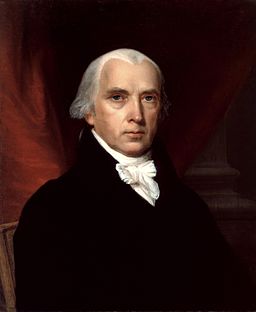
Portrait of James Madison, 1815

Portrait of James Madison, 1815

In many ways Madison served as Jefferson’s junior partner. He kept Jefferson informed of political matters in the states while Jefferson served as minster to France by writing coded letters to his mentor. Madison told Jefferson, “I shall always receive your commands with pleasure.” Yet Madison had his own opinions. While Jefferson was away, Madison helped draft the U.S. Constitution. His belief in a strong central government ran in opposition to Jefferson’s preference for individual rights. Madison did, however, have a flexible personality, which allowed him to see both sides of an issue. Just as he helped write the Constitution, Madison helped create the Bill of Rights that supported Jefferson’s individualistic views.

Surprising Facts about President George Washington

Though respected as a great general in the Revolutionary War, Washington was very self-conscious about his lack of education. Unlike the other colonists with whom he served in the Continental Congress, Washington never attended college. In fact, Washington had only an elementary school education. He did, however, attend dancing school at age fifteen. His dancing skills certainly came in handy when he became the first President of the United States and had many parties to attend.

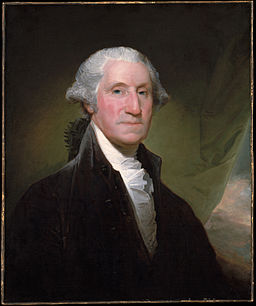
George Washington, 1795 by Gilbert Stuart

George Washington, 1795
by Gilbert Stuart

Dancing was one of the few parts of formal gatherings that he enjoyed. He hated small talk and did not have a strong public speaking voice. He also didn’t like people to stand too close to him, partly because he felt that his false teeth made his face look swollen. Washington always took great pains to control his faults, particularly his temper. His reputation was so important to him that even as a young man he copied out rules of etiquette such as “sit not when others stand; speak not when you should hold your peace.”

Although some of his successors relished the challenges of the office, Washington was a reluctant president. Despite his personal popularity and the large number of people who turned out to greet him on his journey from Virginia to New York, the idea of being president made Washington cringe. Before he was inaugurated, Washington said he felt like “a culprit who is going to his place of execution.”

As president, Washington invented the presidential cabinet, filling it with men he felt had the best qualifications rather than picking personal friends or allies. He called his cabinet members, which included Thomas Jefferson and Alexander Hamilton, his “first characters.” Though he was the only president who never lived in the White House, Washington chose the site and the architect for the house. Before he died, Washington toured the nearly completed mansion.

The Building of the Washington Monument

Washington Monument, Photo by David Bjorgen

Washington Monument, Photo by David Bjorgen

On December 6, 1884, the Washington Monument was finally completed. The word “finally” is appropriate since construction on the monument ended 85 years after George Washington’s death.

While Washington was still alive many people wanted to dedicate statues to him, but he declined. He thought the country should spend its money on other things. Shortly after Washington’s death, John Marshall proposed a memorial to the first president. The memorial was to be built in the style of the ancient Egyptian tombs with a pyramid serving as Washington’s burial place. However, Congress could not agree on the design.

Thirty-seven years later John Marshall, who was now Chief Justice of the Supreme Court, continued to fight for a memorial. In 1832 the Washington National Monument Society was formed. The society decided to hold a competition for the best design while collecting donations from citizens across the country.

Designs came in from around the world. The society required only that each design be “durable, simple, and grand.” Finally they chose a design by Robert Mills, a church architect from Charleston. Mills’ design included a temple with an Egyptian obelisk on top. Inside a colossal statue of Washington and a museum about Washington’s life were to be placed. Because the design was so expensive ($1 million in the 19th century), the society decided to start with the obelisk first.

The monument’s cornerstone was laid on July 4, 1848 with the same trowel that Washington used for the cornerstone of the capital. In a crowd of over 20,000 people that day were three future presidents, including a young congressman named Abraham Lincoln.

To raise money for the monument states were encouraged to donate commemorative stones to its interior. Even foreign countries donated stones to show their respect for the Revolutionary war hero and president. A controversy arose, however, when the Pope tried to donate a stone. Anti-Catholic groups stalled the construction.

During the Civil War the monument was again abandoned. Cattle grazed around it and soldiers practiced maneuvers in its shadow.

Congress decided to resume construction during the centennial of the Declaration of Independence in 1876. All the arguments about the design resurfaced. Congress was still short on money. This time, however, the US Army Corps of Engineers under Lieut. Col. Thomas Lincoln Casey was put in charge of the construction.

The country’s anniversary made both Congress and Casey eager to finish the monument. The design was scaled back. It was decided that the temple would not be constructed–only the obelisk. Despite these cost-cutting measures Casey still had several issues to deal with. For example, the scaffolding was rotted and there were flaws in the foundation of the monument. Casey’s crew reinforced the foundation with concrete. He also carried out the original plan to include the 193 memorial stones donated by states and countries into the interior walls.

The outside stones for the monument presented other problem for Lieut. Casey. The quarry used for the initial construction was no longer available. The builders ended up using two additional quarries with varying colors of stone. Today visitors can see three slightly different colored stones from the three different quarries on the outside of the monument.

On December 6, 1884 Lt. Col. Casey supervised as the capstone was brought out through a window and set on top of the monument. The aluminum tip made by Tiffany‘s was put into place by the lieutenant himself. At 555 feet and 5 inches the monument was the tallest structure in the world. However, the Eiffel Tower surpassed it the following year. Nevertheless, it is still the tallest structure in Washington DC and serves as a landmark for everyone who visits the National Mall.

The Washington Monument’s exterior and interior have endured quite a bit over the years. For example, in 2011 an earthquake struck 90 miles southwest of Washington DC. Though the monument was significantly damaged it was repaired successfully. The durability of the monument was anticipated at its dedication. During the ceremony, a speech by Robert Winthrop who had attended the opening ceremony in 1848 was read by Rep. John Long of Massachusetts. He said, “the storms of winter must blow and beat upon it…the lightnings of heaven may scar and blacken it. An earthquake may shake its foundations…but the character which it commemorates and illustrates is secure.”

Peggy Shippen: Benedict Arnold’s Wife

Growing Up

Peggy Shippen grew up in an upper-middle class family in Philadelphia that didn’t support the American colonies’ complaints about Britain. Her father, Edward Shippen, believed that ordinary citizens could not govern without the upper classes telling them what to do. Her father found himself in a sticky situation when the Continental Congress met in Philadelphia to discuss how the colonies should respond to Britain’s taxes on America. For a while, the Shippen family left their home for a place in the country. Peggy resented having to leave her fashionable lifestyle behind. By 1774 she was a teenage girl who was about to make her debut into Philadelphia society, but her father believed it was best to leave so he wouldn’t be forced to take sides in the debate.

The American Revolution

In 1777, the Shippens returned to their family home. The American Revolution had already started, and the British captured Philadelphia. Peggy and other young women flirted with the British officers and enjoyed dances and parties. One observer said, “all the young men are in love with Peggy.” Eventually the British left Philadelphia for New York, and American general Benedict Arnold was appointed as the city’s military governor. The ever-practical Edward Shippen welcomed him. Though he was twenty years older, Arnold soon fell in love with Peggy.

Arnold’s Troubles

Before their marriage, Benedict Arnold had career problems. He was charged with crimes against the army, including treating minor officials with disrespect, using public wagons for private property, and showing favor to Loyalists who disapproved of the revolution.  Arnold felt bitter that Americans did not appreciate his skills or the fact that he was lame as a result of fighting in battle. Though most of the charges were dropped and George Washington offered him a job as his number two general, it was too late. By then, Arnold and his wife were spying for the British.

Partners in Spying

No one knows whether Peggy suggested they hand over information about American troop positions and guns to the British, or whether Arnold was the first to bring it up. Regardless, Peggy and Arnold were complete partners once they committed to spying. In fact, one of Peggy’s former British acquaintances, Major Andre, became the recipient of Arnold’s letters in Britain. While Arnold supplied the military information, Peggy wrote and received the letters. She used a secret code and invisible ink to hide the contents of the letters. Major Andre held the letters up to a flame or poured lemon juice on them to read them. Using these methods, the Arnolds gave the British the information they needed to capture Charlestown, South Carolina.

Discovery of their Plans

As they gained success, Arnold negotiated a price the British were willing to pay for information about the New York fortress West Point. If the British had West Point, they could cut off communication between New England and the Congress at Philadelphia. Arnold asked to command West Point so he could tell the British when to strike. An unsuspecting George Washington gave him the job. In September 1780, a British warship was prepared to attack the fort. Unfortunately for the Arnolds, American soldiers ruined their plan with the capture of Major Andre. When the soldiers searched him, they found papers on him that revealed the plot, but did not mention Peggy’s involvement.

Arnold escaped on a British barge, leaving his wife behind to defend herself. She pretended to be shocked by her husband’s actions and acted hysterically. Luckily for Peggy, few men, including Washington, thought women were smart enough to be good spies. Washington and others also completely bought her act, and even felt sorry for her. Eventually, she rejoined Arnold in London, where she lived on money gained from her war activities.

Building the White House

In 1790, the United States Congress decided that a new capital city should be built to accommodate the new federal government. Virginia and Maryland offered land along the Potomac River, but there were no buildings on the site. President George Washington took a personal interest in the planning for the Capital and the President’s House—the place where all future chief executives would live.

After firing the first architect hired to construct the house, Washington agreed to hold a contest for the best design. Ads in the major newspapers stated the requirements for the President’s home and promised payment of $500 to the winner. Though no architecture schools existed in America yet, the design of James Hoban, an Irish immigrant who already designed state buildings in South Carolina, caught Washington’s attention. The design called for a three- story house with stone columns in the front. Other features included large windows and high ceilings.

Washington wanted the home to be grand enough for European rulers to admire it, and he thought Hoban’s plan met that requirement. The President also believed the United States would become a great country, and its leader needed a house that could grow with the increasing power of the nation. “It was always my idea, that the building should be so arranged that only a part of it should be erected for the present, and…to admit of an addition in the future as circumstances might render proper,” Washington later wrote. Hoban’s box-like design with wings that could be expanded later was a perfect match.

The Modern White House

The Modern White House

Though Washington put Hoban in charge of the construction site, he remained so involved with the project that Hoban never made any changes without consulting him. One design element Washington insisted on was that the exterior of the house be made of stone. Though Hoban found just enough stone for a scaled down, two-story version of the original plan at Aquia Creek in Virginia, one problem remained. The sandstone from the creek absorbed water easily, which caused the stone to weaken. Hoban ordered his workers to apply a thick coat of white paint to the exterior walls. As work continued, people living in the area referred to the building as the White House—a nickname that eventually stuck.

By 1796, workers completed the interior walls of the White House. Stonemasons brought in from Scotland hand-carved flowers, medallions, and other decorations around the entrance and windows. Two years later, a roof was added.

The year 1800 was the deadline for the project’s completion. By then, John Adams was President and he moved in with his wife. Despite the grand exterior, the thirty inner rooms of the house were not complete. Abigail Adams wrote “Not one room or chamber is finished of the whole. It is habitable by fires in every part, thirteen of which we are obliged to keep daily, or sleep in wet and damp places.” In a few months, the Adams’ moved out when Thomas Jefferson became President. He and the next occupant, James Madison, made the inner rooms of the White House more comfortable.

Unfortunately, during the War of 1812 British soldiers burned the White House and everything inside was destroyed. A rainstorm helped preserve the exterior of the house, however. James Hoban was summoned to help with the rebuilding process so that the White House would look almost the same as when it was first constructed.