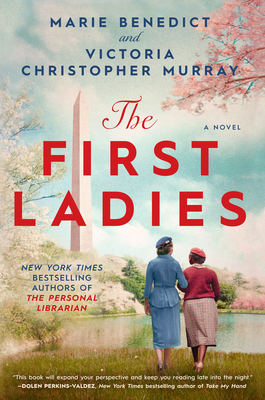
Book Review of The First Ladies by Marie Benedict and Victoria Christopher Murray

The First Ladies introduces us to two influential women of different races who become friends in 1927. Mary McLeod Bethune is an African American woman who founds Bethune Cookman College in Daytona, Florida on the site of a garbage dump. The school serves underprivileged black girls. She also finds funding for McLeod Hospital when her students are turned away by other hospitals due to their race. The book’s other main character is Eleanor Roosevelt, who by 1927 bought Todhunter School for girls and is teaching there. She also works with the Women’s Division of the New York Democratic Party to get women to vote for Democratic candidates.

Though they accomplished much by themselves, Eleanor and Mary accomplished far more together. As Eleanor’s husband Franklin Delano Roosevelt returns to public life after his polio diagnosis, Mary has Eleanor in the New York governor’s mansion and eventually in the White House to turn to when she wants more done about racism.

In the early 1930’s when FDR is still governor, Mary tells Eleanor details about lynchings that are happening in the North as well as the South. Eleanor says, “silence suggests agreement, and anyone who knows about these terrible acts—including me—should take a stand against them. Mrs. Bethune has offered me an entirely different lens through which I should be examining the racism in our country.” As a result of Mary’s friendship, Eleanor begins to take a stronger stance against racism. When FDR is elected president, Eleanor and Mary try to get his approval for an anti-lynching bill. Though FDR makes public speeches condemning lynching, they cannot get his support for the bill.
Despite some setbacks, Mary and Eleanor brainstorm ways to help blacks during the Great Depression. Eleanor asks, “How shall we begin to ensure that the New Deal is indeed for everyone?” They plan to get black people into administrative positions in the government as well as finding them jobs. For example, Eleanor recommends Mary to a position with the National Youth Administration. After Mary speaks to FDR about the importance of funding for black youth, he decides to create a division within the NYA to focus on the needs of blacks and puts Mary in charge. In three months, Mary doubles the funding for NYA’s Division of Negro Affairs.

Just as Mary changes Eleanor’s opinions on racial issues, her friendship with Eleanor changes how Mary votes. She voted against FDR when he first ran for president, but she votes for his second term because blacks are now included in New Deal programs.

During FDR’s second term, Mary makes a persuasive speech to him about including blacks in pilot and combat training and adding more black army units. Mary and her male allies in the black community also get FDR’s promise to issue an executive order ending discrimination in the military. Yet the bill languishes on the president’s desk for so long that the black community threatens to stage a mass protest in Washington, D.C. Fortunately, Eleanor convinces him to sign the bill, preventing the protest.

I always feel that the main job of historical fiction is to make readers interested in learning more about the topics in it. The First Ladies succeeded in making me want to find out more about Mary McLeod Bethune, who I knew almost nothing about before. The dual points of view of Mary and Eleanor worked well, though I could’ve done without some of the details of Eleanor’s childhood. To be fair, I know more about Eleanor Roosevelt from reading biographies about her, so less familiar readers may not mind the extra information.

My main criticism of the book is that it put Mary and Eleanor together in important historical situations when they were in different places. For example, Eleanor visits the Tuskegee Institute’s airfield to make a point about how safe it is to fly with an African American pilot. The book includes Mary on this trip even though she wasn’t there. Fortunately, incidents like this are rare in the book (it only happens twice). I realize the book is historical fiction but feel it’s important to maintain historical accuracy whenever possible.

This is the second historical fiction book I’ve read recently that explores the power of female friendships, and in this case, what female friends can accomplish together. I enjoyed the focus on friendship rather than a romantic relationship. The First Ladies shows Eleanor and Mary as true friends, despite the racism of the time. As Victoria Christopher Murray wrote in her author’s note, “at the core of any relationship is trust, and Eleanor and Mary had that. They trusted each other and felt free to share, to laugh, to cry…and sometimes even get annoyed with each other.” I recommend The First Ladies to anyone looking to explore the wonderful friendship between an influential black woman and an influential white one.
Book Review: Fallen Skies by Philippa Gregory

In her historical novel Fallen Skies Philippa Gregory takes the reader to 1920s England. We meet Lily Valance, a chorus girl with ambitions to become a singer. She meets Capt. Stephen Winters, a World War I veteran, at one of the clubs where she performs. Stephen hardly knows Lily, but believes he is falling in love with her because she seems so unspoiled by World War I. Haunted by his experiences in Belgium, Stephen wants nothing more than to forget the war. He believes Lily’s insistence that no one talk about the past will help him to move on.

Lily enjoys his attentions. She especially likes when he takes her and her mother out in a car driven by his chauffeur. Yet she is also attracted to Charlie, her director. Charlie has a physical injury from the war that will not allow him to have children. Although he loves Lily, he thinks he is doing the noble thing by letting her go.

When Lily’s mother dies, she just wants someone to take care of her. She is convinced that Stephen will do this, so she accepts his marriage proposal.

Soon, however, there is trouble in their marriage. Lily is embarrassed by Stephen’s behavior when a car backfires during their honeymoon. Convinced he is in a war zone, Stephen hits the ground and starts rolling. Onlookers tell Lily he is shell-shocked. She gets him back to the hotel and when he feels more like himself, he acts as though nothing has happened and violently insists that Lily do the same. He pays off the hotel staff with money, and Lily finds herself trapped with a man she fears rather than loves.

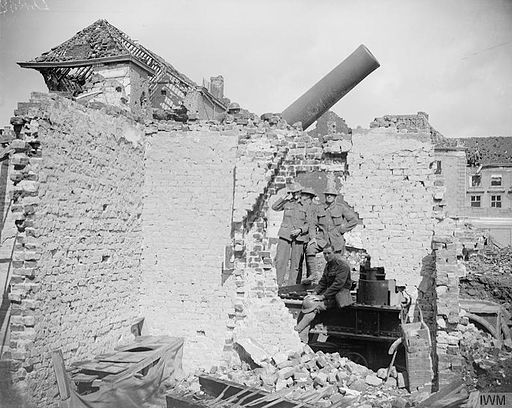
the_british_army_at_the_battle_of_ypres_27_august_1917_q7807

British army at Battle of Ypres, Aug. 1917

When they return home to Stephen’s parents’ house, Lily discovers that she is expected to sit at home with her mother-in-law or to pay boring calls on other ladies while Stephen goes to work. One day she manages to slip out of the house and audition for a production that Charlie is directing. When he realizes what Lily has done, Stephen tries to rape her. With a little help from an unlikely friend, Lily is both saved from rape and allowed to continue performing at the theater. She decides she will let Stephen do what he likes with her at home but lives for her work—at least until she discovers that she is pregnant.

With a baby on the way, Lily and Stephen both have to confront their past. Stephen cannot avoid his war memories and the knowledge of what he and his chauffeur did while at a farmhouse in Belgium. He has to decide what is more important: keeping his past secret or keeping his family together. Lily also has to decide what is most important in her life: her baby or her career. Ultimately the decisions they make will have live-or-death consequences for themselves and their son.

Overall I would recommend the book, especially to anyone who wants to learn more about how World War I affected soldiers when they returned home. The novel also does a good job of describing gender expectations in the 1920s, which basically involved men working and women staying home. Given some of the subject matter, however, I would recommend it for ages 12 and up.


How Historical Movies like Selma can be Used to Teach History

Movies like Lincoln, The King’s Speech, and most recently, Selma generate very different reactions depending on their audience. The Academy of Motion Pictures often gives Oscar nominations to these films, but they also annoy some historians.

If there is a factual error in a film, historians need to point that out to the public. For example, in the movie Lincoln the Congressmen from Connecticut voted against the constitutional amendment which abolished slavery. In reality Connecticut voted in favor of the amendment. Yet those who study history should not be surprised that Hollywood is not run by historians. Producing and directing films are skills that most historians do not possess. Most people who make films also do not possess in-depth historical knowledge.

Historians often like to point out the details that historical films did not address. Complaints about a movie’s failure to include certain aspects of history are often unfair. A movie cannot possibly cover every detail of a historical event because of time constraints. Even my college American history professor, gifted though she was, couldn’t possibly cover everything in an introductory course on American history. There was simply too much material.

Picture of books from Basking Ridge Historical Society taken by William Hoiles.

Picture of books from Basking Ridge Historical Society taken by William Hoiles.

The other complaint often voiced by historians is that young people get their history from movies and therefore the movies have to get every detail right. This begs the question: why are young people more likely to watch a film than pick up a history book? If students think their textbooks are boring that is not Hollywood’s fault. Authors who write history books for young people need to find a way to keep their audience’s attention. Even though I majored in history in college, I wasn’t always so fascinated with the subject. As a young student I was drawn to historical fiction novels, but my textbooks bored me. My favorite author of historical fiction always included a list of sources in the back of her novels, so I started reading biographies about some of the historical figures in her books.

Historians and teachers could do something similar with movies about historical topics.  For example, students who watch Selma could read Martin Luther King Junior’s writings.

Sparking a young person’s interest in history is valuable regardless of the medium used. Authors who write history for young people should view films like Selma as an opportunity to write books that are interesting and explain historical events in more detail.

An Egyptian Princess Goes to School

Princess Hatchepsut sat near the entrance to her room, hugging her wooden cat. In the hallway of the palace, she could hear her father giving advice to her half-brother Tuthmosis II.

"Now you must always listen to your teachers and respect them. Remember, as my son you will someday rule Egypt so you must learn as quickly as you can," said the older Tuthmosis.

"Yes, father," grumbled the younger Tuthmosis. He dashed into his room to grab a reed pen and papyrus scroll before walking to the school inside the palace. The children's rooms were separated by a curtain, which Hatchepsut parted.

As she poked her head into his room, she said to her brother, "If you'd rather practice shooting arrows, I could take your place at school." I would probably learn more than he would anyway, she thought.

"Humph," grunted Tuthmosis. "School is only for boys. Girls are supposed to learn to be good wives and not bother their small brains with learning."

"Well, I can't think of anyone who would marry you," Hatchepsut said. Tuthmosis had no time to reply because their father called out, "Tuthmosis, you will be late."

Hatchepsut watched him dash toward the Household of the Royal Children, the school where male royals learned to read and write. She thought how unfair it was that she missed out on so many adventures just because she was born a girl.

"What should we do today?" she asked her toy cat. "I know! We'll spy on my brother and see what school is really like!

The adults paid her no attention because everyone's focus was on getting Tuthmosis ready for his first day of school. She tucked her cat under one arm and followed her brother at a distance until she came to the school.  The palace school was surrounded by huge pillars carved with hieroglyphic writings.  Hatchepsut's fingers traced the grooved surfaces of the symbols representing falcons and wavy lines, but she could not read them. She sighed and hid behind one of the pillars so she could listen to the teacher's lessons.

"First some of the older children will exhibit their work so the prince will know what he can accomplish someday. Ramose, why don't you recite a passage from the Wisdom Texts for us? said the teacher.

Hatchepsut peeked from behind the pillar as Ramose stood up and recited, "Do good in order to attain a richer life; never dip the reed-pen to do wrong."

The teacher said, "Excellent! Write that ten times before tomorrow on your papyrus scroll. Now Tuthmosis, let's work on your first lesson."

He motioned to the other scribes to attend to the other students so he could focus on the prince's lesson. Hatchepsut overheard the teacher say that he would learn an easier type of writing before moving on to hieroglyphics.

"We write from right to left," said the teacher as he guided Tuthmosis's pen across the scroll.

On the other side of the room, Hatchepsut saw the more advanced students copying long phrases from memory. One of the scribes said to them, "I want you to memorize this passage, "see, there is no worker without an overseer except for the scribe, who is always his own boss."

"Oh, I wish I could be a boy so I could become a scribe," she whispered in her toy cat's ear. She was so enchanted with the schoolroom that she did not hear the sound of her father's sandals walking across the granite floor towards her.

"Daughter, why are you here?" he asked in a soft voice.

Hatchepsut twirled her braided hair in her fingers without looking up at him.

Her father knelt down beside her. "Did you say something about wanting to learn to read?"

Hatchepsut lifted her head and nodded.

"Well, the royal school is for boys, but that doesn't mean you can't learn some of the things that are taught here. I will find a tutor for you."

"Oh, father," exclaimed Hatchepsut. "And will I be able to read the hieroglyphs someday?"

"If you wish I will find a tutor who is an expert in hieroglyphs. Now let's leave your brother to do his homework," said her father as they walked down the corridor together.

"I'll bet I can learn to read those pictures on the school pillars faster than Tuthmosis!" Hatchepsut blushed when she realized she had spoken aloud.

Her father laughed. "I'm sure you will give him a good challenge. You are both my children, so I am sure you will both be wise." Her father left her at the entrance to her room and promised to find a tutor the next day.

"See," Hatchepsut said to her cat, "even if I am a girl, I can still learn like my brother, starting tomorrow!"

(For more on Hatchepsut, see Hatchepsut The Female Pharaoh by Joyce Tyldesley. Tyldesley also has good info on Egyptian schools in Daughters of Isis)