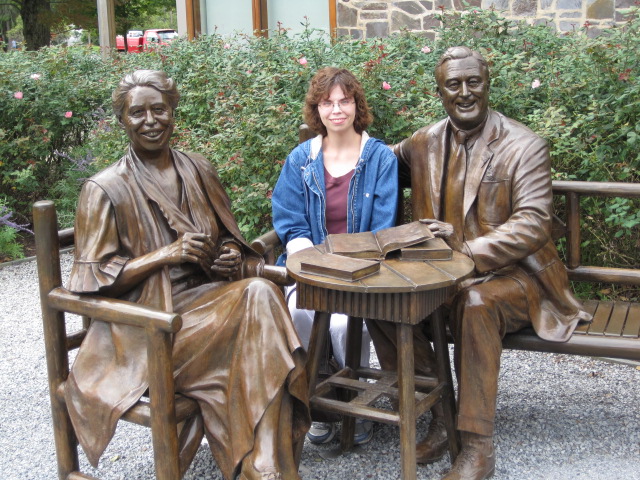
My History Book is Finally Published!

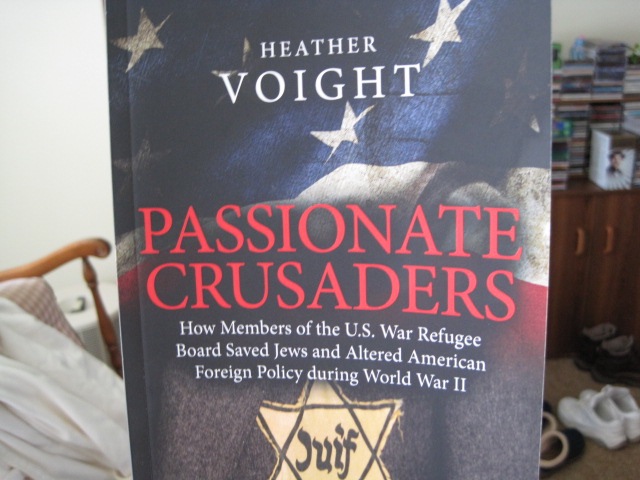
My proof copy of my book, Passionate Crusaders: How Members of the U.S. War Refugee Board Saved Jews and Altered American Foreign Policy during World War II arrived in the mail this week. After finding, as my friend’s daughter would say, a couple of “uh-ohs” in the proof, it’s finally done. I promised to limit myself to a few photos and my Amazon link for my fellow history buffs.

http://www.amazon.com/Passionate-Crusaders-Members-Refugee-American-ebook/dp/B00UEMCYQW/ref=sr_1_1?ie=UTF8&qid=1426289159&sr=8-1&keywords=passionate+crusaders

My book's selfie

My book’s selfie

IMG_0468

Reading my book with my favorite dog, Zoey

IMG_0469

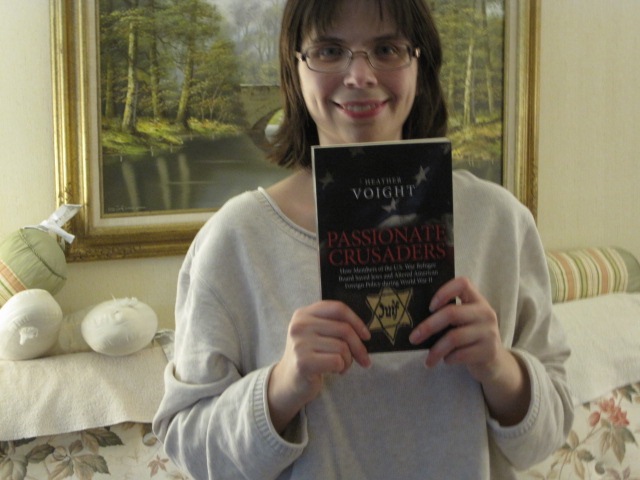
One happy author!

Isn’t my cover designer (Jane Dixon-Smith) great?

Josiah DuBois and the Creation of the War Refugee Board

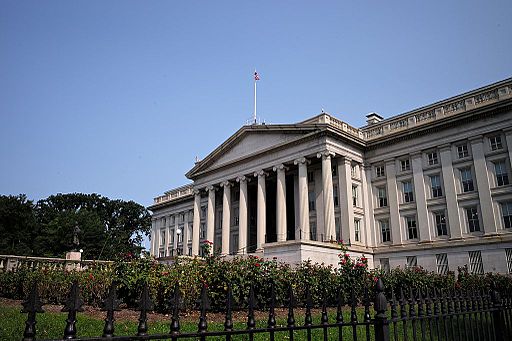
On Christmas Day 1943, a young US Treasury Department employee wrote something that would change the lives of more than 100,000 Jews in Europe. Josiah DuBois worked on this document despite the fact that he was risking his job and had little time to spend with his family on the holiday.

US Treasury Department photo by Roman Boed

US Treasury Department photo by Roman Boed

The document was entitled The Acquiescence of This Government in the Murder of the Jews. It accused the US State Department “of gross procrastination and willful failure to act” and “willful attempts to prevent action from being taken to rescue Jews from Hitler.” DuBois’ report showed that State Department officials not only followed the United States strict immigration laws, but tried to prevent Jews from immigrating to the US altogether.

Visas for potential refugees were delayed because of State’s requirement that refugees produce two letters of reference from American citizens who could either help support the refugees or who could prove the refugees could take care of themselves. In addition, visa applicants were often turned away if they had close relatives in Europe. The theory, or excuse, for not admitting them was that the enemy might persuade immigrants to become Nazi spies.

As DuBois pointed out in his report, the new immigrants would not threaten national security.  If President Roosevelt was concerned about potential spies, refugees could be placed in internment camps “and released only after a satisfactory investigation… Even if we took these refugees and treated them as prisoners of war it would be better than letting them die.”

In DuBois’s mind all human beings worth saving. Sadly, from late 1941 to early 1945 only 10% of the small quotas from Axis controlled countries were filled.

Yet DuBois did accomplish something by turning his report into his boss Treasury Secretary Henry Morganthau. By outlining State’s lack of concern for people fleeing from the Holocaust, DuBois showed that immigration issues shouldn’t be handled by the State Department. A new agency was needed to help people in Europe who were trying to escape from Hitller. This new agency would become known as the War Refugee Board.

My Book’s Back Cover Copy: Thoughts?

I’m looking for my readers’ opinions on my back cover copy for Passionate Crusaders: How Members of the U.S. War Refugee Board Saved Jews and Altered American Foreign Policy During World War II. Comments welcome!

Passionate Crusaders tells the gripping story of a few righteous Americans who sought to do what many thought impossible in 1944—save Jews who had not yet been murdered in the Holocaust.

By January 1944, Treasury Department officials Henry Morgenthau, John Pehle, and Josiah DuBois had already convinced President Franklin Roosevelt to create the War Refugee Board, an agency with the authority to provide rescue and relief for Jews and other groups persecuted by the Nazis.

Scholars have criticized the Board for its inability to save more Jews and maintained that the agency should have been created sooner. Heather Voight’s research shows that despite its shortcomings, the War Refugee Board changed history and forever altered American foreign policy. Its creation ended the cycle of indifference that the government and the American public had shown to victims of the Holocaust. In the words of Henry Morgenthau, from 1944-1945 “crusaders, passionately persuaded of the need for speed and action” risked their reputations and sometimes their lives to save Jews.

In addition to saving more than 100,000 lives, Board members also made a lasting impact on international law. They pressured the War Crimes Commission to broaden its definition of war crimes by including the murder of civilians by their own countrymen. This definition of war crimes was applied to genocides committed many decades later in Bosnia and Rwanda, and continues to be used today.

“[Passionate Crusaders] shows that the efforts of an honorable and courageous few can create small steps to change history. This detailed, well-told, and inspiring story will be of value to students of the Holocaust, American history, and human rights.” –From the Foreword by Dr. Leon Stein, Professor Emeritus of History and Education Director Emeritus, Illinois Holocaust Museum and Education Center.

Heather Voight is a successful freelance writer and history blogger. Since 2009, she has published articles on a variety of topics including the Gibson Girl, healthcare, and the writings of C.S. Lewis. She has a B.A. in History and English.

http://www.heathervoight.com

How to Choose an Editor for a Self-Published Book

As those of you who read this blog regularly know, I am in the process of self-publishing my book, Passionate Crusaders: How the U.S. War Refugee Board Saved Jews and Altered American Foreign Policy during World War II. After reading some great books on self-publishing, I knew I needed a professional editor. It took a lot of work for me to find the editor that was right for my book. Hopefully this post will make the process of finding one easier for others.

Step One: Contact other self-published authors you admire and ask them for recommendations.

I’ve found that many self-published authors are happy to share the names of editors with whom they or someone they know has worked. Sometimes an author will include the name of an editor in the acknowledgements of his or her book, so that’s another way to build your list.

Step Two: Realize that you are not finished after step one.

Please don’t assume that you have the perfect editor for your book once you have a few names. You need to get to know your potential editors first by moving to step three.

Step Three: Visit the editor’s website to see how seriously this person views editing as a career.

If the spelling/grammar on the site is poor, you know it’s time to move on. (I’m not kidding—I’ve seen editor websites that had multiple spelling and grammar errors). Also, see what other services this person offers. Does he/she offer primarily editing and proofreading services, or is editing tacked on to a long list of other things? Most of the time, people who tell you that they can provide everything your book needs are better at some tasks than others. You don’t want to find out that their weakness is editing.  

Step Four: Find out if this person edits books in your genre/uses your style manual.

For example, as a history writer, I wanted someone with experience editing similar books and who could make sure my book conformed to the Chicago Manual of Style. An editor who worked exclusively on mystery novels might be talented, but not a good fit for my book.

Step Five: Initiate e-mail contact with a few editors and ask for basic information.

This will give you a chance to find out more about these people. You can ask about pricing, if they’re taking new clients, when they might be free to work on the book, etc. See if their writing style and personality fits with yours.

Step Six: Study the editors’ responses for mistakes or other quirks.

I got to this step with one editor and realized that she had misspelled my first name, which is in the dictionary. Needless to say, I didn’t hire her.

Step Seven: Ask the editors who are still on your list to copy edit a few pages of your book.

Before any freelance editors who are reading this get angry with me, I’m not saying that an editor can’t charge a fee for a sample of their work. However, self-published authors need to see how the right editor can transform their manuscripts. When I received my sample manuscript pages from the editor I later chose, I was amazed at how much he had improved my work. For example, after adding material to the first chapter, I forgot to include one historical figure’s title–secretary of war–the first time his name appeared. Fortunately, my editor saw my mistake, along with others.

Step Eight: Hire the editor who amazes you!
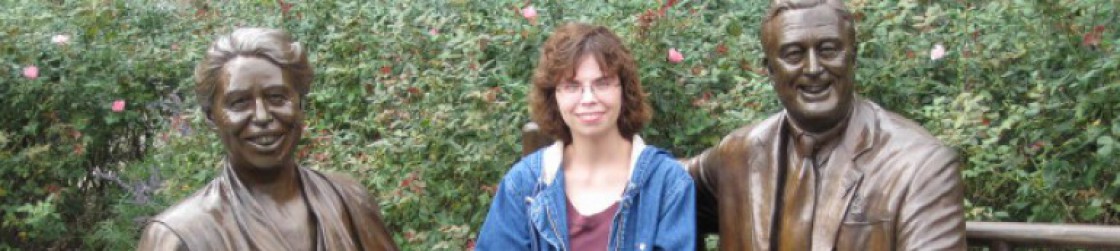
Doing Research at the Franklin D. Roosevelt Library

Statue of FDR's dog, Fala at the visitor's center in Hyde Park, NY

Statue of FDR’s dog, Fala at the visitor’s center in Hyde Park, NY

Two years ago this week, I was conducting research for my book at the FDR Library. Well, that’s not entirely true. I was in Hyde Park, New York and I was using the library’s resources, but both the library and the museum were undergoing renovations. The library was off-limits to visitors, but the library staff set up a cozy room in the visitor’s center for researchers to view the library’s archives. Every morning the other patrons and I arrived early to request the boxes of materials we needed, and one of the archivist’s assistants brought them in on carts.

Sometimes I wish I had the chance to see the actual library, but that didn’t bother me at the time. I was too focused on reading documents from the War Refugee Board files and taking pictures of them with my digital camera (photocopying was not allowed because some of the documents were fragile). I also remember thinking that the presidential library might be large and intimidating. Frankly, doing research for my first book was intimidating enough, so I was content with the smaller room.

The visitor’s center also had a statue of FDR’s dog, Fala, near the entrance. I love dogs and missed my beagle mix who stayed with my mother in Illinois. The staff at the center may have thought I was a little odd when I said, “good morning, Fala” and “see you tomorrow, Fala” every day, but then they were probably used to eccentric researchers.

The best part of the library/visitor’s center was Virginia, the archivist. The library had a great online finding aid, so I knew which documents I needed and the boxes they were located in. Unfortunately, there were two documents that I had only seen cited in other history books, and I had no idea how to locate them. Virginia didn’t, either because the filing system was changed after those books were written, making the citations almost worthless. Fortunately for me and my book, Virginia was determined to find what I needed. She seemed to take it personally when she couldn’t find a document. I thought, this woman is a researcher’s dream come true. I still can’t figure out how she located those documents, but she managed it somehow and I went back to Illinois with all the sources I needed.

Some day I want to return to Hyde Park as a tourist, but I enjoyed almost every minute that I spent researching my book.

Why I Wrote A Book about The War Refugee Board

Picture it: Chicago, December 2001. I was looking for a topic for my honors thesis. I knew I wanted to work with my history advisor, who was a Holocaust historian. Since I spent most of my time studying U.S. history, I decided to dig for information on America and the Holocaust. My advisor told me that America and the Holocaust was too broad for my thesis. He also suggested that I look for a topic that hadn’t received much attention. I asked if I could write about Eleanor Roosevelt’s response to the Holocaust. He said yes, if I found enough information on it. A couple of hours at the library told me that my new idea was too narrow.

While sifting through books on U.S. and the Holocaust, I discovered a chapter here and there in several books about a government agency created in 1944 called the War Refugee Board. At first I thought, a thesis about a government agency? BORING. Once I started reading about the people behind the agency, though, things got interesting. These men were not household names (anyone familiar with John Pehle, and if so, how to pronounce his name?), but they were working their tails off trying to save the few Jews who hadn’t been murdered yet in the Holocaust. 

I started to ask myself questions like why wasn’t the War Refugee Board created sooner? What drove these men, who were mostly from Protestant backgrounds, to risk their jobs by going to the president and criticizing the administration’s lack of response to the Holocaust? So I wrote my thesis, and put it on my bookshelf. I always thought the topic would make a great book and that a well-known historian would write it.

FDR Library

Fast forward several years, and no one else had written a book about the WRB. I contacted my former professor, who encouraged me to do more research on my old topic. Ironically, shortly after I wrote my thesis, a major project to collect the papers of the War Refugee Board was completed. I discovered that I could borrow microfilm from the Library of Congress and read the actual memos that FDR and Board representatives wrote. I spent at least a year of my life looking through those documents, and then I visited the FDR library in Hyde Park because I couldn’t borrow everything I needed. (The picture on the top of my blog and in this post is of me outside the library. I was one relieved researcher)!

My book wasn’t going to rehash my thesis, however. After studying the memos and other government documents related to the Board, I made an interesting discovery. Not only did the members of the War Refugee Board save Jews, but they also made an impact on American foreign policy that continues today. As I mentioned in a previous post, I hoped for a publishing contract, but decided to self-publish when that didn’t happen. Hopefully self-publishing will make my work available to the largest possible number of people, since that always was my main goal.

Why I Decided to Self-Publish My History Book

After sending my manuscript to both academic and small presses, I have decided to self-publish my book on America and the Holocaust. (Specifically, it’s about the War Refugee Board—a government agency created by President Franklin Roosevelt whose members tried to save Jews who were still alive in Europe in 1944). While all of these publishers said “no,” they did not say, “this book is badly written” or “the topic is boring.” Instead, I got objections that I believe I can overcome with self-publishing. I listed a handful of them below.

Objection One: This is not a good fit for our list.

As a self-publisher, the only list I have is for books written by me. Some editors were nice enough to recommend other places where I might send my manuscript, though those presses had other objections.

Objection Two: Investing in a new author is risky.

As my uncle would say, a bus could hit any one of us tomorrow. His point? Life is inherently risky. I’ve read that self-publishing is risky, too, but I decided to defer to my uncle.

Objection Three: The book is too short.

My book and I prefer to be called vertically challenged…I’m kidding. Still, if I self-publish, length doesn’t matter. Having a shorter book will probably make the process a bit more affordable. As someone who also reads books, I appreciate writers who use as much space as they need to tell their stories–no more, no less.

Objection Four: People who do not have PhDs in History could understand this book.

I know some really wonderful people with PhDs, but I don’t want to limit my book’s audience to people who a. have PhDs in History and b. are interested in the Holocaust and/or President Roosevelt’s administration. Since most people don’t know much about what the members of the War Refugee Board accomplished, I want as many people as possible to understand it.

So, that tells you why I’m self-publishing my book. How I’m going to self-publish is still a work in progress. I’ll have more on that topic later on, as well as more general history posts.

If you’ve self-published or are working on a self-published project, what made you decide to do it?

Raoul Wallenberg and the Rescue of Jews During World War II

As a young man growing up in Sweden, Raoul Wallenberg couldn’t figure out what he wanted to do with his life. His family expected him to become a banker, but his grandfather also wanted him to travel Europe. Wallenberg thought traveling to foreign countries was exciting, so with his grandfather’s blessing he worked for a branch of the family’s bank in Haifa, Palestine. Since he arrived in Palestine during the 1930s, the boarding house where he stayed at night was filled with Jewish families who recently fled Germany. Adolf Hitler was in power and the Nazi party placed harsh penalties on the Jews, making it difficult for them to earn a living or even walk the streets without fear of being beaten.

 Traveling Europe after World War II

Bored with his work, Wallenberg left the bank. After World War II began, he met a Jewish businessman named Koloman Lauer from Hungary. Wallenberg’s home country stayed neutral during the war, but Hungary’s alliance with Germany made it impossible for native Jewish businessmen to travel in Europe. Instead, Lauer hired Wallenberg to travel on his behalf. Though Wallenberg enjoyed traveling, what he saw in Nazi-occupied territories like Hungary disturbed him. He encountered Nazis beating Jews in the streets and saw families rounded up and sent to so-called labor camps where they seemed to disappear. Wallenberg’s family was Jewish and he wanted to do something help, but he didn’t know what he could do.

 Wallenberg’s Assignment

Finally, in 1944, Wallenberg received the opportunity to aid Europe’s Jews. The United States had just formed the War Refugee Board, which was designed to provide rescue and relief programs for European Jews. The Board’s representative in Sweden needed a Swedish diplomat who could travel to Budapest, Hungary and rescue Jews there. Wallenberg’s boss mentioned his name to the WRB representative in Sweden, Iver Olsen. Olsen met with Wallenberg and warned him of the dangers of his mission. Wallenberg didn’t care about himself—he just wanted to do something to stop the Nazis.

 Efforts to Protect Hungarian Jews

When he arrived in Hungary, Wallenberg decided the best way to protect Jews was to provide them with Swedish identification badges. The badges proved that these Jews had ties to the neutral country of Sweden and therefore could not be deported by the Nazis. When Wallenberg ran out of official badges, he printed his own. Approximately 7,000 Hungarians received protective badges. Wallenberg also turned large houses in Budapest into Swedish safe houses and allowed Jewish people to live in them. Each house flew the Swedish flag, signifying neutral territory. The badges and safe houses all served the purpose of protecting Jews from deportation to concentration camps where Jews were killed. With the help of a Jewish staff, Wallenberg also worked on other projects, like setting up hospitals and soup kitchens for needy Jews.

Opposition

Despite Wallenberg’s best efforts to protect Hungarian Jews, the Nazis sometimes tried to defy him. On one occasion, he returned to the safe houses and discovered German troops rounding up all the able-bodied Jewish men. When the German patrol refused to leave, Wallenberg said, “As long as I live, none will be taken out of here. First you will have to shoot me.” The Nazis decided against making an enemy out of Sweden by killing Wallenberg, so the patrol left. Unfortunately, they returned later to snatch a handful of Jews and placed them on a train bound for a concentration camp. Undaunted, Wallenberg sped away in his car and caught up with the train. He shouted for the Jews onboard to show their papers, and anyone with Swedish papers returned to the safe houses with him.

Results of Wallenberg’s Work

Wallenberg’s massive efforts helped save tens of thousands of Jews. Though Wallenberg mysteriously disappeared when the Soviet Army arrived in Budapest in 1945, he left a legacy of helping others even when the task endangered his life.