
Forgotten First Lady Ida McKinley

American First Lady Ida Saxon McKinley grew up in one of the wealthiest families in Canton, Ohio. Her father believed in women’s education, so Ida received a college degree. Yet he wanted his daughter’s education to be “more practical than ornamental.” As a result, Ida worked in her father’s bank, first as a teller and then as a manager. In addition to her work and college studies, Ida loved long walks, shopping, and going to concerts and the theater.

She met William McKinley at her father’s bank. Completely smitten, McKinley proposed in the fall of 1870. They had very different personalities, which some friends thought would be an obstacle. McKinley was reserved while Ida was impulsive and adventurous. Yet their love lasted throughout the years. A friend later said, “the relationship between them was one of those rare and beautiful things that live only in tradition.” The happy couple married in January 1871.

By Christmas, Ida gave birth to a daughter named Catherine. In fall of 1872 Ida was pregnant again, but both mother and daughter fell ill. Daughter Ida died of cholera after only five months. After this loss, Ida experienced a combination of symptoms, most notably epileptic seizures. McKinley was determined not to shut Ida up in a mental institution, though epilepsy was thought to be a psychiatric disorder. Unfortunately, more sadness followed. Their first daughter developed scarlet fever and died.

The loss of a second child nearly destroyed Ida, so McKinley offered to give up his political ambitions for her. Ida, however, wouldn’t hear of it. “I have no fear that your choice in life will leave you as you are in the things that make you dear to me,” Ida told him. With his wife’s encouragement, McKinley ran for Congress in 1876 and won.

Whether he was in Congress or home in Ohio, McKinley remained devoted to Ida. While in Congress, Ida sometimes called him out of meetings on trivial matters, such as his opinion on her clothes. When he left town for any reason, McKinley wrote letters to Ida that opened with “My own precious darling.”
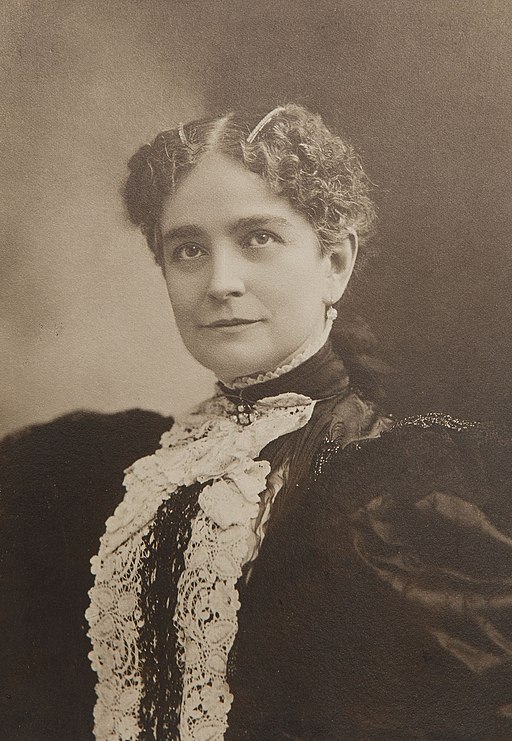
Ida Saxon McKinley, unknown date

Ida’s health would sometimes improve for long stretches, and the couple took advantage of these times by traveling together. Ida loved to travel and managed two trips to California with her husband.

In 1897, William McKinley became president of the United States. Considering her illness, Ida might have given the duties of first lady to someone else, but she refused. Nevertheless, she had limitations. For example, Ida stood in receiving lines to greet White House guests but a chair was always placed behind her in case she became tired. She enjoyed hosting luncheons for members of Congress though she had to pace herself. Both she and McKinley wanted Ida to partake of society as much as possible despite her seizures. William Howard Taft remembered talking with them when he noticed “a peculiar hissing sound” coming from Ida. McKinley walked over to her, draped his handkerchief over her face, and continued the conversation.

Despite her limitations, Ida McKinley put her own stamp on the White House. She crocheted slippers which she gave to charities who them sold them at inflated prices. Her love of music and theater as a young woman continued during her time as first lady. Ida brought pop music like ragtime to White House social events. When she was well she attended comedies in Washington theaters and invited actors to the White House to discuss their craft. Unlike previous first ladies, she met with Susan B. Anthony and supported suffrage by speaking with suffrage organizations.

Though usually supportive of his career, Ida didn’t want McKinley to run for a second term as president. “I thought he had done enough for the country…and when his term expires he will come home and we will settle down quietly and he will belong to me,” Ida told a reporter. Her reasons for opposing a second term weren’t entirely selfish. Ida also feared that McKinley would be assassinated, since anarchists all over the world adopted assassination as a recent means of protest. McKinley refused to give up his reelection bid, however.

Sadly, Ida was right to worry. McKinley was shot, though his first concern was for Ida. “My wife–be careful how you tell her. Oh be careful,” McKinley told a secretary.

When Ida was told, she fainted but recovered quickly. She said, “Tell me all, keep nothing from me! I will be brave–yes, I will be brave for his sake!” Ida did as promised, comforting her husband with hardly any breakdowns. Others assumed the shock of the president’s death would instantly kill Ida, but it did not. At home in Canton, Ohio, she created a shrine to her husband. Ida McKinley passed away in 1907 at age 59.

Sources:

Merry, Robert. President McKinley: Architect of the American Century.

Miller, Scott. The President and the Assassin.

O’Brien, Cormac. Secret Lives of the First Ladies.
Forgotten First Lady Lucy Hayes

American First Lady Lucy Webb Hayes is most remembered as “Lemonade Lucy,” a nickname she received after banning alcohol from the White House. In fact, Lucy Hayes was much more than an advocate for abstinence.

Lucy was the first First Lady to graduate from college. She met Rutherford B. Hayes when she was a student at Ohio Wesleyan University, but at fifteen she was to young to be courted. Fortunately they met again in 1850 and married in 1852.

Despite her education, Lucy told Hayes that she thought she was “too light and trifling for you.” Hayes, though acknowledging his love for her, saw her as much more than a pretty face. He wrote in his diary, “Intellect she has too, a quick and spritely one, rather than a reflective and profound one. She sees at a glance what others study upon, but will not, perhaps, study what she is unable to see at a flash.”

Her college essays show that Lucy took a great interest in the issues of her time, including temperance and women’s rights. In one essay, Lucy compared men to women, with women coming out favorably. she wrote, “It is acknowledged by most persons that her (woman’s) mind is as strong as a man’s…Instead of being considered the slave of man, she is considered his equal in all things and his superior in others.”

Throughout their marriage, Lucy did not hesitate to share her opinions with her husband. An ardent abolitionist, she wrote to Hayes during the Civil War that President Lincoln was not doing enough to get rid of slavery. “The protection of slavery is costing us many precious lives,” she wrote. One of the lives she worried about was Hayes’s, since he was wounded more than once. Lucy traveled with Hayes, who was a Union officer, as much as she could during the war. She even brought two of their youngest children along, which may have contributed to their deaths before the age of two.

She developed an abiding interest in veteran’s causes as a result of her war experiences. When Hayes was elected governor of Ohio, Lucy established a soldier’s orphan’s home. Though she struggled to get the home funded, it became a state institution in 1870.

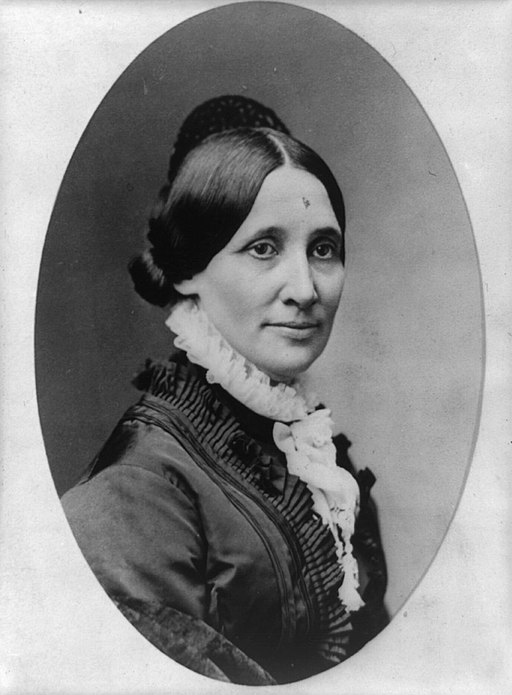
Lucy Hayes, circa 1877

In 1877, Hayes was narrowly elected President of the United States. Lucy’s excellent skills as a hostess helped her husband entertain both political parties at the White House. Her love of music led Lucy to invite vocalists and musicians to the White House. The first black opera singer Marie Selika sang arias in the Green room. On more informal occasions, guests were invited to sing gospel songs with the First Lady.

Though Lucy later took the blame for it, Hayes announced that alcohol would not be served at the White House after spring 1877. He may have partly been trying to please his wife, but Hayes also disliked the way male visitors behaved when drinking. Although some colleagues accused the First Couple of being stingy, they still entertained lavishly. During one dinner, hundreds of guests were treated to expensive foods like salmon, turkey and truffles, ham, lobster salads, and oysters among other dishes.

Since she had no social secretaries to help her entertain, Lucy invited young friends and family to the White House. Though she claimed she was getting an unfair reputation as a matchmaker, more than one politician met his future wife at one of the Hayes’s parties. Even the press acknowledged Lucy as a warm hostess. One reporter wrote of Lucy that “she is so vivacious and so responsive that everybody leaves her presence with a vague idea that he is the one person whom she was longing to see.” To most contemporaries, Lucy was known as a good conversationalist and hostess.

Lucy disappointed some women’s groups by not joining their causes. Despite the fact that the White House no longer served alcohol, Lucy never officially joined the Women’s Christian Temperance Union. She also remained neutral on women’s suffrage.

Lucy Hayes took a more traditional view of the role of First Lady, preferring to support her husband’s decisions rather than making public statements. Yet through her example of a college education and her private influence on issues, Lucy Hayes paved the way for more progressive First Ladies.

Sources:

Greer, Emily Apt. “Lucy Webb Hayes and Her Influence Upon Her Era.” https://www.rbhayes.org/hayes/lucy-webb-hayes-and-her-influence-upon-her-era/

Hoogenboom, Ari. Rutherford B. Hayes: Warrior and President.

O’Brien, Cormac. Secret Lives of the First Ladies.
Trefousse, Hans. Rutherford B. Hayes.

U.S. President Woodrow Wilson

Since I did a post on Teddy Roosevelt’s successor and friend William Howard Taft last year, I decided to skip to Taft’s successor President Wilson.

Woodrow Wilson, whose real first name was Thomas, had an impressive rise in politics. He had only been governor of New Jersey for two years when he was approached by Democrats to run for president.

In another time period voters might have thought that the former president of Princeton University was a snob. Wilson always thought he was right. When a friend told him that there were two sides to every issue, he replied, “Yes, a right side and a wrong side.” His stubbornness would lead to trouble during his second term.

In the election of 1912, however, voters thought his commitment to high ideals refreshing. It also helped that Republican support was split between Taft and third party candidate Theodore Roosevelt.

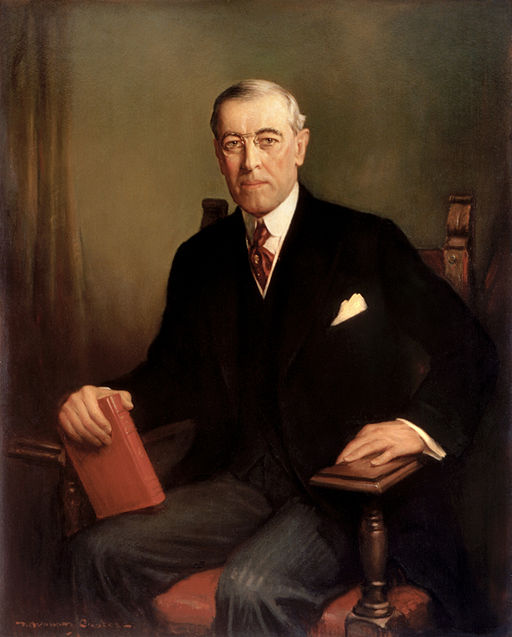
512px-Presidentwoodrowwilson

Official Presidential Portrait of Woodrow Wilson

Wilson hoped to focus on domestic issues while president. His New Freedom programs included restraints on banks and big business as well as child labor laws. Yet in other ways he resisted change. Born a Southerner, Wilson gave cabinet positions to Southerners. He violated the rights of black workers by allowing several racist members of his cabinet to segregate their offices. Wilson was also slow to support women’s suffrage, though he eventually did so.

When World War I began in Europe, Wilson wanted to maintain peace. He was re-elected as the man who kept the country out of war. In 1917 Wilson finally decided that America needed to join its allies to “make the world safe for democracy.”

After the war ended, Wilson worked hard to ensure that the First World War would also be the last. He proposed a League of Nations in which countries would pledge to protect each other in the future. He travelled to Europe for the peace talks, making him the first president to visit that continent while in office. Wilson was not happy with the peace treaty and he still needed more support for the League.

Returning to the U.S., Wilson embarked on a speaking tour to promote the League of Nations. While on his trip Wilson suffered a stroke. Wilson became an invalid for the last year of his presidency, though he communicated with lawmakers by writing letters. Unfortunately, the Senate was still debating the League of Nations. His stroke made the stubborn president even less willing to compromise, and he refused to make any concessions on his beloved League. Though the Senate rejected the League of Nations, Wilson’s ideals live on in the United Nations.


Abigail Duniway: A Different Kind of Pioneer

When you hear the word pioneer, you probably think of people who traveled in covered wagons to settle the West.  Abigail Scott Duniway did go West on the Oregon Trail, but she did not remain a pioneer housewife.  Instead, she became a pioneer for women’s rights.


In 1853, the year after her family arrived in Oregon, Abigail Scott married rancher Ben Duniway.  When Abigail’s husband was injured and could no longer work the farm, Abigail had to get a job to support her family. 


With the financial help of a male friend, Abigail became one of the first women to open her own store on the frontier.  She sold women’s hats which gave her the opportunity to meet many different women.  Sometimes she heard about their struggles.  One customer’s husband left her and her children without any money.  Abigail found a neighbor who aided the woman by helping her rent a house where she took in borders to make money.  Unfortunately, when her husband returned, he took possession of everything because there were no laws yet that protected women from irresponsible husbands.  Inspired by the stories of the women she encountered in her store, Abigail became an advocate for women’s rights.


Abigail knew she needed to get her women’s rights message to the public.  After her first public lecture in 1870, she received invitations to go on lecture tours.  She was joined by women’s rights advocate Susan B. Anthony on a lecture tour through Oregon and Washington.  Their speeches promoted women’s suffrage, meaning their right to vote.  At the time, only men could vote on state laws.  Abigail wanted Oregon women to have the right to vote on issues such as the right of women to become jurors, to own property, and to hold state legislative offices.  Churches and other establishments often closed their doors to her because of her radical message, but Abigail was satisfied to share her ideas even if she had to lecture outside in bad weather in front of barns or behind saloons. 


Eventually Abigail was invited to speak to the Oregon State Legislature and gave her support for a women’s suffrage bill.  Although the bill did not become law, giving a speech in front of lawmakers gave Abigail valuable political experience. 


Lecturing was only one tool Abigail used to promote women’s suffrage.  She also published and edited a newspaper which she named New Northwest.  Once again, Abigail led the way for women to hold jobs that were usually held by men.  Abigail used the paper to provide readers with news on constitutional amendments that were up for a vote, along with advice on how to convince men to vote in their favor.  One issue even contained a petition for women’s suffrage addressed to the United States Congress that she instructed readers to copy and hand out to community members.  Abigail no longer published New Northwest after 1886, but she did not stop campaigning for women’s rights.


The traveling Abigail did for lecture tours and for her newspaper gave her a different perspective from other suffragists on how women could successfully get the right to vote.  Unlike Abigail, many women’s rights groups not only wanted women’s suffrage, but also advocated prohibition, which meant banning alcohol.  Abigail saw that women gained suffrage more quickly in states like Utah where suffragists didn’t insist on prohibition.  When other suffragists expressed their frustration at some western states’ successes in getting votes for women, Abigail stated, “Women can’t enfranchise women.  They may lead a man to the ballot booth, but they cannot make him vote for us after we get him there.  If we are too insistent [about prohibition] they’ll get stubborn and the advantage is all on their side.”  Women needed to encourage men to vote for women’s suffrage, but the prohibition movement often led men to oppose giving women the right to vote.


Despite the obstacles to gaining women’s suffrage, Abigail never doubted that women would gain the right to vote.  She wrote that “although…the final victory remains to be won, so many concessions have been made, all trending in one direction…that it would be indeed an obtuse man or woman who would doubt our ultimate and complete success.”  Some of the new rights for women included a Married Woman’s Property Act, which gave wives the right to own and sell property and keep wages.  In addition, the number of votes for women’s suffrage increased during the proposed Oregon constitutional amendment of 1900.  Still, the prohibition movement continued to discourage men from supporting women’s suffrage.


In 1910, Abigail made a new appeal to voters.  She suggested that since women paid taxes, they should not be denied the right to vote.  Abigail’s pioneering efforts finally paid off when Oregon voters approved women’s suffrage in 1912.