From Preserving the Union to Emancipation: President Lincoln’s Views on Slavery

President Lincoln believed that he would be best remembered for writing the Emancipation Proclamation. Although many people remember him as the president who freed the slaves, some of the facts surrounding that achievement have been clouded with the passing of time.

Although Abraham Lincoln hated slavery, his goal was not to free the slaves at the beginning of his presidency. Instead, he wanted the Southern states to remain in the Union and tried to prevent them from pulling out. He promised Southerners that he would not interfere with slavery in states where it already existed, but this assurance was not enough to prevent the Civil War.

As the war dragged on, however, Lincoln realized that freeing the slaves and preserving the Union were inseparable issues. Lincoln informed his cabinet of his plan to issue emancipation for the slaves in summer 1862, but was advised to wait for a Union army victory. When victory came, he pulled the proclamation out of his desk drawer. In his message to Congress in December 1862, he explained his actions: “In giving freedom to the slave, we assure freedom to the free—honorable alike in what we give, and what we preserve.”

Lincoln signed the Emancipation Proclamation on January 1, 1863. It stated that from that date “all persons held as slaves within any state or states, wherein the constitutional authority of the United States shall not then be practically recognized…shall then, thenceforward, and forever, be free.” Criticism came from within his own party. Conservative Republicans thought it was too radical, while the radicals complained that the proclamation only freed slaves in Southern states that the Union army had no authority to help.

In the military, some soldiers resented having to fight a war for the slaves and others did not want blacks to have the opportunity to join the Union army. Lincoln, however, felt that the former slaves had a stake in fighting for their freedom.  He was also impressed by the abilities of black troops on the battlefield. He wrote that when peace came, “there will be some black men who can remember that, with silent tongue, and clenched teeth, and steady eye, and well-poised bayonet, they have helped mankind on to this great consummation [eliminating slavery and saving the Union]; while…there will be some white ones unable to forget that, with malignant heart, and deceitful speech, they have strove to hinder it.” In just a few years, Lincoln transformed from a politician who wanted little to do with the issue of slavery, to a statesman who wanted to destroy it.
Mary Todd Lincoln: From Slaveholder’s Daughter to Antislavery Advocate

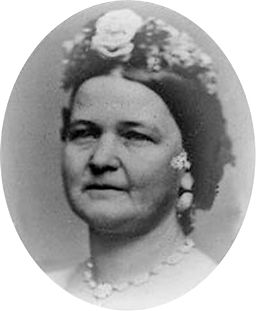
Mary Todd Lincoln

Mary Todd Lincoln

As one of her biographers wrote, “history has not been kind to Mary Lincoln.” In fact, she experienced unpopularity during her years in the White House, partly because of her spending habits, but also because she had relatives fighting for the Confederacy. Though Mary had faults, she was loyal to her husband and the Union, and she became increasingly opposed to slavery.

Mary learned about slavery growing up in Kentucky. Her father’s involvement in state politics meant that his children heard political issues debated at home. One of these issues was slavery. Robert Todd opposed the trading of slaves among whites, which tore them from their relatives. Naively, he hoped that the practice of holding slaves would eventually die out.

His convictions did not, however, keep him from owning a few household slaves. One of these slaves, Aunt Sally, was a mother figure for Mary when her own mother died. When Mary heard a knocking outside one night, Sally explained that she had made a mark on the Todd’s fence to signal to runway slaves that they could stop there for food. Although she knew helping runaway slaves was illegal, Mary was thrilled that Sally shared a secret with her and never told anyone. Her father’s politics and her relationship with Aunt Sally gave Mary an unfavorable view of slavery that became stronger later in her life.

Shortly after she became First Lady and moved to Washington, Mary struck up a friendship with her African American dressmaker and former slave Elizabeth Keckly. When former slaves came flocking to the capital during the Civil War without food or a place to sleep, Elizabeth made it her mission to help them. Mary wrote to her husband, President Abraham Lincoln asking him to support her friend’s charity. She also made contributions herself. In a letter to her husband, she wrote, “She [Elizabeth] says the immense number of contrabands in Washington are suffering intensely, many without bed covering and having to use any bits of carpet to cover themselves—Many dying of want…I have given her the privilege of investing $200 here in bed covering…this sum, I am sure, you will not object to being used in this way—The cause of humanity requires it.”

Unaware of Mary’s growing antislavery feelings, radical abolitionist Jane Swisshelm expected Mary Lincoln to be a Confederate sympathizer. When they met at the White House in 1863, however, Swisshelm believed that Mary was “more radically opposed to slavery” than the President. By listening to her African American friend’s descriptions of suffering, Mary took up the cause of helping former slaves. Through this cause, Mary gained a perspective on slavery that most whites, including the President, did not have.

The Discovery and Translation of the Rosetta Stone

On July 19, 1799, a discovery was made that revealed much of what we know today about ancient Egypt. Napoleon Bonaparte
decided to extend his empire to the East and took forces with him to Egypt. In the process of digging a fort near the town of Rosetta, one of his soldiers found a strangely shaped black slab, which was inscribed with three different types of writing. The top, though damaged, contained Egyptian hieroglyphics; the center section was written in demotic, a form of shorthand writing of the Egyptian language; the lower part revealed Greek letters.

Rosetta Stone--British Museum by Nina Aldin Thune

Rosetta Stone–British Museum by Nina Aldin Thune

Until this discovery, almost nothing was known about the language of the ancient Egyptians. Ancient Greek was still familiar to scholars, however. The Greek part of the stone stated that the three sections of writing all said the same thing—they were descriptions of the decree issued by priests at Memphis on March 27, 196 BC to honor the anniversary of King Ptolemy V Epiphanes’ reign.  The British took possession of the Rosetta Stone in 1801 when they defeated Napoleon. Copies of the stone’s inscriptions were made and scholars all over Europe scrambled to be the first to solve the riddle of the hieroglyphics.

A breakthrough came when Thomas Young of England determined that at least some of the hieroglyphics represented letters of the ancient Egyptian alphabet. They were not purely a crude form of picture writing—for example, a hieroglyph that was shaped like a bird did not always refer to an actual bird. He identified the names of more than one Egyptian ruler in hieroglyphics.

Building on Young’s work, French Egyptologist Jean-Francois Champollion deciphered the hieroglyphics. He explained his findings in A Summary of the Hieroglyphic System of the Ancient Egyptians: “Hieroglyphic writing is a complex system, a script simultaneously figurative, symbolic and phonetic, in one and the same text in one and the same sentence, and I should say, almost one in the same word.” Some hieroglyphics represented letters of the Egyptian alphabet; some combined groups of sounds (for example, one hieroglyph represented letters that were commonly used together to save space), and some were added as pictures to clarify the meaning of a word.

Once the Rosetta Stone’s inscriptions were translated, scholars could learn more about the ancient Egyptians, their culture, daily lives, and religion. Since 1802, it has been displayed in the British Museum in London, though Egyptian archeologists are trying to bring the stone back to Egypt.

The Invention of the Ferris Wheel

You’ve probably ridden in a Ferris wheel at an amusement park, but do you know why the giant wheel is referred to as a Ferris wheel? It’s named after the man who designed the giant observation wheel for the World’s Columbian Exposition in Chicago.

In 1892, the fair’s chief architect Daniel Burnham criticized American engineers for failing to design something spectacular and new for the fair, something that would rival the Eiffel Tower from the previous world’s fair in Paris. A young engineer named George Washington Gale Ferris, Jr. happened to be in the audience. Stories about when he conceived of his idea for the Ferris wheel vary—some say Ferris was planning the wheel all along and the fair provided him with the opportunity to carry out his plans, others say he sketched the idea out the same night of Burnham’s challenge. Either way, as an engineering student he would have been familiar with the use of wheels for industrial purposes.

Ferris’ wheel was supposed to resemble a large bicycle wheel. Heavy steel beams served as spokes to keep the shape and balance of the wheel. The towers that supported the wheel were 140 feet high and the axle was the largest piece of steel ever made in the U.S. Two steam engines allowed the wheel to turn and it stopped with a giant air brake.

Fair organizers were familiar with smaller amusement wheels, but as one of the men who helped Ferris design the wheel said, “nothing of the kind had ever been attempted before.” The committee dismissed Ferris’ proposal as too dangerous and impractical. Unfazed, Ferris proceeded to find the financial support for his invention. In fall of 1893, fair officials changed their minds and allowed Ferris to erect and operate a “revolving wheel, 250 feet in diameter and capable of carrying 2160 persons per trip.” The fair would open in five months. Ferris knew many steel industry executives and spread out orders for the wheel’s parts among several companies.  The wheel was built essentially according to the plans he had shown to fair officials.

Finally it was time to test the wheel. Ferris left this task to his designer William Gronau. He wrote, “slowly but surely the wheel turned, amid the cheers of those assembled…No carriages were yet placed in position, but this did not deter the men [who had worked on the wheel], for they clamored among the spokes and sat upon the crown of the wheel…finally, when the wheel had made the first complete turn, I could have yelled aloud for joy.” Later cars were hung so as many as 2,000 people at one time could take the twenty-minute ride and get a terrific view of the fair from the top of the wheel. By June 21, the Ferris wheel was open to the public.

There were no passenger injuries, and by the end of the Exposition Ferris’ invention had carried 1.5 million people. After the Exposition in Chicago closed, the wheel appeared again in St. Louis at the 1904 Louisiana Purchase Exposition. The wheel was later destroyed by dynamite, but the name of Ferris’ invention lives on in amusement parks around the world.

Child’s Play in Ancient Rome

Although childhood in ancient Rome did not last as long as it does for most kids today, ancient Roman children enjoyed similar toys and games. Boys played with wooden horses, soldiers, and swords. Girls had dolls made of rags, wood, or bone. Some of the dolls had arms and legs that moved. Both girls and boys played with kites and jump ropes. Some even had their own swings. Obviously, children from richer families could afford better toys; however, poorer children used their imaginations to create toys. For example, a tree branch could be substituted for a sword.

Like kids today, ancient Roman children enjoyed a variety of games. The Romans had a board game similar to our game of checkers. Children also played hide-and-seek, tag, and blind man’s bluff. One popular game, called knucklebones, was played with the anklebones of goats and may have resembled jacks.  Ancient Roman children also pretended to be grown-ups and dressed up like adults. They pretended to be judges, kings, and gladiators. When the famous Roman Cato was a boy he became upset while playing Law Courts and insisted on rescuing his friend who was playing the prisoner.

Children in ancient Rome also played sports, although the competition and expectations were higher for boys who could one day be soldiers. Kids played ball games and went swimming. The boys were expected to master hunting, wrestling, and sword fighting. These tasks were part of a boy’s education, which started from boyhood and lasted until age seventeen, when boys could enter the military.

Childhood ended early for boys and girls in ancient Rome. When a girl was barely a teenager, sometimes as young as twelve, she got married and gave away her toys. This act signified that she was an adult. Boys were considered adults a bit later, usually at sixteen. A boy left his childhood purple toga on the altar at his parent’s home and put on a white toga, which meant he was now a man. Unlike the girls whose only coming of age celebration was their wedding, parents often threw parties for sons when they became adults. The new Roman men and women were expected to complete their prescribed roles: for the men, this meant starting a career while women were to become dutiful wives and mothers.