The Little Rock Nine and the Integration of Central High School

On September 25, 1957, nine African American students entered the front doors of Little Rock Central High School. They were accompanied by federal troops from the 101st Airborne Division so they would not be assaulted or otherwise prevented from entering the building. The experiences of the Little Rock Nine, as the African American students were later called, demonstrate that religion is often used to promote very different viewpoints.
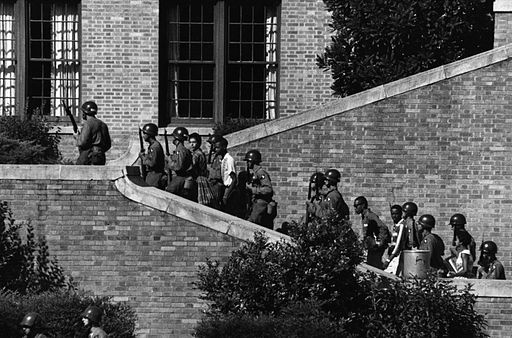
Soldiers from 101st Airborne escort Little Rock Nine students into Central High School

Soldiers from 101st Airborne escort Little Rock Nine students into Central High School, 1957. Source: US Army

In the late 1950s, the idea of integrating white schools was still new. The 1954 Supreme Court ruling, Brown vs. Board of Education, said having separate schools for blacks was illegal. Both sides, the integrationists who wanted African American students to have the same access to the better funded schools that whites attended, and the segregationists who wanted to keep things the same, thought they were right. In fact, they used the same religion, Christianity, to support their causes.

Days before the paratroopers arrived, African American students tried to enter Central High, but were blocked by National Guardsmen, citizens from Little Rock, and even students. Some white students used their religion to explain their attitudes. One of these students was Hazel Bryan, a white girl who photographers captured shouting in anger behind black student Elizabeth Eckford. Hazel later said, “I was very religious at that time. I attended church every Sunday morning and night…while no one at the church said that we should protest school integration, we got the feeling that it would be a good thing to do.”

Many white ministers believed that God sanctioned segregation. Some referred to the passage from Genesis 9:20-27 that said one of Noah’s sons was dark-skinned and was cast out as proof that God did not want white and black people to be near each other.

During the 1956 Arkansas governor’s race, candidate Jim Johnson appealed to voters by saying that the South, “one of the last patriotic and Christian strongholds,” would be ruined if the schools were integrated. While Johnson didn’t win the election, he convinced Governor Orval Faubus that he could not support integration of the public schools. Faubus, who had previously taken a more moderate stance on race issues, sent the Arkansas National Guard out to block African American students from entering the high school on September 4, 1957.

In contrast, some Christians and white ministers supported integration of the state’s public schools. On September 4, 1957, three white ministers joined two black ministers and NAACP chairperson Daisy Bates to walk with the African American students on what was supposed to be their first day of school. Unfortunately, only seven of the students heard about this plan. The seven students who did were still turned away by National Guardsmen, but unlike Elizabeth Eckford, they did not have to fend for themselves.

When the Little Rock Nine finally started school, they faced ridicule and sometimes violence from white students. However, other students like Glennys Oakes were members of churches that supported integration. She said that her minister told the young people that the segregationists’ interpretation of the story of Noah’s son was ridiculous. She said, “Our whole perspective was that this [integration] was the right thing to do.” Despite harassment from segregationists, Glennys and five other white students invited black students to sit at their table during lunch.
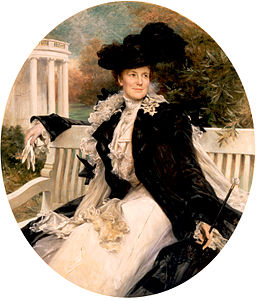
Edith Carow Roosevelt: Future First Lady

Official Portrait of First Lady Edith Roosevelt

Official Portrait of First Lady Edith Roosevelt

Although Edith Carow spent much of her childhood with Theodore Roosevelt and was best friends with Corrine Roosevelt, her family life and fortunes differed from theirs. During the Civil War, Edith’s father’s shipping business became less profitable. When he wasn’t away on business or drinking to forget his troubles, he doted on Edith. He told her tales of Sinbad the Sailor and instilled in her a love for literature that remained throughout her life.

Unfortunately, the shipping business remained unprofitable and the Carows had to depend on relatives. The family moved in with Edith’s aunt when Edith was a toddler. Her aunt’s home in New York was close to Theodore Roosevelt’s grandfather’s house, and Edith was soon welcomed into the Roosevelt circle. She was especially close to Corrine, Theodore’s younger sister, and adored Theodore as well. A sensitive child, Edith hid her broken toys whenever Corrine and Theodore came to her aunt’s house.

Theodore and Edith both loved books from an early age. Edith attended the home school taught by Theodore’s Aunt Gracie, and the two friends read everything they could, including the novels of Louisa May Alcott. Both the Roosevelt children and the adults treated Edith like part of the family, which relieved some of Edith’s anxiety as her alcoholic father went bankrupt and her mother succumbed to depression. Edith also spent time at the Roosevelt’s summer home, named Tranquility. The young friends recited their favorite poems during picnics and Theodore and Edith often danced together at parties.

After Theodore left for Harvard, Corrine and Edith started a literary society in which members contributed short stories and poems while other members critiqued them. Theodore hadn’t forgotten Edith, though. He invited his sisters, brother, and Edith to visit him during his freshman year. After Edith and his siblings left, Theodore told Corrine that he never saw “Edith looking prettier” and that everyone “admired her little Ladyship intensely, and she behaved as sweetly as she looked.”

When Theodore and Corrine’s father died, Edith spent time with both of them, and often went sailing with Theodore. On August 22, 1878, the two had a private conversation which neither ever discussed in public. It was clear that their relationship was damaged afterwards, however. By the winter, Theodore was engaged to Alice Lee. Edith did a good job of keeping her feelings to herself, though her friends noticed that she out-danced everyone at Theodore and Alice’s wedding.

Alice died after a difficult childbirth. Theodore was crushed, but he also instructed his sisters, who were still close to Edith, not to invite her over during his visits. He remembered the happy times they had together and feared he might still have feelings for her. However, they encountered each other one day in October of 1885 as Edith was leaving his sister Bamie’s house. Theodore and Edith, old friends and childhood sweethearts, secretly got engaged the following month.

Doing Research at the Franklin D. Roosevelt Library

Statue of FDR's dog, Fala at the visitor's center in Hyde Park, NY

Statue of FDR’s dog, Fala at the visitor’s center in Hyde Park, NY

Two years ago this week, I was conducting research for my book at the FDR Library. Well, that’s not entirely true. I was in Hyde Park, New York and I was using the library’s resources, but both the library and the museum were undergoing renovations. The library was off-limits to visitors, but the library staff set up a cozy room in the visitor’s center for researchers to view the library’s archives. Every morning the other patrons and I arrived early to request the boxes of materials we needed, and one of the archivist’s assistants brought them in on carts.

Sometimes I wish I had the chance to see the actual library, but that didn’t bother me at the time. I was too focused on reading documents from the War Refugee Board files and taking pictures of them with my digital camera (photocopying was not allowed because some of the documents were fragile). I also remember thinking that the presidential library might be large and intimidating. Frankly, doing research for my first book was intimidating enough, so I was content with the smaller room.

The visitor’s center also had a statue of FDR’s dog, Fala, near the entrance. I love dogs and missed my beagle mix who stayed with my mother in Illinois. The staff at the center may have thought I was a little odd when I said, “good morning, Fala” and “see you tomorrow, Fala” every day, but then they were probably used to eccentric researchers.

The best part of the library/visitor’s center was Virginia, the archivist. The library had a great online finding aid, so I knew which documents I needed and the boxes they were located in. Unfortunately, there were two documents that I had only seen cited in other history books, and I had no idea how to locate them. Virginia didn’t, either because the filing system was changed after those books were written, making the citations almost worthless. Fortunately for me and my book, Virginia was determined to find what I needed. She seemed to take it personally when she couldn’t find a document. I thought, this woman is a researcher’s dream come true. I still can’t figure out how she located those documents, but she managed it somehow and I went back to Illinois with all the sources I needed.

Some day I want to return to Hyde Park as a tourist, but I enjoyed almost every minute that I spent researching my book.

The Origins of American Symbol Uncle Sam

World War I Uncle Sam Recruiting Poster

World War I Uncle Sam Recruiting Poster

When Samuel Wilson moved to Troy, New York in 1789, he had no idea that he would become the inspiration for an American symbol. Four years after arriving in Troy, Samuel and his brother started a meatpacking business called E. and S. Wilson. They also produced the barrels that transported the meat. In Troy, Sam Wilson was known for his pleasant personality and his jokes. Since he was so likeable, the townspeople called him Uncle Sam.

During the War of 1812, the Wilson brothers were under contract to send food supplies to northern troops stationed in Troy. Every barrel of meat bore the stamp “U.S.” Sam Wilson meant the abbreviation to represent United States, but back then the only abbreviation for the country was “U. States.” Troy residents joked that the U.S. stood for Uncle Sam Wilson, who was supplying the army with food. The joke was told so often that all rations sent to the government were called Uncle Sam’s.

In 1813 references to Uncle Sam as a nickname for the United States appeared on local broadsides and in the Troy newspaper.

Images of Uncle Sam were drawn as early as 1830, but his physical traits varied with each artist. Some historians believe that a key factor in the development of Uncle Sam’s likeness occurred after the assassination of President Lincoln. Like Lincoln, the new Uncle Sam was tall, skinny, had a beard, and wore a top hat.

Cartoonist Thomas Nast gave Uncle Sam red-and-white-stripped pants and stars on his coat. In 1914 James Montgomery Flagg created the most famous version of the American icon. Flagg’s Uncle Sam has a stern face and points at observers. Beneath Uncle Sam are the words “I want YOU for U.S. Army.”

Samuel Wilson, the original Uncle Sam, became a wealthy businessman after the War of 1812. He remained popular in his community until his death in 1840. Eventually, Congress made Wilson’s connection with the symbol of Uncle Sam official. Congress signed a Joint Resolution on September 15, 1961 recognizing “Uncle Sam Wilson of Troy, New York, as the progenitor of America’s national symbol of Uncle Sam.”

How I Decided on a Cover Designer for My Self-Published Book

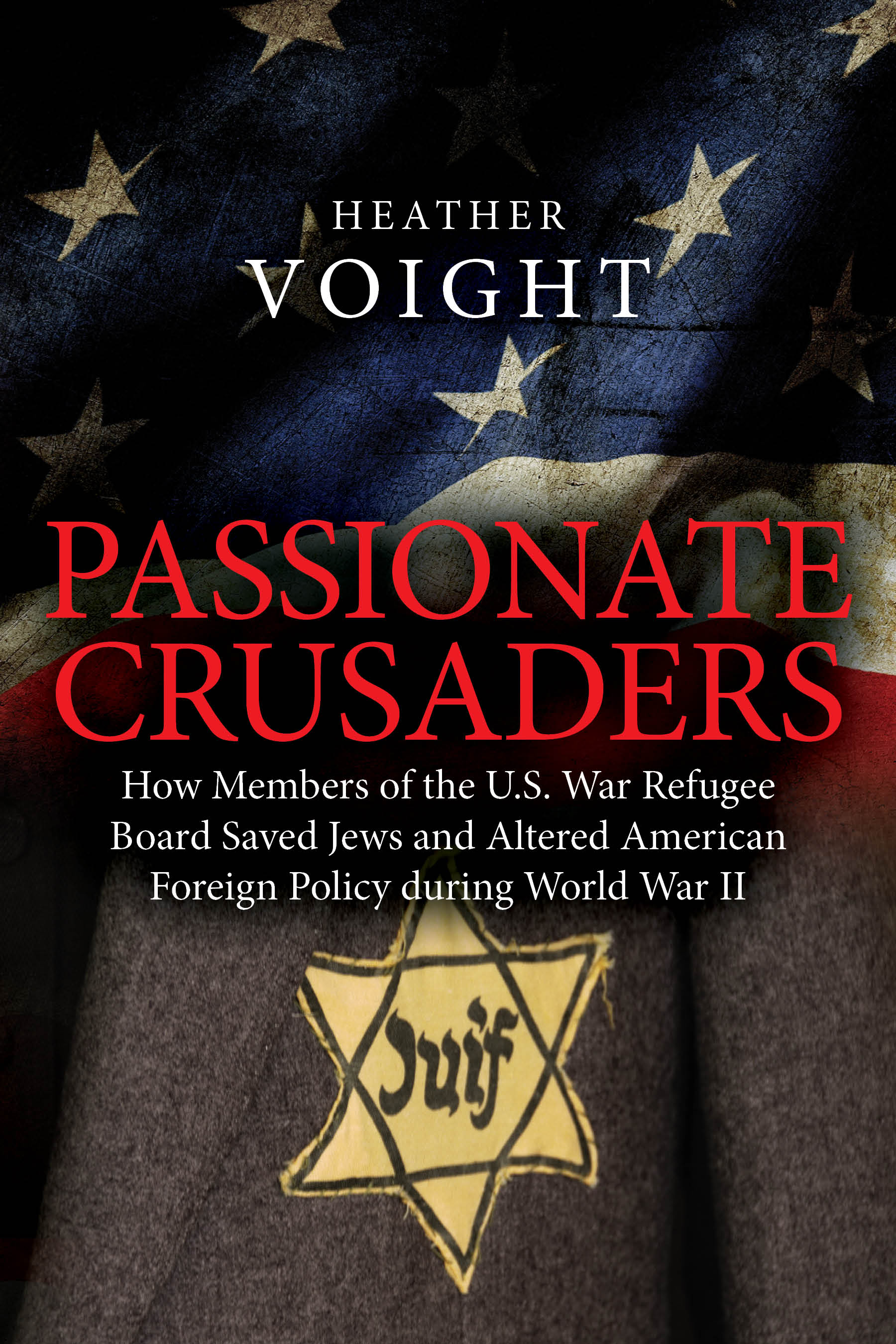
My book cover design is here! I can’t use the word “finally” since my designer Jane Dixon-Smith works pretty quickly, but when you’ve been writing and researching for what seems like ages, seeing your final cover is a great feeling. I didn’t know exactly how my cover would look, but I was looking for a few specific things in a designer.


My book cover!


What I Wanted in a Cover Designer

  • Someone who was experienced and recommended by at least one other self-published author that I liked.
  • A price that was lower than what most women state is their budget for a wedding dress on Say Yes to the Dress. If you haven’t looked for a cover designer yet, please just trust that I’m not exaggerating.
  • A choice of covers, but not a ton of choices since I’m indecisive. Jane gave me three great options and I had trouble picking one!

After deciding on a designer, I felt my cover also needed certain qualities.

What I Wanted in a Book Cover 

  • A design that made the subject of my book on America and the Holocaust clear, even on the small image that would pop up on Amazon. Despite Jane’s request for examples of 6-10 covers, I could only find one book cover on a similar topic that I really liked. Instead, I put together some images in a Word document that I found on Pinterest and asked Jane if she could include the American flag in her design.
  • No photos, since I needed to also hire an editor, have money to feed my dog, etc.
  • Something that didn’t look like I designed it, since I have no artistic skills other than writing. After seeing samples of Jane’s work, I wasn’t worried about this.

The designer and the design I chose met all of my requirements. The combination of the American flag and the Jewish star helps set the tone for my book on a small U.S. government agency whose members tried to save Jews during the Holocaust.

If you’ve self-published a book or are considering the idea, what are you looking for in a designer/book cover?

World War II Begins as Germany Invades Poland

When Hitler invaded Poland on September 1, 1939, he felt sure of two things. First, he believed that Germany’s attack on Poland would be swift and successful. Second, he thought Britain and France would not respond to the attack with force. Only one of Hitler’s assumptions proved correct.

The attack was quick and it was a success. German air and armed forces were much more advanced than their Polish counterparts. Poland possessed 600 tanks to Germany’s 3,200. Unlike the Germans, the Poles still had cavalry as part of their army divisions.

In the early morning of September 1, German aircraft bombed Warsaw. Meanwhile, the German army invaded Poland from the north and south. During multiple air raids, the Germans targeted railroads, roads, and Polish troops. Villages were also bombed in order to terrify civilians. Hitler wanted the civilians to attempt to escape and thus block Polish reinforcements from using the remaining roads.

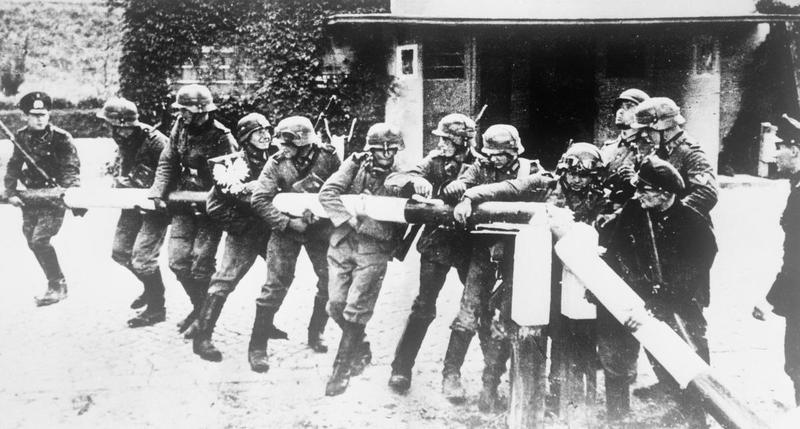
German troops breaking border barrier

German troops breaking border barrier in Polish town. September 1, 1939

Though he successfully conquered Poland a few weeks later, Hitler miscalculated British and French attitudes to his takeover. He knew that Britain and France had agreed to aid Poland in the spring of 1939 if she came under attack. Still, Hitler wasn’t very worried about a military response from either country.

To avoid war with Germany in previous years, Britain and France had already granted Hitler’s demands for German rearmament. They also allowed him to make Austria and Czechoslovakia part of the Third Reich. He thought a takeover of Poland would be followed by more peace talks, not war. Yet leaders in Britain and France had already concluded that Hitler’s demands might never end unless they threatened war.

On the evening of September 1, Poland asked Britain and France to honor their promise to defend Poland. That same day, British Prime Minster Neville Chamberlain delivered a speech to the House of Commons. He said, “Eighteen months ago in this House I prayed that the responsibility might not fall upon me to ask this country to accept the awful arbitrament of war. I fear that I may not be able to avoid that responsibility.” On September 3rd, Britain’s ambassador to Germany delivered an ultimatum stating that if Germany did not stop its attack on Poland by 11 AM, Britain would go to war with Germany. Germany did not respond, and Britain’s Prime Minster made an announcement on the radio that the country was at war with Germany.