U.S. President Andrew Jackson: Surprising Facts about the Man on the Twenty Dollar Bill

When Andrew Jackson was elected president in 1828, he was the first to reach that office as a self-made man. He was born into a poor family in South Carolina. During the American Revolution, Jackson lost his mother and two brothers and was wounded by a British officer.

Family tragedy seemed to follow Jackson throughout his life. As he ran for president, his detractors claimed that Jackson had lived with his wife before their marriage. Actually, they were married for two years before they realized that Rachel’s divorce from her previous husband had not been finalized. Rachel Jackson died from an illness before her husband’s inauguration. Jackson blamed her death on the nasty comments made during the campaign.

Historians have dubbed Jackson’s presidency the “age of the common man.” He was certainly unlike any other president the country had elected.

White House Portrait of Andrew Jackson

White House Portrait of Andrew Jackson

After his inauguration Jackson invited members of the public to attend a reception at the White House. To the dismay of the staff, so many people tried to cram into the White House that items were broken. Shortly after becoming president, Jackson indulged his fondness for chewing tobacco by installing twenty spittoons in the East Room.

Despite his dislike of formalities, Jackson’s terms as president had little impact on the common man. It’s true that more people (at least white, taxpaying males) got to vote in the election that sent Jackson to the White House. Through the Indian Removal Act he gave more white men the opportunity to acquire Native American land.

He did not, however, believe that social or economic equality was desirable. He stated, “Distinctions in society will always exist under every just government. Equality of talents, or education, or of wealth cannot be produced by human institutions.”

Jackson established the office of president as the chief power in American government for the first time. He made it obvious that he was not going to allow others to tell him what to do. He used the presidential veto more often than any previous president. For example, he vetoed the re-charter of the National Bank and federal support for internal improvements.

His ignorance of financial matters led to an economic crisis which harmed his successor, Martin Van Buren.
 

Surprising Facts about U.S. President John Quincy Adams

Though he was the first son of a former president to be elected, John Quincy Adams’ presidency was undermined before he even got into office.

The 1824 election was crowded with four Republican candidates: Andrew Jackson, Adams, Henry Clay, and William Crawford. Jackson and Adams received the most votes but neither won outright, so the election results were decided in the House of Representatives where Clay was Speaker of the House. Clay threw his support behind Adams. Afterwards, Adams named Clay as his secretary of state. Jackson supporters claimed without proof that Adams had bribed Clay and did their best to discredit Adams.

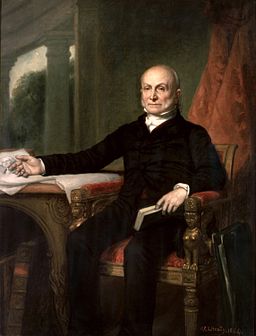
John Quincy Adams Official White House Portrait

John Quincy Adams Official White House Portrait

Adams had also inherited his father John Adams’ stubborn refusal to negotiate. His first annual message to Congress contained some good ideas, such as promotion of internal improvements and the creation of a national university. His insistence on broad federal powers and his assertion that government officials did not need to consider the opinions of their constituents made him very unpopular, however. As a result, Congress ignored President Adams’ domestic and foreign policies.

After being voted out of office and replaced by Andrew Jackson, Adams did not retire. Instead, he served as a member of the House of Representatives for 17 years. He was the only president to serve in the House after being president. His family objected to him serving in a lower office, but his election pleased him.

Nicknamed “Old Man Eloquent” for his speeches against slavery, Adams received more respect in the House than as president. He also accomplished more. For example, he helped repeal the gag rule that prevented the House from debating any criticisms of slavery.

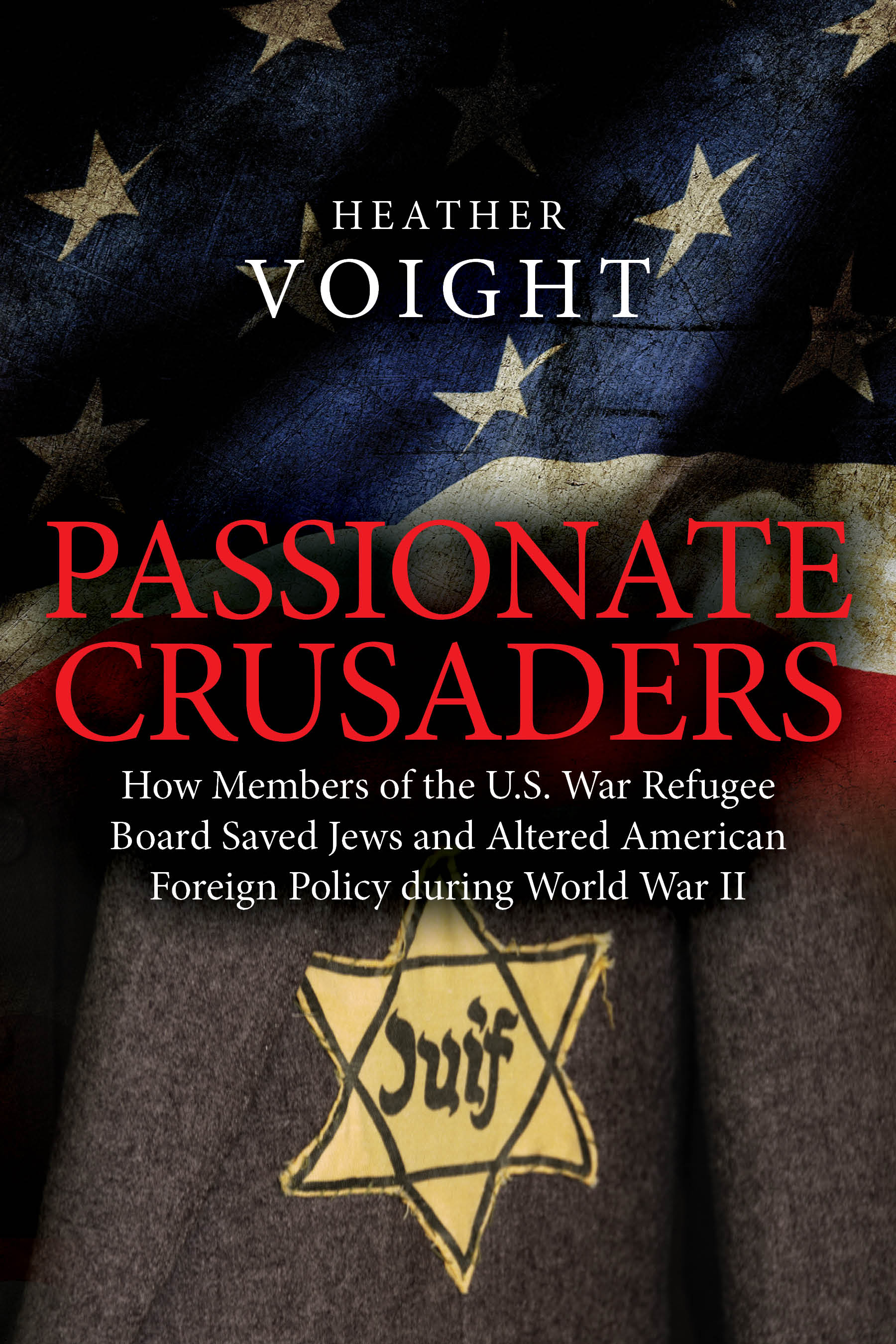
Heather Voight Talks about her Book Passionate Crusaders: How Members of the U.S. War Refugee Board Saved Jews and Altered American Foreign Policy during World War II on Back Porch Writer Podcast

Heather Voight on Back Porch Writer podcast. I talk about my history book and the process of writing it. http://www.blogtalkradio.com/backporchwriter/2015/09/15/author-heather-voight-joins-kori-on-the-back-porch

Passionate Crusaders Cover LARGE EBOOK

My Book FREE on Amazon Kindle

To my readers: My book, Passionate Crusaders: How Members of the U.S. War Refugee Board Saved Jews and Altered American Foreign Policy during World War II will be free on Amazon Kindle September 16th and 17th here:

http://amzn.to/1GDI2qq

Passionate Crusaders Cover SMALL AVATAR

If you don’t have a Kindle but know someone who likes free books, please spread the word!

Surprising Facts about U.S. President James Monroe

James Monroe was the son of a Virginia plantation owner. He became an orphan in his mid-teens. Fortunately, he stayed with his uncle who liked James and his siblings. In 1774 Monroe attended William and Mary College in Williamsburg. Monroe and his friends found plenty to do outside the classroom. The Royal Governor had already left town due to the spirit of rebellion among some Virginians in the colony’s capital. Along with a few classmates, Monroe helped to raid the absent governor’s palace. The young men took 200 muskets and 300 swords which they gave to the Virginia militia. In the winter of 1776, Monroe joined the Virginia infantry.

By the time he became president, Monroe’s resume included service as a soldier in the Revolutionary War, U.S. senator, minister to France and England under President Washington, governor of Virginia, and positions as secretary of state and secretary of war under President Madison. He became friends with James Madison and Thomas Jefferson while the U.S. government was being formed. Together, the three of them opposed the policies of John Adams and other Federalists.

Portrait of James Monroe

Portrait of James Monroe

Though he often receives less attention from scholars than other presidents who came from Virginia, Monroe’s elections and administration were notable for several reasons. In the 1820 election Monroe got all the electoral votes except one. When elected, Monroe was the first president to hold his inauguration outdoors. He was also the first chief executive since Washington to take a national tour of the country. Unlike his friends Jefferson and Madison, Monroe had an outgoing personality that endeared him to the other Americans he met. His cross-country tour was such a success that he travelled several times while in office.

As president, Monroe utilized his agreeable personality to great effect. He had a talent for picking men with great minds to serve in his administration and maintained good relationships with his cabinet members. Despite his opposition to John Adams’ political views, Monroe chose Adams’ son, John Quincy Adams as secretary of state. Monroe’s easy going personality allowed him to get along with almost anyone, so the two men established a good working relationship. Adams encouraged Monroe to make a statement about European influence in the Western Hemisphere.

In his annual message to Congress, Monroe stated “the American continents, by the free and independent condition which they have assumed and maintain, are henceforth not to be considered as subjects for future colonization by any European powers.” This part of Monroe’s message came to be known as the Monroe Doctrine. The doctrine made it clear that America had a right to protect any nation in the Western Hemisphere against European aggression. As a product of both John Quincy Adams and Monroe’s ideals, the doctrine aptly demonstrated the president’s ability to partner with unlikely people for the good of the country.

Book Review of Holocaust Memoir Dry Tears by Nechama Tec

In contrast to other Holocaust memoirs that describe what it took to survive the concentration camps, Dry Tears is the story of a Jewish young girl with blond hair and blue eyes trying to pass as a Christian in Nazi-occupied Poland. At the beginning of the book, Nechama’s father worries that she and her sister will fall behind in school. Of course, her learning cannot take place in a traditional school since the Nazis have closed them to Jews. Even private tutoring becomes impossible.

Yet Nechama acquires different kinds of knowledge during the war years. Nazis made it extremely difficult for Poles to find enough to eat because of the activities of the Polish underground. Jews were not supposed to be in Poland at all, so there were no food rations for them. Since she looked Aryan, Nechama could pass for a Pole and venture out of her family’s hiding place. She learns to bargain for the cheapest food prices on the “black market.” Later, she learns to sell her mother’s rolls at the same market when the family finances are low.

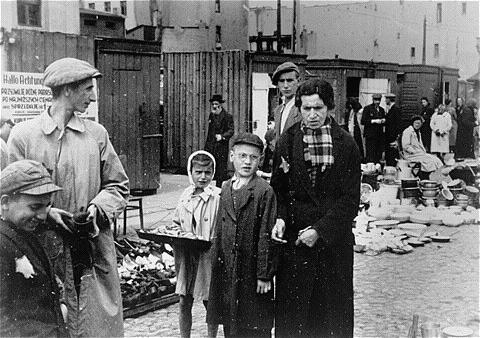
Child vendor in ghetto during the Holocaust

Child vendor in ghetto during the Holocaust (Nechama is not living in a ghetto, but she still sells food illegally to other Poles)

Nechama also acquires knowledge about human nature most eleven year olds do not. The Christian family that takes her and her family into their small home in the Polish countryside do not do so out of charity, but out of their own self-interest. Poles were unpopular with the Nazis as it was, and hiding any Jew was punishable by death. However, no one could survive on the wages that Nazis provided to Poles, so families like the Homars decide to “keep cats,” meaning that they took in Jews in return for handsome sums of money.

Some of the members of the Homar family treat Nechama very well. Helena, the family matriarch, even encourages the girl to call her Grandma. Yet despite her affection for Nechama, Helena says that she initially disagreed with having Jews come to stay in her home because Christian blood should not be spilt for Jewish blood. The Homars, like most other Polish families, are anti-Semitic. They emphasize that Nechama and her family are “not really Jewish” because “real Jews were greedy and dishonest”–qualities that Nechama’s family abhors.

Nechama cannot understand how the Homars could like her family and still think bad things about Jews. Her father tells her that the Homars’ anti-Semitism comes from hating an abstraction, a caricature of Jews that does not exist. Soon Nechama discovers that adults are not the only ones who think Jews are evil. Children that she socializes with in the small Polish village of Kielce also make anti-Semitic remarks. She says, “in a sense, they were unconsciously telling me that I was their friend only for as long as they thought I was one of them.”

As Nechama gains knowledge, the reader learns that a trying to pass as a Christian in Poland during World War II is fraught with almost as many dangers as trying to survive a concentration camp. There are random raids on Poles that threaten to deport even Aryan looking Jews. Certain members of the Homar family are less trustworthy than others, making their hiding place precarious. Nechama’s efforts to get food and money for her family place her in special danger since Nazis hate the Poles’ black market activities.

The fact that her looks give her the opportunity to pass does not ensure her survival or her family’s. Nechama’s unique struggles make this memoir a must-read for anyone with an interest in the Holocaust years or students of human nature.