Presidential Pets: George Washington’s Dogs

George Washington was both the founder of the United States and the founder of the American foxhound. He crossed seven larger hounds given to him by the Marquis de Lafayette with his smaller Virginia hounds to develop the new breed. Around 1785, Lafayette sent his hounds to America on a ship. They were placed in the care of a young John Quincy Adams, who appeared to have misplaced the dogs at one point. Washington got rather worked up over the incident, but fortunately the dogs were located.

Washington wrote that he wanted to create “a superior dog, one that had speed, scent and brains.” Washington’s fondness for foxhunting caused his search for a superior hound. In the winter he went foxhunting several times a week. He gave his hounds mischievous-sounding names like Drunkard, Mopsey, Taster, Tipsy, Tipler, and Lady Rover.
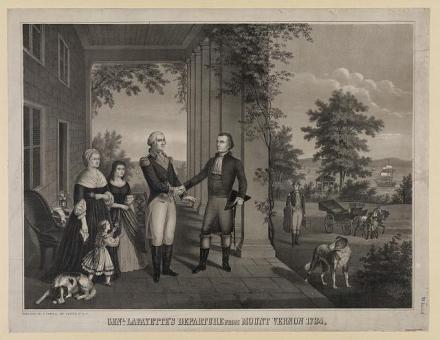
Washington and dogs

Lithograph of George Washington and General Lafayette at Mount Vernon, Library of Congress

In addition to foxhounds, Washington also wished to breed Irish wolfhounds to protect the sheep at his plantation Mount Vernon. Unfortunately, the wolfhound was so rare even in Ireland at the time that Washington had to give up the idea.

Washington enjoyed owning many other breeds of dogs throughout his life. In 1786 he bought a Dalmatian named Madame Moose. The next year he bought a male to breed with her. He recorded the arrival of the second dog: “A new coach dog [arrived] for the benefit of Madame Moose; her amorous fits should therefore be attended to.”

Fox hunting and breeding dogs were only two of Washington’s passions. Washington also enjoyed duck hunting. For this purpose, he took his poodle named Pilot with him. Other dogs included spaniels which were used to flush out birds and retrieve them when they were shot. Terriers hunted on their own for rats at Mount Vernon, a service Mrs. Washington undoubtedly appreciated.

Though he owned many dogs, Washington didn’t think that his slaves should have the same privilege. Eventually any dogs owned by his slaves were hanged.
The Maya Creation Story

In 1701, a Dominican priest named Francisco Ximenez was allowed by the Maya to see something no other European had ever laid eyes on. They showed him a copy of their creation story, known as the Popol Vuh. The document had been hidden in the town of Chichicastenago in Guatemala. Ximenez made a Spanish translation of the Popol Vuh so Europeans could read it.

The document Ximenez saw was written between 1554-1558. Before the anonymous Mayan authors wrote it down, Mayans told the creation story orally. Here is the basic story of the Popol Vuh.

In the beginning, there was nothing but stillness. There were only a group of gods called Heart of Sky, Newborn Thunderbolt, Sudden Thunderbolt, and the Plumed Serpent. These gods went to a pair of other gods named the Maker and Modeler–a pair of male and female creators. Maker and Modeler created the earth through the power of their words. They created land, mountains, trees, rivers, and plants. The gods weren’t completely satisfied, though. They wanted to create beings that could worship and thank them for what they created.

First, the gods made animals, but then realized that animals couldn’t speak to honor the gods with words. Next the gods tried making humans out of mud. The humans could speak but they were stiff and melted in the rain. The gods decided to send a flood upon the mud people to destroy them. On their third attempt, the gods made wooden people. These humans had great strength and could speak but they treated the animals cruelly. As revenge, the gods allowed the animals to eat the wooden people. The few wooden people who survived hid up in the trees and became monkeys.

While the gods were trying to create humans, the earth was still without a sun or a moon. One day Seven Macaw, a large bird with shining feathers and jeweled eyes, went up into a tree and claimed that he was the sun and the moon. The Hero Twins, Hunahpu and Xbalanque, thought Seven Macaw had too much pride. They used their blow guns to shoot him and Seven Macaw fell from the tree with a broken jaw. (This image is portrayed often in Mayan pottery). Unfortunately, Seven Macaw wasn’t dead. He ripped off Hunahpu’s arm and took it back to his house.

The twins went to the houses of their elders. They asked for help to defeat Seven Macaw and get Hunahpu’s arm back. The twins suggested that the elders pretend to be healers and they pretend to be their assistants. Then the elders walked by Seven Macaw’s house selling their healing practices. Seven Macaw invited them in to fix his jaw. He was told that all his teeth need to be replaced. Reluctantly, Seven Macaw agreed to this treatment. The elders replaced Seven Macaw’s teeth with white corn so that he couldn’t eat and he dies. The elders then fixed Hunahpu’s arm.

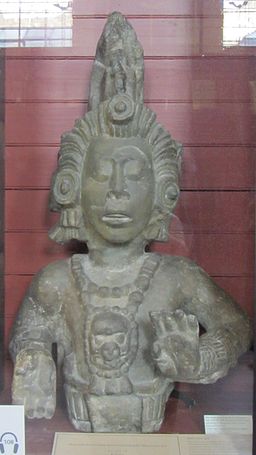
256px-Maya_maize_god_statue

Maya Maize God statue at British Museum March 25, 2012. Photo by BabelStone

At this point, the Popol Vuh goes back in time to explain who the twins’ ancestors were. Their father was defeated by the Lords of Death in the Underworld. The twins went through many trials concocted by the same Lords but they won and resurrected their father, who came back to life as the Mayan Maize god.

After all their adventures, the Hero Twins went up in the sky and became the Sun and the Moon.

With the Sun and Moon in place, the gods made a final attempt to create humans. This time they mixed yellow and white corn with water to make human flesh. According to the Popol Vuh, “this time the beings shaped by the gods are everything they hoped for and more: not only do [they] pray to their makers, but they have perfect vision and therefore perfect knowledge.” The gods decided that these humans were too perfect, however. They put a fog on the people’s eyes so they couldn’t see that they were godlike.

The Childhood Adventures of Winston Churchill

Most pictures taken of Winston Churchill with the bald head and rounded stomach make it hard to picture him as a young boy, but he did have a childhood.

Winston Churchill was born on November 30, 1874 in Oxfordshire, England. His family didn’t stay long in England though. Soon after Winston’s birth, the family moved to Dublin, Ireland. Winston and his parents lived with his grandfather who was the Viceroy of Ireland. Winston’s father, Lord Randolph Churchill, worked as the viceroy’s secretary. By the time the Churchills returned to England in 1880, Winston had a new brother named Jack.

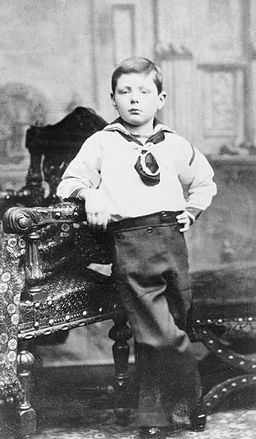
256px-Churchill_1881_ZZZ_7555D

Winston Churchill, 1881 Dublin, Ireland

Like a lot of kids from wealthy families in Victorian England, Winston was closer to his nanny than to his parents. His nanny’s name was Mrs. Everest, but Winston affectionately called her “Old Woom” or “Woomany.” They remained friends when Winston grew up. Though he was only twenty when she died, Winston kept a picture of his nanny in his bedroom until his death.

Winston didn’t become close to his mother, Lady Randolph Churchill, until after Mrs. Everest’s death. He later wrote of his mother that she “always seemed to me a fairy princess…I loved her dearly—but at a distance.”

Lady Randolph Churchill had both physical and emotional distance from her son. Before his eighth birthday in 1882 Winston was sent to St. George’s boarding school. Winston showed no interest in his subjects and had poor grades. Lord and Lady Randolph didn’t take much interest in their son, either, even when he begged them to visit the school. His father was a politician and his mother was busy with her social life.

After two years at St. George’s Winston transferred to Miss Thomson’s Preparatory School. He liked his new school much better. Winston remembered his time there fondly: “At this school I was allowed to learn things which interested me: French, History, lots of Poetry by heart, and above all riding and swimming.”

In 1888 Winston entered Harrow School. He joined the Harrow Rifle Corps which held mock battles. Though he excelled in the Rifle Corps and enjoyed the mock battles, he was not a stellar student otherwise. As he remembered, “in all the twelve years I was at school no one ever succeeded in making me write a Latin verse or learn any Greek except the alphabet.”

Clearly, Winston had other goals in mind that didn’t involve school. He told one friend that “I shall be in command of the defenses in London…it will fall to me to save the capital and save the Empire.” During World War II, young Winston’s comments came true.