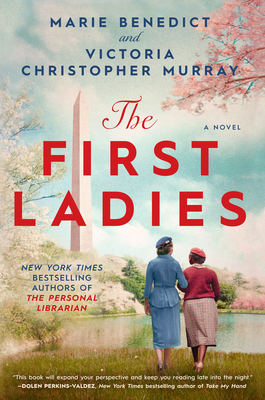
The First Ladies introduces us to two influential women of different races who become friends in 1927. Mary McLeod Bethune is an African American woman who founds Bethune Cookman College in Daytona, Florida on the site of a garbage dump. The school serves underprivileged black girls. She also finds funding for McLeod Hospital when her students are turned away by other hospitals due to their race. The book’s other main character is Eleanor Roosevelt, who by 1927 bought Todhunter School for girls and is teaching there. She also works with the Women’s Division of the New York Democratic Party to get women to vote for Democratic candidates.
Though they accomplished much by themselves, Eleanor and Mary accomplished far more together. As Eleanor’s husband Franklin Delano Roosevelt returns to public life after his polio diagnosis, Mary has Eleanor in the New York governor’s mansion and eventually in the White House to turn to when she wants more done about racism.
In the early 1930’s when FDR is still governor, Mary tells Eleanor details about lynchings that are happening in the North as well as the South. Eleanor says, “silence suggests agreement, and anyone who knows about these terrible acts—including me—should take a stand against them. Mrs. Bethune has offered me an entirely different lens through which I should be examining the racism in our country.” As a result of Mary’s friendship, Eleanor begins to take a stronger stance against racism. When FDR is elected president, Eleanor and Mary try to get his approval for an anti-lynching bill. Though FDR makes public speeches condemning lynching, they cannot get his support for the bill.
Despite some setbacks, Mary and Eleanor brainstorm ways to help blacks during the Great Depression. Eleanor asks, “How shall we begin to ensure that the New Deal is indeed for everyone?” They plan to get black people into administrative positions in the government as well as finding them jobs. For example, Eleanor recommends Mary to a position with the National Youth Administration. After Mary speaks to FDR about the importance of funding for black youth, he decides to create a division within the NYA to focus on the needs of blacks and puts Mary in charge. In three months, Mary doubles the funding for NYA’s Division of Negro Affairs.
Just as Mary changes Eleanor’s opinions on racial issues, her friendship with Eleanor changes how Mary votes. She voted against FDR when he first ran for president, but she votes for his second term because blacks are now included in New Deal programs.
During FDR’s second term, Mary makes a persuasive speech to him about including blacks in pilot and combat training and adding more black army units. Mary and her male allies in the black community also get FDR’s promise to issue an executive order ending discrimination in the military. Yet the bill languishes on the president’s desk for so long that the black community threatens to stage a mass protest in Washington, D.C. Fortunately, Eleanor convinces him to sign the bill, preventing the protest.
I always feel that the main job of historical fiction is to make readers interested in learning more about the topics in it. The First Ladies succeeded in making me want to find out more about Mary McLeod Bethune, who I knew almost nothing about before. The dual points of view of Mary and Eleanor worked well, though I could’ve done without some of the details of Eleanor’s childhood. To be fair, I know more about Eleanor Roosevelt from reading biographies about her, so less familiar readers may not mind the extra information.
My main criticism of the book is that it put Mary and Eleanor together in important historical situations when they were in different places. For example, Eleanor visits the Tuskegee Institute’s airfield to make a point about how safe it is to fly with an African American pilot. The book includes Mary on this trip even though she wasn’t there. Fortunately, incidents like this are rare in the book (it only happens twice). I realize the book is historical fiction but feel it’s important to maintain historical accuracy whenever possible.
This is the second historical fiction book I’ve read recently that explores the power of female friendships, and in this case, what female friends can accomplish together. I enjoyed the focus on friendship rather than a romantic relationship. The First Ladies shows Eleanor and Mary as true friends, despite the racism of the time. As Victoria Christopher Murray wrote in her author’s note, “at the core of any relationship is trust, and Eleanor and Mary had that. They trusted each other and felt free to share, to laugh, to cry…and sometimes even get annoyed with each other.” I recommend The First Ladies to anyone looking to explore the wonderful friendship between an influential black woman and an influential white one.
C.S. Lewis’s parents picked a relatively normal name for their first child Warren, known as Warnie, in 1895. On November 29, 1898, however, they gave their second and last child the name Clive Staples Lewis. Unsurprisingly, he insisted on being called Jack by his fourth birthday.
Lewis’s first books included The Tale of Squirrel Nutkin as well as other Beatrix Potter stories. He was fascinated by the human characteristics of Potter’s animals. C.S. and Warnie also spent time working on their own fantasy worlds. C.S. called his Animal-land and populated it with animals dressed as humans. There was no sense of another world within Animal-land like there was in his Narnia books, however. “My invented world was full (for me) of interest, bustle, humour and character. But there was no poetry, even no romance in it. It was almost astonishingly prosaic,” Lewis later wrote.
In 1905, the family moved to Little Lea, a large house outside of Belfast. Though the house had many design flaws, it was perfect for two young boys. An attic room at the end of a long corridor served as a hideaway for best friends C.S. and Warnie. Both of their parents were fond of books and Little Lea was full of them. Unfortunately, Warnie had little time to enjoy his new home. He was sent away to boarding school in England in spring of 1905.
Although he missed Warnie terribly, C.S. enjoyed reading books and writing stories while at Little Lea. He still preferred the time he spent with his brother on school holidays. Until 1908, C.S. had a childhood that protected him from reality.
In 1908, his mother Flora was diagnosed with cancer and required nurses night and day. C.S. felt ill one night, “crying both with headache and toothache and distressed because my mother did not come to me. That was because she was ill too…And then my father, in tears, came into my room and began to try to convey to my terrified mind things it had never conceived before,” Lewis wrote. Flora died in August 1908 during Warnie’s summer break.
Distraught over his wife’s death, the boys’ father began drinking excessively and yelled at his sons over minor things. Only a couple of weeks after his mother’s death, C.S. left for boarding school with Warnie. He would never forgive his father for sending him away.
Lewis hated Wynard School so much that he described it in his autobiography as a “concentration camp.” The mean headmaster Reverend Robert Capron beat his pupils indiscriminately with a cane. C.S. pleaded with his father to come home but the pleas went unheeded. Wynard closed after a lawsuit by another boy’s parents and C.S. was sent back to Ireland.
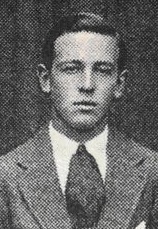
C.S. Lewis as undergraduate at University College, 1917
He went back to school after an illness to Cherbourg House, a small prep school in Malvern close to Warnie who was at Malvern College. Lewis’s new school had competent teachers and a stronger curriculum.
C.S. got a scholarship to Malvern College, which he also hated because the boys aged 13-14 acted as servants to the older boys aged 17-18. Though he didn’t fit in with the other boys, C.S. liked his Latin master Harry Wakelyn Smith who read poetry aloud to his students. Malvern also had a good library where Lewis read Yeats and discovered Celtic mythology. To C.S.’s relief, he was withdrawn from the school to continue his education under father’s great master, William Kirkpatrick.
In 1914 Warnie went to war in France and Jack went to Surrey to meet Kirkpatrick, who tutored him to pass his Oxford exams. During his time with Kirkpatrick, C.S. discovered Greek literature and history as well as Dante. He read Phantastes by fantasy writer George MacDonald and loved it. In a letter that Lewis discovered years later, Kirkpatrick wrote to his father that C.S. would be useless in any career except a scholar or a writer. As it turned out, Lewis became both.
Early marriage was encouraged in ancient Egypt. A suitable age for men was 20 but the bride would be younger, probably around 14 years old. There were no legal age restrictions on marriage so younger girls married too.
Ancient Egyptians usually married within the same social class. Marriages between cousins or an uncle and a niece were desirable because it would prevent splitting up family property. Though marriage between brothers and sisters happened within royal families, it wasn’t a widespread practice. Unfortunately the ancient Egyptian habit of using the words “brother” or “sister” as terms of affection made it seem that many more brother/sister marriages took place. Polygamy was also uncommon since a man needed to be rich to provide for many wives.
Marriages were agreed to by the father of the bride and the groom. Unlike modern weddings in western societies, there was no ceremony or exchanging of rings. The ancient Egyptians didn’t even have a word for “wedding.” The bride simply moved her possessions to her new husband’s home. Nevertheless, the ancient Egyptians loved parties so wedding banquets were likely.
The unceremonious nature of Egyptian marriage didn’t mean that couples felt no affection for each other. Indeed, the sheer volume of Egyptian love poetry indicates the opposite. One such poem begins: “My love is one and only, without peer, lovely above all Egypt’s lovely girls./On the horizon of my seeing, see her, rising,/Glistening goddess of the sunrise star bright in the forehead of a lucky year.” Ancient Egyptian statues and tomb portraits also portray husbands and wives sitting side by side. The husband’s arm might be around his wife’s shoulders or vice versa. Though the poses may not seem romantic to modern eyes, few other ancient civilizations showed that much affection between married couples.
Labit – A couple and their child – Reign of Thutmose IV – Egypt
Ancient Egyptian wives also had certain rights that other ancient married women did not. The wife was allowed to own property, and to have a share of any property acquired during the marriage. Ancient wisdom texts show the respect due to a wife. The Instructions of Ani exhort young men: “Do not control your wife in her house when you know she is efficient. Do not say to her ‘Where is it? Get it!’, when she has put it in the right place. Let your eye observe in silence. Then you recognize her skill.”
Wives, like husbands, could also initiate a divorce. Marriages dissolved in much the same way as they began. The wife usually returned to her family home, taking her possessions and her share of the property. Sometimes she received some financial support from her former husband. Marriages ended for various reasons. Sometimes the couple was incompatible, sometimes one party fell in love with someone else, or the wife was infertile and the husband wanted children. Having an infertile wife was not considered an appropriate reason for divorce, but it happened anyway.
Infertility was invariably blamed on women. The main point of ancient Egyptian marriage was to have children, especially sons who could continue the family name and make sure the proper rituals were performed for the parents after death. Wives needed many children to please their husbands, ensure security in marriage and to enhance their social status.
Yet children were not merely status symbols. Tomb scenes show affection of parents to both boys and girls. Though boys were preferred, there was no established tradition of female infanticide in ancient Egypt.
Marriages in ancient Egypt could also end through death. Young girls who married uncles were often widowed and women could die in childbirth. Tomb scenes show loving couples being reunited after death. Remarriage after widowhood was also common, with some ancient Egyptians remarrying multiple times.
Sources:
Ancient Egyptian Literature: An Anthology Translated by John L. Foster
Daughters of Isis: Women of Ancient Egypt by Joyce Tyldesley
Egyptian Life by Miriam Stead
Everyday Life in Ancient Egypt by Jon Manchip White
Abigail Adams (1744-1818), born Abigail Smith, was an early advocate for women’s rights in America through her extensive correspondence with her husband John Adams. Throughout her husband’s political career Abigail took on some roles that were traditional for women at the time and some that were not. Abigail was the second woman to serve as first lady and the first to occupy the executive mansion in Washington, D.C. She was also the first woman to become the wife and mother of U.S. presidents, though she did not live long enough to see her son John Quincy Adams get elected.
Abigail Smith was born on November 22, 1744, in Weymouth, Massachusetts—a farming community 14 miles southeast of Boston. Her parents, William and Elizabeth Smith, nicknamed her Nabby. Though she was small and frail as a child, Abigail was also stubborn. Abigail and her sisters did not go to school because the local ones were only for boys. Their father, who was the village parson, encouraged them instead to read from his extensive library. Abigail loved reading Shakespeare, Pope and Locke. The combination of her father’s encouragement and her love of reading made Abigail one of the best-read women of her time. Abigail’s mother Elizabeth disapproved of both her daughter’s stubbornness and her fondness for reading. She sent Abigail on visits to her maternal grandmother Elizabeth Quincy, who encouraged rather than corrected her granddaughter’s opinions.
John Adams and Abigail Smith met at a party when Abigail was fifteen. John was unimpressed by Abigail and her older sister Mary. He wrote that the Smith girls were “not fond, not frank, not candid.” Over time, John got to know Abigail better. He was basically forced into her company because his friend Richard Cranch courted Mary. At 17, Abigail was very attractive. She was tall and thin, with a dark complexion and dark hair and eyes. John was also impressed with her desire to learn. He brought Abigail books which they discussed. After a few years of courting, Abigail and John married on October 25, 1764, at William Smith’s parsonage. They moved into a cottage next door to John’s childhood home at Braintree.
The marriage was a love match as well as an intellectual one. Abigail said their hearts were “cast in the same mould [sic].” Abigail’s intelligence meant that they could converse on almost any topic. John recognized that his wife was the superior letter writer. “If I could write as well as you, it would be so, but, upon my word, I cannot.”
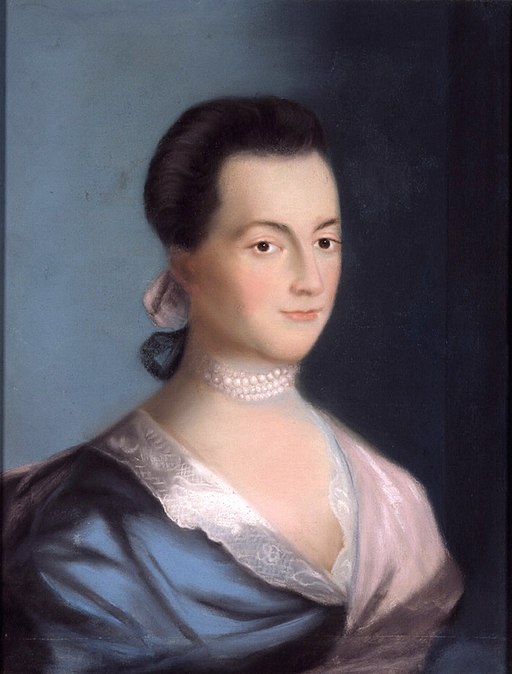
Abigail Adams, Portrait by Benjamin Blyth, 1766
At the beginning of their marriage, Abigail was busy with traditional wifely duties such as caring for her children. Daughter Abigail (Nabby) was born in 1765, followed by John Quincy in 1767, Susanna in 1768 who died after one year, Charles in 1770 and Thomas in 1772. Abigail was responsible for the physical and moral well-being of her children while John worried about making more money on the circuit as a lawyer.
In June 1774 the Massachusetts legislature elected John to the Continental Congress. Abigail and John would be farther away from each other than ever. After John left for Philadelphia, Abigail confided that “the great anxiety I feel for my Country, for you and for our family renders the day tedious, and the night unpleasant.”
While John was gone, Abigail had even more responsibilities. For example, she made sure hired men on the farm did their jobs and she made decisions about harvesting crops. Abigail took so well to her farming tasks that a family friend said she “was like to outshine all the farmers.” In addition, Abigail saw to the children’s education. Dissatisfied with the schools around Braintree, she got a tutor for John Quincy. Abigail was also in some danger from the British who were quartered in Boston. John depended on her observations during the battles of 1775 and sometimes showed her letters to fellow delegates.
In the middle of all her other responsibilities, Abigail wrote John letters about women’s rights. She wrote: “I desire you would Remember the Ladies and be more generous and favorable to them than your ancestors. Do not put such unlimited power in the hands of the Husbands. Remember all men would be tyrants if they could. If particular care and attention is not paid to the Ladies, we are determined to foment a Rebellion, and will not hold ourselves bound by any laws in which we have no voice, or Representation.” In the eighteenth century, men had legal power over their wives. Women could not legally own property and some were in physically abusive marriages.
Abigail also wanted better education for women, who still did not attend school. She wrote, “If we mean to have Heroes, Statesman and Philosophers, we should have learned women.” John agreed on the education of women; after all, he married one of the most intelligent women of the time. He was not prepared to go any further for fear that everyone regardless of age, gender, or property ownership would demand equal rights. Independence from Britain would have to be won first.
Before John returned from Philadelphia, Abigail received a letter stating that he was elected commissioner to France. John took ten-year-old John Quincy with him, leaving the Adams farm even lonelier for Abigail. Both she and John had a great sense of public duty, but the lack of reliable letters from her husband depressed Abigail. She wrote of her “cruel destiny” and herself “siting in my solitary chamber, the representative of the lonely love.”
Despite her loneliness Abigail took on some unladylike pursuits on the home front. She managed the family finances. She acquired land when able and even started her own importation business. At first John sent her goods from France like handkerchiefs and linens that she consigned to her uncle. Later Abigail wrote to the merchants abroad herself and told them what she wanted. She used the profits for the taxes needed to fund the war or bartered for local goods.
By 1784 both John and Abigail were fed up with their separation and Abigail made plans to join John in Paris with Nabby. As a diplomat’s wife first in Paris and then in London, Abigail had a more public role to play in John’s career. She was expected to accompany him on all ceremonial and social occasions. Living in Europe gave Abigail an education in entertaining on a budget, since American diplomats were not paid as much as their European counterparts. She also managed to visit the wives of 15-20 government officials or foreign ministers each week.
Abigail and John returned home to Braintree in 1788, the same year that John was elected the first vice president of the United States. Abigail’s training in Europe helped her ease into the role of the vice president’s wife. She hosted a weekly levee, an open house where residents came and paid their respects. With time she managed to invite every senator and congressman to dinner.
After eight years as George Washington’s vice president, John was elected president in 1797. Before the election, Abigail worried about her ability to be as popular as Washington’s quieter wife Martha. “I have been so used to a freedom of sentiment that I know not how to place so many guards about me, as will be indispensable, to look at every word before I utter it, and to impose a silence upon myself, when I long to talk.” John thought she would do an excellent job and once elected, urged her to leave Massachusetts and come to him in Philadelphia.
As she had when John was vice president, Abigail organized her social routine as first lady, a term that had not been coined yet. The family ate breakfast together at 8am, and Abigail received visitors from 12-2 or 3pm. Dinner was at 3pm except on Tuesdays and Thursdays when she hosted company. After dinner she visited others. She was home by 7pm to spend time with family before an early bedtime. Abigail’s company dinners meant inviting 30-40 guests at a time. She could invite all the senators in one dinner but had a series of dinners for House members.
Her main complaint about entertaining came from a tradition George Washington started. On July 4th, all Congress and state officials were invited to the president’s residence. Washington was wealthier than the Adams family and Abigail resented the amount of cake, wine and punch she had to serve. She reported that guests ate 200 pounds of cake!
In addition to her traditional social duties, Abigail offered John political advice and helped promote his agenda. For example, she sent letters supportive of John’s presidential policies to friendly newspaper editors. Often these letters came from her son John Quincy. Abigail also received requests from office seekers asking her to influence John, many of which she answered.
Though mostly an asset to John’s work, Abigail erred in her support of the 1788 Alien and Sedition Acts. These laws permitted the arrest of newspaper editors publishing statements against the government and allowed the deportation of foreigners accused of seditious activities. Eager to protect her husband against the pro-French republican opposition led by Thomas Jefferson, Abigail was much more in favor of the acts than John. In fact, she wanted them to be harsher. She wrote that “they have had a salutary effect, weak as they are.” John later acknowledged that signing the acts was a mistake, but they remain a dark part of his legacy.
John and Abigail were the first president and first lady to move into the president’s house in Washington, D.C. Abigail was not impressed with the house since it was large and drafty. She described it as “a castle of a house” built “for ages to come.” In the meantime, it was impractical to live in. Abigail kept 13 fires going all day and used the east room to hang her laundry.
When John lost his bid for reelection, Abigail felt it keenly. She thought the public was ungrateful for John’s years of public service. Yet she was almost as busy in retirement as she had been as first lady. She had a house full of in-laws and grandchildren as well as some more distant relatives. Any family member who needed a place to stay was always welcome in John and Abigail’s home.
In 1814, one of Abigail’s sisters asked if she would marry John if she could live her life over. She responded, “Yet after half a century, I can say my first choice would be the same if I again had my youth and opportunity to make it.” On October 28, 1818, Abigail passed away surrounded by family including her beloved John.
Sources:
Carlin, Diana B., Anita B. McBride, and Nancy Kegan Smith. U.S. First Ladies: Making History and Leaving Legacies. Cognella, Inc., 2024.
Ellis, Joseph J. First Family: Abigail and John Adams. Alfred A. Knopf, 2010.
Holton, Woody. Abigail Adams. Free Press, 2009.
Withey, Lynne. Dearest Friend: A Life of Abigail Adams. The Free Press, 1981.
American First Lady Ida Saxon McKinley grew up in one of the wealthiest families in Canton, Ohio. Her father believed in women’s education, so Ida received a college degree. Yet he wanted his daughter’s education to be “more practical than ornamental.” As a result, Ida worked in her father’s bank, first as a teller and then as a manager. In addition to her work and college studies, Ida loved long walks, shopping, and going to concerts and the theater.
She met William McKinley at her father’s bank. Completely smitten, McKinley proposed in the fall of 1870. They had very different personalities, which some friends thought would be an obstacle. McKinley was reserved while Ida was impulsive and adventurous. Yet their love lasted throughout the years. A friend later said, “the relationship between them was one of those rare and beautiful things that live only in tradition.” The happy couple married in January 1871.
By Christmas, Ida gave birth to a daughter named Catherine. In fall of 1872 Ida was pregnant again, but both mother and daughter fell ill. Daughter Ida died of cholera after only five months. After this loss, Ida experienced a combination of symptoms, most notably epileptic seizures. McKinley was determined not to shut Ida up in a mental institution, though epilepsy was thought to be a psychiatric disorder. Unfortunately, more sadness followed. Their first daughter developed scarlet fever and died.
The loss of a second child nearly destroyed Ida, so McKinley offered to give up his political ambitions for her. Ida, however, wouldn’t hear of it. “I have no fear that your choice in life will leave you as you are in the things that make you dear to me,” Ida told him. With his wife’s encouragement, McKinley ran for Congress in 1876 and won.
Whether he was in Congress or home in Ohio, McKinley remained devoted to Ida. While in Congress, Ida sometimes called him out of meetings on trivial matters, such as his opinion on her clothes. When he left town for any reason, McKinley wrote letters to Ida that opened with “My own precious darling.”
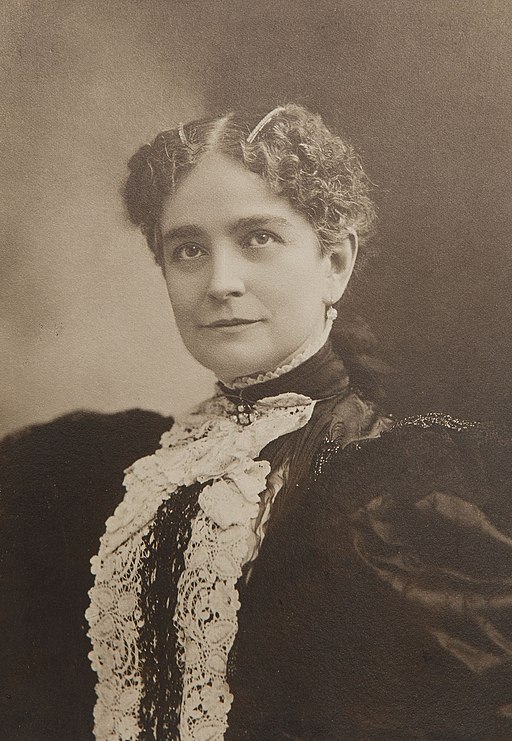
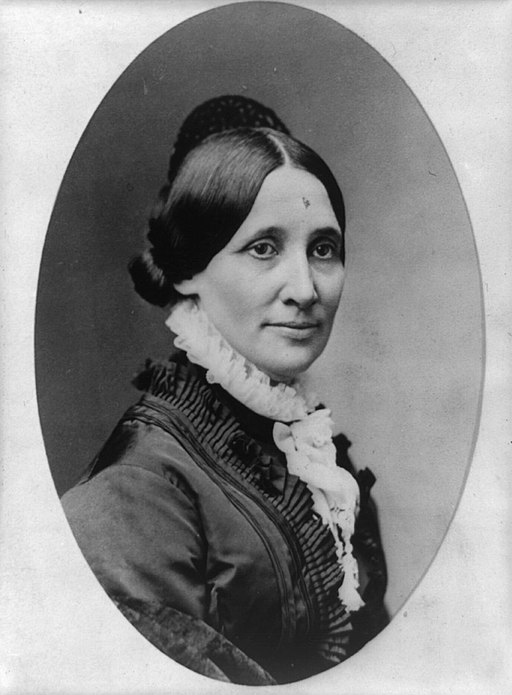
Ida Saxon McKinley, unknown date
Ida’s health would sometimes improve for long stretches, and the couple took advantage of these times by traveling together. Ida loved to travel and managed two trips to California with her husband.
In 1897, William McKinley became president of the United States. Considering her illness, Ida might have given the duties of first lady to someone else, but she refused. Nevertheless, she had limitations. For example, Ida stood in receiving lines to greet White House guests but a chair was always placed behind her in case she became tired. She enjoyed hosting luncheons for members of Congress though she had to pace herself. Both she and McKinley wanted Ida to partake of society as much as possible despite her seizures. William Howard Taft remembered talking with them when he noticed “a peculiar hissing sound” coming from Ida. McKinley walked over to her, draped his handkerchief over her face, and continued the conversation.
Despite her limitations, Ida McKinley put her own stamp on the White House. She crocheted slippers which she gave to charities who them sold them at inflated prices. Her love of music and theater as a young woman continued during her time as first lady. Ida brought pop music like ragtime to White House social events. When she was well she attended comedies in Washington theaters and invited actors to the White House to discuss their craft. Unlike previous first ladies, she met with Susan B. Anthony and supported suffrage by speaking with suffrage organizations.
Though usually supportive of his career, Ida didn’t want McKinley to run for a second term as president. “I thought he had done enough for the country…and when his term expires he will come home and we will settle down quietly and he will belong to me,” Ida told a reporter. Her reasons for opposing a second term weren’t entirely selfish. Ida also feared that McKinley would be assassinated, since anarchists all over the world adopted assassination as a recent means of protest. McKinley refused to give up his reelection bid, however.
Sadly, Ida was right to worry. McKinley was shot, though his first concern was for Ida. “My wife–be careful how you tell her. Oh be careful,” McKinley told a secretary.
When Ida was told, she fainted but recovered quickly. She said, “Tell me all, keep nothing from me! I will be brave–yes, I will be brave for his sake!” Ida did as promised, comforting her husband with hardly any breakdowns. Others assumed the shock of the president’s death would instantly kill Ida, but it did not. At home in Canton, Ohio, she created a shrine to her husband. Ida McKinley passed away in 1907 at age 59.
Sources:
Merry, Robert. President McKinley: Architect of the American Century.
Miller, Scott. The President and the Assassin.
O’Brien, Cormac. Secret Lives of the First Ladies.
American First Lady Lucy Webb Hayes is most remembered as “Lemonade Lucy,” a nickname she received after banning alcohol from the White House. In fact, Lucy Hayes was much more than an advocate for abstinence.
Lucy was the first First Lady to graduate from college. She met Rutherford B. Hayes when she was a student at Ohio Wesleyan University, but at fifteen she was to young to be courted. Fortunately they met again in 1850 and married in 1852.
Despite her education, Lucy told Hayes that she thought she was “too light and trifling for you.” Hayes, though acknowledging his love for her, saw her as much more than a pretty face. He wrote in his diary, “Intellect she has too, a quick and spritely one, rather than a reflective and profound one. She sees at a glance what others study upon, but will not, perhaps, study what she is unable to see at a flash.”
Her college essays show that Lucy took a great interest in the issues of her time, including temperance and women’s rights. In one essay, Lucy compared men to women, with women coming out favorably. she wrote, “It is acknowledged by most persons that her (woman’s) mind is as strong as a man’s…Instead of being considered the slave of man, she is considered his equal in all things and his superior in others.”
Throughout their marriage, Lucy did not hesitate to share her opinions with her husband. An ardent abolitionist, she wrote to Hayes during the Civil War that President Lincoln was not doing enough to get rid of slavery. “The protection of slavery is costing us many precious lives,” she wrote. One of the lives she worried about was Hayes’s, since he was wounded more than once. Lucy traveled with Hayes, who was a Union officer, as much as she could during the war. She even brought two of their youngest children along, which may have contributed to their deaths before the age of two.
She developed an abiding interest in veteran’s causes as a result of her war experiences. When Hayes was elected governor of Ohio, Lucy established a soldier’s orphan’s home. Though she struggled to get the home funded, it became a state institution in 1870.
Lucy Hayes, circa 1877
In 1877, Hayes was narrowly elected President of the United States. Lucy’s excellent skills as a hostess helped her husband entertain both political parties at the White House. Her love of music led Lucy to invite vocalists and musicians to the White House. The first black opera singer Marie Selika sang arias in the Green room. On more informal occasions, guests were invited to sing gospel songs with the First Lady.
Though Lucy later took the blame for it, Hayes announced that alcohol would not be served at the White House after spring 1877. He may have partly been trying to please his wife, but Hayes also disliked the way male visitors behaved when drinking. Although some colleagues accused the First Couple of being stingy, they still entertained lavishly. During one dinner, hundreds of guests were treated to expensive foods like salmon, turkey and truffles, ham, lobster salads, and oysters among other dishes.
Since she had no social secretaries to help her entertain, Lucy invited young friends and family to the White House. Though she claimed she was getting an unfair reputation as a matchmaker, more than one politician met his future wife at one of the Hayes’s parties. Even the press acknowledged Lucy as a warm hostess. One reporter wrote of Lucy that “she is so vivacious and so responsive that everybody leaves her presence with a vague idea that he is the one person whom she was longing to see.” To most contemporaries, Lucy was known as a good conversationalist and hostess.
Lucy disappointed some women’s groups by not joining their causes. Despite the fact that the White House no longer served alcohol, Lucy never officially joined the Women’s Christian Temperance Union. She also remained neutral on women’s suffrage.
Lucy Hayes took a more traditional view of the role of First Lady, preferring to support her husband’s decisions rather than making public statements. Yet through her example of a college education and her private influence on issues, Lucy Hayes paved the way for more progressive First Ladies.
Though he had political skills that propelled him to the presidency, James Buchanan is one of the United States’ most unpopular presidents. He happily left problems like slavery and the secession of the Southern states to his more gifted successor, Abraham Lincoln.
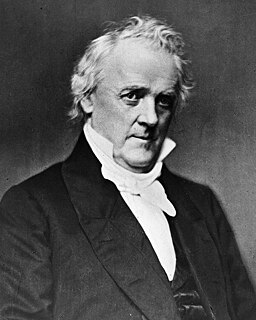
U.S. President James Buchanan
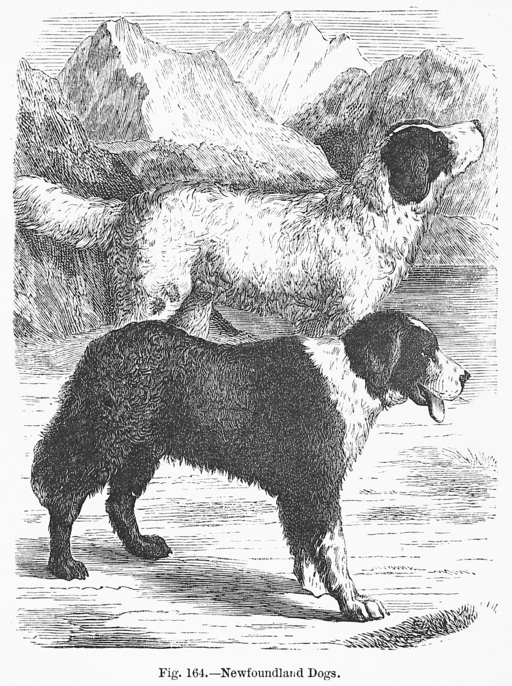
Yet President Buchanan’s dogs did not share their master’s unpopularity. In fact, he helped to popularize the Newfoundland dog breed by bringing one to the White House. Buchanan acquired his 170 pound Newfoundland Lara prior to serving as U.S. ambassador to Great Britain. While he was away, he wrote to his niece Harriet Lane and asked, “How is Lara?” Harriet said that he sounded homesick.
During their coverage of the presidential campaign of 1856, reporters for Frank Leslie’s Illustrated Newspaper visited Buchanan’s Wheatland estate in Pennsylvania. The magazine’s March 1857 issue describes Lara: “Prominent also [at Wheatland] is Mr. Buchanan’s Newfoundland dog Lara, remarkable for his [sic] immense tail and his attachment to his master.” The magazine predicted that “This dog will hereafter become historical as a resident of the White House.”
In the 1850s, Lara’s breed was only fifty years old. As the president’s dog, Lara was the most famous dog in America and probably the largest to occupy the White House. She slept next to Buchanan and viewed herself as his protector. Visitors remarked that Lara looked like a bear who slept with one eye open.
Newfoundland Dogs, 1870
Buchanan’s time in office saw the biggest dog and also one of the smallest in the White House. Since Buchanan was unmarried, his niece Harriet Lane served as First Lady. Harriet received a toy terrier named Punch from the U.S. consul in South Hampton, England. She named the dog Punch because it could supposedly fit under a down turned punch bowl. A writer covering social life in Washington wrote, “the little stranger was a nine-days’ curiosity at the White House where it was exhibited to all who were on visiting terms with Miss Lane.”
Though the press were Punch fans, Buchanan was not. While Harriet traveled, he wrote that he was trying to avoid Punch as much as possible.
Unfortunately, there are no accounts of the antics between Lara and Punch during their time in the White House. One can imagine the giant dog and the diminutive one running through the stately rooms of the house, perhaps chasing each other. Given Lara’s size, she may have broken an object or two.
President Buchanan did not run for a second term. In March 1861, he, Harriet, and the dogs returned to Wheatland. Lara’s time in the White House had a lasting impact though. The breed’s popularity grew in later decades and a Newfoundland named Faithful arrived with President Grant in 1869.
Sources:
All-American Dogs: A History of Presidential Pets from Every Era by Andrew Hager
First Dogs: American Presidents and Their Best Friends by Roy Rowan and Brooke Janis
Coretta Scott King was born on April 27, 1927 in Heiberger, Alabama. During her early childhood, her family home had no running water or electricity. Her father Obadiah Scott worked hard to support his family. He always had several jobs going at once, including a barbering business, driving a taxi, and managing a farm. His home eventually made even whites in the area envious.
When Coretta was fifteen, her family’s home burned down. Coretta was convinced that white men were responsible, but the police never investigated. Coretta later wrote that “in the eyes of whites, we were a black family of ‘nobodies.'”
The day after the fire, her father went to work as if nothing happened. For Coretta, the example of her parents showing her how to live with fear but keep going was a lesson she applied for the rest of her life.
Work and Play
Despite racism, Coretta felt she had a mostly happy childhood. Her parents loved her and she loved her siblings Edythe and Obie. The children made their own toys because they couldn’t afford store bought ones. For example, they found an old tire, attached rope, and tied it to a tree to make a swing. They also climbed trees.
From age six, Coretta worked in her family’s fields. The family farm raised corn, peas, potatoes, and garden vegetables. She and her sister also milked cows.
During the Great Depression, she and Edythe worked as hired hands picking cotton in other people’s fields. They each made 60 cents per day which helped pay for their schooling.
Early Education
Coretta’s mother believed in the importance of education for all her children. “I cannot remember a time when I didn’t know I was going to college,” wrote Coretta.
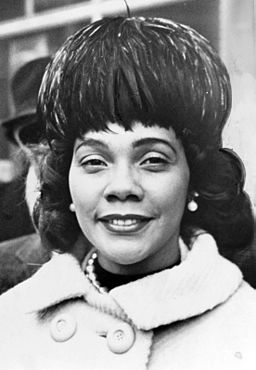
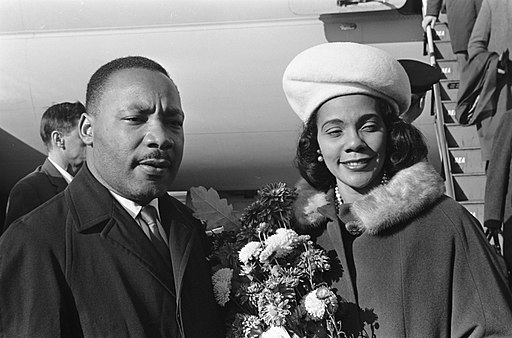
Coretta Scott King, 1964
In Perry County Alabama the public school system separated black and white children. Coretta’s school was one room filled with over 100 children from grades one through six. Just getting to and from school was a challenge. “I saw white children riding yellow-checkered buses to their school, yet, in all kinds of weather, we black children walked three miles to our one-room schoolhouse and three miles back home.” Although they had outdated books and no labs, Coretta’s teachers were good people who “loved us and expected us to excel.”
Fortunately, Coretta’s education improved after sixth grade. She attended Lincoln Normal School which had an integrated faculty. White faculty members cared for their black students. Coretta learned from them that some white people were kind–something she hadn’t experienced before.
Her music teacher introduced Coretta to classical music and told her about black concert performers. Through the encouragement of her teachers, Coretta wondered if she could do something with music when she grew up.
College and Graduate School
In 1945, Coretta followed her sister to Antioch College in Yellow Springs, Ohio. To her dismay, she discovered that her high school education still wasn’t as good as most white students. She persevered, however, and eventually caught up through hard work.
In college Coretta met people of different races, cultures, and religions. She dreamed of a world in which all kinds of people lived in peace together.
Unfortunately, even the North in the 1940s didn’t offer the utopia she wanted. Coretta majored in elementary education with a minor in voice. Her major required her to teach one year in an Antioch private elementary school and one year in a Yellow Springs, Ohio public school. Coretta wasn’t allowed to teach in the Yellow Springs public school because there were no black teachers there. She appealed to various school officials, the school board, and the college administration. Her protests were denied and she had to teach another year in private school.
Even though she wasn’t successful, Coretta’s protests taught her something. “This was the first time I stood publicly against discrimination, and I found that I rather liked making waves and being a catalyst for change,” she said.
Martin Luther King, Jr. and Coretta Scott King, 1966
At the time, Coretta thought she was meant to fight racial discrimination through her music. “I saw myself as a concert singer, paving the way for other blacks.” She received an early acceptance to the New England Conservatory and began her voice studies. During her second semester in Boston, she met a young man named Martin Luther King, Jr. As their relationship became more serious, Coretta wondered if she could sacrifice her musical ambitions to support Martin’s racial justice work.
Sources:
King: A Life by Jonathan Eig
Coretta: My Life, My Love, My Legacy by Coretta Scott King
On October 1, 1924, Jimmy Carter was the first future U.S. president to be born in a hospital. Most women at the time still gave birth at home, but Jimmy’s mother was a registered nurse.
Jimmy’s family lived in Plains, Georgia on South Bond Street. Their neighbors included Edgar and Allie Smith. When the Smith’s daughter Rosalynn was born in 1927, Jimmy went next door to see the baby. That marked the first time Jimmy saw his future wife.
In 1928, Jimmy’s father became a full time farmer. Jimmy and his sisters were raised on a farm two and a half miles from Plains in Archery. The town had a population of around 200 people. At first the farmhouse had no electricity or plumbing. Jimmy’s most vivid memories were of the cold because his room was the farthest from the stove and fireplaces.
Jimmy’s brother Billy wasn’t born until Jimmy turned twelve so he received a lot of attention from his father. He followed his dad around the farm whenever possible. His father encouraged him to earn money at an early age. Jimmy sold peanuts in Plains when he was only five years old. He maintained ten regular customers and also sold to shoppers visiting the town.
Most of Jimmy’s duties on the farm meant working in the field. He chopped cotton and hoed weeds. Jimmy felt restless doing small chores though. He wanted to “escape from the company of other children and women in just hoeing, picking cotton, and shaking peanuts and to graduate to the exalted status of a skilled plowman who could cultivate a crop.” In his father’s opinion, Jimmy never fully reached his goal. He was permitted to break land in the field at age twelve, however. Others viewed it as boring work, “but to me it was a great achievement.”
U.S. President Jimmy Carter, 1977
As Jimmy grew, he especially enjoyed doing carpentry with his dad. “I relished the repair of houses, barns, and storage places, and was eager to help when new farrowing pens were built for our sows and pigs,” Jimmy wrote years later.
In addition to his chores, Jimmy also played on the farm. Since the Carters were the only white family in Archery, his playmates were African American. They made their own toys, such as hoops, slingshots and guns. Even when he started school in Plains, Jimmy felt “more at home” with his black friends. The only rankings among him and the other kids revolved around who caught the biggest fish or performed best in the last baseball game.
At six years old Jimmy attended Plains High School where he had only white classmates. The school was one of the best in the state thanks to its superintendent. She took a special interest in Jimmy and gave him extra reading assignments. Jimmy’s parents also encouraged their children to bring books to the dinner table.
Jimmy was content on the farm, but his parents wanted him to finish high school, go to college, and join the navy. His mother’s youngest brother was in the navy and sent Jimmy souvenirs from countries like Australia and Japan. A naval appointment could only come from a senator or congressman, so Jimmy had to work hard in high school to get good grades. He didn’t receive an appointment when he graduated high school in 1941. Instead, he enrolled in Georgia Southwestern College and became a lab assistant.
The bombing of Pearl Harbor in December 1941 changed Jimmy’s life. After his sophomore year in college, he finally received his appointment and entered the Naval Academy in 1943.
Sources:
Jimmy Carter A Full Life: Reflections at Ninety by Jimmy Carter
Gift of Peace: The Jimmy Carter Story by Elizabeth Raum



 Heather on History