Book Review: The Immortal Life of Henrietta Lacks

As an English and History major, I was not particularly inclined to read a book about science. However, one of my Goodreads friends read it and enjoyed it, so I decided to give the book a chance. I found that I not only understood the book’s content, but I also couldn’t put it down.

The book discusses the cells that doctors at Johns Hopkins took from an African American woman with cervical cancer (Henrietta). These cells, called HeLa, grew successfully in culture. In fact, they grew so successfully that scientists all over the world wanted to use them in experiments. Among other medical advances, HeLa cells helped develop the polio vaccine, identify chromosomal disorders like Down syndrome, and test the effectiveness of chemotherapy and other drugs.
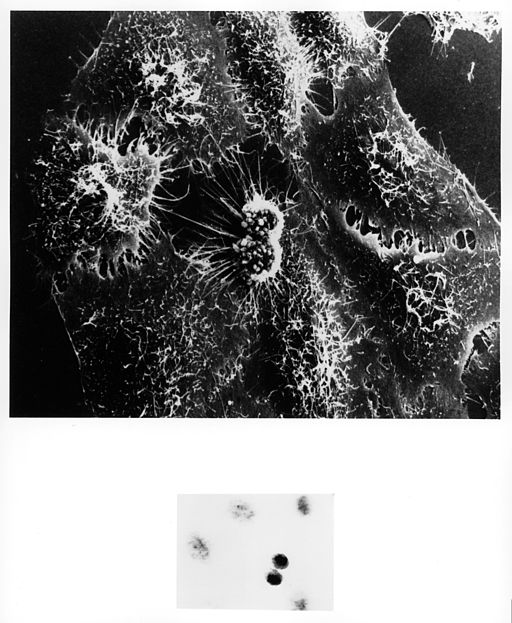
HeLa cells infected with adenovirus. Inset--HeLa cells in the process of dividing.

HeLa cells infected with adenovirus. Inset–HeLa cells in the process of dividing.

While Henrietta’s cells are an important aspect of the story, author Rebecca Skloot also sought to find out who Henrietta Lacks was. The reader discovers that many of Henrietta’s children wanted to know the same thing, since most were very young when she died. Despite her illness, Henrietta continued to cook and clean for her husband, neighbors and family. Her oldest son remembered that she was fair, but had strict rules about where her children could play.

Most interestingly, the book makes the reader think about how patients, particularly African Americans, were treated in the early 1950s. Henrietta went to Johns Hopkins because it was one of the few hospitals that agreed to treat African Americans who couldn’t pay their bills. Of course, Johns Hopkins had separate entrances for “white” and “colored” patients. Henrietta and her family had no idea that white doctors were taking samples of her cervix for their private research. Would Henrietta would have been treated any differently or given more information about the samples being taken if she was white? These are questions that the author allows the reader to decide.

During Skloot’s research, however, it is evident that the actions of Johns Hopkins researchers created distrust between Henrietta’s family and any white person who inquired about HeLa cells. For years, members of the Lacks family refused to talk to Skloot. Then one or two of them decided she could be trusted and they began sharing stories about Henrietta. Even after trust had seemingly been established, Henrietta’s daughter Deborah would accuse Skloot, who was paying for her research via credit cards and student loans, of secretly working for the hospital. Then Deborah would call Skloot as if nothing had happened and research would resume.

I finished this book with knowledge of the lengths to which scientists sometimes go to conduct their research. I also felt and better understood the distrust of some African Americans toward white people, particularly in the South. Finally, I admired Skloot’s determination to interview Henrietta’s family members and even scientists who were often less than enthusiastic about talking to her. This book will make people think about the American medical system’s treatment of patients of all colors. Highly recommended.

French Attacks about more than Freedom of Speech

I believe in the right to free speech and my right to express my opinions on this blog and elsewhere. I realize that free speech will also allow some people to express themselves in ways that I or others might find offensive.

I also believe that people have the right to freedom of religion and the right not to be discriminated against. Those last two points have been trampled on by some in France in recent years. For example, in December 2014 three armed men broke into a flat occupied by a Jewish couple. The men tied them up, robbed them, and raped the woman.

These incidents do not get much news coverage. In contrast, I can turn on any news station and see pictures of the murderers of the Charlie Hebdo cartoonists. Some called them artists, but it is not artistic to belittle other religions through cartoons or any other medium. Regardless, murdering people for drawing tasteless cartoons is wrong.

Charlie Hebdo Shooting Press Coverage Photo by Remi Mathis

Charlie Hebdo Shooting Press Coverage Photo by Remi Mathis

In a country where fear and dislike of people who are different is increasingly common, the killers have only succeeded in making a bad situation worse. Innocent, God-fearing Muslims are much more likely to be mistreated because people will say, “See, Muslims do evil things.”

Some light has been thrown on anti-Semitism in France since the attacks on the kosher supermarket. France’s Prime Minister and others have expressed their shock. But how long will it take before French citizens again turned a blind eye to the less dramatic acts of hatred against Jews and other religious groups?

How Historical Movies like Selma can be Used to Teach History

Movies like Lincoln, The King’s Speech, and most recently, Selma generate very different reactions depending on their audience. The Academy of Motion Pictures often gives Oscar nominations to these films, but they also annoy some historians.

If there is a factual error in a film, historians need to point that out to the public. For example, in the movie Lincoln the Congressmen from Connecticut voted against the constitutional amendment which abolished slavery. In reality Connecticut voted in favor of the amendment. Yet those who study history should not be surprised that Hollywood is not run by historians. Producing and directing films are skills that most historians do not possess. Most people who make films also do not possess in-depth historical knowledge.

Historians often like to point out the details that historical films did not address. Complaints about a movie’s failure to include certain aspects of history are often unfair. A movie cannot possibly cover every detail of a historical event because of time constraints. Even my college American history professor, gifted though she was, couldn’t possibly cover everything in an introductory course on American history. There was simply too much material.

Picture of books from Basking Ridge Historical Society taken by William Hoiles.

Picture of books from Basking Ridge Historical Society taken by William Hoiles.

The other complaint often voiced by historians is that young people get their history from movies and therefore the movies have to get every detail right. This begs the question: why are young people more likely to watch a film than pick up a history book? If students think their textbooks are boring that is not Hollywood’s fault. Authors who write history books for young people need to find a way to keep their audience’s attention. Even though I majored in history in college, I wasn’t always so fascinated with the subject. As a young student I was drawn to historical fiction novels, but my textbooks bored me. My favorite author of historical fiction always included a list of sources in the back of her novels, so I started reading biographies about some of the historical figures in her books.

Historians and teachers could do something similar with movies about historical topics.  For example, students who watch Selma could read Martin Luther King Junior’s writings.

Sparking a young person’s interest in history is valuable regardless of the medium used. Authors who write history for young people should view films like Selma as an opportunity to write books that are interesting and explain historical events in more detail.

Josiah DuBois and the Creation of the War Refugee Board

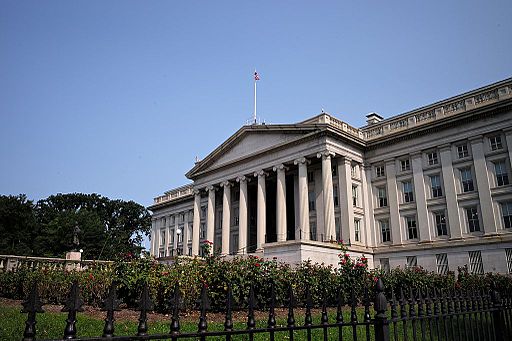
On Christmas Day 1943, a young US Treasury Department employee wrote something that would change the lives of more than 100,000 Jews in Europe. Josiah DuBois worked on this document despite the fact that he was risking his job and had little time to spend with his family on the holiday.

US Treasury Department photo by Roman Boed

US Treasury Department photo by Roman Boed

The document was entitled The Acquiescence of This Government in the Murder of the Jews. It accused the US State Department “of gross procrastination and willful failure to act” and “willful attempts to prevent action from being taken to rescue Jews from Hitler.” DuBois’ report showed that State Department officials not only followed the United States strict immigration laws, but tried to prevent Jews from immigrating to the US altogether.

Visas for potential refugees were delayed because of State’s requirement that refugees produce two letters of reference from American citizens who could either help support the refugees or who could prove the refugees could take care of themselves. In addition, visa applicants were often turned away if they had close relatives in Europe. The theory, or excuse, for not admitting them was that the enemy might persuade immigrants to become Nazi spies.

As DuBois pointed out in his report, the new immigrants would not threaten national security.  If President Roosevelt was concerned about potential spies, refugees could be placed in internment camps “and released only after a satisfactory investigation… Even if we took these refugees and treated them as prisoners of war it would be better than letting them die.”

In DuBois’s mind all human beings worth saving. Sadly, from late 1941 to early 1945 only 10% of the small quotas from Axis controlled countries were filled.

Yet DuBois did accomplish something by turning his report into his boss Treasury Secretary Henry Morganthau. By outlining State’s lack of concern for people fleeing from the Holocaust, DuBois showed that immigration issues shouldn’t be handled by the State Department. A new agency was needed to help people in Europe who were trying to escape from Hitller. This new agency would become known as the War Refugee Board.

Kristallnacht: A Prelude to the Holocaust

After annexing Austria and the German-speaking portion of Czechoslovakia, Hitler decided to expel Jews living in Germany who were born in Poland. On October 27-8, 1938, 18,000 Jews were put on trains bound for the Polish border. Some were forced to enter Poland by the Nazis while some camped in a tiny Polish village.

Zindel Grynszpan was one of the Jews expelled from Germany. He described his ordeal as follows: “A Polish general and some officers arrived, and then examined the papers and saw that we were Polish citizens. It was decided to let us enter. They took us to a village of about 6,000 people, and we were 12,000. The rain was driving hard, people were fainting – some suffered heart attacks; on all sides one saw old men and women. Our suffering was great – there was no food.”

Zindel sent a postcard to his son Hirsch who was studying in Paris. Mad with rage, he went to the German Embassy in Paris and shot the first German official that he met, Ernest vom Rath. Ironically vom Rath was not a Nazi.

Cleaning the street after Kristallnacht

Cleaning the street after Kristallnacht

Hitler and the Nazis called the murder a Jewish conspiracy against Germany. In fact it was a convenient excuse to do what Hitler had wanted all along: to expel all the Jews from Germany. Eager to carry out Hitler’s orders, the Nazis decided on a plan of action which they put into place on November 9, 1938. Their plan is now known as Kristallnacht – the night of broken glass. On that night, Stormtroops and Nazi party members burned synagogues, destroyed Jewish shops, and beat up as many Jews as possible. Bonfires were lit to burn prayer books and Torah scrolls. In 24 hours 91 Jews were killed. Over 30,000 were arrested and sent to concentration camps.

The Nazi atrocities did not only happen in Germany’s large cities. Small Jewish villages in Germany were also affected. From inside his uncle’s house young Eric Lewis saw Stormtroops destroy a synagogue. “After a while, the Stormtroops were joined by people who were not in uniform; and suddenly, with one loud cry of, ‘Down with the Jews,’ the gathering outside produced axes and heavy sledgehammers. They advanced toward the little synagogue which stood in Michael’s [his uncle’s] own meadow, opposite his house. They burst the door open, and the whole crowd, by now shouting and laughing, stormed into the little House of God.”

After Kristallnacht Jews were fined 1 billion Reichsmarks for vom Rath’s death. Jews were also fined for the destruction of their own property. The Nazis were systematically pushing Jews out of the German economy. As of January 1, 1939, Jews could only be employed by other Jewish organizations. These conditions led to attempts of many Jews to emigrate to other countries such as the United States. The question was whether or not the other countries would welcome the Jews.

Sources:

The Holocaust by Martin Gilbert

A History of the Holocaust by Yehuda Bauerh

The Building of the Washington Monument

Washington Monument, Photo by David Bjorgen

Washington Monument, Photo by David Bjorgen

On December 6, 1884, the Washington Monument was finally completed. The word “finally” is appropriate since construction on the monument ended 85 years after George Washington’s death.

While Washington was still alive many people wanted to dedicate statues to him, but he declined. He thought the country should spend its money on other things. Shortly after Washington’s death, John Marshall proposed a memorial to the first president. The memorial was to be built in the style of the ancient Egyptian tombs with a pyramid serving as Washington’s burial place. However, Congress could not agree on the design.

Thirty-seven years later John Marshall, who was now Chief Justice of the Supreme Court, continued to fight for a memorial. In 1832 the Washington National Monument Society was formed. The society decided to hold a competition for the best design while collecting donations from citizens across the country.

Designs came in from around the world. The society required only that each design be “durable, simple, and grand.” Finally they chose a design by Robert Mills, a church architect from Charleston. Mills’ design included a temple with an Egyptian obelisk on top. Inside a colossal statue of Washington and a museum about Washington’s life were to be placed. Because the design was so expensive ($1 million in the 19th century), the society decided to start with the obelisk first.

The monument’s cornerstone was laid on July 4, 1848 with the same trowel that Washington used for the cornerstone of the capital. In a crowd of over 20,000 people that day were three future presidents, including a young congressman named Abraham Lincoln.

To raise money for the monument states were encouraged to donate commemorative stones to its interior. Even foreign countries donated stones to show their respect for the Revolutionary war hero and president. A controversy arose, however, when the Pope tried to donate a stone. Anti-Catholic groups stalled the construction.

During the Civil War the monument was again abandoned. Cattle grazed around it and soldiers practiced maneuvers in its shadow.

Congress decided to resume construction during the centennial of the Declaration of Independence in 1876. All the arguments about the design resurfaced. Congress was still short on money. This time, however, the US Army Corps of Engineers under Lieut. Col. Thomas Lincoln Casey was put in charge of the construction.

The country’s anniversary made both Congress and Casey eager to finish the monument. The design was scaled back. It was decided that the temple would not be constructed–only the obelisk. Despite these cost-cutting measures Casey still had several issues to deal with. For example, the scaffolding was rotted and there were flaws in the foundation of the monument. Casey’s crew reinforced the foundation with concrete. He also carried out the original plan to include the 193 memorial stones donated by states and countries into the interior walls.

The outside stones for the monument presented other problem for Lieut. Casey. The quarry used for the initial construction was no longer available. The builders ended up using two additional quarries with varying colors of stone. Today visitors can see three slightly different colored stones from the three different quarries on the outside of the monument.

On December 6, 1884 Lt. Col. Casey supervised as the capstone was brought out through a window and set on top of the monument. The aluminum tip made by Tiffany‘s was put into place by the lieutenant himself. At 555 feet and 5 inches the monument was the tallest structure in the world. However, the Eiffel Tower surpassed it the following year. Nevertheless, it is still the tallest structure in Washington DC and serves as a landmark for everyone who visits the National Mall.

The Washington Monument’s exterior and interior have endured quite a bit over the years. For example, in 2011 an earthquake struck 90 miles southwest of Washington DC. Though the monument was significantly damaged it was repaired successfully. The durability of the monument was anticipated at its dedication. During the ceremony, a speech by Robert Winthrop who had attended the opening ceremony in 1848 was read by Rep. John Long of Massachusetts. He said, “the storms of winter must blow and beat upon it…the lightnings of heaven may scar and blacken it. An earthquake may shake its foundations…but the character which it commemorates and illustrates is secure.”

My Book’s Back Cover Copy: Thoughts?

I’m looking for my readers’ opinions on my back cover copy for Passionate Crusaders: How Members of the U.S. War Refugee Board Saved Jews and Altered American Foreign Policy During World War II. Comments welcome!

Passionate Crusaders tells the gripping story of a few righteous Americans who sought to do what many thought impossible in 1944—save Jews who had not yet been murdered in the Holocaust.

By January 1944, Treasury Department officials Henry Morgenthau, John Pehle, and Josiah DuBois had already convinced President Franklin Roosevelt to create the War Refugee Board, an agency with the authority to provide rescue and relief for Jews and other groups persecuted by the Nazis.

Scholars have criticized the Board for its inability to save more Jews and maintained that the agency should have been created sooner. Heather Voight’s research shows that despite its shortcomings, the War Refugee Board changed history and forever altered American foreign policy. Its creation ended the cycle of indifference that the government and the American public had shown to victims of the Holocaust. In the words of Henry Morgenthau, from 1944-1945 “crusaders, passionately persuaded of the need for speed and action” risked their reputations and sometimes their lives to save Jews.

In addition to saving more than 100,000 lives, Board members also made a lasting impact on international law. They pressured the War Crimes Commission to broaden its definition of war crimes by including the murder of civilians by their own countrymen. This definition of war crimes was applied to genocides committed many decades later in Bosnia and Rwanda, and continues to be used today.

“[Passionate Crusaders] shows that the efforts of an honorable and courageous few can create small steps to change history. This detailed, well-told, and inspiring story will be of value to students of the Holocaust, American history, and human rights.” –From the Foreword by Dr. Leon Stein, Professor Emeritus of History and Education Director Emeritus, Illinois Holocaust Museum and Education Center.

Heather Voight is a successful freelance writer and history blogger. Since 2009, she has published articles on a variety of topics including the Gibson Girl, healthcare, and the writings of C.S. Lewis. She has a B.A. in History and English.

http://www.heathervoight.com

Why Isis the Ancient Egyptian Goddess has nothing in common with ISIS (Islamic State of Iraq and Syria)

Before the name ISIS (an acronym for Islamic State of Iraq and Syria) became synonymous with public executions and terror, a goddess with the name Isis was popular in ancient Egypt. The ancient Egyptian goddess Isis represented many positive values, such as protection, healing, and the importance of family. Clearly, she had nothing in common with the ISIS we read and hear about today.

According to ancient Egyptian mythology, Isis was the wife and sister of the god Osiris. Osiris ruled Egypt, and Isis supported his endeavors. Unfortunately for the couple, Osiris’ brother Seth wanted his brother’s power so badly that he murdered and then dismembered Osiris. Isis and her sister Nephthys mourned Osiris, but they did not sit around crying for long. Instead, the two women travelled to the ends of the earth to find Osiris’ remains and revive him: “Rise up, Osiris, for Isis has your arm and Nephthys your hand.” After Osiris’ resurrection, Isis conceived a son with him whom she named Horus. Osiris left Isis to care for their son and became the god of the underworld.

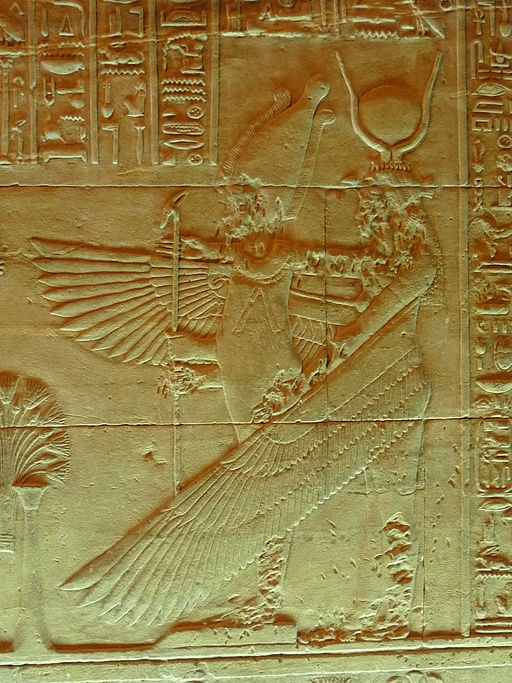
Osiris and Winged Isis, Isis Temple, Philae Island, Egypt. Photo by Remin.

Osiris and Winged Isis, Isis Temple, Philae Island, Egypt. Photo by Remin.

Proving that a woman’s work is never done, Isis now had to hide her son from the evil Seth. She proved to be a wonderful and protective mother. For example, she healed Horus when a scorpion stung him. Isis continued to watch over her son until he was old enough to fight Seth. Horus successfully avenged his father’s death and became king of Egypt, but he couldn’t have done it without his mother.

Ancient Egyptians associated Isis with motherhood, especially as the mother of Egyptian kings. Early Pyramid Texts state “the king drinks milk from his mother Isis.” At first the goddess could only be called upon to help Egyptian pharaohs, but later the nobility and even commoners could ask Isis for assistance. In a time with high mortality rates, ancient Egyptian mothers often recited spells that included the goddess in the hope that Isis would heal their sick children.

In addition to her role as a mother, Isis also served as the protector of the dead in the afterlife. She was often depicted on the sides of royal coffins with winged arms. With the wings of the goddess to carry their deceased loved ones to next world, Egyptians felt comforted even though they mourned the dead.

A faithful wife, loving mother, a healer of children, and a comforting presence to those who mourn—all qualities that the ancient Egyptians gave to their Isis. Unfortunately, the organization that now uses her name stands for none of these admirable traits.

Sources:

Daughters of Isis by Joyce Tyldesley

The Complete Gods and Goddesses of Ancient Egypt, Richard Wilkinson

How to Choose an Editor for a Self-Published Book

As those of you who read this blog regularly know, I am in the process of self-publishing my book, Passionate Crusaders: How the U.S. War Refugee Board Saved Jews and Altered American Foreign Policy during World War II. After reading some great books on self-publishing, I knew I needed a professional editor. It took a lot of work for me to find the editor that was right for my book. Hopefully this post will make the process of finding one easier for others.

Step One: Contact other self-published authors you admire and ask them for recommendations.

I’ve found that many self-published authors are happy to share the names of editors with whom they or someone they know has worked. Sometimes an author will include the name of an editor in the acknowledgements of his or her book, so that’s another way to build your list.

Step Two: Realize that you are not finished after step one.

Please don’t assume that you have the perfect editor for your book once you have a few names. You need to get to know your potential editors first by moving to step three.

Step Three: Visit the editor’s website to see how seriously this person views editing as a career.

If the spelling/grammar on the site is poor, you know it’s time to move on. (I’m not kidding—I’ve seen editor websites that had multiple spelling and grammar errors). Also, see what other services this person offers. Does he/she offer primarily editing and proofreading services, or is editing tacked on to a long list of other things? Most of the time, people who tell you that they can provide everything your book needs are better at some tasks than others. You don’t want to find out that their weakness is editing.  

Step Four: Find out if this person edits books in your genre/uses your style manual.

For example, as a history writer, I wanted someone with experience editing similar books and who could make sure my book conformed to the Chicago Manual of Style. An editor who worked exclusively on mystery novels might be talented, but not a good fit for my book.

Step Five: Initiate e-mail contact with a few editors and ask for basic information.

This will give you a chance to find out more about these people. You can ask about pricing, if they’re taking new clients, when they might be free to work on the book, etc. See if their writing style and personality fits with yours.

Step Six: Study the editors’ responses for mistakes or other quirks.

I got to this step with one editor and realized that she had misspelled my first name, which is in the dictionary. Needless to say, I didn’t hire her.

Step Seven: Ask the editors who are still on your list to copy edit a few pages of your book.

Before any freelance editors who are reading this get angry with me, I’m not saying that an editor can’t charge a fee for a sample of their work. However, self-published authors need to see how the right editor can transform their manuscripts. When I received my sample manuscript pages from the editor I later chose, I was amazed at how much he had improved my work. For example, after adding material to the first chapter, I forgot to include one historical figure’s title–secretary of war–the first time his name appeared. Fortunately, my editor saw my mistake, along with others.

Step Eight: Hire the editor who amazes you!