How I Decided on a Cover Designer for My Self-Published Book

My book cover design is here! I can’t use the word “finally” since my designer Jane Dixon-Smith works pretty quickly, but when you’ve been writing and researching for what seems like ages, seeing your final cover is a great feeling. I didn’t know exactly how my cover would look, but I was looking for a few specific things in a designer.
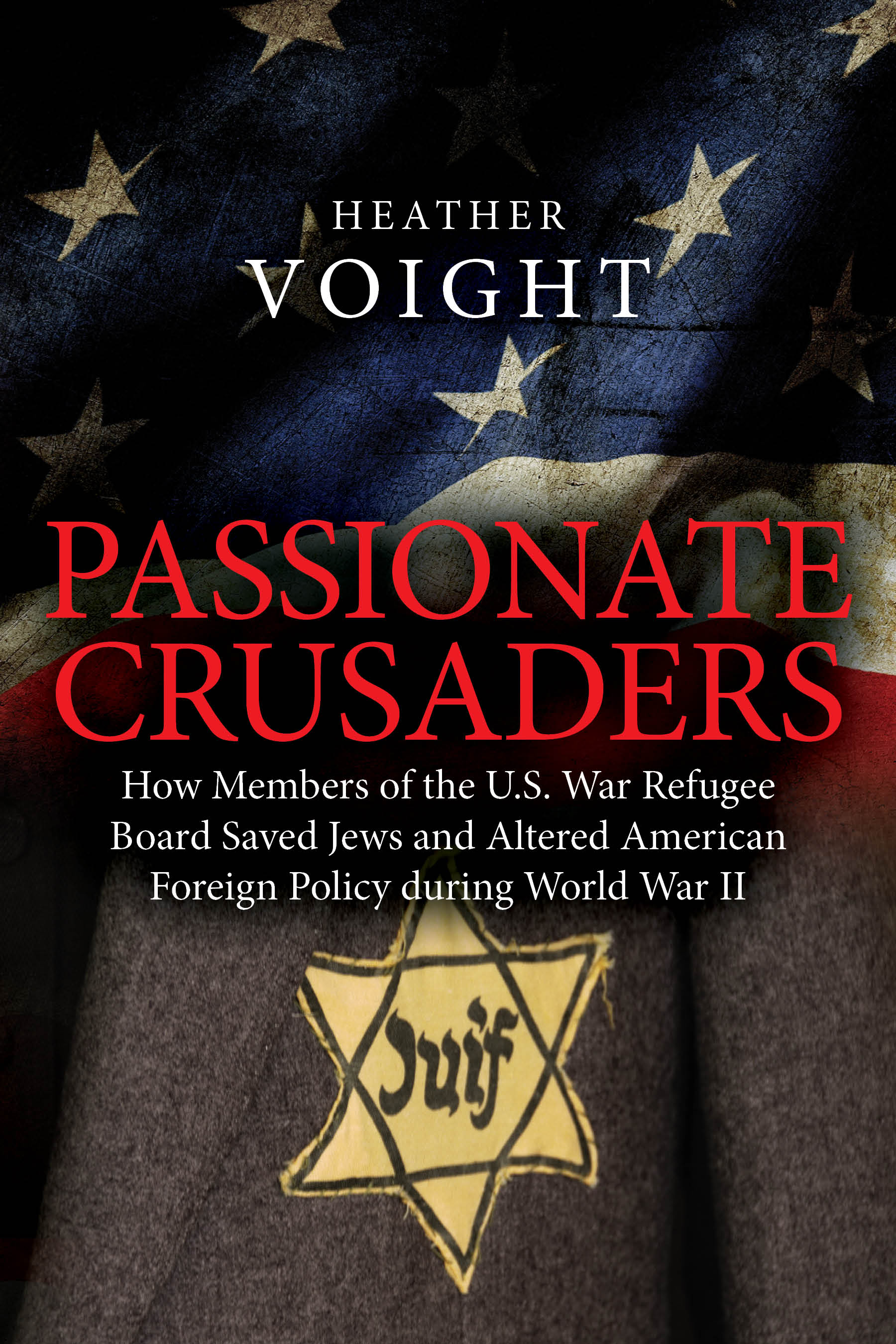
 

My book cover!


What I Wanted in a Cover Designer

  • Someone who was experienced and recommended by at least one other self-published author that I liked.
  • A price that was lower than what most women state is their budget for a wedding dress on Say Yes to the Dress. If you haven’t looked for a cover designer yet, please just trust that I’m not exaggerating.
  • A choice of covers, but not a ton of choices since I’m indecisive. Jane gave me three great options and I had trouble picking one!

After deciding on a designer, I felt my cover also needed certain qualities.

What I Wanted in a Book Cover 

  • A design that made the subject of my book on America and the Holocaust clear, even on the small image that would pop up on Amazon. Despite Jane’s request for examples of 6-10 covers, I could only find one book cover on a similar topic that I really liked. Instead, I put together some images in a Word document that I found on Pinterest and asked Jane if she could include the American flag in her design.
  • No photos, since I needed to also hire an editor, have money to feed my dog, etc.
  • Something that didn’t look like I designed it, since I have no artistic skills other than writing. After seeing samples of Jane’s work, I wasn’t worried about this.

The designer and the design I chose met all of my requirements. The combination of the American flag and the Jewish star helps set the tone for my book on a small U.S. government agency whose members tried to save Jews during the Holocaust.

If you’ve self-published a book or are considering the idea, what are you looking for in a designer/book cover?
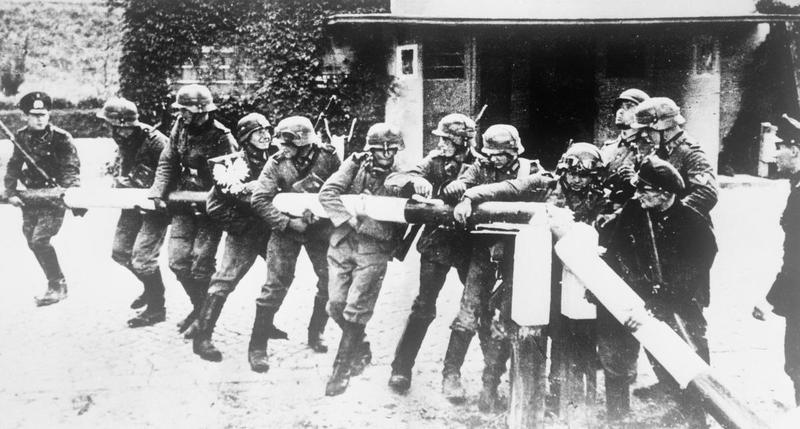
World War II Begins as Germany Invades Poland

When Hitler invaded Poland on September 1, 1939, he felt sure of two things. First, he believed that Germany’s attack on Poland would be swift and successful. Second, he thought Britain and France would not respond to the attack with force. Only one of Hitler’s assumptions proved correct.

The attack was quick and it was a success. German air and armed forces were much more advanced than their Polish counterparts. Poland possessed 600 tanks to Germany’s 3,200. Unlike the Germans, the Poles still had cavalry as part of their army divisions.

In the early morning of September 1, German aircraft bombed Warsaw. Meanwhile, the German army invaded Poland from the north and south. During multiple air raids, the Germans targeted railroads, roads, and Polish troops. Villages were also bombed in order to terrify civilians. Hitler wanted the civilians to attempt to escape and thus block Polish reinforcements from using the remaining roads.

German troops breaking border barrier

German troops breaking border barrier in Polish town. September 1, 1939

Though he successfully conquered Poland a few weeks later, Hitler miscalculated British and French attitudes to his takeover. He knew that Britain and France had agreed to aid Poland in the spring of 1939 if she came under attack. Still, Hitler wasn’t very worried about a military response from either country.

To avoid war with Germany in previous years, Britain and France had already granted Hitler’s demands for German rearmament. They also allowed him to make Austria and Czechoslovakia part of the Third Reich. He thought a takeover of Poland would be followed by more peace talks, not war. Yet leaders in Britain and France had already concluded that Hitler’s demands might never end unless they threatened war.

On the evening of September 1, Poland asked Britain and France to honor their promise to defend Poland. That same day, British Prime Minster Neville Chamberlain delivered a speech to the House of Commons. He said, “Eighteen months ago in this House I prayed that the responsibility might not fall upon me to ask this country to accept the awful arbitrament of war. I fear that I may not be able to avoid that responsibility.” On September 3rd, Britain’s ambassador to Germany delivered an ultimatum stating that if Germany did not stop its attack on Poland by 11 AM, Britain would go to war with Germany. Germany did not respond, and Britain’s Prime Minster made an announcement on the radio that the country was at war with Germany.

Why I Wrote A Book about The War Refugee Board

Picture it: Chicago, December 2001. I was looking for a topic for my honors thesis. I knew I wanted to work with my history advisor, who was a Holocaust historian. Since I spent most of my time studying U.S. history, I decided to dig for information on America and the Holocaust. My advisor told me that America and the Holocaust was too broad for my thesis. He also suggested that I look for a topic that hadn’t received much attention. I asked if I could write about Eleanor Roosevelt’s response to the Holocaust. He said yes, if I found enough information on it. A couple of hours at the library told me that my new idea was too narrow.

While sifting through books on U.S. and the Holocaust, I discovered a chapter here and there in several books about a government agency created in 1944 called the War Refugee Board. At first I thought, a thesis about a government agency? BORING. Once I started reading about the people behind the agency, though, things got interesting. These men were not household names (anyone familiar with John Pehle, and if so, how to pronounce his name?), but they were working their tails off trying to save the few Jews who hadn’t been murdered yet in the Holocaust. 

I started to ask myself questions like why wasn’t the War Refugee Board created sooner? What drove these men, who were mostly from Protestant backgrounds, to risk their jobs by going to the president and criticizing the administration’s lack of response to the Holocaust? So I wrote my thesis, and put it on my bookshelf. I always thought the topic would make a great book and that a well-known historian would write it.

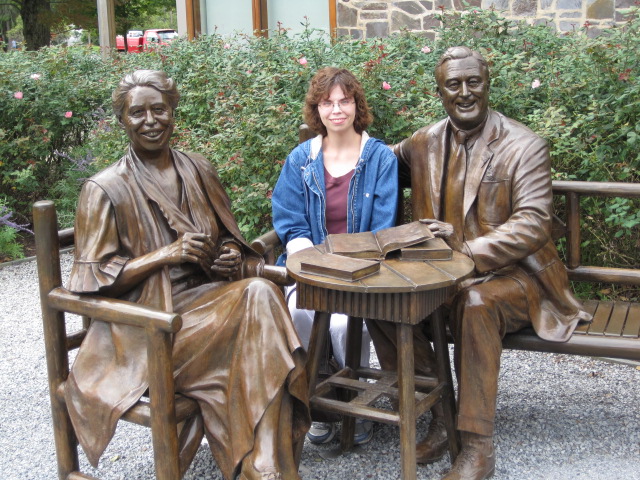
FDR Library

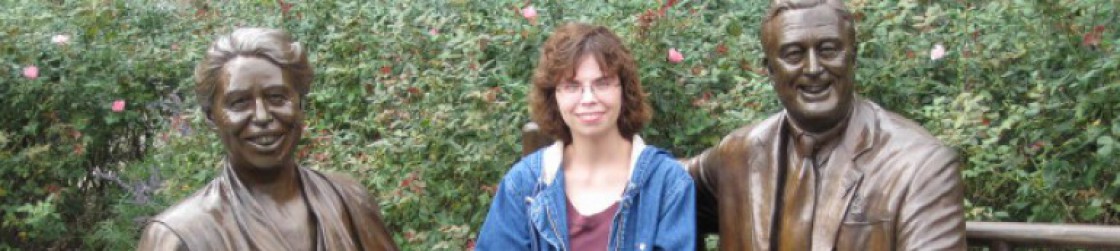
Fast forward several years, and no one else had written a book about the WRB. I contacted my former professor, who encouraged me to do more research on my old topic. Ironically, shortly after I wrote my thesis, a major project to collect the papers of the War Refugee Board was completed. I discovered that I could borrow microfilm from the Library of Congress and read the actual memos that FDR and Board representatives wrote. I spent at least a year of my life looking through those documents, and then I visited the FDR library in Hyde Park because I couldn’t borrow everything I needed. (The picture on the top of my blog and in this post is of me outside the library. I was one relieved researcher)!

My book wasn’t going to rehash my thesis, however. After studying the memos and other government documents related to the Board, I made an interesting discovery. Not only did the members of the War Refugee Board save Jews, but they also made an impact on American foreign policy that continues today. As I mentioned in a previous post, I hoped for a publishing contract, but decided to self-publish when that didn’t happen. Hopefully self-publishing will make my work available to the largest possible number of people, since that always was my main goal.

The Detroit Race Riots of 1943

The riot that broke out on the evening of June 20, 1943 at a popular beach park wasn’t the first sign of racial tensions in Detroit. During World War II, Detroit, a town already known for its manufacturing plants, produced one-third of America’s military equipment. The demand for blue-collar workers grew, and thousands of Southern African Americans flooded the city. They wanted better pay and better treatment than they received in the South’s sharecropping system.

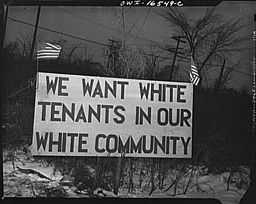
By the early 1940s, one major problem existed: the manufacturing plants provided jobs but not housing. Where would the new migrants live? White workers made it clear that they didn’t want to live next door to African Americans. Across town signs like “we want white tenants in our white community” were put up. Detroit Mayor Edward Jeffries finally succeeded in obtaining some additional housing for blacks, but his efforts required a show of force. Blacks moved in to their new neighborhood only after the Detroit police and the National Guard escorted the new tenants.

256px-White_sign_racial_hatred.

Life Magazine printed an article in August 1942 that predicted a larger clash between whites and blacks. The article said, “If machines could win the war, Detroit would have nothing to worry about. But it takes people to run machines and too many of the people of Detroit are confused, embittered and distracted by factional groups that are fighting each other harder than they are willing to fight Hitler. Detroit can either blow up Hitler or it can blow up the U.S.” The article proved to be prophetic.

On a hot summer day in 1943, tensions between the two races boiled over again. To escape the heat, over 100,000 Detroit residents went to an integrated beach called Belle Isle. The majority of the beachgoers were black. At first, small fights broke out among black and white teenagers. Black youths mugged whites, and white and black teens got into fistfights. By evening, however, the situation escalated. People tried to leave the island for the mainland, causing traffic jams. Stuck on the Belle Isle Bridge, a fight started between 200 blacks and white sailors. On the mainland, thousands of whites threatened blacks trying to cross. Though the Detroit police arrested dozens, rioting had already spread to other parts of the city.

Rumors only made the riots worse. Among whites, a rumor spread that blacks had murdered a white woman on the bridge. Among blacks, a similar rumor claimed that whites threw a black woman and her baby off the bridge. Whites attacked patrons exiting a theater patronized by African Americans. Streetcars filled with black people trying to go to work were stopped and passengers were thrown out. African Americans smashed windows of white owned stores and attacked anyone with white skin, including a doctor responding to an emergency call.

After nearly twenty-four hours of chaos, Michigan Governor Harry Kelly finally asked President Franklin Roosevelt to send in National Guard troops. Federal troops arrived the following morning and restored order. The riots left twenty-five African Americans and nine whites dead. Almost 1,000 people were injured.

Why I Decided to Self-Publish My History Book

After sending my manuscript to both academic and small presses, I have decided to self-publish my book on America and the Holocaust. (Specifically, it’s about the War Refugee Board—a government agency created by President Franklin Roosevelt whose members tried to save Jews who were still alive in Europe in 1944). While all of these publishers said “no,” they did not say, “this book is badly written” or “the topic is boring.” Instead, I got objections that I believe I can overcome with self-publishing. I listed a handful of them below.

Objection One: This is not a good fit for our list.

As a self-publisher, the only list I have is for books written by me. Some editors were nice enough to recommend other places where I might send my manuscript, though those presses had other objections.

Objection Two: Investing in a new author is risky.

As my uncle would say, a bus could hit any one of us tomorrow. His point? Life is inherently risky. I’ve read that self-publishing is risky, too, but I decided to defer to my uncle.

Objection Three: The book is too short.

My book and I prefer to be called vertically challenged…I’m kidding. Still, if I self-publish, length doesn’t matter. Having a shorter book will probably make the process a bit more affordable. As someone who also reads books, I appreciate writers who use as much space as they need to tell their stories–no more, no less.

Objection Four: People who do not have PhDs in History could understand this book.

I know some really wonderful people with PhDs, but I don’t want to limit my book’s audience to people who a. have PhDs in History and b. are interested in the Holocaust and/or President Roosevelt’s administration. Since most people don’t know much about what the members of the War Refugee Board accomplished, I want as many people as possible to understand it.

So, that tells you why I’m self-publishing my book. How I’m going to self-publish is still a work in progress. I’ll have more on that topic later on, as well as more general history posts.

If you’ve self-published or are working on a self-published project, what made you decide to do it?

Why History 4 Kids has Moved

I wanted to update my readers on the reasons why I moved my blog and changed its name from History 4 Kids to Heather on History.

  • The new site covers more than just history for kids, though it will be family friendly.
  • I’ll be posting about the process of writing and publishing history books for both adults and kids.
  • Book reviews for all ages will eventually be included.
  • Previous posts didn’t reflect my personality.

I’m hoping that you’ll find my new blog entertaining and informative.


Surprising Facts about Eleanor Roosevelt

Official White House Portrait of Eleanor Roosevelt

Official White House Portrait of Eleanor Roosevelt

  • She was very shy. Though she did a lot of public speaking as First Lady, Eleanor Roosevelt was a shy child. Even as a teenager, she worried that she would not attract a husband. Despite her worries, Eleanor became the first wife of a U.S. president to hold press conferences, speak at a national party convention, and write her own newspaper column. As she looked back on her life, Eleanor hoped others would see that “in spite of timidity and fear, in spite of a lack of special talents, one can find a way to live widely and fully.”
  • First wife of a president to drive a car by herself. As First Lady, Eleanor insisted on driving her own car, and wanted to go for drives without the Secret Service. President Franklin Roosevelt’s concern for her safety caused Eleanor to make some compromises. She sometimes traveled with a private bodyguard, and she also learned how to shoot a small gun. She admitted to the readers of her newspaper column that she was not an expert, but “if the necessity arose, I do know how to use a pistol.”
  • Loved to fly in airplanes and wanted flying lessons. Eleanor was the first president’s wife to ride in an airplane, and she told her friend Amelia Earhart that she hoped FDR would let her take flying lessons. FDR said no to the lessons, but that didn’t stop Eleanor from traveling by plane. Most Americans thought flying was dangerous in the 1930s, so Eleanor’s frequent plane rides helped airlines change some people’s minds.
  • Helped African Americans serve as pilots in World War II. In 1941, Eleanor traveled to the Tuskegee Institute, which provided education and job skills for African Americans. The Institute had an aviation program so students could learn to fly. Many hoped to be included in the air force in World War II, but the public doubted if blacks could really be good pilots. When Eleanor visited the program, she asked to fly with one of the Tuskegee pilots. He flew her over Alabama for an hour. After the flight, the pilot and Eleanor had their picture taken in the plane. The photo of the smiling First Lady sitting next to a black pilot made people think that African Americans might be competent airmen. With a little help from Eleanor, President Roosevelt decided to use Tuskegee pilots in combat.

The Childhood of President Theodore Roosevelt

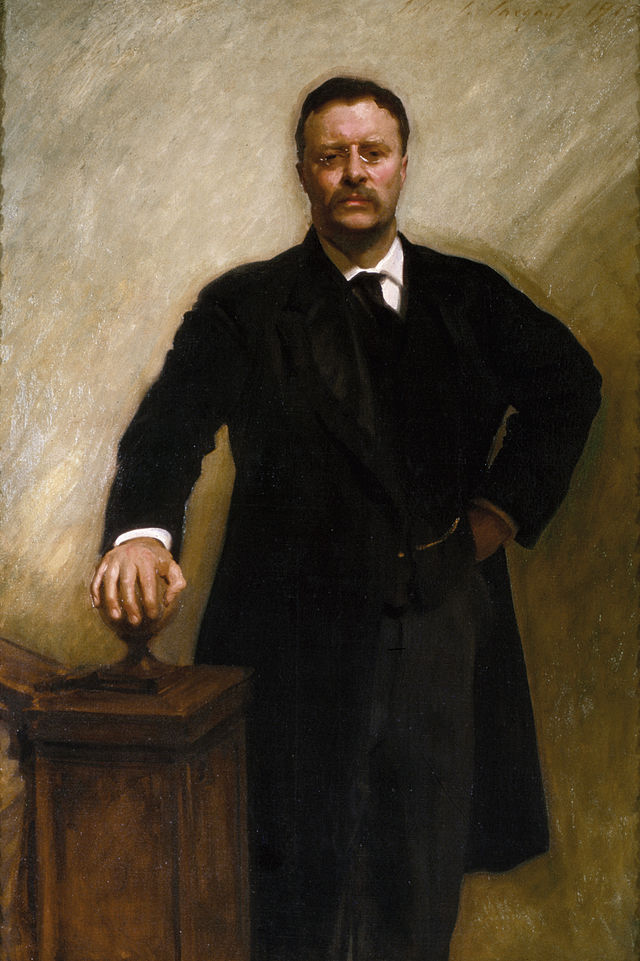
Official White House Portrait of Theodore Roosevelt

Official White House Portrait of Theodore Roosevelt

Theodore Roosevelt is remembered as one of the most athletic U.S. presidents. When he was a child, Theodore’s father worried about his son’s health. From the day he was born in 1858, Theodore Roosevelt, nicknamed “Teedie” or Teddy, suffered from asthma attacks. Since Theodore’s mother Mittie was often ill, his father Theodore Roosevelt Senior walked up and down the halls of the family’s house as the boy struggled to breathe. Other times, Theodore’s father ordered a horse and carriage in the middle of the night so Theodore could get some fresh air. Theodore Roosevelt later wrote that “I could breathe, I could sleep, when he had me in his arms.”

Since Theodore and his three siblings all had health problems, their father arranged for them to have private tutoring. Their father did his best to make learning fun by creating plays for them and reading stories. Theodore liked stories about men fighting in battles and stories about animals.

When the family went on vacation at Oyster Bay in Long Island, New York, Theodore noticed birds he had never seen before. He began to study their colors and the sounds they made. Theodore’s father had a professional taxidermist teach the boy how to stuff and mount dead birds for his natural history collection. Other family member and friends were less enthusiastic about Theodore’s collection, but his father thought anything that helped his son learn about the world was worthwhile.

Since the Roosevelt children didn’t attend school, their parents included a lot of field trips and traveling in their education. Theodore’s father helped establish the American Museum of Natural History and the Children’s Aid Society for poor children. He took his children with him when he visited children’s hospitals. By the time he went to college, Theodore toured many European countries and also went to the Middle East. During the Middle East tour, he loved finding exotic animals that didn’t live in the U.S.

Theodore’s father also encouraged his son to make his body as strong as his mind. He told Theodore, “You have the mind, but…you must make your body.” After two boys picked a fight with him and he lost, Theodore realized that his father was right. A gym was set up in the family home for Theodore to practice weight lifting and gymnastics. He also took up boxing. It took a long time, but Theodore eventually became more athletic.

In college Theodore continued his exercise program and his interest in animals. When Theodore’s father died, he decided to change his major from natural history to history and government. He wanted to honor his father’s memory by doing something useful. Though not everyone in his family supported his decision, Theodore thought a career in politics would allow him to help the most people.

Further Reading:  The Theodore Roosevelt Center: http://www.theodorerooseveltcenter.org

The Bully Pulpit by Doris Kearns Goodwin, Ch. 2

The Education of President Harry S. Truman

220px-Harry-truman
Though young Harry Truman spent his early years living with his parents and siblings on his grandfather’s farm, his family soon moved to nearby Independence, Missouri. From that point on, Harry thought of Independence as his hometown.

His mother Mattie, a well-educated woman, favored the move because Independence had better schools. She read aloud to Harry and gave him a love of books and music. By age five, he could read simple sentences. Harry’s reading ability made school easier for him. He also knew how to get along with his teachers and parents to get what he wanted. “I used to watch my mother and father closely to learn what I could do to please them, just as I did with my schoolteachers and playmates,” Harry said later.

Harry had a special reason for wanting to be judged for his behavior. A kid wearing glasses was a rare thing in a farm town, and Harry’s schoolmates teased him. Since he was also not very tall, they called Harry “little four-eyes.” Despite some teasing, Harry earned the respect of the other kids. He didn’t participate in many sports because of fear of breaking his expensive glasses, but he knew how to settle an argument with words instead of fists. His sense of fairness made him a popular referee during games.

Still, there was no doubt that Harry had different goals from his classmates. He enjoyed reading so much that he claimed to have read all the books in the Independence public library. Favorite books included biographies of military leaders like Andrew Jackson and Robert E. Lee. He admired these men for their honesty, a trait he was later known for as president.

Harry’s love of piano playing set him apart, too since girls and not boys usually took music lessons. His parents thought his talent should be encouraged, so Harry received piano lessons for as long as his father could afford them. When he graduated from high school, Harry hoped to go to college, join the military, or become a concert pianist.

Unfortunately, Harry’s father John Truman made some bad investments. Harry’s hopes to attend college or even continue piano lessons were dashed. Instead, he worked various jobs. He eventually became a bank clerk and made a good salary. Once again, his duty to his family called him away. His mother inherited the family farm and his father asked Harry to help him run it. Under Harry’s careful management, the farm made a profit.

Although he finally had some success, there were no signs that Harry Truman would become a famous politician and future president. His future mother-in-law said to her daughter Bessie, “That farmer boy is not going to make it anywhere.” Years later, “that farmer boy” proved her wrong.