John Adams: The Independent President

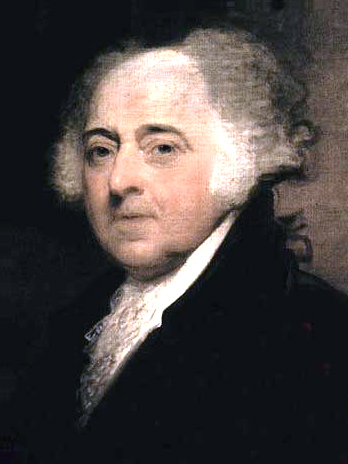
John Adams, like George Washington, did not enjoy his inauguration either, though for somewhat different reasons. His wife and political confidant, Abigail, was at home in Quincy, Massachusetts caring for John’s dying mother. In addition much of the attention that day was focused on Washington as people wept over the first president’s departure. Adams was also on the outs with his long time friend and now political enemy Thomas Jefferson.

John Adams, 1823 by Gilbert Stuart

John Adams, 1823 by Gilbert Stuart

Adams had reason to feel lonely on his inauguration day, but most of his public career characterized him as a “loner.” While his daughter expressed concern over his narrow election victory in a letter (he won 71 votes to Jefferson’s 68), he wrote back that he didn’t believe in “extravagant popularity.” Adams never quite trusted public opinion and felt that the more unpopular an idea was, the more likely it was to be right. Before the presidency he never held an administrative position and tended to take on causes that were unpopular with the public, such as defending British soldiers after the Boston Massacre.

Any politician who is unwilling to negotiate with others is unlikely to be successful for long, and Adams lost his re-election bid in 1800 to Thomas Jefferson. At the time, however, Adams was more concerned about family matters than election results. His son Charles, an alcoholic, had died. Since he was no longer president, John and Abigail would have more time to care for Charles’ widow and their grandchildren. Adams did live long enough, however, to see his son John Quincy Adams elected as President of the United States.

Surprising Facts about US President William Howard Taft

Portrait of President Taft

Portrait of President Taft

William Howard Taft was always a welcome addition to any social gathering. Because of his jovial personality, people liked him. Despite being overweight, Taft remained an agile dancer throughout his life.

Unlike his friend Theodore Roosevelt, Taft had no ambition to become president of the United States. All he wanted was to be a judge. During Roosevelt’s administration, he even had the opportunity to become a Supreme Court Justice.

His wife Nellie Taft, however, wanted to be First Lady. She urged Taft to take various political positions, such as governor of the Philippines. Taft had a bad habit of letting others make decisions for him. As a result, he became a reluctant politician. He tended to procrastinate and wrote his public speeches at the last minute.

When he became president in 1909, Taft noted, “If I were now presiding in the Supreme Court of the United States as Chief Justice, I should feel entirely at home.” As the new president, however, Taft felt “just a bit like a fish out of water.”

After spending a miserable term as President, Taft finally got a job he loved. He became the only former president to serve as a Supreme Court Justice.

How Historical Movies like Selma can be Used to Teach History

Movies like Lincoln, The King’s Speech, and most recently, Selma generate very different reactions depending on their audience. The Academy of Motion Pictures often gives Oscar nominations to these films, but they also annoy some historians.

If there is a factual error in a film, historians need to point that out to the public. For example, in the movie Lincoln the Congressmen from Connecticut voted against the constitutional amendment which abolished slavery. In reality Connecticut voted in favor of the amendment. Yet those who study history should not be surprised that Hollywood is not run by historians. Producing and directing films are skills that most historians do not possess. Most people who make films also do not possess in-depth historical knowledge.

Historians often like to point out the details that historical films did not address. Complaints about a movie’s failure to include certain aspects of history are often unfair. A movie cannot possibly cover every detail of a historical event because of time constraints. Even my college American history professor, gifted though she was, couldn’t possibly cover everything in an introductory course on American history. There was simply too much material.

Picture of books from Basking Ridge Historical Society taken by William Hoiles.

Picture of books from Basking Ridge Historical Society taken by William Hoiles.

The other complaint often voiced by historians is that young people get their history from movies and therefore the movies have to get every detail right. This begs the question: why are young people more likely to watch a film than pick up a history book? If students think their textbooks are boring that is not Hollywood’s fault. Authors who write history books for young people need to find a way to keep their audience’s attention. Even though I majored in history in college, I wasn’t always so fascinated with the subject. As a young student I was drawn to historical fiction novels, but my textbooks bored me. My favorite author of historical fiction always included a list of sources in the back of her novels, so I started reading biographies about some of the historical figures in her books.

Historians and teachers could do something similar with movies about historical topics.  For example, students who watch Selma could read Martin Luther King Junior’s writings.

Sparking a young person’s interest in history is valuable regardless of the medium used. Authors who write history for young people should view films like Selma as an opportunity to write books that are interesting and explain historical events in more detail.

Josiah DuBois and the Creation of the War Refugee Board

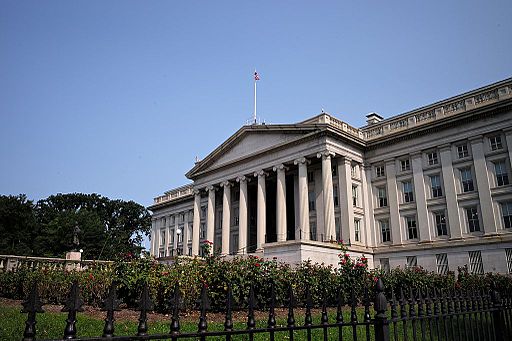
On Christmas Day 1943, a young US Treasury Department employee wrote something that would change the lives of more than 100,000 Jews in Europe. Josiah DuBois worked on this document despite the fact that he was risking his job and had little time to spend with his family on the holiday.

US Treasury Department photo by Roman Boed

US Treasury Department photo by Roman Boed

The document was entitled The Acquiescence of This Government in the Murder of the Jews. It accused the US State Department “of gross procrastination and willful failure to act” and “willful attempts to prevent action from being taken to rescue Jews from Hitler.” DuBois’ report showed that State Department officials not only followed the United States strict immigration laws, but tried to prevent Jews from immigrating to the US altogether.

Visas for potential refugees were delayed because of State’s requirement that refugees produce two letters of reference from American citizens who could either help support the refugees or who could prove the refugees could take care of themselves. In addition, visa applicants were often turned away if they had close relatives in Europe. The theory, or excuse, for not admitting them was that the enemy might persuade immigrants to become Nazi spies.

As DuBois pointed out in his report, the new immigrants would not threaten national security.  If President Roosevelt was concerned about potential spies, refugees could be placed in internment camps “and released only after a satisfactory investigation… Even if we took these refugees and treated them as prisoners of war it would be better than letting them die.”

In DuBois’s mind all human beings worth saving. Sadly, from late 1941 to early 1945 only 10% of the small quotas from Axis controlled countries were filled.

Yet DuBois did accomplish something by turning his report into his boss Treasury Secretary Henry Morganthau. By outlining State’s lack of concern for people fleeing from the Holocaust, DuBois showed that immigration issues shouldn’t be handled by the State Department. A new agency was needed to help people in Europe who were trying to escape from Hitller. This new agency would become known as the War Refugee Board.

The Building of the Washington Monument

Washington Monument, Photo by David Bjorgen

Washington Monument, Photo by David Bjorgen

On December 6, 1884, the Washington Monument was finally completed. The word “finally” is appropriate since construction on the monument ended 85 years after George Washington’s death.

While Washington was still alive many people wanted to dedicate statues to him, but he declined. He thought the country should spend its money on other things. Shortly after Washington’s death, John Marshall proposed a memorial to the first president. The memorial was to be built in the style of the ancient Egyptian tombs with a pyramid serving as Washington’s burial place. However, Congress could not agree on the design.

Thirty-seven years later John Marshall, who was now Chief Justice of the Supreme Court, continued to fight for a memorial. In 1832 the Washington National Monument Society was formed. The society decided to hold a competition for the best design while collecting donations from citizens across the country.

Designs came in from around the world. The society required only that each design be “durable, simple, and grand.” Finally they chose a design by Robert Mills, a church architect from Charleston. Mills’ design included a temple with an Egyptian obelisk on top. Inside a colossal statue of Washington and a museum about Washington’s life were to be placed. Because the design was so expensive ($1 million in the 19th century), the society decided to start with the obelisk first.

The monument’s cornerstone was laid on July 4, 1848 with the same trowel that Washington used for the cornerstone of the capital. In a crowd of over 20,000 people that day were three future presidents, including a young congressman named Abraham Lincoln.

To raise money for the monument states were encouraged to donate commemorative stones to its interior. Even foreign countries donated stones to show their respect for the Revolutionary war hero and president. A controversy arose, however, when the Pope tried to donate a stone. Anti-Catholic groups stalled the construction.

During the Civil War the monument was again abandoned. Cattle grazed around it and soldiers practiced maneuvers in its shadow.

Congress decided to resume construction during the centennial of the Declaration of Independence in 1876. All the arguments about the design resurfaced. Congress was still short on money. This time, however, the US Army Corps of Engineers under Lieut. Col. Thomas Lincoln Casey was put in charge of the construction.

The country’s anniversary made both Congress and Casey eager to finish the monument. The design was scaled back. It was decided that the temple would not be constructed–only the obelisk. Despite these cost-cutting measures Casey still had several issues to deal with. For example, the scaffolding was rotted and there were flaws in the foundation of the monument. Casey’s crew reinforced the foundation with concrete. He also carried out the original plan to include the 193 memorial stones donated by states and countries into the interior walls.

The outside stones for the monument presented other problem for Lieut. Casey. The quarry used for the initial construction was no longer available. The builders ended up using two additional quarries with varying colors of stone. Today visitors can see three slightly different colored stones from the three different quarries on the outside of the monument.

On December 6, 1884 Lt. Col. Casey supervised as the capstone was brought out through a window and set on top of the monument. The aluminum tip made by Tiffany‘s was put into place by the lieutenant himself. At 555 feet and 5 inches the monument was the tallest structure in the world. However, the Eiffel Tower surpassed it the following year. Nevertheless, it is still the tallest structure in Washington DC and serves as a landmark for everyone who visits the National Mall.

The Washington Monument’s exterior and interior have endured quite a bit over the years. For example, in 2011 an earthquake struck 90 miles southwest of Washington DC. Though the monument was significantly damaged it was repaired successfully. The durability of the monument was anticipated at its dedication. During the ceremony, a speech by Robert Winthrop who had attended the opening ceremony in 1848 was read by Rep. John Long of Massachusetts. He said, “the storms of winter must blow and beat upon it…the lightnings of heaven may scar and blacken it. An earthquake may shake its foundations…but the character which it commemorates and illustrates is secure.”
My Book’s Back Cover Copy: Thoughts?

I’m looking for my readers’ opinions on my back cover copy for Passionate Crusaders: How Members of the U.S. War Refugee Board Saved Jews and Altered American Foreign Policy During World War II. Comments welcome!

Passionate Crusaders tells the gripping story of a few righteous Americans who sought to do what many thought impossible in 1944—save Jews who had not yet been murdered in the Holocaust.

By January 1944, Treasury Department officials Henry Morgenthau, John Pehle, and Josiah DuBois had already convinced President Franklin Roosevelt to create the War Refugee Board, an agency with the authority to provide rescue and relief for Jews and other groups persecuted by the Nazis.

Scholars have criticized the Board for its inability to save more Jews and maintained that the agency should have been created sooner. Heather Voight’s research shows that despite its shortcomings, the War Refugee Board changed history and forever altered American foreign policy. Its creation ended the cycle of indifference that the government and the American public had shown to victims of the Holocaust. In the words of Henry Morgenthau, from 1944-1945 “crusaders, passionately persuaded of the need for speed and action” risked their reputations and sometimes their lives to save Jews.

In addition to saving more than 100,000 lives, Board members also made a lasting impact on international law. They pressured the War Crimes Commission to broaden its definition of war crimes by including the murder of civilians by their own countrymen. This definition of war crimes was applied to genocides committed many decades later in Bosnia and Rwanda, and continues to be used today.

“[Passionate Crusaders] shows that the efforts of an honorable and courageous few can create small steps to change history. This detailed, well-told, and inspiring story will be of value to students of the Holocaust, American history, and human rights.” –From the Foreword by Dr. Leon Stein, Professor Emeritus of History and Education Director Emeritus, Illinois Holocaust Museum and Education Center.

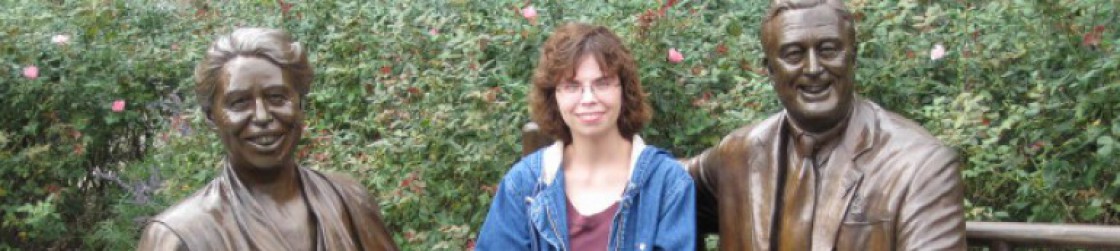
Heather Voight is a successful freelance writer and history blogger. Since 2009, she has published articles on a variety of topics including the Gibson Girl, healthcare, and the writings of C.S. Lewis. She has a B.A. in History and English.

http://www.heathervoight.com

Catherine Ryan Howard Answers my Self-Publishing Question

My question: I’m told that my blogsite on (mostly) U.S. history should have an incentive for people to sign up and therefore learn more about my self-published book on the U.S. and the Holocaust. In your opinion, what’s a good freebie for a history blog?

Catherine’s answer: This wouldn’t be my area of expertise, Heather, but I think the simple answer is a preview of your book. Try to make it something that stands alone–like a chapter about a single topic–so they don’t HAVE to buy your book to appreciate it. Just a simple PDF will do. Make sure to put links in the end of it so if they want to buy your book, they can!

Guy Fawkes Day Celebrations in England and America

On November 5, 1605, Guy Fawkes planned to blow up King James I during a Parliament meeting by lighting over 20 barrels of gunpowder in the building’s cellar. The night before the planned attack, Fawkes hid in the cellar and covered the barrels with coals and fagots. Fawkes and a number of other Catholic men resented the anti-Catholic laws in England, and hoped to establish a Catholic government after they blew up the Protestant king. The plot’s mastermind, Robert Catesby, chose Fawkes for the task because he had recently returned from fighting a foreign war and wouldn’t be recognized easily.

Unfortunately for Fawkes and his co-conspirators, the Gunpowder Plot was discovered. Authorities arrested Fawkes that evening and tortured him on the rack to force him to name the other men. Catesby and four others were killed when they resisted arrest; Fawkes and the rest of the gang were found guilty of treason and executed.

In January of 1606, Parliament declared November 5 as a day of thanksgiving. According to tradition, children carried straw effigies of Guy Fawkes through the streets, asking passersby for “a penny for the Guy” so they could buy fireworks for the celebration. They recited verses from the poem “The Fifth of November,” which states “Remember, remember!/The fifth of November,/The Gunpowder treason and plot;/I know of no reason Why the Gunpowder Treason/Should ever be forgot!”

The holiday even spread to the American colonies, where it was referred to as Pope’s Day. Colonists did not focus on the figure of Guy Fawkes, but they did burn effigies of the Pope, the devil, and political enemies.

Lewes_Guy_Fawkes_Night_Celebrations_(7)_-_geograph.org.uk_-_1570233

Guy Fawkes Night Celebration in England. Photo by Peter Trimming.

Unlike Britain, which still celebrates the original holiday, America does not. During the American Revolution, the colonies needed the support of France, which was a Catholic country. It became politically incorrect for colonists to hold an anti-Catholic celebration.

In England, however, people celebrate Guy Fawkes Day with fireworks, bonfires, parties, and burnt effigies of Fawkes and unpopular politicians. Children still go door-to-door before the holiday asking for “a penny for the Guy,” which is similar to the American custom of trick or treating on Halloween. Guards also continue the tradition of searching the Houses of Parliament, just in case any plots like the one Fawkes and his conspirators planned are afoot.

7 Great U.S. War Websites

5ea86-6a0128764e57aa970c01538e4fcdba970b-800wiFor this week’s post, I decided to share some of the best websites I’ve found on wars in which Americans fought. The list includes the websites themselves as well as the reasons that I chose them. My list is by no means comprehensive. If you have a favorite website that covers one of America’s wars, please feel free to add it in the comment section.

Note: I have not included blogs here; perhaps I’ll add those in a future post.

U.S. Civil War

Civil War Academy.com

http://www.civilwaracademy.com

This site is most helpful for finding information about battles. It includes a description of each battle and lists other pertinent information. Its most unique feature is that it allows users to search for battles by state as well as name.

The Spanish-American War

The World of 1898: The Spanish-American War

http://www.loc.gov/rr/hispanic/1898/index.html

This site from the Library of Congress has an extensive list of non-American participants in its subject index, as well as a section on the literature of the period. Primary documents such as maps of Cuba and the Philippines at the time of war and the papers of Theodore Roosevelt are online.

World War I

First World War.com

http://www.firstworldwar.com

This extensive site includes battlefield maps, a day-by-day timeline, primary documents, a complete listing of battlefields with descriptions, an encyclopedia (people, places, events, and terms), photographs, and first-hand accounts. The Prose and Poetry section is also an interesting place to learn about authors affected by World War I.

World War II

The World at War

http://www.worldwar-2.eu

The World at War is a nearly day-by-day history of World War II. It also includes extensive information about the events leading up to the war.

Generals of World War II

http://www.generals.dk/

This detailed site offers information on the military careers of generals in WWII from all participating nations.

Vietnam War

The History Place Presents the Vietnam War

http://www.historyplace.com/unitedstates/vietnam/

This site offers a detailed timeline with quotes and analysis. Information on My Lai, Gulf of Tonkin, Kent State, and other war-related topics is included.

The American Experience: Vietnam

http://www.pbs.org/wgbh/amex/vietnam/

This site provides a glossary of important figures in the Vietnam War, maps, and basic U.S. government documents relating to the war. The Weapons of War section makes the site an especially good resource for details about the weapons the combatants used.

What is your favorite U.S. war website?