Marriage in Ancient Egypt

Early marriage was encouraged in ancient Egypt. A suitable age for men was 20 but the bride would be younger, probably around 14 years old. There were no legal age restrictions on marriage so younger girls married too.

Ancient Egyptians usually married within the same social class. Marriages between cousins or an uncle and a niece were desirable because it would prevent splitting up family property. Though marriage between brothers and sisters happened within royal families, it wasn’t a widespread practice. Unfortunately the ancient Egyptian habit of using the words “brother” or “sister” as terms of affection made it seem that many more brother/sister marriages took place. Polygamy was also uncommon since a man needed to be rich to provide for many wives.

Marriages were agreed to by the father of the bride and the groom. Unlike modern weddings in western societies, there was no ceremony or exchanging of rings. The ancient Egyptians didn’t even have a word for “wedding.” The bride simply moved her possessions to her new husband’s home. Nevertheless, the ancient Egyptians loved parties so wedding banquets were likely.

The unceremonious nature of Egyptian marriage didn’t mean that couples felt no affection for each other. Indeed, the sheer volume of Egyptian love poetry indicates the opposite. One such poem begins: “My love is one and only, without peer, lovely above all Egypt’s lovely girls./On the horizon of my seeing, see her, rising,/Glistening goddess of the sunrise star bright in the forehead of a lucky year.” Ancient Egyptian statues and tomb portraits also portray husbands and wives sitting side by side. The husband’s arm might be around his wife’s shoulders or vice versa. Though the poses may not seem romantic to modern eyes, few other ancient civilizations showed that much affection between married couples.

Labit – A couple and their child – Reign of Thutmose IV – Egypt

Ancient Egyptian wives also had certain rights that other ancient married women did not. The wife was allowed to own property, and to have a share of any property acquired during the marriage. Ancient wisdom texts show the respect due to a wife. The Instructions of Ani exhort young men: “Do not control your wife in her house when you know she is efficient. Do not say to her ‘Where is it? Get it!’, when she has put it in the right place. Let your eye observe in silence. Then you recognize her skill.”

Wives, like husbands, could also initiate a divorce. Marriages dissolved in much the same way as they began. The wife usually returned to her family home, taking her possessions and her share of the property. Sometimes she received some financial support from her former husband. Marriages ended for various reasons. Sometimes the couple was incompatible, sometimes one party fell in love with someone else, or the wife was infertile and the husband wanted children. Having an infertile wife was not considered an appropriate reason for divorce, but it happened anyway.

Infertility was invariably blamed on women. The main point of ancient Egyptian marriage was to have children, especially sons who could continue the family name and make sure the proper rituals were performed for the parents after death. Wives needed many children to please their husbands, ensure security in marriage and to enhance their social status.

Yet children were not merely status symbols. Tomb scenes show affection of parents to both boys and girls. Though boys were preferred, there was no established tradition of female infanticide in ancient Egypt.

Marriages in ancient Egypt could also end through death. Young girls who married uncles were often widowed and women could die in childbirth. Tomb scenes show loving couples being reunited after death. Remarriage after widowhood was also common, with some ancient Egyptians remarrying multiple times.

Sources:

Ancient Egyptian Literature: An Anthology Translated by John L. Foster

Daughters of Isis: Women of Ancient Egypt by Joyce Tyldesley

Egyptian Life by Miriam Stead

Everyday Life in Ancient Egypt by Jon Manchip White

The Childhood of U.S. President Jimmy Carter

On October 1, 1924, Jimmy Carter was the first future U.S. president to be born in a hospital. Most women at the time still gave birth at home, but Jimmy’s mother was a registered nurse.

Jimmy’s family lived in Plains, Georgia on South Bond Street. Their neighbors included Edgar and Allie Smith. When the Smith’s daughter Rosalynn was born in 1927, Jimmy went next door to see the baby. That marked the first time Jimmy saw his future wife.

In 1928, Jimmy’s father became a full time farmer. Jimmy and his sisters were raised on a farm two and a half miles from Plains in Archery. The town had a population of around 200 people. At first the farmhouse had no electricity or plumbing. Jimmy’s most vivid memories were of the cold because his room was the farthest from the stove and fireplaces.

Jimmy’s brother Billy wasn’t born until Jimmy turned twelve so he received a lot of attention from his father. He followed his dad around the farm whenever possible. His father encouraged him to earn money at an early age. Jimmy sold peanuts in Plains when he was only five years old. He maintained ten regular customers and also sold to shoppers visiting the town.

Most of Jimmy’s duties on the farm meant working in the field. He chopped cotton and hoed weeds. Jimmy felt restless doing small chores though. He wanted to “escape from the company of other children and women in just hoeing, picking cotton, and shaking peanuts and to graduate to the exalted status of a skilled plowman who could cultivate a crop.” In his father’s opinion, Jimmy never fully reached his goal. He was permitted to break land in the field at age twelve, however. Others viewed it as boring work, “but to me it was a great achievement.”

U.S. President Jimmy Carter, 1977

As Jimmy grew, he especially enjoyed doing carpentry with his dad. “I relished the repair of houses, barns, and storage places, and was eager to help when new farrowing pens were built for our sows and pigs,” Jimmy wrote years later.

In addition to his chores, Jimmy also played on the farm. Since the Carters were the only white family in Archery, his playmates were African American. They made their own toys, such as hoops, slingshots and guns. Even when he started school in Plains, Jimmy felt “more at home” with his black friends. The only rankings among him and the other kids revolved around who caught the biggest fish or performed best in the last baseball game.

At six years old Jimmy attended Plains High School where he had only white classmates. The school was one of the best in the state thanks to its superintendent. She took a special interest in Jimmy and gave him extra reading assignments. Jimmy’s parents also encouraged their children to bring books to the dinner table.

Jimmy was content on the farm, but his parents wanted him to finish high school, go to college, and join the navy. His mother’s youngest brother was in the navy and sent Jimmy souvenirs from countries like Australia and Japan. A naval appointment could only come from a senator or congressman, so Jimmy had to work hard in high school to get good grades. He didn’t receive an appointment when he graduated high school in 1941. Instead, he enrolled in Georgia Southwestern College and became a lab assistant.

The bombing of Pearl Harbor in December 1941 changed Jimmy’s life. After his sophomore year in college, he finally received his appointment and entered the Naval Academy in 1943.

Sources:

Jimmy Carter A Full Life: Reflections at Ninety by Jimmy Carter

Gift of Peace: The Jimmy Carter Story by Elizabeth Raum

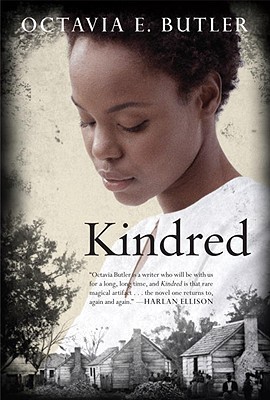
Book Review: Kindred by Octavia Butler

Dana is an African American woman living in the present day, which when Butler was writing her novel was 1976. On June 9th, the day of Dana’s birthday, she and her husband Kevin unpack books in their new house in California. Dana suddenly feels nauseated and dizzy. Kevin disappears from her sight.

Though she doesn’t know it on this first trip, Dana is pulled back into the nineteenth century, specifically antebellum Maryland. She discovers that she gets pulled out of the 1970s and into the 1800s every time a white ancestor of hers is in danger. Since this ancestor is a troublemaker, Dana is called to him several times. She witnesses what it was like to be a slave on the Waylon plantation. Though she’s treated somewhat better than the others because of her healing abilities (she knows basic things like CPR and how to keep a wound from getting infected that doctors in the 1800s don’t), she still faces her share of danger. As a reader I wondered if she would have a chance to live with her husband in the 1970s and if she would come back to him in one piece.

I listened to this book on audio. The one criticism I had is that sometimes the narrator doesn’t make the voices of the characters distinct enough. Butler’s writing had me riveted, though. Kindred was described to me as science fiction for people who aren’t sure they like science fiction. I knew that I enjoyed books that travel back in time, so I thought this book would be a good choice. Kindred was a good choice for me, though I won’t use the word enjoyable to describe it. Dana and the reader witness the evils of slavery. African American characters are whipped, sold away from family members and sometimes contemplate suicide, among other horrors.

As I read Kindred in the year 2021, I felt like I was witnessing two historical time periods: the antebellum South and 1976. I laughed when Kevin and Dana couldn’t use the Internet to look up information, though they did pretty well with books. Also, although race relations were obviously better in 1976 than the 1800s, more progress has been made in the twenty-first century. For example, the South African apartheid that Dana hears about on the radio no longer exists. That’s not to say that we don’t need to make more progress on issues of race today, however.

Kindred reminded me of what an African American character on the TV show Timeless said. He said that he couldn’t think of a time in history that would be safe for him to go back to visit. He was right, but I also think that one of the worst times in history to return to for an African American would involve a time in which slavery existed.

Kindred will introduce readers to the realities of slavery in the nineteenth century as well as a bit of the 1970s. I wanted Dana to describe a bit more of her surroundings on the plantation, but I think her understandable terror explains the sometimes lackluster descriptions. I definitely recommend Kindred by Octavia Butler for ages 14 and up.

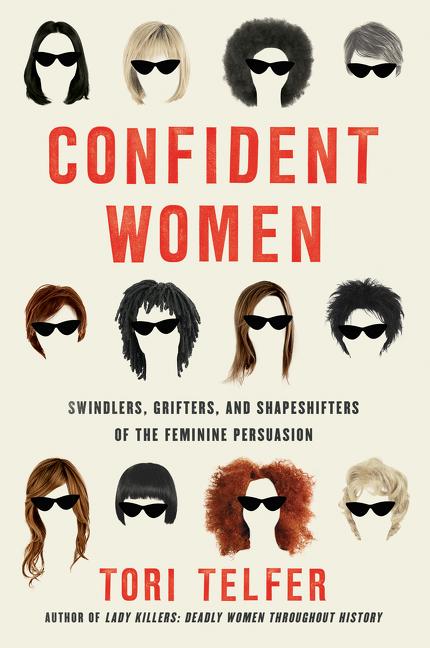
Book Review: Confident Women: Swindlers, Grifters, and Shapeshifters of the Feminine Persuasion by Tori Telfer

This book offers a brief look at the lives of various con women throughout history. It’s divided into four sections: The Glitterati, The Seers, The Fabulists, and The Drifters. Each section contains brief essays about women who fit those descriptions. For example, Jeanne de Saint-Remy is in the Glitterati category. In the 1700s she convinced a jewelry company that she was Marie Antoinette’s best friend and the company’s owners handed her a decadent but ugly diamond necklace for Marie Antoinette to wear. Interestingly, Marie Antoinette had previously rejected the necklace and disliked wearing necklaces.

For the category of Seers, Telfer talks about spiritualists who could supposedly help their customers communicate with the dead for a fee. The Civil War helped these women become especially successful since so many people wanted to contact loved ones who died during the war. Though not an honest profession, it did help nineteenth century women to make money independently, which was rare.

In the Fabulist category, the author includes women who either made money off of tragedies or gained notoriety. One woman, Tania Head, claimed she survived 9/11 in one World Trade Center tower while her husband died in the other. She even formed a survivors organization which she was kicked out of when a New York Times reporter discovered the holes in her story.

https://images-na.ssl-images-amazon.com/images/S/compressed.photo.goodreads.com/books/1630860647i/53487125.jpg

The Drifter category introduces readers to Lauretta Williams, aka Loreta Janeta Velasquez. She disguised herself as a Confederate soldier and claimed in her book that she fought for the Confederacy in the Civil War. There is no proof of her claims and the book’s contents are wildly inconsistent.

I was familiar with a few of the women in this book, including Lauretta Williams, but the the majority were unknown to me. I enjoy learning about little known aspects of history and I enjoyed the book. The explanation in the introduction and conclusion about why con women fascinate us and how they manage to con people who are otherwise intelligent was interesting. In part, they manage to con people because they are likable. Many people, including men, get conned because the women are so charming. They also speak to something in us that wants to be important or liked or to believe that we can control our lives.

The one major disadvantage to Confident Women is that it doesn’t go into depth on the women featured, but it’s a useful introduction to con women and readers can do more research if interested.

I recommend Confident Women to readers who enjoy women’s history. Tori Telfer is also the author of Lady Killers: Deadly Women Throughout History which I’m looking forward to reading at some point.

Wanted: A Husband for the Queen–Queen Victoria and Prince Albert

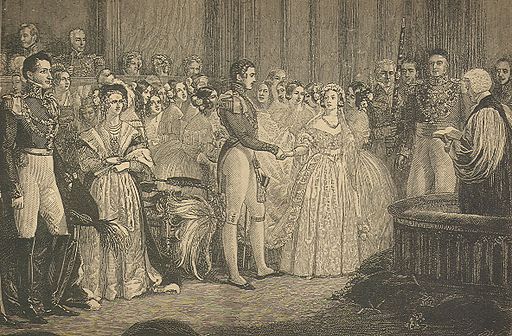
As Queen of England, Victoria was expected to produce an heir. Soon after her coronation in 1837 a search for a husband started. Since the Queen of England ruled in her own right, finding a husband presented some unique issues since there was really no precedent. Queen Elizabeth I ruled alone but never married. In the end Victoria chose her German cousin on her mother’s side. He became known in England as Prince Albert.

The extraordinary circumstances of their marriage were no doubt helped by the fact that Victoria and Albert were very much in love with each other. Prince Albert soon carved out his own role beside Victoria. He served as her private secretary and closest advisor. He often stood in for her when she was feeling particularly unwell during one of her nine pregnancies. Albert also influenced Victoria with his interest in science and technology. As a result the queen remained a patron of both throughout her reign.

512px-VictoriaAlbertMarriageEngraving

The Marriage of Queen Victoria and Prince Albert, Feb. 1840

Husband and wife and their nine children made for quite a happy family. Though it has been said that Victoria did not like children, this was mostly true of children six months of age and younger. Like most women, she did not enjoy the experience of childbirth. In contrast to Victoria, Albert liked the company of very small children. The Queen admitted that Albert made a better nurse than she did after the birth of their first child and later reminded her daughter “dear Papa always directed our nursery and I believe that none was ever better.”

Victoria had many photographs and portraits made of her and her family, although she was often away on official business. Neither mother nor father could spend as much time with the children as they would’ve liked, but this was common among wealthy British families. Both parents took a keen interest and concern in their children’s education. They tended to stay away from the traditional clerics and selected more liberal tutors.

Albert and Victoria’s personalities also balanced one another out. Albert had tendency to be serious, while Victoria appeared more serious in portraits than in real life. Many people who met her in person were surprised to see Victoria smile and laugh so often.

When Albert died in 1861, the Queen was devastated. After his death, she wrote “What a dreadful going to bed! What a contrast to that tender lover’s love! All alone!” Victoria mourned in private for almost three years until she was finally seen in public riding in her carriage.

Limited Time Book Sale for Holocaust and U.S. History Buffs!

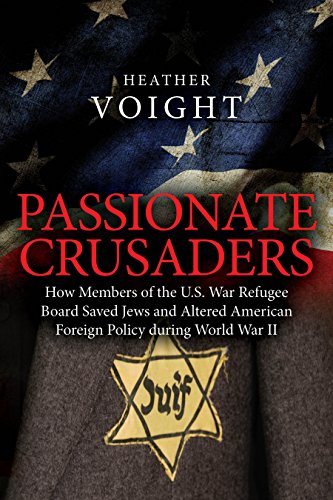
My book Passionate Crusaders: How Members of the U.S. War Refugee Board Saved Jews and Altered American Foreign Policy during World War II is ON SALE until Christmas here: http://amzn.to/2gBVVD8

It’s the story of a few good men who tried to save Jews and others from the Holocaust at the last minute. These ordinary people had hope in the face of impossible odds, and isn’t that what we could all use this holiday season?

Available for $0.99 on Kindle and $8.99 paperback. Happy holidays to my readers.

518itdt0ynl

Letters from the Past: Back to School in Ancient Egypt

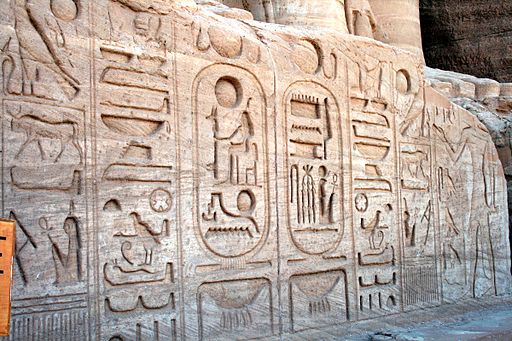
Hi, I’m Rahmose, and like many of you, I’ll be starting school soon. I’m nine now, which means that I have three more years to go before I can be a scribe for the pharaoh. This year I’ll learn to write hieroglyphics.

As a young boy, I watched my father perfect his hieroglyphic writing before chiseling the final copy on the walls of royal tombs. He dipped his reed pen in ink and drew tiny birds, sheaths of corn, and odd looking lines on papyrus. Sometimes I copied what he wrote, or tried to, on pieces of ostraca. My mother says I used to break her pottery on purpose so I could have something to write on! She was relieved when I turned five and she could send me to the House of Instruction in the Royal Palace.

Abu_Simbel_Egypt_6

Name of Ramesses II in hieroglyphs at his temple Abu Simbel


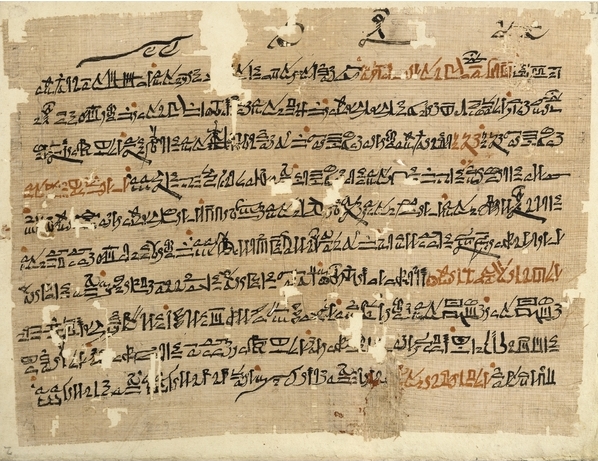
I was so excited to start school. Finally, I would learn what the symbols in the tombs and temples meant. Imagine my disappointment when the teacher told us we weren’t learning hieroglyphs right away. Instead, we had to master hieratic. In case you haven’t seen it, hieratic is a curly looking script that reads from right to left. Most Egyptians who can write use hieratic because it’s not as time consuming as hieroglyphics. It’s not as beautiful, either.


Papyrus_Sallier_II

Example of hieratic writing. Document known as Papyrus Sallier


Our teacher gave us reading assignments from the Kemyt. The assignments were hard and boring. The Kemyt was filled with advice for young students and included Egyptian phrases.

When we finally finished the Kemyt, the other boys and I moved on to the Wisdom Texts. I thought that with a name like the Wisdom Texts, this new text must be more interesting. Maybe I would become as wise as my father after I read it. But no, we’re just reading about how much better off scribes are than men in other occupations. I had to memorize and copy out this passage: “there is no worker without an overseer except the scribe, who is his own boss.”

Sometimes I wonder if other jobs are as bad as our teachers say. It might be fun to work outside and grow crops. My father says that farming would make me dependent on the flooding of the Nile, though. As a scribe, I’ll rely on my knowledge, not nature.

Even if I get bored sometimes, I still want to become a great scribe like my father. Writing has so much power in Egyptian culture. When someone dies, their mummy is buried with their possessions. Still, the objects in the tomb aren’t as important as the hieroglyphics. If the tomb is robbed but the name of the owner is still carved on the wall, the spirit of the dead person can live on. The worst thing that could happen to anyone is to be forgotten by the living and have their name disappear from the earth.

I am so proud that someday soon I will be preserving the spirits of the pharaoh’s family.


Frequently Forgotten U.S. President Grover Cleveland

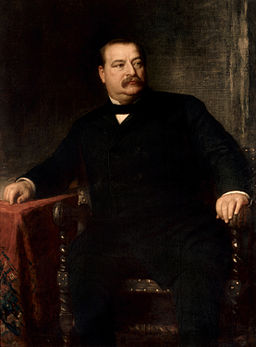
Young Grover Cleveland’s father was a minister, and he learned to be truthful from an early age. In politics Cleveland gained a reputation for reform as the mayor of Buffalo and governor of New York. He also gained weight thanks to his fondness for food and beer, though he was not a fan of the French cooking served in the White House.

During the 1884 presidential election the forthright Cleveland was accused of having an illegitimate son. Cleveland insisted on supporting the boy financially even though he may have been covering up for a married friend. (Cleveland did not marry until after he became president).

256px-Gcleveland

Official Presidential Portrait of Grover Cleveland

Cleveland’s decisions as president were somewhat contradictory. On the one hand, he refused to sign a bill that would have helped struggling farmers because he believed that government should take a limited role in people’s lives.

On the other hand, he created the Interstate Commerce Commission which eliminated the authority of individual states to set rates on interstate traffic. Cleveland’s subsequent fights with big business prevented him from being re-elected in 1888.

Yet Cleveland was not ready to retire. He ran again for president four years later and won, becoming the only president elected to non-consecutive terms.

His second term was marked by health problems and the worst economic depression up to that time. Though doctors successfully removed a tumor from his mouth, Cleveland’s poor health made him increasingly stubborn. During the Pullman strike in Chicago he sent in federal troops to break it up, asserting that presidents could interfere in a labor dispute if it endangered the country’s economy.

Frequently Forgotten President Rutherford B. Hayes

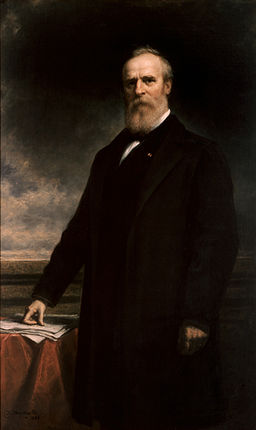
256px-Rhayes

Official Presidential Portrait of Rutherford B. Hayes 

Rutherford B. Hayes is the first in my new series of frequently forgotten U.S. Presidents.

Like President Grant, Hayes had personal integrity, but his presidency was tainted by the very corruption he deplored. During the 1876 presidential election Hayes’ Republican supporters disputed the electoral votes in a few southern states. Republicans promised that Hayes would withdraw federal troops in those states if elected, which he did.

The southern states did not keep their promise to grant civil rights to blacks, however. Though he made other reforms, Hayes’ troop withdrawal delayed the civil rights movement until the 20th century.

The circumstances of his election caused some to label Hayes as “His Fraudulence.” Hayes did gain some support from the public by promoting civil service reform. He signed an executive order that stated that people in public office would be fired only in the best interest of the government regardless of their political affiliations. Hayes followed through on this by firing future Republican president Chester Arthur who used his position at the New York Customs House to help other Republicans.

Though he had pledged to serve only one term, he couldn’t have run again if he wanted to because so many Republicans were angered by his efforts to root out corruption. He managed to accomplish some changes, however.

He had the first telephone installed and was the first president to have a college-educated wife. He and “Lemonade Lucy” banned alcohol from White House dinners. After leaving office he became one of the most active ex-presidents, supporting causes like black education and prison reform.