More Abraham Lincoln Pets and the First Presidential Turkey Pardon

Despite the fact that they left their dog Fido behind in Springfield, the Lincolns had other pets in the White House. Tad and Willie had two goats named Nanny and Nanko, both of whom had the run of the White House. The goats drove the staff crazy by chewing almost everything in sight and eating the flower bulbs in the garden. In addition, the Lincoln boys would hitch the goats to either chairs or carts and have the goats pull them around. On one occasion, Tad scared White House visitors by driving one goat-pulled chair through the East Room while shouting, “Get out the way!”

Lincoln told Elizabeth Keckley, his wife’s seamstress, “I believe they are the kindest and best goats in the world.” According to Keckley, Lincoln and the boys would play with the goats in the yard “and when he called them they would come bounding to his side.” The White House staff was so frustrated with Nanny, however, that she was taken to the Soldiers Home. Unfortunately, she also chewed up the garden there and was sent back to the White House. Nanny, probably confused by the move, disappeared one day. Lincoln reported the loss to Tad who was on a trip with Mrs. Lincoln. “Poor Nanny goat is lost,” he wrote. By the next spring, Nanny was either found or replaced by another goat. Lincoln sent his wife a telegram saying “Tell Tad the goats and father are very well– especially the goats.”

If goats made for unusual White House pets, Tad managed to find yet another exotic friend. In 1863 the Lincolns were sent a live turkey. It was to be eaten at Christmas dinner. Tad became attached to the turkey and named him Jack. When Tad found out his new friend was going to be cooked for Christmas dinner, he interrupted Lincoln during a cabinet meeting to plead for the bird’s life. Lincoln stopped the meeting and wrote an “order of reprieve” for the turkey. Jack continued to live at the White House.
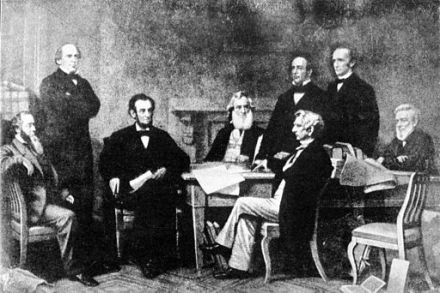
colliers_1921_lincoln_abraham_-_cabinet_meeting

Lincoln and his Cabinet. William Seward, who gave Lincoln kittens, is seated in front of the desk.

The tradition of presidents pardoning turkeys was thus started by Lincoln even though his turkey was for Christmas dinner. The presidential turkey pardon did not become an annual tradition until years later. John F. Kennedy was the first modern president to let a Thanksgiving turkey go.

Lincoln himself seem to derive the most comfort from the company of cats. When asked if her husband had a hobby, Mary Lincoln might’ve answered cats.  Lincoln received two kittens as a gift from Secretary of State William Seward. He named them Tabby and Dixie. He reportedly spent quite a few hours of his time talking to them. At one point he exclaimed that they “were smarter than my whole cabinet.” During one White House dinner, Lincoln had Tabby seated next to him. This embarrassed Mrs. Lincoln but did not seem to trouble her husband.

Lincoln was also fond of stray cats, but he didn’t bring them home too often because Mary didn’t appreciate it. While visiting Gen. Ulysses S Grant at army headquarters in 1865, Lincoln spotted three stray kittens. He scooped them up and petted them. Before he left he made sure that someone would look after them. Grant aid Horace Porter stated that it was a “curious site at army headquarters upon the eve of a great military crisis” to watch the president “tenderly caressing three stray kittens. It well illustrated the kindness of the man’s disposition, and showed the childlike simplicity which was mingled with the grandeur of his nature.”
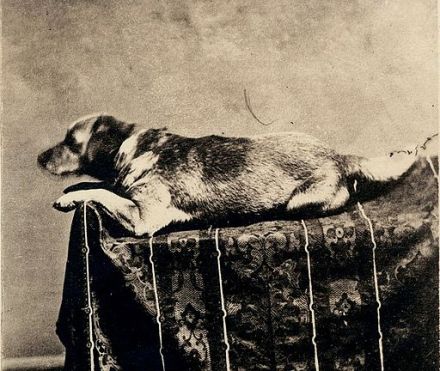
Presidential Pets: Abraham Lincoln’s Dog Fido

Abraham Lincoln’s dog Fido was the first presidential dog to be photographed. Lincoln had the photo taken in 1861 just before he left Springfield, Illinois for his presidential inauguration. He told his sons Tad and Willie that they could take the photo with them to Washington, but not the dog.

fido_the_dog

Official Portrait of Fido, Abraham Lincoln’s Dog

During his time in Springfield Fido was a great companion to Lincoln. The yellow-and-brown mutt accompanied Lincoln on errands and often waited outside the barbershop for him. Unlike his master, however, Fido wasn’t meant for public life. After Lincoln’s presidential nomination, local politicians came to the house and tried to greet Fido, who retreated under the family sofa. Fido also was less than enthused about the fireworks and cannons going off when his master won the election.

Mary Lincoln was not a big fan of dogs and she was probably happy not to have to clean up after Fido anymore. Lincoln, however, loved dogs and made sure that Fido had a good home. Lincoln gave the dog to the Roll family who were friends and neighbors of the Lincolns and their children.

Before giving away his pet, Lincoln gave the Rolls strict instructions about Fido’s care. For example, Lincoln insisted that Fido never be punished for coming inside with muddy paws. He also wanted the dog to be allowed in the dining room where he could beg for table scraps. The Rolls were also given the Lincoln family sofa to make Fido feel more at home. It was his favorite place to sleep. Finally, the Rolls promised to give the dog back when the Lincolns returned to Springfield.

Fido was never reunited with his master, though he did watch the funeral procession in Springfield after Lincoln’s assassination. Several months later Fido ran away from the Roll’s home. John Roll wrote, The dog in a playful manner put his dirty paws upon a drunken man sitting on the street curbing. In his drunken rage the man thrust a knife into the body of poor old Fido. So Fido, just a poor yellow dog was assassinated like his illustrious master.” The Roll children buried Lincoln’s beloved dog in their yard.


Presidential Pets: Gerald Ford’s Golden Retriever Liberty

President Gerald Ford arrived in the White House without a dog. The family had owned golden retrievers before, so daughter Susan Ford and White House photographer David Hume Kennerly decided to surprise the president with a puppy. After contacting a breeder of golden retrievers in Minneapolis, they soon realized that it would be tough to keep the puppy a secret.

The breeder wanted to make sure the dog had a good home and asked a lot of questions. For example, the breeder insisted on knowing where the puppy would live. Kennerly said that the couple “lives in a white house with a big yard and a fence around it.” The breeder also asked if the couple owned or rented their home. Kennerly said, “I guess you could say they live in public housing.”

Unimpressed, the breeder refused to ship the dog. Finally Kennerly and Susan said the dog was for the president and explained that they wanted it to be a surprise.

In his memoir A Time to Heal, President Ford wrote about the day he first met Liberty. “I was in the Oval Office…when Susan walked in. ‘Daddy,’ she said, ‘if we ever get another dog, what kind are we going to get?’ ‘A female golden retriever about six months old,’ I said. At that moment, David entered with a copper-colored pup who raced around the Oval Office yelping excitedly. ‘Whose dog is that?’ I asked. ‘It’s yours.’ Susan and David laughed. ‘Her name was Streaker, but we’ve changed it to Liberty.’ Delighted, I grabbed the pup, put her on my lap, then got down on my hands and knees and played with her on the rug.”

256px-liberty-ford

President Ford and Liberty in the Oval Office

Liberty spent much of her time in the Oval Office next to Ford’s desk. If visitors came in, she would check them out. After they met with her approval, she returned to her rug beside her owner.

Other presidents enjoyed the company of their pets, but President Ford often personally took care of Liberty. They went on long walks together. According to Betty Ford, the pair even got locked out of the White House together!

At three in the morning, Liberty licked the president’s face, indicating that she needed to go out. Ford took her on the south lawn, but when they came back the elevator was turned off. They tried the stairwell, but the door to the hall was locked. After much pounding by the president and a lot of barking from Liberty, the Secret Service finally let them in.

Liberty became a national celebrity when she gave birth to puppies. The public was so eager for pictures of the new mom that a rubber stamp with Liberty’s paw print was made. This way, Liberty could “autograph” photos of her and the puppies.

The Fords kept one of Liberty’s puppies, a blond one named Misty. Another named Jerry went to the Leader Dog School for the Blind. The others were given as gifts or bought by friends.

Even though President Ford only served one term, his fondness for Liberty increased the popularity of the golden retriever in America. To this day the breed remains a popular choice with dog lovers.


Presidential Pets: Socks, First Cat of the Clinton White House

When Chelsea Clinton finished a lesson at her piano teacher’s house in 1993, she had no idea that she would take home a kitty. Though Socks had been a stray, he was intent on finding a home. He and another cat had been hanging out in the teacher’s yard, and as Chelsea came out of the house, Socks jumped into her arms.

Socks settled in at the Clinton’s house. Bill Clinton was governor of Arkansas at the time, and Socks had the run of the house and grounds. He could chase squirrels and other furry creatures to his heart’s content.

Socks’ life changed when the Clintons moved into the White House. Though he had the distinction of being the first cat to live in the White House since Jimmy Carter’s presidency, his owners decided it was unsafe for him to roam the 18 acres of his new home. They knew how much Socks liked to hunt, and that he might squeeze through the iron fence. Socks could go outside, but he stayed on a long leash on the South Lawn.

Even though he couldn’t hunt much, being the president’s pet had some advantages. For example, he got to sit on President Clinton’s shoulders in the Oval Office. He also made many new friends among the staff. One of his favorite people to visit was the president’s secretary Betty Currie.

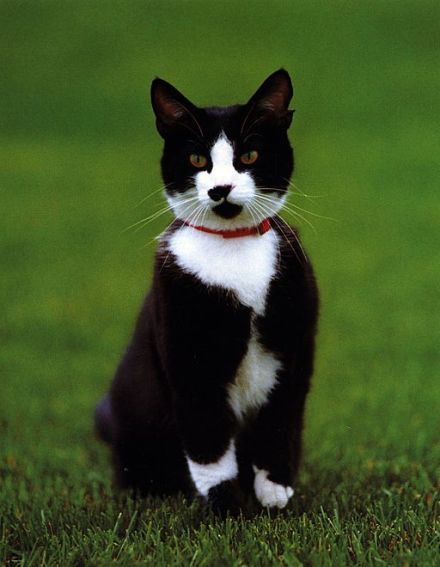
Socks_the_Cat_Official_Portrait

Official Portrait of Socks the Cat, 1993


As First Cat, Socks had certain duties to perform. He often accompanied Hilary Clinton on visits to hospitals and nursing homes. Socks seemed to enjoy the attention he got from kids and senior citizens. During these visits, he sat on Hillary’s lap and purred away. He also knew how to make an entrance. When he went anywhere, Socks travelled in his own carrying case with the presidential seal on it.

Socks became the first presidential pet to have his own webpage. An animated version of Socks guided children through the White House website. He also got a lot of fan mail from kids. The Clintons made sure that Socks sent a card back to his fans with a paw print.

In 1997, the Clintons got a Labrador retriever named Buddy. Everyone was thrilled–except for Socks. Hilary Clinton said that Socks “despised Buddy from first sight, instantly and forever.” Socks enjoyed being the only furry member of the family, and couldn’t stand having to share the spotlight with a boisterous dog.

To be fair, the dislike seemed mutual. As Hilary Clinton said, “if they were left together, Socks would be found hissing, fluffed up and with his back arched, while Buddy tried to chase him under the sofa.”

Bill Clinton’s second term ended in 2002, and the family decided it would be best to separate Socks and Buddy. Socks left with his old friend Betty Currie for her Maryland home. Even though he was no longer First Cat, Socks still made appearances with Betty for charities.

Socks died in 2009 at the age of twenty. Some of his ashes were scattered at the governor’s mansion in Little Rock, Arkansas. A plaque near the mansion’s back porch reads: “Socks. 1991-2009. First Cat of Arkansas 1991-1993. First Cat of the U.S. 1993-2001.”

President Lyndon Johnson and his Dogs

When Lyndon Johnson became president, he brought two beagles named Him and Her to the White House. Both Him and Her attended official White House functions. Even though Him once left a puddle on a chair during a party, the president refused to make Him stay elsewhere while his master entertained. Both Him and Her had the run of the Oval Office. Johnson signed the law that created The Great Society–a set of programs that gave more rights to African Americans and poor people–in the presence of his dogs.

Johnson often combined press conferences with dog walks. Most of the time, these walks went well. The walks made good copy for reporters because the public loved seeing the president with his beagles. Johnson tried to get his dogs to do different tricks for the cameras. He stuffed his pockets with candy-coated doggy vitamins to get Him and Her to perform.

One act, however, made the American people and Johnson’s dogs howl. During a press conference, Johnson picked one of the beagles up by its ears. Animal rights groups complained that Johnson was mistreating the dogs. Suddenly Johnson and his dogs were front-page news. Other than that incident, however, Him and Her seemed to enjoy their time as presidential pups.

After Him and Her died, Johnson felt pretty lonely in that big house. Fortunately his daughter found a stray running along the highway. She stopped at a gas station to ask whom he belonged to, but no one knew. She decided to bring the little white dog to the White House.

Lyndon_B._Johnson's_family_Xmas_Eve_1968

Lyndon Johnson Family on Christmas Eve 1968. Johnson is holding Yuki


Johnson loved the little mutt and named him Yuki. Johnson said that Yuki was “the friendliest, the smartest, and the most constant in his attentions of all the dogs I’ve known.” The president took Yuki with him everywhere. He and the dog travelled together on Air Force One. Yuki attended cabinet meetings, though he did so under the table. Unlike President Harding’s dog Laddie Boy, Yuki did not sit in his own chair for cabinet meetings.

One of Johnson’s favorite things to do with Yuki was to howl with him. Johnson claimed that Yuki “had a Texas accent.” Yuki and the president howled together in the presence of important visitors like the Chancellor of Germany, who was a bit shocked at the performance!

The president needed the support of his loyal dog as protests against the Vietnam War increased.

Yuki went back to Johnson’s Texas ranch after his master retired from the presidency. He was at Johnson’s side in 1973 when the former president died.

President Theodore Roosevelt and his Dogs

During President McKinley’s time in office, the White House was pretty quiet. He and his wife had no children and only two pets, a parrot and a cat. When Theodore Roosevelt came to the White House, he brought a zoo with him. Snakes, a coyote, and a zebra were among the Roosevelt’s many animals. However, dogs were the family’s most cherished pets.

The Roosevelt dogs ranged in size from Rollo, the enormous St. Bernard, to Manchu, a tiny Pekingese given to the president’s daughter by the Chinese Dowager Empress.

Rollo’s size did not stop him from being a loving friend to the kids. As one newspaper noted, “No doubt visitors to the White House or Sagamore Hill [Roosevelt’s home in Long Island, New York] were often startled to see the Roosevelt children racing across the lawn, pursued by the bounding Rollo, who looked like some huge beast, ready to destroy them. But Rollo was a children’s dog, and he protected the president’s children as efficiently as the Secret Service men.”

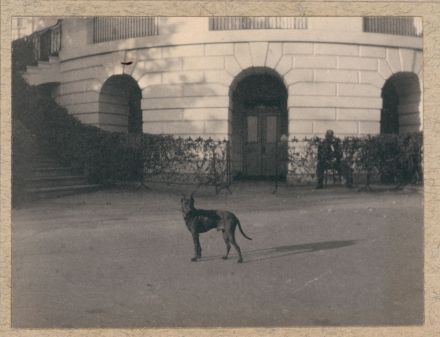
Most of Teddy Roosevelt’s dogs were not quite as large as Rollo. Roosevelt’s son Kermit had a Manchester terrier named Jack. Jack would have enjoyed his time at the White House much more if the cat hadn’t tormented him. The cat thought jumping on Jack was great fun.

TR's dog Jack

Jack, the Roosevelt family dog at the White House, 1902. Library of Congress Prints and Photographs.


Though he never made friends with the cat, the rest of the family adored Jack. The president described Jack as “absolutely a member of the family.” He thought Jack was a gentleman, even though Jack sometimes chewed on the president’s books.

When Jack died, he was buried behind the White House. Roosevelt’s wife Edith refused to leave Jack there after her husband’s second term as president. She worried that Jack would be “beneath the eyes of presidents who might care nothing for little black dogs.” Jack’s little coffin was brought to the family home in Long Island, New York.

Roosevelt’s son Archie loved a dog named Skip. Skip may have been a rat terrier or a mutt. Teddy Roosevelt found the dog while he was on a bear hunt, and he probably liked Skip best. Roosevelt took pride in Skip’s courage. The dog stood his ground when facing a bear. Similarly, the president stood up to members of Congress.

President Roosevelt often took Skip on his hunting trips. When the dog’s short legs got tired, Roosevelt scooped him up and let Skip ride on his horse. On a typical evening, Skip raced down the halls of the White House with Archie. Once the kids fell asleep, Skip would find the president, who was usually reading. Skip climbed up on his master’s lap and snoozed. Skip died the year before the Roosevelt’s left the White House.

“We Like Ike”: The Presidency of Dwight Eisenhower

Dwight Eisenhower already had his famous nickname while growing up in Kanas. “Little Ike” also had such a temper that he once beat his fists against a tree until he started bleeding. His mother bandaged up his hands and tried to teach him to control his temper. Ike took the lesson to heart. Throughout his life Ike would reign in his emotions because he wanted people to like him.

He did not, however, share his mother’s pacifist views. The only time Ike remembered making his mother cry was when he left for West Point. After World War II, General Eisenhower returned home as a hero. Ike’s popularity was so great that both political parties wanted him to be their candidate for president. Ike didn’t want to declare his politics right away. By 1952, Eisenhower felt disenchanted with the policies of President Truman and agreed to run as a Republican.

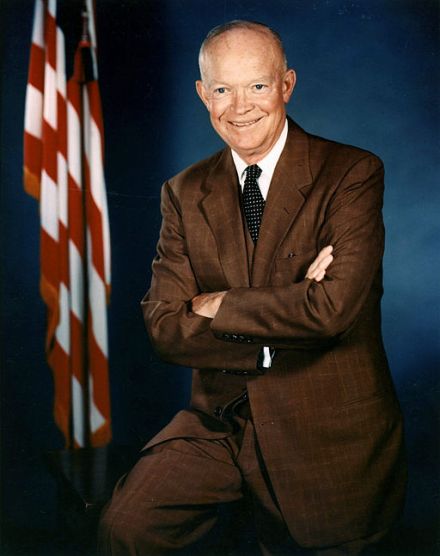
512px-Eisenhower_official

Official Portrait of Dwight Eisenhower

Unlike other presidential candidates, Eisenhower was not an intellectual. The only books he enjoyed were western novels. Instead of great speeches, Eisenhower preferred to use sayings such as “Everybody ought to be happy every day. Play hard, have fun doing it, and despise wickedness.” A war-weary public found his simple style appealing.

Eisenhower won the election by promising to end the Korean war. He even vowed to go there himself. Though he did end the fighting, he did so by stepping up aerial bombardment of North Korea and threatening to use the atomic bomb. Whether he would have used the bomb is questionable, but Eisenhower’s tough talk led to a peace agreement. From that point on Eisenhower liked to say he was “waging peace” by keeping America out of foreign wars.

The supposedly peace loving president allowed America to stockpile nuclear weapons, however. He also secretly authorized spying on Russian nuclear missile sites. Meanwhile, he invited Soviet Premier Nikita Khrushchev to a summit that would have limited nuclear testing. During the summit, an American spy plane was shot down by the Soviets. Eisenhower had to admit that he knew about the spy mission. An angry Khrushchev left the peace summit. No agreement on nuclear testing was reached.

Eisenhower’s administration has been criticized for failing to respond to domestic issues, especially civil rights. During his presidency the Supreme Court decided that public schools should be desegregated. Eisenhower didn’t believe that a law would change the hearts of Southern whites. When nine African American students tried to integrate a white high school in Little Rock Arkansas, a white mob threatened the students’ safety. Despite his disagreement with the Supreme Court, Eisenhower sent in the National Guard to protect the students.

Although Eisenhower believed in saving money, he also believed in many of the FDR’s programs. Eisenhower expanded the number of people eligible for Social Security and left labor laws in place. He also added a project of his own. The Federal Highway Act of 1956 pledged federal funds would be used to build interstate highways. The highways insured that the automobile became the primary means of travel for Americans instead of trains.


“Give-’em-hell-Harry” The Presidency of Harry Truman

Future president Harry Truman had a difficult childhood. A kid wearing glasses was a rare thing in the farm town of Independence, Missouri, and his schoolmates teased him. Since he was not very tall, they nicknamed him “little four eyes.”

Young Harry Truman also had different goals than most other children. He loved music and hoped to become a concert pianist. As a result of his father’s bad investments Truman could no longer receive piano lessons or even apply to college. Although he hated it, he worked the family farm until his father died. Truman then tried his hand at various business ventures, all of which failed.

Despite his poor eyesight and the fact that he was past the draft age, Harry managed to serve as a combat artillery captain in World War I. He discovered his ability to lead other people and gained the respect of his men. The experience boosted his confidence. He returned to Missouri as a war hero and married his sweetheart Bess Wallace.

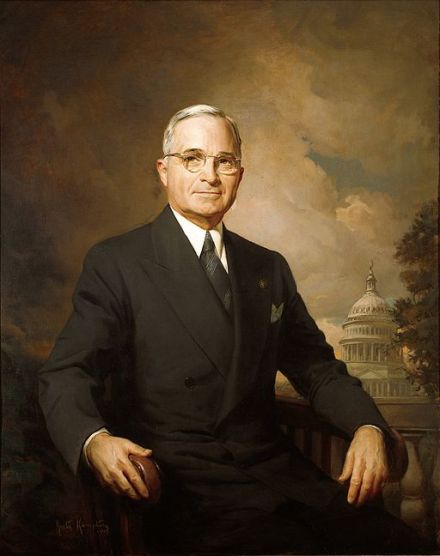
512px-HarryTruman

Official Presidential Portrait of Harry Truman

Truman needed to support his family and had to find work. After another business failure, he decided to try politics. It helped that he had kept in touch with the other veterans he served with during World War I. With the help of his friends and Democratic Party boss Tom Pendergast, Harry got elected first as a judge and later to other county offices. Despite his association with Pendergast, who had criminal ties, Harry became known for his honesty and his desire to help the common man during the Great Depression.

In 1934 Truman was elected to the U.S. Senate. He served as chairman of a committee that uncovered the Defense Department’s wasteful spending. The public found Truman’s honesty and even his swearing so refreshing that they nicknamed him “Give-’em-hell-Harry.”

During the 1944 presidential election Truman was selected as President Franklin Roosevelt’s vice-president. Only a few months after he became vice-president, Roosevelt died and Truman had to take over. At the time he thought, “There must be a million other men more qualified for the presidential task. But the work was mine to do, and I had to do it.”

Chief among Truman’s tasks was to bring World War II to a successful conclusion. Even after Germany surrendered, the fighting with Japan dragged on. Truman believed that if the war in the Pacific continued, up to 100,000 American soldiers could die. He decided that if Japan refused to surrender, he would use the new atomic bomb.

On July 26, 1945, Truman warned Japan that it would be destroyed if it continued to fight. The Japanese Emperor still would not give up. In August, the U.S. dropped two atomic bombs, one on the town of Hiroshima and one on Nagasaki. Finally, the Japanese Emperor surrendered and the war was over.

Truman received criticism in later years for using the atomic bombs, which mostly killed Japanese civilians. He never regretted his decision, however. As Truman put it “The greatest part of the president’s job is to make decisions…he can’t pass the buck to anybody.”

After World War II Truman turned his attention to stopping the spread of communism. The start of a nuclear arms race with the Soviet Union worried voters, and Truman’s popularity suffered. In 1948 he was probably the only person who thought he would be re-elected president. He took the campaign seriously and made hundreds of speeches throughout the country on his “Whistle-stop campaign” tour. Truman’s confidence proved to be prophetic when he won.

Truman’s second term was dominated by his decision to support South Korea when it was invaded by communist North Korea. He never asked Congress for a declaration of war because he feared the public would be reminded of World War II. As the war went on, Truman’s popularity took a nosedive.

Even though he had a poor approval rating, the public was still shocked when he announced that he didn’t plan to run for president again. He took delight in returning to Missouri and becoming “Mr. Citizen.” Truman lived to see much of his reputation restored. He became known not only for overseeing the end of World War II but also for desegregating the military and banning racial discrimination in the federal government.


Before the Great Depression: President Herbert Hoover

Herbert Hoover was born in Iowa, which made him the first president to be born west of the Mississippi River. Though he was orphaned at age nine, he managed to get a geology degree from Stanford University. When he was evaluating mines in Australia, he sent a telegram with a marriage proposal to his future wife and Stanford graduate Lou. Lou had always wanted to marry someone who appreciated the outdoors, and Hoover did. Even as president he took time to go fishing.

During World War I, Hoover headed a relief effort for starving Belgian citizens. In Europe he was known as “the food czar.” Back in the states he also organized a relief effort after a massive flood along the Mississippi River. As secretary of commerce under Harding and Coolidge, he opened up new markets for business and helped standardize products like car tires.

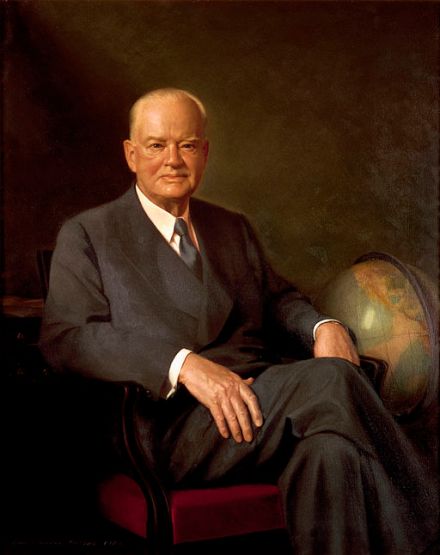
Hhoover

Official Presidential Portrait of Herbert Hoover

Hoover was so popular that he easily won the presidential election in 1928. Even he seemed to realize the possible dangers of people viewing him as “some kind of superman”, however. He worried that some catastrophe would occur during his time in office. When the stock market crashed and left many Americans unemployed and hungry, Hoover had the catastrophe he feared.

One of Hoover’s errors was his belief that local governments and volunteerism could stop the Great Depression. He opposed direct federal government aid for most of his presidency, though he did authorize loans for state and federal government projects in order to create jobs. Hoover also made some poorly thought out statements to the press that gave people the impression that the multimillionaire didn’t care about them.

To be fair, the depression continued for eight more years even with Franklin Roosevelt’s federal aid. Despite mistakes, Hoover’s administration introduced some progressive ideas. For example, he invited prominent black leaders to the White House, something his predecessors avoided. He also supported tax reductions for the poor.

Though he knew he would not win another term, Hoover’s love for America never wavered. After all, he had signed a law making The Star-Spangled Banner America’s national anthem.