Coretta Scott King’s Childhood and Education

Racism in Coretta Scott King’s Childhood

Coretta Scott King was born on April 27, 1927 in Heiberger, Alabama. During her early childhood, her family home had no running water or electricity. Her father Obadiah Scott worked hard to support his family. He always had several jobs going at once, including a barbering business, driving a taxi, and managing a farm. His home eventually made even whites in the area envious.

When Coretta was fifteen, her family’s home burned down. Coretta was convinced that white men were responsible, but the police never investigated. Coretta later wrote that “in the eyes of whites, we were a black family of ‘nobodies.'”

The day after the fire, her father went to work as if nothing happened. For Coretta, the example of her parents showing her how to live with fear but keep going was a lesson she applied for the rest of her life.

Work and Play

Despite racism, Coretta felt she had a mostly happy childhood. Her parents loved her and she loved her siblings Edythe and Obie. The children made their own toys because they couldn’t afford store bought ones. For example, they found an old tire, attached rope, and tied it to a tree to make a swing. They also climbed trees.

From age six, Coretta worked in her family’s fields. The family farm raised corn, peas, potatoes, and garden vegetables. She and her sister also milked cows.

During the Great Depression, she and Edythe worked as hired hands picking cotton in other people’s fields. They each made 60 cents per day which helped pay for their schooling.

Early Education

Coretta’s mother believed in the importance of education for all her children. “I cannot remember a time when I didn’t know I was going to college,” wrote Coretta.

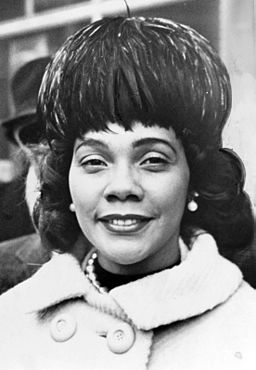
Coretta Scott King, 1964

In Perry County Alabama the public school system separated black and white children. Coretta’s school was one room filled with over 100 children from grades one through six. Just getting to and from school was a challenge. “I saw white children riding yellow-checkered buses to their school, yet, in all kinds of weather, we black children walked three miles to our one-room schoolhouse and three miles back home.” Although they had outdated books and no labs, Coretta’s teachers were good people who “loved us and expected us to excel.”

Fortunately, Coretta’s education improved after sixth grade. She attended Lincoln Normal School which had an integrated faculty. White faculty members cared for their black students. Coretta learned from them that some white people were kind–something she hadn’t experienced before.

Her music teacher introduced Coretta to classical music and told her about black concert performers. Through the encouragement of her teachers, Coretta wondered if she could do something with music when she grew up.

College and Graduate School

In 1945, Coretta followed her sister to Antioch College in Yellow Springs, Ohio. To her dismay, she discovered that her high school education still wasn’t as good as most white students. She persevered, however, and eventually caught up through hard work.

In college Coretta met people of different races, cultures, and religions. She dreamed of a world in which all kinds of people lived in peace together.

Unfortunately, even the North in the 1940s didn’t offer the utopia she wanted. Coretta majored in elementary education with a minor in voice. Her major required her to teach one year in an Antioch private elementary school and one year in a Yellow Springs, Ohio public school. Coretta wasn’t allowed to teach in the Yellow Springs public school because there were no black teachers there. She appealed to various school officials, the school board, and the college administration. Her protests were denied and she had to teach another year in private school.

Even though she wasn’t successful, Coretta’s protests taught her something. “This was the first time I stood publicly against discrimination, and I found that I rather liked making waves and being a catalyst for change,” she said.

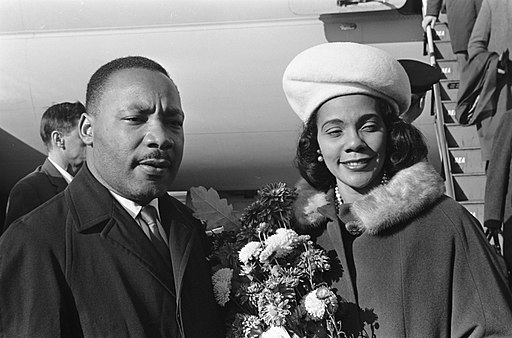
Martin Luther King, Jr. and Coretta Scott King, 1966

At the time, Coretta thought she was meant to fight racial discrimination through her music. “I saw myself as a concert singer, paving the way for other blacks.” She received an early acceptance to the New England Conservatory and began her voice studies. During her second semester in Boston, she met a young man named Martin Luther King, Jr. As their relationship became more serious, Coretta wondered if she could sacrifice her musical ambitions to support Martin’s racial justice work.

Sources:

King: A Life by Jonathan Eig

Coretta: My Life, My Love, My Legacy by Coretta Scott King

What’s Wrong with Ken Burns’s Holocaust Documentary + Free Book

Ken Burns’s documentary The U.S. and The Holocaust has not finished its run on PBS. Nevertheless, the content that has aired is biased toward both the United States and President Franklin Roosevelt.

The documentary states that the United States took in more Jewish refugees than any other sovereign nation during the Nazi era. As Dr. Rafael Medoff asked in his September 13, 2022 article in The Jerusalem Post, why didn’t Burns simply use the word country instead of sovereign nation? Because, though it was not a sovereign nation, Palestine let in more Jews than the U.S. Of course, if you’re not paying attention to the very careful wording, you might assume that the U.S. was more generous toward Jewish refugees than any other land. Interestingly, as Medoff notes, the statement is false even with the words “sovereign nation.” The Soviet Union, a sovereign nation, allowed more Jews in than the U.S.

The other major problem with the documentary is its favoritism towards FDR. Viewers are repeatedly told that there was nothing FDR could have done for the Jews because, well, insert excuse. Because Congress wouldn’t approve higher immigration quotas. Because even Jews close to FDR could not decide whether having him make a statement on Nazi atrocities would help or hurt Jews in Europe. Historian Deborah Lipstadt states that it was not as though FDR could have “snapped his fingers” and helped the Jews of Europe himself. After all, there was “plenty of blame to go around.”

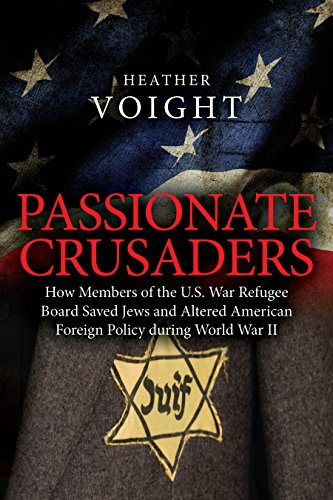
Yet in 1944 FDR did the equivalent of snapping his fingers and helping Jews. He accomplished this by signing an executive order that created the War Refugee Board. The War Refugee Board had the power to “rescue the victims of enemy oppression who are in imminent danger of death.” As I explain in my book Passionate Crusaders, the WRB’s members provided physical rescue and humanitarian relief to thousands of persecuted people, though they were not all Jewish. Hard numbers are difficult to come by, but there is no question that if FDR had established the WRB earlier, more Jews would have survived the Holocaust.

As a result of my disagreements with Ken Burns’s documentary, I am making my book Passionate Crusaders FREE on Amazon Kindle from today, September 20th to September 24th.

Link to my book: https://amzn.to/1GDI2qq

Link to Dr. Medoff’s article: https://www.jpost.com/opinion/article-716987

How Thanksgiving Became a National Holiday

Heather Voight's avatarHeather on History

Although the 1621 Pilgrim celebration at Plymouth Colony in Massachusetts is usually regarded as the first Thanksgiving, other states disagree. Maine claims to have the held the earliest Thanksgiving fourteen years before the Plymouth holiday. The celebration had much in common with Plymouth’s, since English settlers shared a large meal with local Native Americans near the Kennebec River. Virginia held a religious service in 1619 after colonists landed safely at a place called Berkeley Hundred, located up the river from Jamestown. Neither the Maine nor the Virginia settlements survived, which is likely why the Plymouth Colony gets credit for the first Thanksgiving.

The colonists at Plymouth didn’t plan on making Thanksgiving an annual holiday, however. Instead, they held days of thanksgiving whenever they felt especially grateful to God. For example, in 1623, Plymouth’s crops withered. When rain fell, the colonists held a day of thanksgiving prayer. Basically, in bad times the Pilgrims fasted, and in good times they gave thanks.

Even in the…

View original post 305 more words

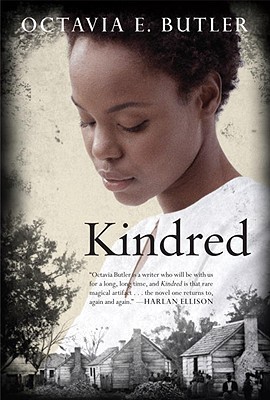
Book Review: Kindred by Octavia Butler

Dana is an African American woman living in the present day, which when Butler was writing her novel was 1976. On June 9th, the day of Dana’s birthday, she and her husband Kevin unpack books in their new house in California. Dana suddenly feels nauseated and dizzy. Kevin disappears from her sight.

Though she doesn’t know it on this first trip, Dana is pulled back into the nineteenth century, specifically antebellum Maryland. She discovers that she gets pulled out of the 1970s and into the 1800s every time a white ancestor of hers is in danger. Since this ancestor is a troublemaker, Dana is called to him several times. She witnesses what it was like to be a slave on the Waylon plantation. Though she’s treated somewhat better than the others because of her healing abilities (she knows basic things like CPR and how to keep a wound from getting infected that doctors in the 1800s don’t), she still faces her share of danger. As a reader I wondered if she would have a chance to live with her husband in the 1970s and if she would come back to him in one piece.

I listened to this book on audio. The one criticism I had is that sometimes the narrator doesn’t make the voices of the characters distinct enough. Butler’s writing had me riveted, though. Kindred was described to me as science fiction for people who aren’t sure they like science fiction. I knew that I enjoyed books that travel back in time, so I thought this book would be a good choice. Kindred was a good choice for me, though I won’t use the word enjoyable to describe it. Dana and the reader witness the evils of slavery. African American characters are whipped, sold away from family members and sometimes contemplate suicide, among other horrors.

As I read Kindred in the year 2021, I felt like I was witnessing two historical time periods: the antebellum South and 1976. I laughed when Kevin and Dana couldn’t use the Internet to look up information, though they did pretty well with books. Also, although race relations were obviously better in 1976 than the 1800s, more progress has been made in the twenty-first century. For example, the South African apartheid that Dana hears about on the radio no longer exists. That’s not to say that we don’t need to make more progress on issues of race today, however.

Kindred reminded me of what an African American character on the TV show Timeless said. He said that he couldn’t think of a time in history that would be safe for him to go back to visit. He was right, but I also think that one of the worst times in history to return to for an African American would involve a time in which slavery existed.

Kindred will introduce readers to the realities of slavery in the nineteenth century as well as a bit of the 1970s. I wanted Dana to describe a bit more of her surroundings on the plantation, but I think her understandable terror explains the sometimes lackluster descriptions. I definitely recommend Kindred by Octavia Butler for ages 14 and up.

Book Review of The Water Dancer by Ta-Nehisi Coates

The Water Dancer by Ta-Nehisi Coates is a debut novel that has both significant pluses and minuses.

The novel starts strong. We are introduced to Hiram Walker (called Hi throughout the novel), a house slave on the Lockless plantation in Virginia. Hi is the mulatto son of his master and his slave mother who was sold years ago. When we first meet Hi, he is driving his white half brother Maynard in a carriage over a bridge. Suddenly the bridge disappears and both Maynard and Hi are plunged into the water. While Hi is struggling to save himself, the selfish Maynard cries out for Hi to help him. Hi isn’t able to do so. Oddly, when he is out of the water, he’s nowhere near the collapsed bridge. Instead he finds himself on the dry land of the Lockless plantation.

Hiram spends much of the middle of the novel doing two things: trying to get his magical power back, and trying to free himself and the people he loves. The Underground Railroad is also interested in Hiram’s powers and how they might be used to transport slaves from one spot to another.

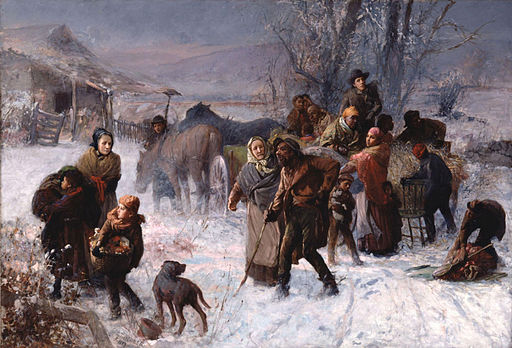
The_Underground_Railroad_by_Charles_T._Webber,_1893

Painting, The Underground Railroad by Charles T. Webber, 1893

I thought much time was wasted in the novel’s midsection as Hi works to get his power of conduction back. As a history lover, I’ve always thought that the most amazing thing about the Underground Railroad was the fact that its work wasn’t done by magic, but by people using real-life resources to save lives. Coates’s inclusion of magical realism in the Underground Railroad’s operations diminished the accomplishments of those workers for me.

I also lost interest in Hi’s story as more and more characters were introduced. I realize this is Coates’ first novel, but most fiction readers want to feel a consistent connection with a book’s main character. I was unable to recover my interest until the novel reached the end.

Despite its flaws, The Water Dancer has some undoubtably good points. As I’ve said the book has a strong beginning, and the ending was equally good, though I won’t discuss that here. Coates’s narrator Hi also has very profound things to say about slavery.  For example, he describes the dependence of whites on their slaves as follows: “The masters could not bring water to boil, harness a horse, nor strap their own drawers without us. We were better than them–we had to be. Sloth was literal death for us, while for them it was the whole ambition of their lives.” Lines like that come from writers with real insight and talent.

Still, at slightly over 400 pages The Water Dancer is not a short book, so readers need to decide whether the excellent quotes combined with a strong beginning and ending are worth their time. If Ta-Nehisi Coates writes another novel, I will give it a try because this one had so much potential.

The Early Life of President Richard Nixon

Most people remember Richard Nixon for being the only President of the United States to resign from office. Yet when I was researching this blog post, I realized that I knew almost nothing about his childhood and education. Like most leaders, his early experiences shaped what he did later in life.

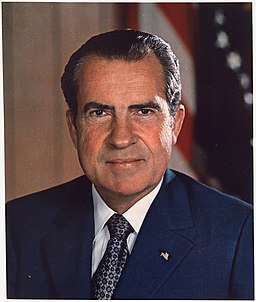
256px-Richard_M._Nixon,_ca._1935_-_1982_-_NARA_-_530679

Official White House Photo of President Richard Nixon

Richard Nixon was born in 1913 in Yorba Linda, a small town east of Los Angeles. His father Frank planted lemon groves, but these failed and the family moved to Whittier, California. Here Frank ran a grocery store and gas station. Richard Nixon said of his childhood, “we were poor, but the glory of it was we didn’t know it.”

Although Frank and Hannah Nixon had five children, they lavished most of their attention and what little money they had on their oldest son, Harold. They bought Harold a Boy Scout uniform but couldn’t afford to get one for Richard. Richard and his other brothers stayed home while Harold was sent to a Christian boarding school in Massachusetts.

Harold and Richard were opposites. Harold was popular with other kids and girls “swooned over him.” In contrast, Richard felt uncomfortable around people he didn’t know well and the other boys teased him. Instead of fighting the bullies, Richard kept his anger bottled up. Realizing he would never be as popular as Harold, Richard threw himself into his schoolwork. He became his grammar school’s valedictorian and joined the debate team in high school. Richard also had big dreams. His grandmother gave him a framed portrait of Abraham Lincoln, which he hung over his bed.

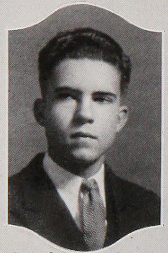
Richard_Nixon_HS_Yearbook

Photo of Richard Nixon as a senior in high school, 1930

While Richard Nixon could literately look up to Abraham Lincoln, his parents’ volatile personalities had the most influence on him. Frank Nixon had a terrible temper. Richard and his brothers were rapped on the head by their father at various times. At his grocery store, Frank subjected customers to his conservative political opinions whether they wanted to hear them or not. He also blamed others for his bad luck.

In contrast, Richard’s mother, whom he called “a saint,” smiled and bottled up her frustrations. Hannah Nixon had a gentle voice but punished her children by not speaking to them. Though deeply religious, she was not affectionate.

As a result of his childhood experiences, Richard developed a dislike of conflict and a sense that he was not good enough, especially when compared with Harold. When Harold died of tuberculosis in 1933, Frank Nixon said, “Why is it, that the best and finest of the flock has to be taken?” Richard, as the second oldest son, would always be trying to live up to his dead brother’s potential.

After high school, Richard was offered a scholarship to Harvard but ended up at Whittier College to save money on living expenses. Determined to distinguish himself, Richard participated in school debates and was eventually elected president of the student body. While he excelled in debates and in his studies, Richard remained somewhat of a loner. One former classmate recalled that “I don’t think he had anybody you would call a close friend.” He had an on and off relationship with a young woman which she described as “stormy.” Even she said she didn’t feel that she really knew him.

At the end of college, Nixon received and accepted a scholarship to Duke University Law School. He told his girlfriend that he hoped to do something important with his life. Clearly, Richard Nixon was ready to make his mark on the world.

Sources:

Being Nixon: A Man Divided by Evan Thomas

The American President by Phillip B. Kunhardt, Jr., Phillip B. Kunhardt III, Peter W. Kunhardt

https://www.biography.com/people/richard-nixon-9424076


Book Review of Doris Kearns Goodwin’s Leadership in Turbulent Times

Let me start this review by explaining what Leadership in Turbulent Times is NOT. It is not a commentary on the current White House; Donald Trump’s name is never even mentioned. The book is also not as lengthy as Doris Kearns Goodwin’s other titles. Without notes, Leadership is 370 pages. In contrast, Goodwin’s previous book The Bully Pulpit is 752 pages without notes.

Now for what Leadership in Turbulent Times IS. It is a survey of four presidents who, though imperfect, displayed extraordinary leadership qualities during their time in office. The men included are Abraham Lincoln, Theodore Roosevelt, Franklin Roosevelt, and Lyndon Johnson. Goodwin spent years writing about each of these leaders.

The book is divided into three main sections. In Ambition and the Recognition of Leadership, Goodwin shows how important early ambition and the desire to take charge are to successful leadership later in each man’s life. Abraham Lincoln’s famous thirst for knowledge helped him walk for miles to borrow a book. He got no encouragement from his father, who thought a strong young man like Abe should be helping with the family farm. Yet Lincoln was determined to get ahead of other young people. A contemporary recalled how Lincoln would devote himself to books while the other kids played. Years later, when a law student asked him for advice, Lincoln said, “Always bear in mind that your own resolution to succeed is more important than any other thing.”

abrahamlincoln

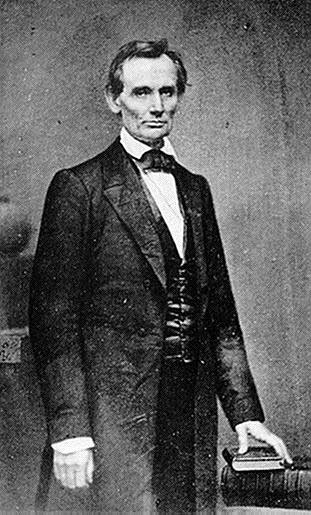
Abraham Lincoln, Feb. 1860 by Mathew Brady

The second section of the book, Adversity and Growth, demonstrates how each of these men became better leaders as a result of overcoming challenges. For example, Franklin Roosevelt came from a wealthy family and appeared to be living a charmed life until he contracted polio. Suddenly the pampered FDR had to work hard just to manipulate a wheelchair. He went to Warm Springs, Georgia after hearing about a man who gained strength in his legs by swimming in the warm mineral water. FDR invested money in a rundown hotel and turned it into a resort and treatment center for polio patients. He took an active interest in his investment and became known to other patients as Doc Roosevelt. Spending time listening and sharing his own struggles with others who had polio changed Roosevelt. According to his future cabinet member Frances Perkins, the experience made him “completely warmhearted, with humility of spirit and with a deeper philosophy.” FDR’s newfound empathy would later help him to understand what other people were going through as he worked to get the U.S. out of the Great Depression.

385px-froosevelt

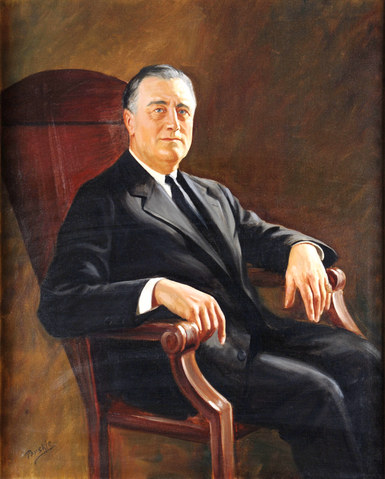
Gubernatorial portrait of FDR, Dec. 1940

In the third section of the book, The Leader and the Times: How They Led, Goodwin shows how the ambition and personal trials of each man made him a better leader. She presents case studies from each of their presidencies to show how effectively they led their country at challenging times. For Lincoln, she uses the introduction of the Emancipation Proclamation during the Civil War. Theodore Roosevelt’s chapter discusses his response to The Great Coal Strike of 1902. For FDR, his first 100 days in office dealing with the Great Depression are examined. Finally, Goodwin discusses Lyndon Johnson’s work on behalf of civil rights.

I recommend this book for readers who want a relatively quick introduction to these four presidents and want to learn how they became great leaders. Leadership in Turbulent Times is also a good choice for people who may be hesitant about starting one of Goodwin’s larger tomes. If readers decide they want to learn more about a particular president, they can check out Goodwin’s other excellent books.

Why FDR Decided to Rescue Jews from the Holocaust in 1944

As mentioned in my last blog post, President Franklin Roosevelt showed little interest in the fate of Europe’s Jews until January 16, 1944. On that date he had a meeting with officials from the Treasury Department, including Secretary of the Treasury Henry Morgenthau, Jr. and a man in his thirties named John Pehle. These men presented to FDR a report which detailed the State Department’s attempts to “stop the obtaining of information concerning the murder of the Jewish people of Europe.” The report revealed that State Department officials blocked cables about Nazi atrocities that reliable informants tried to send to the U.S.


Henry_Morgenthau,_Jr.1947

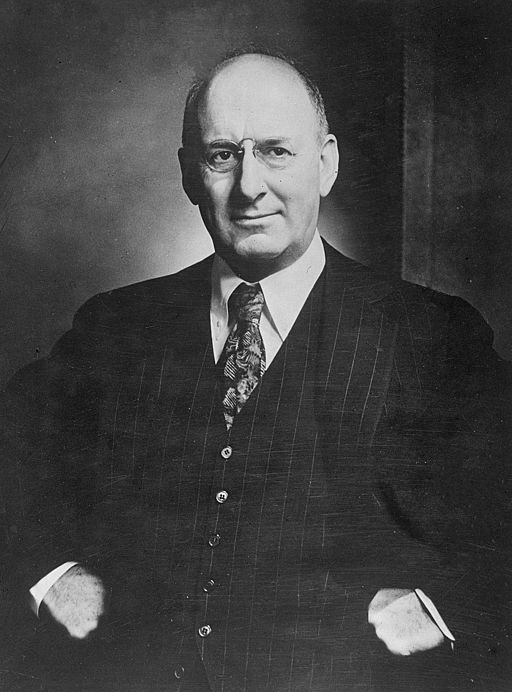
Henry Morgenthau, Jr. 1944

Fortunately for Morgenthau and Pehle, FDR was receptive to a report of State Department wrongdoing. A major reason for this was the recent testimony of Assistant Secretary of State Breckinridge Long. The House of Representatives was debating whether to ask FDR for a refugee rescue agency that would be separate from the State Department. Congress held private hearings with witnesses testifying for and against the new agency.

Breckinridge Long testified that another agency was not needed because “we have taken into this country, since the beginning of the Hitler regime and the persecution of the Jews, until today, approximately 580,000 refugees.” Most members of the House initially believed Long’s story. Then Long made a mistake by allowing his testimony to be published. A few news outlets and Jewish organizations pointed out the inconsistencies in Long’s statement. According to the Immigration and Naturalization Service, the number of Jews who came in under national quotas between January 1, 1933 and June 30, 1943 totaled only 166,843–far from Long’s claim of 580,000.

The press made Long a laughingstock, and members of Congress who supported the new agency were more determined than ever. The Senate planned to put the rescue agency to a vote, and polls showed it would pass.

FDR hated the idea of a scandal, especially in an election year like 1944. Long’s false testimony and the Treasury Department’s report on State Department duplicity were enough to convince FDR to create the War Refugee Board. He made his decision in his twenty minute meeting with Henry Morgenthau and John Pehle.

John F. Kennedy’s Childhood and Education

John F. Kennedy, or Jack as his family called him, was born on May 29, 1917. He had an older brother, Joe Kennedy Jr. and seven younger siblings. He spent the first decade of his life in Brookline, Massachusetts. JFK’s father Joseph Kennedy Sr. didn’t play an active role in young Jack’s life since he was often away on business. His mother, Rose Kennedy, did have help with the children though. She needed it since Jack was often ill. The family joked that if a mosquito bit Jack, it would be sorry because it would catch whatever illness he had at the time.

Eventually the Kennedys moved to Bronxville, New York. Thanks to his father’s successful business ventures, the family could afford several different homes. They spent summers in Hyannis Port, Massachusetts. Easter and Christmas holidays took place at their home in Palm Beach, Florida.

jfk youth

Kennedy family at Hyannis Port Sept. 4, 1931. JFK at left in white shirt, Joe Jr. far right

Jack and his older brother were extremely competitive. Joe Sr. encouraged this quality in his sons. He often said, “When the going gets tough, the tough get going.” Unfortunately for Jack, his brother was both two years older and stronger, so if they fought Jack got beat up. Jack couldn’t best Joe as a student, either. Joe had ambition. Since childhood Joe said that he wanted to become the first Catholic President of the United States. While Joe worked hard in all his subjects, Jack tended to pay attention only to the ones that interested him, such as English.

When he enrolled at Choate boarding school in ninth grade, Jack found other ways of distinguishing himself from Joe. While Joe was the better student and an accomplished athlete, Jack became the class clown. He formed a group at Choate called the Muckers, which was responsible for many school pranks. Most memorably, they exploded a toilet seat with a firecracker. Jack was nearly expelled for that incident. Instead, poor health interfered with his studies. He was diagnosed with colitis. It made him tired and he also lost his appetite. He got well enough to graduate in the middle of his class. Despite his mediocre performance as a student, his classmates voted him most likely to succeed.

Jack’s colitis interfered again when he entered Princeton and had to quit after six weeks. In 1936, he enrolled at Harvard. While there, he produced a campus newspaper called the “Freshman Smoker” and got a spot on the varsity swim team. He wanted to play football, too, but he ruptured a disk in his spine. From then on JFK always lived with back pain.

In 1938, Joe Sr. served as President Franklin Roosevelt’s ambassador to Great Britain. Both Jack and Joe Jr. went to Great Britain to work with their father. To prepare for his senior thesis, Jack traveled throughout Europe, the Middle East, and the Soviet Union. He returned to London on September 1, 1939—the same day that World War II began. Jack’s thesis pointed out that Great Britain was unprepared for war because it had neglected its military. Published as Why England Slept, his work became a bestseller. He used the money he made from the book to buy a Buick convertible, but he also gave the royalties he made from Great Britain to charity.

256px-1942_JFK_uniform_portrait

Lt. John F. Kennedy, 1942

After graduation, Jack joined his brother in the U.S. Navy. Joe was a flyer and Jack was a Lieutenant assigned to the South Pacific. Only Jack came home. Joe Jr. died when his plane blew up during a mission in Europe.

Joe’s death changed everything for JFK. With his oldest son gone, Jack’s father encouraged him to abandon his interests in writing and teaching to run for Congress. JFK won a seat in the House of Representatives in 1946. His political career had begun.