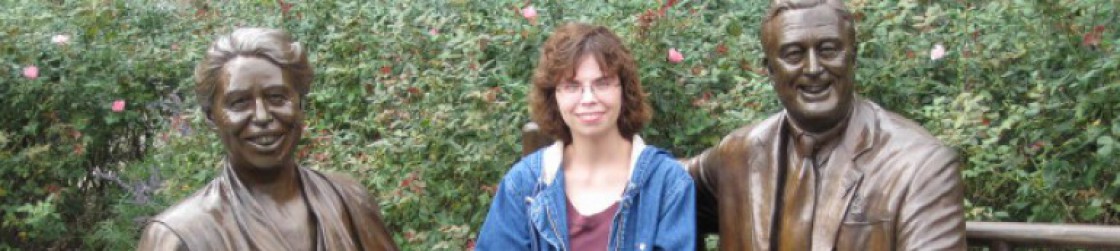
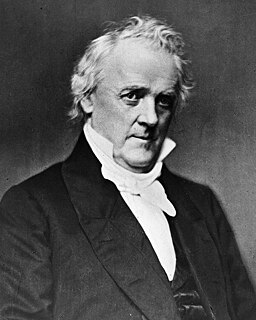
Though he had political skills that propelled him to the presidency, James Buchanan is one of the United States’ most unpopular presidents. He happily left problems like slavery and the secession of the Southern states to his more gifted successor, Abraham Lincoln.
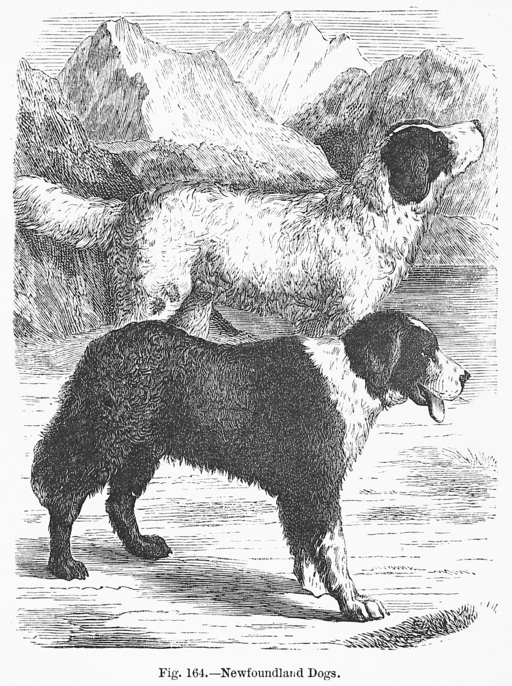
Yet President Buchanan’s dogs did not share their master’s unpopularity. In fact, he helped to popularize the Newfoundland dog breed by bringing one to the White House. Buchanan acquired his 170 pound Newfoundland Lara prior to serving as U.S. ambassador to Great Britain. While he was away, he wrote to his niece Harriet Lane and asked, “How is Lara?” Harriet said that he sounded homesick.
During their coverage of the presidential campaign of 1856, reporters for Frank Leslie’s Illustrated Newspaper visited Buchanan’s Wheatland estate in Pennsylvania. The magazine’s March 1857 issue describes Lara: “Prominent also [at Wheatland] is Mr. Buchanan’s Newfoundland dog Lara, remarkable for his [sic] immense tail and his attachment to his master.” The magazine predicted that “This dog will hereafter become historical as a resident of the White House.”
In the 1850s, Lara’s breed was only fifty years old. As the president’s dog, Lara was the most famous dog in America and probably the largest to occupy the White House. She slept next to Buchanan and viewed herself as his protector. Visitors remarked that Lara looked like a bear who slept with one eye open.
Buchanan’s time in office saw the biggest dog and also one of the smallest in the White House. Since Buchanan was unmarried, his niece Harriet Lane served as First Lady. Harriet received a toy terrier named Punch from the U.S. consul in South Hampton, England. She named the dog Punch because it could supposedly fit under a down turned punch bowl. A writer covering social life in Washington wrote, “the little stranger was a nine-days’ curiosity at the White House where it was exhibited to all who were on visiting terms with Miss Lane.”
Though the press were Punch fans, Buchanan was not. While Harriet traveled, he wrote that he was trying to avoid Punch as much as possible.
Unfortunately, there are no accounts of the antics between Lara and Punch during their time in the White House. One can imagine the giant dog and the diminutive one running through the stately rooms of the house, perhaps chasing each other. Given Lara’s size, she may have broken an object or two.
President Buchanan did not run for a second term. In March 1861, he, Harriet, and the dogs returned to Wheatland. Lara’s time in the White House had a lasting impact though. The breed’s popularity grew in later decades and a Newfoundland named Faithful arrived with President Grant in 1869.
Sources:
All-American Dogs: A History of Presidential Pets from Every Era by Andrew Hager
First Dogs: American Presidents and Their Best Friends by Roy Rowan and Brooke Janis

 Heather on History