Presidential Pets: U.S. President James Buchanan’s Dogs

Though he had political skills that propelled him to the presidency, James Buchanan is one of the United States’ most unpopular presidents. He happily left problems like slavery and the secession of the Southern states to his more gifted successor, Abraham Lincoln.
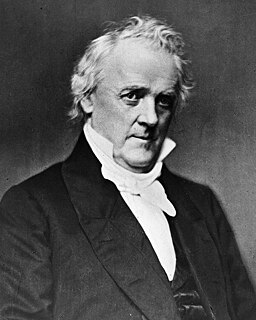
U.S. President James Buchanan

Yet President Buchanan’s dogs did not share their master’s unpopularity. In fact, he helped to popularize the Newfoundland dog breed by bringing one to the White House. Buchanan acquired his 170 pound Newfoundland Lara prior to serving as U.S. ambassador to Great Britain. While he was away, he wrote to his niece Harriet Lane and asked, “How is Lara?” Harriet said that he sounded homesick.

During their coverage of the presidential campaign of 1856, reporters for Frank Leslie’s Illustrated Newspaper visited Buchanan’s Wheatland estate in Pennsylvania. The magazine’s March 1857 issue describes Lara: “Prominent also [at Wheatland] is Mr. Buchanan’s Newfoundland dog Lara, remarkable for his [sic] immense tail and his attachment to his master.” The magazine predicted that “This dog will hereafter become historical as a resident of the White House.”

In the 1850s, Lara’s breed was only fifty years old. As the president’s dog, Lara was the most famous dog in America and probably the largest to occupy the White House. She slept next to Buchanan and viewed herself as his protector. Visitors remarked that Lara looked like a bear who slept with one eye open.
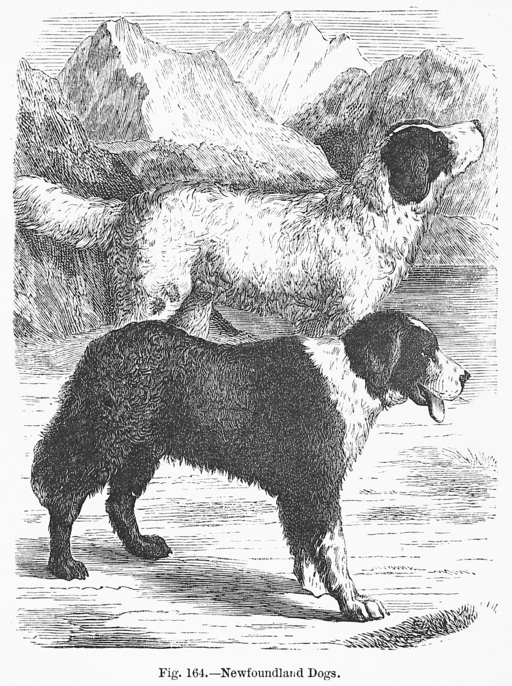
Newfoundland Dogs, 1870

Buchanan’s time in office saw the biggest dog and also one of the smallest in the White House. Since Buchanan was unmarried, his niece Harriet Lane served as First Lady. Harriet received a toy terrier named Punch from the U.S. consul in South Hampton, England. She named the dog Punch because it could supposedly fit under a down turned punch bowl. A writer covering social life in Washington wrote, “the little stranger was a nine-days’ curiosity at the White House where it was exhibited to all who were on visiting terms with Miss Lane.”

Though the press were Punch fans, Buchanan was not. While Harriet traveled, he wrote that he was trying to avoid Punch as much as possible.

Unfortunately, there are no accounts of the antics between Lara and Punch during their time in the White House. One can imagine the giant dog and the diminutive one running through the stately rooms of the house, perhaps chasing each other. Given Lara’s size, she may have broken an object or two.

President Buchanan did not run for a second term. In March 1861, he, Harriet, and the dogs returned to Wheatland. Lara’s time in the White House had a lasting impact though. The breed’s popularity grew in later decades and a Newfoundland named Faithful arrived with President Grant in 1869.

Sources:

All-American Dogs: A History of Presidential Pets from Every Era by Andrew Hager

First Dogs: American Presidents and Their Best Friends by Roy Rowan and Brooke Janis

President James Buchanan: Career Politician

James Buchanan had more political experience than most presidents. He had served in Congress for 20 years and was President Polk’s secretary of state. He was more effective socializing in small groups rather than making public speeches, however.

256px-James_Buchanan

Portrait of James Buchanan

As the only president who never married, he asked his niece Harriet Lane to be White House hostess. She ably presided over dinners with Buchanan’s cabinet members whom he thought of as his family.

President Buchanan was a Northerner who thought the Constitution supported slavery. Before his inauguration he convinced a Supreme Court Justice to vote pro-slavery in the Dred Scott case. The case decided that slaves taken to the North for a period of time were still slaves if their owners brought them back to a slave state.

Buchanan responded to the vote on secession in South Carolina by saying that while secession was wrong, the Constitution gave him no power to tell states what to do. He thought he could preserve the Union by making concessions to the South, but he only succeeded in angering anti-slavery and pro-Union voters.

Eager to let someone else deal with the country’s problems, Buchanan refused to run for a second term. He also refused to back Stephen Douglas in the presidential election. By causing a rift within the Democratic Party, he ensured that Abraham Lincoln would be elected.

Moving Toward Civil War: The Presidency of Franklin Pierce

As a young congressman, Franklin Pierce was fond of socializing and drank heavily. To please his wife who hated both Washington, D.C. and his drinking, he agreed to go back to his law practice in New Hampshire. He displeased her when he signed up for the Mexican War. Pierce wanted to serve his country but was a terrible general who suffered from multiple injuries and fainted often.

Portrait of Franklin Pierce

Portrait of Franklin Pierce

When the Democrats nominated him for president in 1852, his main advantage was that he had been out of politics for years and had no enemies. His journey to Washington turned tragic when he and his family were involved in a train wreck. He and his wife were unharmed, but their young son died. Mrs. Pierce refused to accompany her husband to his inauguration and returned to New Hampshire to grieve.

Though he was from a non-slave state, Pierce believed that the Constitution supported slavery. He made Jefferson Davis, future president of the Confederacy, a member of his cabinet. As president he enforced the Fugitive Slave Act that Northerners hated.

He also supported the Kanas Nebraska Act, which allowed people in the Kansas and Nebraska territories to decide whether they wanted slavery in those territories or not. Slave owners and abolitionists rushed into Kansas in an effort to influence the vote on slavery. The clashes between the slave owners and the abolitionists turned violent. Pierce was unable to unite the country or his party while the fighting continued.

Democrats passed over Pierce and nominated James Buchanan for the next election. When the South left the Union, Pierce wrote a letter of support to his friend Jefferson Davis. The letter became public and Pierce was viewed in his own state as a traitor. The increasingly reclusive former president drank so much after his wife’s death that he also died.