Dynamic First Lady Abigail Adams

Abigail Adams (1744-1818), born Abigail Smith, was an early advocate for women’s rights in America through her extensive correspondence with her husband John Adams. Throughout her husband’s political career Abigail took on some roles that were traditional for women at the time and some that were not. Abigail was the second woman to serve as first lady and the first to occupy the executive mansion in Washington, D.C. She was also the first woman to become the wife and mother of U.S. presidents, though she did not live long enough to see her son John Quincy Adams get elected.

Abigail Smith was born on November 22, 1744, in Weymouth, Massachusetts—a farming community 14 miles southeast of Boston. Her parents, William and Elizabeth Smith, nicknamed her Nabby. Though she was small and frail as a child, Abigail was also stubborn. Abigail and her sisters did not go to school because the local ones were only for boys. Their father, who was the village parson, encouraged them instead to read from his extensive library. Abigail loved reading Shakespeare, Pope and Locke. The combination of her father’s encouragement and her love of reading made Abigail one of the best-read women of her time. Abigail’s mother Elizabeth disapproved of both her daughter’s stubbornness and her fondness for reading. She sent Abigail on visits to her maternal grandmother Elizabeth Quincy, who encouraged rather than corrected her granddaughter’s opinions.

John Adams and Abigail Smith met at a party when Abigail was fifteen. John was unimpressed by Abigail and her older sister Mary. He wrote that the Smith girls were “not fond, not frank, not candid.” Over time, John got to know Abigail better. He was basically forced into her company because his friend Richard Cranch courted Mary. At 17, Abigail was very attractive. She was tall and thin, with a dark complexion and dark hair and eyes. John was also impressed with her desire to learn. He brought Abigail books which they discussed. After a few years of courting, Abigail and John married on October 25, 1764, at William Smith’s parsonage. They moved into a cottage next door to John’s childhood home at Braintree.

The marriage was a love match as well as an intellectual one. Abigail said their hearts were “cast in the same mould [sic].” Abigail’s intelligence meant that they could converse on almost any topic. John recognized that his wife was the superior letter writer. “If I could write as well as you, it would be so, but, upon my word, I cannot.” 
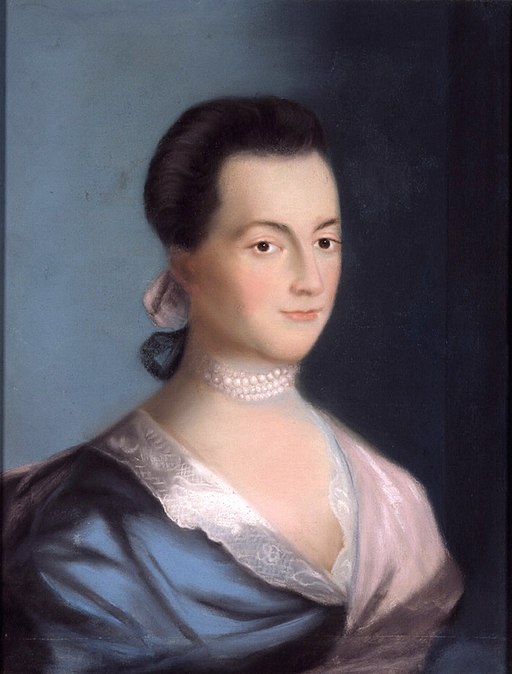
Abigail Adams, Portrait by Benjamin Blyth, 1766

At the beginning of their marriage, Abigail was busy with traditional wifely duties such as caring for her children. Daughter Abigail (Nabby) was born in 1765, followed by John Quincy in 1767, Susanna in 1768 who died after one year, Charles in 1770 and Thomas in 1772. Abigail was responsible for the physical and moral well-being of her children while John worried about making more money on the circuit as a lawyer.

In June 1774 the Massachusetts legislature elected John to the Continental Congress. Abigail and John would be farther away from each other than ever. After John left for Philadelphia, Abigail confided that “the great anxiety I feel for my Country, for you and for our family renders the day tedious, and the night unpleasant.”

While John was gone, Abigail had even more responsibilities. For example, she made sure hired men on the farm did their jobs and she made decisions about harvesting crops. Abigail took so well to her farming tasks that a family friend said she “was like to outshine all the farmers.” In addition, Abigail saw to the children’s education. Dissatisfied with the schools around Braintree, she got a tutor for John Quincy. Abigail was also in some danger from the British who were quartered in Boston. John depended on her observations during the battles of 1775 and sometimes showed her letters to fellow delegates.

In the middle of all her other responsibilities, Abigail wrote John letters about women’s rights. She wrote: “I desire you would Remember the Ladies and be more generous and favorable to them than your ancestors. Do not put such unlimited power in the hands of the Husbands. Remember all men would be tyrants if they could. If particular care and attention is not paid to the Ladies, we are determined to foment a Rebellion, and will not hold ourselves bound by any laws in which we have no voice, or Representation.” In the eighteenth century, men had legal power over their wives. Women could not legally own property and some were in physically abusive marriages.

Abigail also wanted better education for women, who still did not attend school. She wrote, “If we mean to have Heroes, Statesman and Philosophers, we should have learned women.” John agreed on the education of women; after all, he married one of the most intelligent women of the time. He was not prepared to go any further for fear that everyone regardless of age, gender, or property ownership would demand equal rights. Independence from Britain would have to be won first.  

Before John returned from Philadelphia, Abigail received a letter stating that he was elected commissioner to France. John took ten-year-old John Quincy with him, leaving the Adams farm even lonelier for Abigail. Both she and John had a great sense of public duty, but the lack of reliable letters from her husband depressed Abigail. She wrote of her “cruel destiny” and herself “siting in my solitary chamber, the representative of the lonely love.”  

Despite her loneliness Abigail took on some unladylike pursuits on the home front. She managed the family finances. She acquired land when able and even started her own importation business. At first John sent her goods from France like handkerchiefs and linens that she consigned to her uncle. Later Abigail wrote to the merchants abroad herself and told them what she wanted. She used the profits for the taxes needed to fund the war or bartered for local goods.

By 1784 both John and Abigail were fed up with their separation and Abigail made plans to join John in Paris with Nabby. As a diplomat’s wife first in Paris and then in London, Abigail had a more public role to play in John’s career. She was expected to accompany him on all ceremonial and social occasions. Living in Europe gave Abigail an education in entertaining on a budget, since American diplomats were not paid as much as their European counterparts. She also managed to visit the wives of 15-20 government officials or foreign ministers each week.

Abigail and John returned home to Braintree in 1788, the same year that John was elected the first vice president of the United States. Abigail’s training in Europe helped her ease into the role of the vice president’s wife. She hosted a weekly levee, an open house where residents came and paid their respects. With time she managed to invite every senator and congressman to dinner.

After eight years as George Washington’s vice president, John was elected president in 1797. Before the election, Abigail worried about her ability to be as popular as Washington’s quieter wife Martha. “I have been so used to a freedom of sentiment that I know not how to place so many guards about me, as will be indispensable, to look at every word before I utter it, and to impose a silence upon myself, when I long to talk.” John thought she would do an excellent job and once elected, urged her to leave Massachusetts and come to him in Philadelphia.

As she had when John was vice president, Abigail organized her social routine as first lady, a term that had not been coined yet. The family ate breakfast together at 8am, and Abigail received visitors from 12-2 or 3pm. Dinner was at 3pm except on Tuesdays and Thursdays when she hosted company. After dinner she visited others. She was home by 7pm to spend time with family before an early bedtime. Abigail’s company dinners meant inviting 30-40 guests at a time. She could invite all the senators in one dinner but had a series of dinners for House members.

Her main complaint about entertaining came from a tradition George Washington started. On July 4th, all Congress and state officials were invited to the president’s residence. Washington was wealthier than the Adams family and Abigail resented the amount of cake, wine and punch she had to serve. She reported that guests ate 200 pounds of cake!

In addition to her traditional social duties, Abigail offered John political advice and helped promote his agenda. For example, she sent letters supportive of John’s presidential policies to friendly newspaper editors. Often these letters came from her son John Quincy. Abigail also received requests from office seekers asking her to influence John, many of which she answered.

Though mostly an asset to John’s work, Abigail erred in her support of the 1788 Alien and Sedition Acts. These laws permitted the arrest of newspaper editors publishing statements against the government and allowed the deportation of foreigners accused of seditious activities. Eager to protect her husband against the pro-French republican opposition led by Thomas Jefferson, Abigail was much more in favor of the acts than John. In fact, she wanted them to be harsher. She wrote that “they have had a salutary effect, weak as they are.” John later acknowledged that signing the acts was a mistake, but they remain a dark part of his legacy.

John and Abigail were the first president and first lady to move into the president’s house in Washington, D.C. Abigail was not impressed with the house since it was large and drafty. She described it as “a castle of a house” built “for ages to come.” In the meantime, it was impractical to live in. Abigail kept 13 fires going all day and used the east room to hang her laundry.

When John lost his bid for reelection, Abigail felt it keenly. She thought the public was ungrateful for John’s years of public service. Yet she was almost as busy in retirement as she had been as first lady. She had a house full of in-laws and grandchildren as well as some more distant relatives. Any family member who needed a place to stay was always welcome in John and Abigail’s home.

In 1814, one of Abigail’s sisters asked if she would marry John if she could live her life over. She responded, “Yet after half a century, I can say my first choice would be the same if I again had my youth and opportunity to make it.” On October 28, 1818, Abigail passed away surrounded by family including her beloved John.

Sources:       

Carlin, Diana B., Anita B. McBride, and Nancy Kegan Smith. U.S. First Ladies: Making History and Leaving Legacies. Cognella, Inc., 2024.

Ellis, Joseph J. First Family: Abigail and John Adams. Alfred A. Knopf, 2010.

Holton, Woody. Abigail Adams. Free Press, 2009.

Withey, Lynne. Dearest Friend: A Life of Abigail Adams. The Free Press, 1981.

Presidential Pets: George Washington’s Dogs

George Washington was both the founder of the United States and the founder of the American foxhound. He crossed seven larger hounds given to him by the Marquis de Lafayette with his smaller Virginia hounds to develop the new breed. Around 1785, Lafayette sent his hounds to America on a ship. They were placed in the care of a young John Quincy Adams, who appeared to have misplaced the dogs at one point. Washington got rather worked up over the incident, but fortunately the dogs were located.

Washington wrote that he wanted to create “a superior dog, one that had speed, scent and brains.” Washington’s fondness for foxhunting caused his search for a superior hound. In the winter he went foxhunting several times a week. He gave his hounds mischievous-sounding names like Drunkard, Mopsey, Taster, Tipsy, Tipler, and Lady Rover.

Washington and dogs

Lithograph of George Washington and General Lafayette at Mount Vernon, Library of Congress

In addition to foxhounds, Washington also wished to breed Irish wolfhounds to protect the sheep at his plantation Mount Vernon. Unfortunately, the wolfhound was so rare even in Ireland at the time that Washington had to give up the idea.

Washington enjoyed owning many other breeds of dogs throughout his life. In 1786 he bought a Dalmatian named Madame Moose. The next year he bought a male to breed with her. He recorded the arrival of the second dog: “A new coach dog [arrived] for the benefit of Madame Moose; her amorous fits should therefore be attended to.”

Fox hunting and breeding dogs were only two of Washington’s passions. Washington also enjoyed duck hunting. For this purpose, he took his poodle named Pilot with him. Other dogs included spaniels which were used to flush out birds and retrieve them when they were shot. Terriers hunted on their own for rats at Mount Vernon, a service Mrs. Washington undoubtedly appreciated.

Though he owned many dogs, Washington didn’t think that his slaves should have the same privilege. Eventually any dogs owned by his slaves were hanged.

Tippecanoe and Tyler, too: U.S. Presidents William Henry Harrison and John Tyler

William Henry Harrison

In the 1840 election William Henry Harrison’s Whig party supporters got some extra help from a Democratic newspaper. The paper claimed that if he got his pension and a barrel of cider, Harrison would retire to a log cabin in Ohio. As a result people thought of Harrison as a common man, despite the fact that he was the son of a wealthy Virginian who signed the Declaration of Independence. Supporters nicknamed Harrison “Tippecanoe” after a battle he had fought against a confederation of Native Americans. “Tippecanoe and Tyler, too” made a catchy campaign slogan.

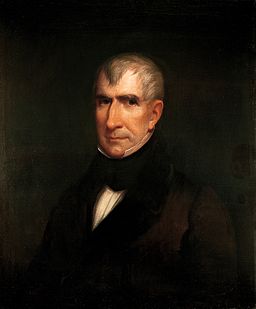
Official White House Portrait of William Henry Harrison

Official White House Portrait of William Henry Harrison

The election also gave birth to the American expression “O.K.” Democrats used O.K. as affectionate shorthand for Harrison’s opponent, Martin Van Buren, who was known as “Old Kinderhook” after the town in New York where he grew up.

Harrison was the first Whig party candidate to win a presidential election. The Whig party had formed out of opposition to President Jackson’s policies. Whigs wanted a strong federal government and social reforms.

Harrison was mainly nominated and elected because he had few political enemies and didn’t share his personal opinions. No one knows what kind of president he would have been because he died from pneumonia one month after his inauguration. He was the first president, though not the last, to die in office.

John Tyler

Tyler’s succeeding Harrison established the precedent of the vice-president taking over for a deceased president. Yet, since the Constitution didn’t specifically state what the vice-president’s role was in case a president died, not everyone thought Tyler should become president. John Quincy Adams referred to Tyler as “His Accidency.”

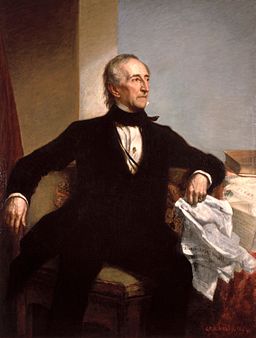
Official White House Portrait of John Tyler

Official White House Portrait of John Tyler

Shortly after taking the oath of office, Tyler’s wife died, which made him the first president to become a widower in office. Tyler soon married Julia Gardiner, a young woman thirty years younger than he.

In many ways, Tyler seemed like a natural fit for the presidency. At fifty-one he already had political experience serving as a governor and a congressman. His tall, thin frame made him stand out in a crowd, and he had an excellent speaking voice.

Tyler was a former Democrat who had switched over to the Whig party during Jackson’s presidency. Yet he still felt strongly about states’ rights. This feeling got him into trouble with his party, which favored a strong federal government. He vetoed bills that Whigs in Congress and in his cabinet wanted.

After vetoing a tariff bill introduced by Whigs, the first ever impeachment resolution of a president was made against Tyler. The resolution failed. Nevertheless, Tyler remained a mainly ineffectual executive.

Though he supported the annexation of Texas, the Senate would not approve it until Tyler’s successor James Polk was elected so that Tyler’s administration could not take credit. Tyler stated, “A Vice President, who succeeds to the Presidency by the demise of the President…has no party at his heels to sustain his measures.”

Surprising Facts about U.S. President John Quincy Adams

Though he was the first son of a former president to be elected, John Quincy Adams’ presidency was undermined before he even got into office.

The 1824 election was crowded with four Republican candidates: Andrew Jackson, Adams, Henry Clay, and William Crawford. Jackson and Adams received the most votes but neither won outright, so the election results were decided in the House of Representatives where Clay was Speaker of the House. Clay threw his support behind Adams. Afterwards, Adams named Clay as his secretary of state. Jackson supporters claimed without proof that Adams had bribed Clay and did their best to discredit Adams.

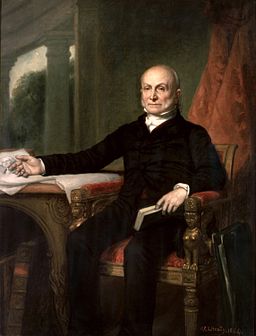
John Quincy Adams Official White House Portrait

John Quincy Adams Official White House Portrait

Adams had also inherited his father John Adams’ stubborn refusal to negotiate. His first annual message to Congress contained some good ideas, such as promotion of internal improvements and the creation of a national university. His insistence on broad federal powers and his assertion that government officials did not need to consider the opinions of their constituents made him very unpopular, however. As a result, Congress ignored President Adams’ domestic and foreign policies.

After being voted out of office and replaced by Andrew Jackson, Adams did not retire. Instead, he served as a member of the House of Representatives for 17 years. He was the only president to serve in the House after being president. His family objected to him serving in a lower office, but his election pleased him.

Nicknamed “Old Man Eloquent” for his speeches against slavery, Adams received more respect in the House than as president. He also accomplished more. For example, he helped repeal the gag rule that prevented the House from debating any criticisms of slavery.

Surprising Facts about U.S. President James Monroe

James Monroe was the son of a Virginia plantation owner. He became an orphan in his mid-teens. Fortunately, he stayed with his uncle who liked James and his siblings. In 1774 Monroe attended William and Mary College in Williamsburg. Monroe and his friends found plenty to do outside the classroom. The Royal Governor had already left town due to the spirit of rebellion among some Virginians in the colony’s capital. Along with a few classmates, Monroe helped to raid the absent governor’s palace. The young men took 200 muskets and 300 swords which they gave to the Virginia militia. In the winter of 1776, Monroe joined the Virginia infantry.

By the time he became president, Monroe’s resume included service as a soldier in the Revolutionary War, U.S. senator, minister to France and England under President Washington, governor of Virginia, and positions as secretary of state and secretary of war under President Madison. He became friends with James Madison and Thomas Jefferson while the U.S. government was being formed. Together, the three of them opposed the policies of John Adams and other Federalists.

Portrait of James Monroe

Portrait of James Monroe

Though he often receives less attention from scholars than other presidents who came from Virginia, Monroe’s elections and administration were notable for several reasons. In the 1820 election Monroe got all the electoral votes except one. When elected, Monroe was the first president to hold his inauguration outdoors. He was also the first chief executive since Washington to take a national tour of the country. Unlike his friends Jefferson and Madison, Monroe had an outgoing personality that endeared him to the other Americans he met. His cross-country tour was such a success that he travelled several times while in office.

As president, Monroe utilized his agreeable personality to great effect. He had a talent for picking men with great minds to serve in his administration and maintained good relationships with his cabinet members. Despite his opposition to John Adams’ political views, Monroe chose Adams’ son, John Quincy Adams as secretary of state. Monroe’s easy going personality allowed him to get along with almost anyone, so the two men established a good working relationship. Adams encouraged Monroe to make a statement about European influence in the Western Hemisphere.

In his annual message to Congress, Monroe stated “the American continents, by the free and independent condition which they have assumed and maintain, are henceforth not to be considered as subjects for future colonization by any European powers.” This part of Monroe’s message came to be known as the Monroe Doctrine. The doctrine made it clear that America had a right to protect any nation in the Western Hemisphere against European aggression. As a product of both John Quincy Adams and Monroe’s ideals, the doctrine aptly demonstrated the president’s ability to partner with unlikely people for the good of the country.

John Adams: The Independent President

John Adams, like George Washington, did not enjoy his inauguration either, though for somewhat different reasons. His wife and political confidant, Abigail, was at home in Quincy, Massachusetts caring for John’s dying mother. In addition much of the attention that day was focused on Washington as people wept over the first president’s departure. Adams was also on the outs with his long time friend and now political enemy Thomas Jefferson.

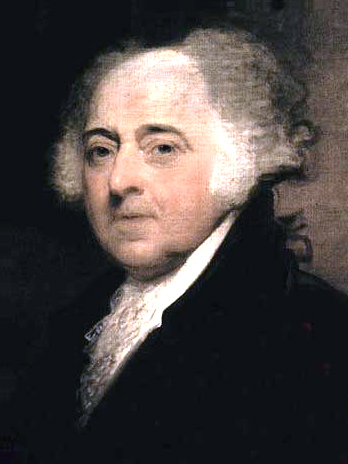
John Adams, 1823 by Gilbert Stuart

John Adams, 1823 by Gilbert Stuart

Adams had reason to feel lonely on his inauguration day, but most of his public career characterized him as a “loner.” While his daughter expressed concern over his narrow election victory in a letter (he won 71 votes to Jefferson’s 68), he wrote back that he didn’t believe in “extravagant popularity.” Adams never quite trusted public opinion and felt that the more unpopular an idea was, the more likely it was to be right. Before the presidency he never held an administrative position and tended to take on causes that were unpopular with the public, such as defending British soldiers after the Boston Massacre.

Any politician who is unwilling to negotiate with others is unlikely to be successful for long, and Adams lost his re-election bid in 1800 to Thomas Jefferson. At the time, however, Adams was more concerned about family matters than election results. His son Charles, an alcoholic, had died. Since he was no longer president, John and Abigail would have more time to care for Charles’ widow and their grandchildren. Adams did live long enough, however, to see his son John Quincy Adams elected as President of the United States.