Forgotten First Lady Ida McKinley

American First Lady Ida Saxon McKinley grew up in one of the wealthiest families in Canton, Ohio. Her father believed in women’s education, so Ida received a college degree. Yet he wanted his daughter’s education to be “more practical than ornamental.” As a result, Ida worked in her father’s bank, first as a teller and then as a manager. In addition to her work and college studies, Ida loved long walks, shopping, and going to concerts and the theater.

She met William McKinley at her father’s bank. Completely smitten, McKinley proposed in the fall of 1870. They had very different personalities, which some friends thought would be an obstacle. McKinley was reserved while Ida was impulsive and adventurous. Yet their love lasted throughout the years. A friend later said, “the relationship between them was one of those rare and beautiful things that live only in tradition.” The happy couple married in January 1871.

By Christmas, Ida gave birth to a daughter named Catherine. In fall of 1872 Ida was pregnant again, but both mother and daughter fell ill. Daughter Ida died of cholera after only five months. After this loss, Ida experienced a combination of symptoms, most notably epileptic seizures. McKinley was determined not to shut Ida up in a mental institution, though epilepsy was thought to be a psychiatric disorder. Unfortunately, more sadness followed. Their first daughter developed scarlet fever and died.

The loss of a second child nearly destroyed Ida, so McKinley offered to give up his political ambitions for her. Ida, however, wouldn’t hear of it. “I have no fear that your choice in life will leave you as you are in the things that make you dear to me,” Ida told him. With his wife’s encouragement, McKinley ran for Congress in 1876 and won.

Whether he was in Congress or home in Ohio, McKinley remained devoted to Ida. While in Congress, Ida sometimes called him out of meetings on trivial matters, such as his opinion on her clothes. When he left town for any reason, McKinley wrote letters to Ida that opened with “My own precious darling.”
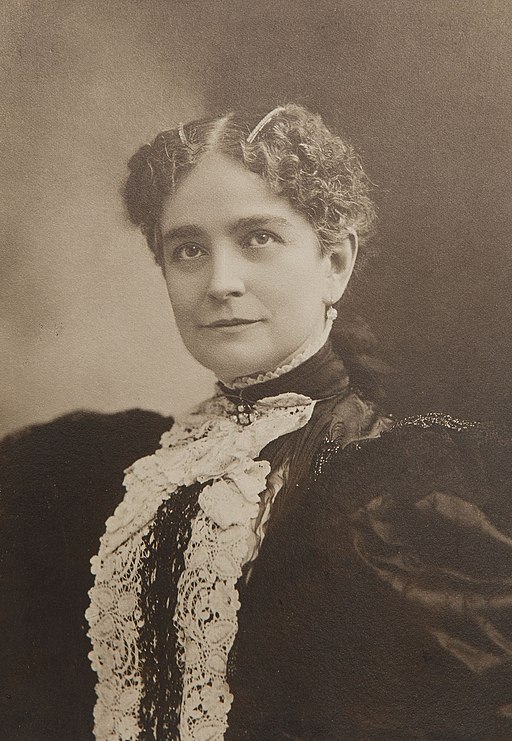
Ida Saxon McKinley, unknown date

Ida’s health would sometimes improve for long stretches, and the couple took advantage of these times by traveling together. Ida loved to travel and managed two trips to California with her husband.

In 1897, William McKinley became president of the United States. Considering her illness, Ida might have given the duties of first lady to someone else, but she refused. Nevertheless, she had limitations. For example, Ida stood in receiving lines to greet White House guests but a chair was always placed behind her in case she became tired. She enjoyed hosting luncheons for members of Congress though she had to pace herself. Both she and McKinley wanted Ida to partake of society as much as possible despite her seizures. William Howard Taft remembered talking with them when he noticed “a peculiar hissing sound” coming from Ida. McKinley walked over to her, draped his handkerchief over her face, and continued the conversation.

Despite her limitations, Ida McKinley put her own stamp on the White House. She crocheted slippers which she gave to charities who them sold them at inflated prices. Her love of music and theater as a young woman continued during her time as first lady. Ida brought pop music like ragtime to White House social events. When she was well she attended comedies in Washington theaters and invited actors to the White House to discuss their craft. Unlike previous first ladies, she met with Susan B. Anthony and supported suffrage by speaking with suffrage organizations.

Though usually supportive of his career, Ida didn’t want McKinley to run for a second term as president. “I thought he had done enough for the country…and when his term expires he will come home and we will settle down quietly and he will belong to me,” Ida told a reporter. Her reasons for opposing a second term weren’t entirely selfish. Ida also feared that McKinley would be assassinated, since anarchists all over the world adopted assassination as a recent means of protest. McKinley refused to give up his reelection bid, however.

Sadly, Ida was right to worry. McKinley was shot, though his first concern was for Ida. “My wife–be careful how you tell her. Oh be careful,” McKinley told a secretary.

When Ida was told, she fainted but recovered quickly. She said, “Tell me all, keep nothing from me! I will be brave–yes, I will be brave for his sake!” Ida did as promised, comforting her husband with hardly any breakdowns. Others assumed the shock of the president’s death would instantly kill Ida, but it did not. At home in Canton, Ohio, she created a shrine to her husband. Ida McKinley passed away in 1907 at age 59.

Sources:

Merry, Robert. President McKinley: Architect of the American Century.

Miller, Scott. The President and the Assassin.

O’Brien, Cormac. Secret Lives of the First Ladies.
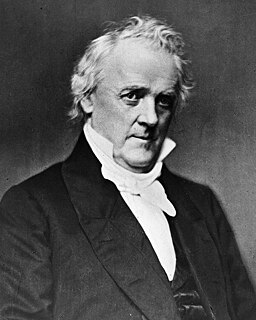
Presidential Pets: U.S. President James Buchanan’s Dogs

Though he had political skills that propelled him to the presidency, James Buchanan is one of the United States’ most unpopular presidents. He happily left problems like slavery and the secession of the Southern states to his more gifted successor, Abraham Lincoln.

U.S. President James Buchanan

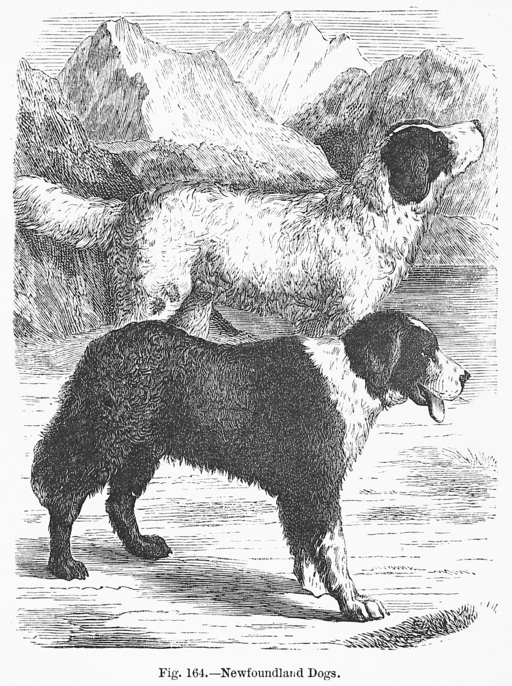
Yet President Buchanan’s dogs did not share their master’s unpopularity. In fact, he helped to popularize the Newfoundland dog breed by bringing one to the White House. Buchanan acquired his 170 pound Newfoundland Lara prior to serving as U.S. ambassador to Great Britain. While he was away, he wrote to his niece Harriet Lane and asked, “How is Lara?” Harriet said that he sounded homesick.

During their coverage of the presidential campaign of 1856, reporters for Frank Leslie’s Illustrated Newspaper visited Buchanan’s Wheatland estate in Pennsylvania. The magazine’s March 1857 issue describes Lara: “Prominent also [at Wheatland] is Mr. Buchanan’s Newfoundland dog Lara, remarkable for his [sic] immense tail and his attachment to his master.” The magazine predicted that “This dog will hereafter become historical as a resident of the White House.”

In the 1850s, Lara’s breed was only fifty years old. As the president’s dog, Lara was the most famous dog in America and probably the largest to occupy the White House. She slept next to Buchanan and viewed herself as his protector. Visitors remarked that Lara looked like a bear who slept with one eye open.

Newfoundland Dogs, 1870

Buchanan’s time in office saw the biggest dog and also one of the smallest in the White House. Since Buchanan was unmarried, his niece Harriet Lane served as First Lady. Harriet received a toy terrier named Punch from the U.S. consul in South Hampton, England. She named the dog Punch because it could supposedly fit under a down turned punch bowl. A writer covering social life in Washington wrote, “the little stranger was a nine-days’ curiosity at the White House where it was exhibited to all who were on visiting terms with Miss Lane.”

Though the press were Punch fans, Buchanan was not. While Harriet traveled, he wrote that he was trying to avoid Punch as much as possible.

Unfortunately, there are no accounts of the antics between Lara and Punch during their time in the White House. One can imagine the giant dog and the diminutive one running through the stately rooms of the house, perhaps chasing each other. Given Lara’s size, she may have broken an object or two.

President Buchanan did not run for a second term. In March 1861, he, Harriet, and the dogs returned to Wheatland. Lara’s time in the White House had a lasting impact though. The breed’s popularity grew in later decades and a Newfoundland named Faithful arrived with President Grant in 1869.

Sources:

All-American Dogs: A History of Presidential Pets from Every Era by Andrew Hager

First Dogs: American Presidents and Their Best Friends by Roy Rowan and Brooke Janis

Coretta Scott King’s Childhood and Education

Racism in Coretta Scott King’s Childhood

Coretta Scott King was born on April 27, 1927 in Heiberger, Alabama. During her early childhood, her family home had no running water or electricity. Her father Obadiah Scott worked hard to support his family. He always had several jobs going at once, including a barbering business, driving a taxi, and managing a farm. His home eventually made even whites in the area envious.

When Coretta was fifteen, her family’s home burned down. Coretta was convinced that white men were responsible, but the police never investigated. Coretta later wrote that “in the eyes of whites, we were a black family of ‘nobodies.'”

The day after the fire, her father went to work as if nothing happened. For Coretta, the example of her parents showing her how to live with fear but keep going was a lesson she applied for the rest of her life.

Work and Play

Despite racism, Coretta felt she had a mostly happy childhood. Her parents loved her and she loved her siblings Edythe and Obie. The children made their own toys because they couldn’t afford store bought ones. For example, they found an old tire, attached rope, and tied it to a tree to make a swing. They also climbed trees.

From age six, Coretta worked in her family’s fields. The family farm raised corn, peas, potatoes, and garden vegetables. She and her sister also milked cows.

During the Great Depression, she and Edythe worked as hired hands picking cotton in other people’s fields. They each made 60 cents per day which helped pay for their schooling.

Early Education

Coretta’s mother believed in the importance of education for all her children. “I cannot remember a time when I didn’t know I was going to college,” wrote Coretta.

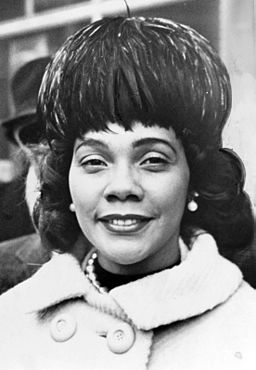
Coretta Scott King, 1964

In Perry County Alabama the public school system separated black and white children. Coretta’s school was one room filled with over 100 children from grades one through six. Just getting to and from school was a challenge. “I saw white children riding yellow-checkered buses to their school, yet, in all kinds of weather, we black children walked three miles to our one-room schoolhouse and three miles back home.” Although they had outdated books and no labs, Coretta’s teachers were good people who “loved us and expected us to excel.”

Fortunately, Coretta’s education improved after sixth grade. She attended Lincoln Normal School which had an integrated faculty. White faculty members cared for their black students. Coretta learned from them that some white people were kind–something she hadn’t experienced before.

Her music teacher introduced Coretta to classical music and told her about black concert performers. Through the encouragement of her teachers, Coretta wondered if she could do something with music when she grew up.

College and Graduate School

In 1945, Coretta followed her sister to Antioch College in Yellow Springs, Ohio. To her dismay, she discovered that her high school education still wasn’t as good as most white students. She persevered, however, and eventually caught up through hard work.

In college Coretta met people of different races, cultures, and religions. She dreamed of a world in which all kinds of people lived in peace together.

Unfortunately, even the North in the 1940s didn’t offer the utopia she wanted. Coretta majored in elementary education with a minor in voice. Her major required her to teach one year in an Antioch private elementary school and one year in a Yellow Springs, Ohio public school. Coretta wasn’t allowed to teach in the Yellow Springs public school because there were no black teachers there. She appealed to various school officials, the school board, and the college administration. Her protests were denied and she had to teach another year in private school.

Even though she wasn’t successful, Coretta’s protests taught her something. “This was the first time I stood publicly against discrimination, and I found that I rather liked making waves and being a catalyst for change,” she said.

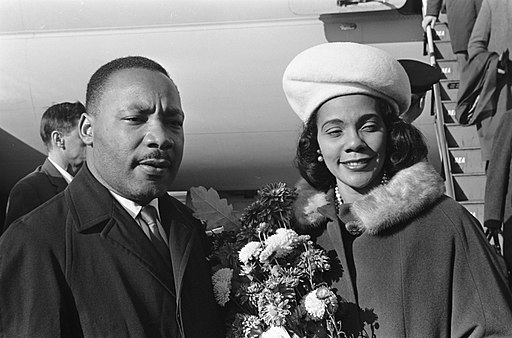
Martin Luther King, Jr. and Coretta Scott King, 1966

At the time, Coretta thought she was meant to fight racial discrimination through her music. “I saw myself as a concert singer, paving the way for other blacks.” She received an early acceptance to the New England Conservatory and began her voice studies. During her second semester in Boston, she met a young man named Martin Luther King, Jr. As their relationship became more serious, Coretta wondered if she could sacrifice her musical ambitions to support Martin’s racial justice work.

Sources:

King: A Life by Jonathan Eig

Coretta: My Life, My Love, My Legacy by Coretta Scott King

The Childhood of U.S. President Jimmy Carter

On October 1, 1924, Jimmy Carter was the first future U.S. president to be born in a hospital. Most women at the time still gave birth at home, but Jimmy’s mother was a registered nurse.

Jimmy’s family lived in Plains, Georgia on South Bond Street. Their neighbors included Edgar and Allie Smith. When the Smith’s daughter Rosalynn was born in 1927, Jimmy went next door to see the baby. That marked the first time Jimmy saw his future wife.

In 1928, Jimmy’s father became a full time farmer. Jimmy and his sisters were raised on a farm two and a half miles from Plains in Archery. The town had a population of around 200 people. At first the farmhouse had no electricity or plumbing. Jimmy’s most vivid memories were of the cold because his room was the farthest from the stove and fireplaces.

Jimmy’s brother Billy wasn’t born until Jimmy turned twelve so he received a lot of attention from his father. He followed his dad around the farm whenever possible. His father encouraged him to earn money at an early age. Jimmy sold peanuts in Plains when he was only five years old. He maintained ten regular customers and also sold to shoppers visiting the town.

Most of Jimmy’s duties on the farm meant working in the field. He chopped cotton and hoed weeds. Jimmy felt restless doing small chores though. He wanted to “escape from the company of other children and women in just hoeing, picking cotton, and shaking peanuts and to graduate to the exalted status of a skilled plowman who could cultivate a crop.” In his father’s opinion, Jimmy never fully reached his goal. He was permitted to break land in the field at age twelve, however. Others viewed it as boring work, “but to me it was a great achievement.”

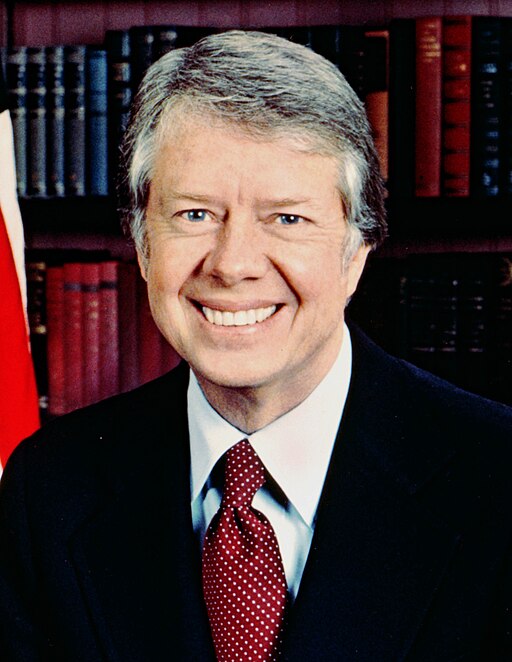
U.S. President Jimmy Carter, 1977

As Jimmy grew, he especially enjoyed doing carpentry with his dad. “I relished the repair of houses, barns, and storage places, and was eager to help when new farrowing pens were built for our sows and pigs,” Jimmy wrote years later.

In addition to his chores, Jimmy also played on the farm. Since the Carters were the only white family in Archery, his playmates were African American. They made their own toys, such as hoops, slingshots and guns. Even when he started school in Plains, Jimmy felt “more at home” with his black friends. The only rankings among him and the other kids revolved around who caught the biggest fish or performed best in the last baseball game.

At six years old Jimmy attended Plains High School where he had only white classmates. The school was one of the best in the state thanks to its superintendent. She took a special interest in Jimmy and gave him extra reading assignments. Jimmy’s parents also encouraged their children to bring books to the dinner table.

Jimmy was content on the farm, but his parents wanted him to finish high school, go to college, and join the navy. His mother’s youngest brother was in the navy and sent Jimmy souvenirs from countries like Australia and Japan. A naval appointment could only come from a senator or congressman, so Jimmy had to work hard in high school to get good grades. He didn’t receive an appointment when he graduated high school in 1941. Instead, he enrolled in Georgia Southwestern College and became a lab assistant.

The bombing of Pearl Harbor in December 1941 changed Jimmy’s life. After his sophomore year in college, he finally received his appointment and entered the Naval Academy in 1943.

Sources:

Jimmy Carter A Full Life: Reflections at Ninety by Jimmy Carter

Gift of Peace: The Jimmy Carter Story by Elizabeth Raum

What’s Wrong with Ken Burns’s Holocaust Documentary + Free Book

Ken Burns’s documentary The U.S. and The Holocaust has not finished its run on PBS. Nevertheless, the content that has aired is biased toward both the United States and President Franklin Roosevelt.

The documentary states that the United States took in more Jewish refugees than any other sovereign nation during the Nazi era. As Dr. Rafael Medoff asked in his September 13, 2022 article in The Jerusalem Post, why didn’t Burns simply use the word country instead of sovereign nation? Because, though it was not a sovereign nation, Palestine let in more Jews than the U.S. Of course, if you’re not paying attention to the very careful wording, you might assume that the U.S. was more generous toward Jewish refugees than any other land. Interestingly, as Medoff notes, the statement is false even with the words “sovereign nation.” The Soviet Union, a sovereign nation, allowed more Jews in than the U.S.

The other major problem with the documentary is its favoritism towards FDR. Viewers are repeatedly told that there was nothing FDR could have done for the Jews because, well, insert excuse. Because Congress wouldn’t approve higher immigration quotas. Because even Jews close to FDR could not decide whether having him make a statement on Nazi atrocities would help or hurt Jews in Europe. Historian Deborah Lipstadt states that it was not as though FDR could have “snapped his fingers” and helped the Jews of Europe himself. After all, there was “plenty of blame to go around.”

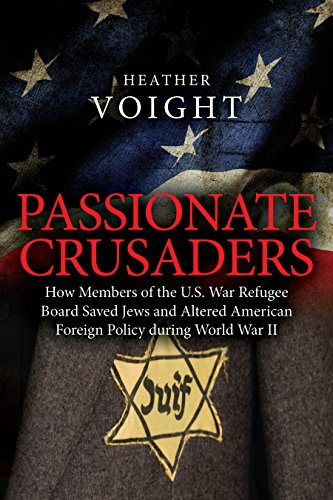
Yet in 1944 FDR did the equivalent of snapping his fingers and helping Jews. He accomplished this by signing an executive order that created the War Refugee Board. The War Refugee Board had the power to “rescue the victims of enemy oppression who are in imminent danger of death.” As I explain in my book Passionate Crusaders, the WRB’s members provided physical rescue and humanitarian relief to thousands of persecuted people, though they were not all Jewish. Hard numbers are difficult to come by, but there is no question that if FDR had established the WRB earlier, more Jews would have survived the Holocaust.

As a result of my disagreements with Ken Burns’s documentary, I am making my book Passionate Crusaders FREE on Amazon Kindle from today, September 20th to September 24th.

Link to my book: https://amzn.to/1GDI2qq

Link to Dr. Medoff’s article: https://www.jpost.com/opinion/article-716987

How Thanksgiving Became a National Holiday

Heather Voight's avatarHeather on History

Although the 1621 Pilgrim celebration at Plymouth Colony in Massachusetts is usually regarded as the first Thanksgiving, other states disagree. Maine claims to have the held the earliest Thanksgiving fourteen years before the Plymouth holiday. The celebration had much in common with Plymouth’s, since English settlers shared a large meal with local Native Americans near the Kennebec River. Virginia held a religious service in 1619 after colonists landed safely at a place called Berkeley Hundred, located up the river from Jamestown. Neither the Maine nor the Virginia settlements survived, which is likely why the Plymouth Colony gets credit for the first Thanksgiving.

The colonists at Plymouth didn’t plan on making Thanksgiving an annual holiday, however. Instead, they held days of thanksgiving whenever they felt especially grateful to God. For example, in 1623, Plymouth’s crops withered. When rain fell, the colonists held a day of thanksgiving prayer. Basically, in bad times the Pilgrims fasted, and in good times they gave thanks.

Even in the…

View original post 305 more words

The Early Life of President Richard Nixon

Most people remember Richard Nixon for being the only President of the United States to resign from office. Yet when I was researching this blog post, I realized that I knew almost nothing about his childhood and education. Like most leaders, his early experiences shaped what he did later in life.

256px-Richard_M._Nixon,_ca._1935_-_1982_-_NARA_-_530679

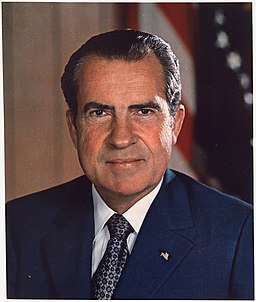
Official White House Photo of President Richard Nixon

Richard Nixon was born in 1913 in Yorba Linda, a small town east of Los Angeles. His father Frank planted lemon groves, but these failed and the family moved to Whittier, California. Here Frank ran a grocery store and gas station. Richard Nixon said of his childhood, “we were poor, but the glory of it was we didn’t know it.”

Although Frank and Hannah Nixon had five children, they lavished most of their attention and what little money they had on their oldest son, Harold. They bought Harold a Boy Scout uniform but couldn’t afford to get one for Richard. Richard and his other brothers stayed home while Harold was sent to a Christian boarding school in Massachusetts.

Harold and Richard were opposites. Harold was popular with other kids and girls “swooned over him.” In contrast, Richard felt uncomfortable around people he didn’t know well and the other boys teased him. Instead of fighting the bullies, Richard kept his anger bottled up. Realizing he would never be as popular as Harold, Richard threw himself into his schoolwork. He became his grammar school’s valedictorian and joined the debate team in high school. Richard also had big dreams. His grandmother gave him a framed portrait of Abraham Lincoln, which he hung over his bed.

Richard_Nixon_HS_Yearbook

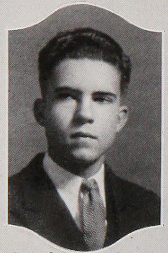
Photo of Richard Nixon as a senior in high school, 1930

While Richard Nixon could literately look up to Abraham Lincoln, his parents’ volatile personalities had the most influence on him. Frank Nixon had a terrible temper. Richard and his brothers were rapped on the head by their father at various times. At his grocery store, Frank subjected customers to his conservative political opinions whether they wanted to hear them or not. He also blamed others for his bad luck.

In contrast, Richard’s mother, whom he called “a saint,” smiled and bottled up her frustrations. Hannah Nixon had a gentle voice but punished her children by not speaking to them. Though deeply religious, she was not affectionate.

As a result of his childhood experiences, Richard developed a dislike of conflict and a sense that he was not good enough, especially when compared with Harold. When Harold died of tuberculosis in 1933, Frank Nixon said, “Why is it, that the best and finest of the flock has to be taken?” Richard, as the second oldest son, would always be trying to live up to his dead brother’s potential.

After high school, Richard was offered a scholarship to Harvard but ended up at Whittier College to save money on living expenses. Determined to distinguish himself, Richard participated in school debates and was eventually elected president of the student body. While he excelled in debates and in his studies, Richard remained somewhat of a loner. One former classmate recalled that “I don’t think he had anybody you would call a close friend.” He had an on and off relationship with a young woman which she described as “stormy.” Even she said she didn’t feel that she really knew him.

At the end of college, Nixon received and accepted a scholarship to Duke University Law School. He told his girlfriend that he hoped to do something important with his life. Clearly, Richard Nixon was ready to make his mark on the world.

Sources:

Being Nixon: A Man Divided by Evan Thomas

The American President by Phillip B. Kunhardt, Jr., Phillip B. Kunhardt III, Peter W. Kunhardt

https://www.biography.com/people/richard-nixon-9424076


Book Review of Doris Kearns Goodwin’s Leadership in Turbulent Times

Let me start this review by explaining what Leadership in Turbulent Times is NOT. It is not a commentary on the current White House; Donald Trump’s name is never even mentioned. The book is also not as lengthy as Doris Kearns Goodwin’s other titles. Without notes, Leadership is 370 pages. In contrast, Goodwin’s previous book The Bully Pulpit is 752 pages without notes.

Now for what Leadership in Turbulent Times IS. It is a survey of four presidents who, though imperfect, displayed extraordinary leadership qualities during their time in office. The men included are Abraham Lincoln, Theodore Roosevelt, Franklin Roosevelt, and Lyndon Johnson. Goodwin spent years writing about each of these leaders.

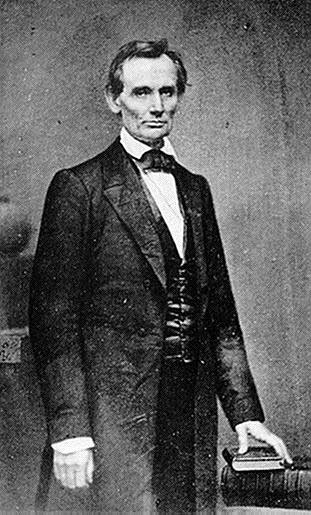
The book is divided into three main sections. In Ambition and the Recognition of Leadership, Goodwin shows how important early ambition and the desire to take charge are to successful leadership later in each man’s life. Abraham Lincoln’s famous thirst for knowledge helped him walk for miles to borrow a book. He got no encouragement from his father, who thought a strong young man like Abe should be helping with the family farm. Yet Lincoln was determined to get ahead of other young people. A contemporary recalled how Lincoln would devote himself to books while the other kids played. Years later, when a law student asked him for advice, Lincoln said, “Always bear in mind that your own resolution to succeed is more important than any other thing.”

abrahamlincoln

Abraham Lincoln, Feb. 1860 by Mathew Brady

The second section of the book, Adversity and Growth, demonstrates how each of these men became better leaders as a result of overcoming challenges. For example, Franklin Roosevelt came from a wealthy family and appeared to be living a charmed life until he contracted polio. Suddenly the pampered FDR had to work hard just to manipulate a wheelchair. He went to Warm Springs, Georgia after hearing about a man who gained strength in his legs by swimming in the warm mineral water. FDR invested money in a rundown hotel and turned it into a resort and treatment center for polio patients. He took an active interest in his investment and became known to other patients as Doc Roosevelt. Spending time listening and sharing his own struggles with others who had polio changed Roosevelt. According to his future cabinet member Frances Perkins, the experience made him “completely warmhearted, with humility of spirit and with a deeper philosophy.” FDR’s newfound empathy would later help him to understand what other people were going through as he worked to get the U.S. out of the Great Depression.

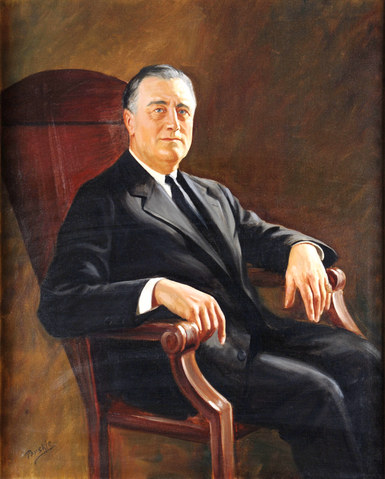
385px-froosevelt

Gubernatorial portrait of FDR, Dec. 1940

In the third section of the book, The Leader and the Times: How They Led, Goodwin shows how the ambition and personal trials of each man made him a better leader. She presents case studies from each of their presidencies to show how effectively they led their country at challenging times. For Lincoln, she uses the introduction of the Emancipation Proclamation during the Civil War. Theodore Roosevelt’s chapter discusses his response to The Great Coal Strike of 1902. For FDR, his first 100 days in office dealing with the Great Depression are examined. Finally, Goodwin discusses Lyndon Johnson’s work on behalf of civil rights.

I recommend this book for readers who want a relatively quick introduction to these four presidents and want to learn how they became great leaders. Leadership in Turbulent Times is also a good choice for people who may be hesitant about starting one of Goodwin’s larger tomes. If readers decide they want to learn more about a particular president, they can check out Goodwin’s other excellent books.

Presidential Pets: Herbert Hoover’s Dogs

President Hoover and his wife enjoyed having dogs in the White House. They had some trouble keeping pets in the busy executive mansion, however.

Hoover’s favorite dog was a Belgian shepherd named King Tut. King Tut met the future US President while Hoover was on assignment in Belgium for President Wilson. Hoover adopted the dog and brought him back to the US.

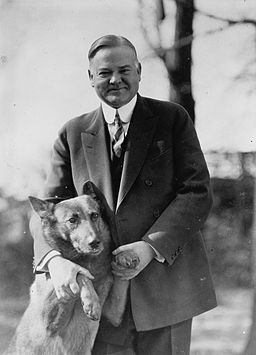
When Hoover ran for president in 1928, his political advisors looked for a way to soften the public servant’s stiff image. Hoover fished wearing a full suit, so his advisors had their work cut out for them. Their solution was to photograph Hoover with King Tut. In the photograph, a smiling Hoover holds up the dog’s front paws, as if he were begging for votes. After Hoover autographed the photo, it was sent to thousands of voters. King Tut and his master became more popular as a result. The New York Times called it “one of the happiest photos ever made” of Hoover. With the help of man’s best friend, Hoover was elected president.

256px-Herbert_Hoover_and_King_Tut

Herbert Hoover with his dog King Tut before the 1928 election

After he arrived at the White House, King Tut took on the responsibility of guarding both the president and the grounds around his new home. The White House security chief considered Tut “a sergeant, not merely a sentry” as Tut made his rounds each night.

Unfortunately, being on guard 24/7 started to stress the dog out. Tut sulked and stopped eating. Hoover sent him to a quieter residence in the hope that King Tut would improve, but he died in late 1929.

Hoover didn’t make the dog’s death public for several months. The stock market had already crashed and people were feeling the effects of what would be called the Great Depression. Under those circumstances, Hoover didn’t think it was appropriate to grieve publicly over a dog.

Like her husband, First Lady Lou Hoover also liked dogs. She received an Irish wolfhound from a breeder and school friend when she moved into the White House. The friend thought the dog’s enormous size would make him a good guard dog for the president and his family. Sadly, the dog, whose name was Patrick, passed away from an infection shortly after his arrival.

To compensate for this loss, Mrs. Hoover’s friend sent another Irish wolfhound named Patrick II. A contemporary newspaper reported that Patrick was “sensitive, shy, and shaggy.” Mrs. Hoover decided the dog was too shy for the busy White House and traded him for Shamrock, another Irish wolfhound. Shamrock was definitely not shy, but he wasn’t friendly, either. He bit one of the Marine guards at Camp Rapidan. The Hoovers eventually gave Shamrock to a colonel.

Ultimately, neither President Hoover or his dogs stayed long at the White House. In 1932, Hoover ran for reelection without King Tut and lost to fellow dog lover Franklin Roosevelt.