Forgotten First Lady Lucy Hayes

American First Lady Lucy Webb Hayes is most remembered as “Lemonade Lucy,” a nickname she received after banning alcohol from the White House. In fact, Lucy Hayes was much more than an advocate for abstinence.

Lucy was the first First Lady to graduate from college. She met Rutherford B. Hayes when she was a student at Ohio Wesleyan University, but at fifteen she was to young to be courted. Fortunately they met again in 1850 and married in 1852.

Despite her education, Lucy told Hayes that she thought she was “too light and trifling for you.” Hayes, though acknowledging his love for her, saw her as much more than a pretty face. He wrote in his diary, “Intellect she has too, a quick and spritely one, rather than a reflective and profound one. She sees at a glance what others study upon, but will not, perhaps, study what she is unable to see at a flash.”

Her college essays show that Lucy took a great interest in the issues of her time, including temperance and women’s rights. In one essay, Lucy compared men to women, with women coming out favorably. she wrote, “It is acknowledged by most persons that her (woman’s) mind is as strong as a man’s…Instead of being considered the slave of man, she is considered his equal in all things and his superior in others.”

Throughout their marriage, Lucy did not hesitate to share her opinions with her husband. An ardent abolitionist, she wrote to Hayes during the Civil War that President Lincoln was not doing enough to get rid of slavery. “The protection of slavery is costing us many precious lives,” she wrote. One of the lives she worried about was Hayes’s, since he was wounded more than once. Lucy traveled with Hayes, who was a Union officer, as much as she could during the war. She even brought two of their youngest children along, which may have contributed to their deaths before the age of two.

She developed an abiding interest in veteran’s causes as a result of her war experiences. When Hayes was elected governor of Ohio, Lucy established a soldier’s orphan’s home. Though she struggled to get the home funded, it became a state institution in 1870.
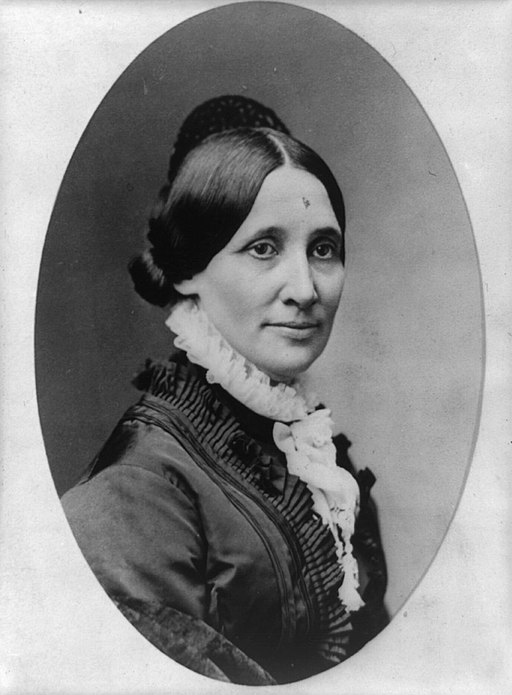
Lucy Hayes, circa 1877

In 1877, Hayes was narrowly elected President of the United States. Lucy’s excellent skills as a hostess helped her husband entertain both political parties at the White House. Her love of music led Lucy to invite vocalists and musicians to the White House. The first black opera singer Marie Selika sang arias in the Green room. On more informal occasions, guests were invited to sing gospel songs with the First Lady.

Though Lucy later took the blame for it, Hayes announced that alcohol would not be served at the White House after spring 1877. He may have partly been trying to please his wife, but Hayes also disliked the way male visitors behaved when drinking. Although some colleagues accused the First Couple of being stingy, they still entertained lavishly. During one dinner, hundreds of guests were treated to expensive foods like salmon, turkey and truffles, ham, lobster salads, and oysters among other dishes.

Since she had no social secretaries to help her entertain, Lucy invited young friends and family to the White House. Though she claimed she was getting an unfair reputation as a matchmaker, more than one politician met his future wife at one of the Hayes’s parties. Even the press acknowledged Lucy as a warm hostess. One reporter wrote of Lucy that “she is so vivacious and so responsive that everybody leaves her presence with a vague idea that he is the one person whom she was longing to see.” To most contemporaries, Lucy was known as a good conversationalist and hostess.

Lucy disappointed some women’s groups by not joining their causes. Despite the fact that the White House no longer served alcohol, Lucy never officially joined the Women’s Christian Temperance Union. She also remained neutral on women’s suffrage.

Lucy Hayes took a more traditional view of the role of First Lady, preferring to support her husband’s decisions rather than making public statements. Yet through her example of a college education and her private influence on issues, Lucy Hayes paved the way for more progressive First Ladies.

Sources:

Greer, Emily Apt. “Lucy Webb Hayes and Her Influence Upon Her Era.” https://www.rbhayes.org/hayes/lucy-webb-hayes-and-her-influence-upon-her-era/

Hoogenboom, Ari. Rutherford B. Hayes: Warrior and President.

O’Brien, Cormac. Secret Lives of the First Ladies.

Trefousse, Hans. Rutherford B. Hayes.
Book Review of Doris Kearns Goodwin’s Leadership in Turbulent Times

Let me start this review by explaining what Leadership in Turbulent Times is NOT. It is not a commentary on the current White House; Donald Trump’s name is never even mentioned. The book is also not as lengthy as Doris Kearns Goodwin’s other titles. Without notes, Leadership is 370 pages. In contrast, Goodwin’s previous book The Bully Pulpit is 752 pages without notes.

Now for what Leadership in Turbulent Times IS. It is a survey of four presidents who, though imperfect, displayed extraordinary leadership qualities during their time in office. The men included are Abraham Lincoln, Theodore Roosevelt, Franklin Roosevelt, and Lyndon Johnson. Goodwin spent years writing about each of these leaders.

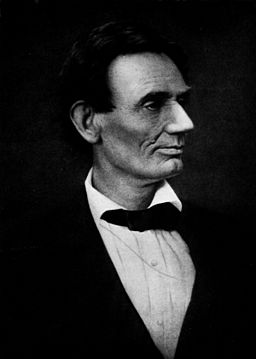
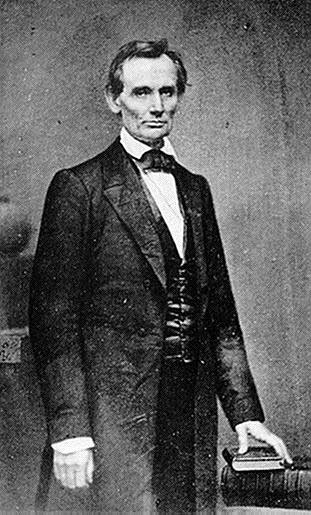
The book is divided into three main sections. In Ambition and the Recognition of Leadership, Goodwin shows how important early ambition and the desire to take charge are to successful leadership later in each man’s life. Abraham Lincoln’s famous thirst for knowledge helped him walk for miles to borrow a book. He got no encouragement from his father, who thought a strong young man like Abe should be helping with the family farm. Yet Lincoln was determined to get ahead of other young people. A contemporary recalled how Lincoln would devote himself to books while the other kids played. Years later, when a law student asked him for advice, Lincoln said, “Always bear in mind that your own resolution to succeed is more important than any other thing.”

abrahamlincoln

Abraham Lincoln, Feb. 1860 by Mathew Brady

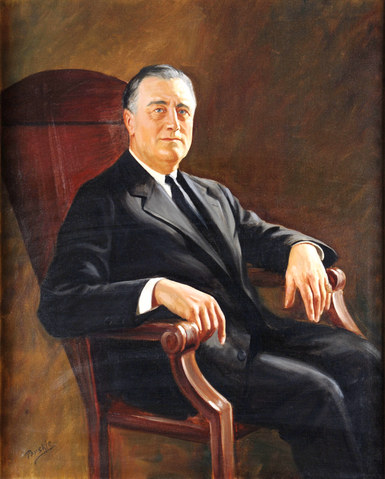
The second section of the book, Adversity and Growth, demonstrates how each of these men became better leaders as a result of overcoming challenges. For example, Franklin Roosevelt came from a wealthy family and appeared to be living a charmed life until he contracted polio. Suddenly the pampered FDR had to work hard just to manipulate a wheelchair. He went to Warm Springs, Georgia after hearing about a man who gained strength in his legs by swimming in the warm mineral water. FDR invested money in a rundown hotel and turned it into a resort and treatment center for polio patients. He took an active interest in his investment and became known to other patients as Doc Roosevelt. Spending time listening and sharing his own struggles with others who had polio changed Roosevelt. According to his future cabinet member Frances Perkins, the experience made him “completely warmhearted, with humility of spirit and with a deeper philosophy.” FDR’s newfound empathy would later help him to understand what other people were going through as he worked to get the U.S. out of the Great Depression.

385px-froosevelt

Gubernatorial portrait of FDR, Dec. 1940

In the third section of the book, The Leader and the Times: How They Led, Goodwin shows how the ambition and personal trials of each man made him a better leader. She presents case studies from each of their presidencies to show how effectively they led their country at challenging times. For Lincoln, she uses the introduction of the Emancipation Proclamation during the Civil War. Theodore Roosevelt’s chapter discusses his response to The Great Coal Strike of 1902. For FDR, his first 100 days in office dealing with the Great Depression are examined. Finally, Goodwin discusses Lyndon Johnson’s work on behalf of civil rights.

I recommend this book for readers who want a relatively quick introduction to these four presidents and want to learn how they became great leaders. Leadership in Turbulent Times is also a good choice for people who may be hesitant about starting one of Goodwin’s larger tomes. If readers decide they want to learn more about a particular president, they can check out Goodwin’s other excellent books.

President Abraham Lincoln, The Moral Politician

In honor of Presidents’ Day weekend and African-American History Month, I am revisiting this post from last year on Abraham Lincoln.

Until the 1850s Abraham Lincoln was a frustrated one-term congressman who had decided to focus on his law practice. Lincoln was drawn into politics again during the Kanas Nebraska Act controversy. While he accepted slavery where it existed, he couldn’t abide its expansion into new territories.

He was not in favor of giving blacks full citizenship, however. In 1840 he criticized Martin Van Buren for voting to enfranchise blacks, and he did not support giving blacks the vote in his bid for the U.S. Senate against Stephen Douglas. He believed that blacks had the right to earn their own living without it being taken away by their masters. Though he lost to Douglas, the debates helped raise Lincoln’s political profile.

Although he did not officially campaign for the nation’s highest office, Lincoln cleverly placed himself in the public eye. Prior to the election he had the debates with rival Stephen Douglas published; the volume became a national bestseller. He also travelled to New York so people in that part of the country could listen to his arguments and see his talent as a public speaker.

256px-Abraham_Lincoln_-_Clara_Barton_Centenary

Photo of President-elect Abraham Lincoln, 1860

While in New York he had his photograph taken so it could be handed out just in case his name was mentioned at the Republican convention. After he was elected, more than sixty photos were taken of Lincoln, making him the most photographed president up to that time. Though opponents often made fun of his plain, slightly unkempt appearance, Lincoln also poked fun at himself. After being called two-faced, Lincoln said, “If I had another face, do you think I would wear this one?”

Unlike Buchanan, who claimed that he could do nothing if a state wanted to leave the Union, Lincoln refused to bargain with secessionists and sent supplies to the federal fort in South Carolina. He also rejected the idea that the president could do nothing about slavery. While maintaining the Union was his first objective, he said that if freeing the slaves would save the Union he would free them.

Lincoln remained a great politician during the Civil War. He gave out contracts and government offices in exchange for votes. Yet he also knew how to unite people behind a moral cause such as the constitutional amendment that abolished slavery.

As the war drew to an end, he offered friendship to the defeated Southerners “with malice toward none, with charity to all.” Americans can only imagine what Lincoln would have accomplished during his second term in office. On April 14, 1865, he was the first president to be assassinated.

U.S. President William McKinley

One of many presidents who grew up in Ohio, William McKinley always believed he would be president someday. He inherited a poor economy from President Cleveland and wanted to focus on America’s domestic problems.

256px-Wmckinley

Official Presidential Portrait of William McKinley

Instead, he ended up presiding over a war with Spain. Having already witnessed the Civil War, McKinley had no desire to involve the country in Cuba’s fight for independence. Once the U.S. warship Maine exploded in Havana’s harbor, however, McKinley was pressured by the public to declare war. He finally gave in.

Once committed to a war, McKinley set out to win it. He set up the first modern war room in a corner office of the White House. By the war’s end the U.S. emerged for the first time as a world power. The United States not only served as protector of Cuba, but also took Puerto Rico and Guam from the Spaniards.

A confident president McKinley also sought to take the Philippines from Spain, but the Filipinos fought back. In order to subdue them, U.S. soldiers resorted to tactics such as burning villages in which innocent people, including children, were killed. McKinley disliked the atrocity stories but believed strongly in Manifest Destiny. He saw it as America’s duty to civilize the Filipinos and convert them to Christianity.

The bullet of an assassin ended the president’s second term during a cross-country tour. That trip was the last time a president traveled without the Secret Service.


Frequently Forgotten President Benjamin Harrison

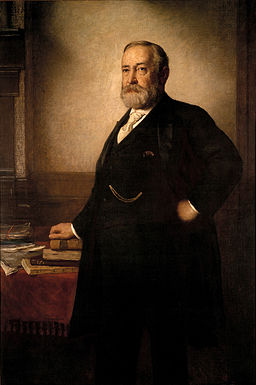
In 1888 President Cleveland lost the election to Benjamin Harrison. Harrison ran on a pro-business platform and hailed from Indiana, a state that had a healthy number of electoral votes. The election was so close that without states like Indiana and New York, Harrison could not have won.

Throughout his life Benjamin Harrison wanted to be known as an individual. He did not want his presidential campaign to mention his grandfather, former President William Henry Harrison. Against his wishes his campaign supporters used references to “Tippecanoe” and his grandfather’s allegedly humble origins.

They also pointed out that the grandson had inherited his grandfather’s reputation as a fighter. During the Civil War Harrison fought in as many battles as possible. In 1864 he joined General Sherman’s Atlanta campaign.

Benjamin_Harrison_(official_Presidential_portrait,_1895)

Official Presidential Portrait of Benjamin Harrison

Harrison’s actions as president included generous pensions for Civil War veterans and the signing of an anti-trust law. Under Harrison and the next few presidents, the law, meant to prevent the establishment of monopolies, remained mainly symbolic. Harrison did not wish to anger the businessmen who helped elect him.

The American voters were unimpressed by Harrison’s spending of millions of dollars on pensions and his pro-business stance. As a result his opponent (former President Grover Cleveland) was re-elected in 1892.

Harrison’s personality did nothing to endear him to voters either. Nicknamed “The Icebox” for his cold manner, he disliked having to deal with people outside his family. In public he often looked up at the sky so he would not have to greet others, even if he knew them! He was, however, very devoted to his wife, who died of tuberculosis during his re-election campaign. Harrison personally nursed her through her illness and didn’t care at all when he lost the election.

After his wife’s death he went home to Indiana. In his loneliness he married his wife’s niece, a circumstance that shocked his older children. The couple had a daughter, and Harrison doted on her until he died.


Frequently Forgotten President James A. Garfield

James Garfield was raised by a single mother in Ohio (his father died when he was two years old). He managed to save enough money to get through school. After college Garfield had various jobs as a preacher, professor, and college president. Garfield was never satisfied with any of these occupations or with having just one girlfriend. He courted his future wife Lucretia for so long that she was ready to give him up, but he finally grew into a devoted family man.

When the Civil War began Garfield served as the country’s youngest major general. President Lincoln convinced him to resign his commission, however, when his home state elected him to Congress. Garfield never lost an election and served for nearly two decades.

256px-Jgarfield

Official presidential portrait of James Garfield

During the 1880 Republican convention Garfield’s name was put forward, though he tried to object. In a crowded field that included former President Grant, Garfield won the nomination. With the help of powerful Republican Senator Roscoe Conkling he narrowly won the presidency, too.

Ironically, Garfield and Conkling were soon pitted against each other in an argument over federal appointments. Though Garfield had nominated some of Conkling’s friends for other positions, he appointed one of Conkling’s rivals to the New York Customs House.

Garfield surprised Conkling and almost everyone else when he refused to back down. “This…will settle the question whether the President is registering clerk of the Senate or the Executive of the United States,” he said. It seemed that the country had finally found a strong chief executive.

Only a few month into his presidency, a young man who had unsuccessfully sought a position in the government shot Garfield. Garfield lingered for months. An early air conditioning unit was installed in the White House to keep Garfield cool in the summer. Alexander Graham Bell even tried to find the location of the bullet, which remained inside the president, with a new electrical invention. After being moved to the Jersey shore, however, Garfield died.

Abraham Lincoln: The Moral Politician

Until the 1850s Abraham Lincoln was a frustrated one-term congressman who had decided to focus on his law practice. Lincoln was drawn into politics again during the Kanas Nebraska Act controversy. While he accepted slavery where it existed, he couldn’t abide its expansion into new territories.

He was not in favor of giving blacks full citizenship, however. In 1840 he criticized Martin Van Buren for voting to enfranchise blacks, and he did not support giving blacks the vote in his bid for the U.S. Senate against Stephen Douglas. He believed that blacks had the right to earn their own living without it being taken away by their masters. Though he lost to Douglas, the debates helped raise Lincoln’s political profile.

Although he did not officially campaign for the nation’s highest office, Lincoln cleverly placed himself in the public eye. Prior to the election he had the debates with rival Stephen Douglas published; the volume became a national bestseller. He also travelled to New York so people in that part of the country could listen to his arguments and see his talent as a public speaker.

256px-Abraham_Lincoln_-_Clara_Barton_Centenary

Photo of President-elect Abraham Lincoln, 1860


While in New York he had his photograph taken so it could be handed out just in case his name was mentioned at the Republican convention. After he was elected, more than sixty photos were taken of Lincoln, making him the most photographed president up to that time. Though opponents often made fun of his plain, slightly unkempt appearance, Lincoln also poked fun at himself. After being called two-faced, Lincoln said, “If I had another face, do you think I would wear this one?”

Unlike Buchanan, who claimed that he could do nothing if a state wanted to leave the Union, Lincoln refused to bargain with secessionists and sent supplies to the federal fort in South Carolina. He also rejected the idea that the president could do nothing about slavery. While maintaining the Union was his first objective, he said that if freeing the slaves would save the Union he would free them.

Lincoln remained a great politician during the Civil War. He gave out contracts and government offices in exchange for votes. Yet he also knew how to unite people behind a moral cause such as the constitutional amendment that abolished slavery.

As the war drew to an end, he offered friendship to the defeated Southerners “with malice toward none, with charity to all.” Americans can only imagine what Lincoln would have accomplished during his second term in office. On April 14, 1865, he was the first president to be assassinated.


Moving Toward Civil War: The Presidency of Franklin Pierce

As a young congressman, Franklin Pierce was fond of socializing and drank heavily. To please his wife who hated both Washington, D.C. and his drinking, he agreed to go back to his law practice in New Hampshire. He displeased her when he signed up for the Mexican War. Pierce wanted to serve his country but was a terrible general who suffered from multiple injuries and fainted often.

Portrait of Franklin Pierce

Portrait of Franklin Pierce

When the Democrats nominated him for president in 1852, his main advantage was that he had been out of politics for years and had no enemies. His journey to Washington turned tragic when he and his family were involved in a train wreck. He and his wife were unharmed, but their young son died. Mrs. Pierce refused to accompany her husband to his inauguration and returned to New Hampshire to grieve.

Though he was from a non-slave state, Pierce believed that the Constitution supported slavery. He made Jefferson Davis, future president of the Confederacy, a member of his cabinet. As president he enforced the Fugitive Slave Act that Northerners hated.

He also supported the Kanas Nebraska Act, which allowed people in the Kansas and Nebraska territories to decide whether they wanted slavery in those territories or not. Slave owners and abolitionists rushed into Kansas in an effort to influence the vote on slavery. The clashes between the slave owners and the abolitionists turned violent. Pierce was unable to unite the country or his party while the fighting continued.

Democrats passed over Pierce and nominated James Buchanan for the next election. When the South left the Union, Pierce wrote a letter of support to his friend Jefferson Davis. The letter became public and Pierce was viewed in his own state as a traitor. The increasingly reclusive former president drank so much after his wife’s death that he also died.

Not What their Party Ordered: The Surprising Presidencies of Zachary Taylor and Millard Fillmore

Zachary Taylor

Official White House Portrait of Zachary Taylor

Official White House Portrait of Zachary Taylor

Taylor was best known as a general rather than a politician. In fact, he had never voted in a presidential election. That was somewhat understandable since he was usually busy fighting battles. He earned his nickname “Old Rough and Ready” during the Seminole War in Florida. His men admired the fact that he fought beside them on the front lines. They also liked his independent spirit. Instead of a uniform Taylor wore a straw hat and civilian clothes.

At age sixty-one he led troops into Mexico in the fight for Texas. A new invention, the telegraph, was used for the first time to provide daily progress of the war. News of Taylor’s victories in the Mexican American War made him very popular. Despite or perhaps because his opinion on most issues was unknown, the Whigs chose him as their candidate in 1848.

Since Taylor was a slave owner, southerners expected him to support the expansion of slavery in the new territories of California and New Mexico. Taylor surprised almost everyone. He resolved to leave slavery in states where it existed but opposed its expansion. When Congressmen tried to work out a compromise, Taylor threatened to veto it. He said of the Union, “Whatever dangers may threaten it, I shall stand by and maintain it.”

Taylor never had a showdown with Congress. After a July 4th celebration he drank some tainted milk and died days later of gastritis.

Millard Fillmore

256px-Mfillmore

Official White House Portrait of Millard Fillmore

Taylor’s vice-president Millard Fillmore took office after Taylor’s death. Fillmore grew up in extreme poverty. He was mostly self-educated, but he was encouraged by a schoolteacher named Abigail to study law. Later, Abigail became his wife. Ironically, he was chosen to balance the Whig ticket as a non-slave owner from New York. Yet, unlike Taylor, he was prepared to allow the spread of slavery.

He supported the Compromise of 1850 under which California was made a free state while the New Mexico and Utah territories were left open to slavery. Slavery was abolished in the District of Columbia, but a new fugitive slave law offered $10 to anyone who handed over an African-American to federal authorities. Although Fillmore disliked slavery, he thought that states and not the federal government should decide where it would or would not exist.

After the passage of the Compromise of 1850, Fillmore thought the slavery issue was resolved. Yet both North and South were dissatisfied with the Compromise. The Whigs chose not to nominate Fillmore in the next election. Fillmore looked forward to a happy retirement with his beloved Abigail. Sadly she died before he left Washington.

Fillmore lived for over twenty years after his presidency. He even ran for the office one more time as a third party candidate but lost. During the Civil War he supported the Union. Nevertheless, some never forgot his support of the Fugitive Slave Law. After President Lincoln’s assassination a mob tried to paint Fillmore’s home black.