President James Buchanan: Career Politician

James Buchanan had more political experience than most presidents. He had served in Congress for 20 years and was President Polk’s secretary of state. He was more effective socializing in small groups rather than making public speeches, however.

256px-James_Buchanan

Portrait of James Buchanan

As the only president who never married, he asked his niece Harriet Lane to be White House hostess. She ably presided over dinners with Buchanan’s cabinet members whom he thought of as his family.

President Buchanan was a Northerner who thought the Constitution supported slavery. Before his inauguration he convinced a Supreme Court Justice to vote pro-slavery in the Dred Scott case. The case decided that slaves taken to the North for a period of time were still slaves if their owners brought them back to a slave state.

Buchanan responded to the vote on secession in South Carolina by saying that while secession was wrong, the Constitution gave him no power to tell states what to do. He thought he could preserve the Union by making concessions to the South, but he only succeeded in angering anti-slavery and pro-Union voters.

Eager to let someone else deal with the country’s problems, Buchanan refused to run for a second term. He also refused to back Stephen Douglas in the presidential election. By causing a rift within the Democratic Party, he ensured that Abraham Lincoln would be elected.

Not What their Party Ordered: The Surprising Presidencies of Zachary Taylor and Millard Fillmore

Zachary Taylor

Official White House Portrait of Zachary Taylor

Official White House Portrait of Zachary Taylor

Taylor was best known as a general rather than a politician. In fact, he had never voted in a presidential election. That was somewhat understandable since he was usually busy fighting battles. He earned his nickname “Old Rough and Ready” during the Seminole War in Florida. His men admired the fact that he fought beside them on the front lines. They also liked his independent spirit. Instead of a uniform Taylor wore a straw hat and civilian clothes.

At age sixty-one he led troops into Mexico in the fight for Texas. A new invention, the telegraph, was used for the first time to provide daily progress of the war. News of Taylor’s victories in the Mexican American War made him very popular. Despite or perhaps because his opinion on most issues was unknown, the Whigs chose him as their candidate in 1848.

Since Taylor was a slave owner, southerners expected him to support the expansion of slavery in the new territories of California and New Mexico. Taylor surprised almost everyone. He resolved to leave slavery in states where it existed but opposed its expansion. When Congressmen tried to work out a compromise, Taylor threatened to veto it. He said of the Union, “Whatever dangers may threaten it, I shall stand by and maintain it.”

Taylor never had a showdown with Congress. After a July 4th celebration he drank some tainted milk and died days later of gastritis.

Millard Fillmore

256px-Mfillmore

Official White House Portrait of Millard Fillmore

Taylor’s vice-president Millard Fillmore took office after Taylor’s death. Fillmore grew up in extreme poverty. He was mostly self-educated, but he was encouraged by a schoolteacher named Abigail to study law. Later, Abigail became his wife. Ironically, he was chosen to balance the Whig ticket as a non-slave owner from New York. Yet, unlike Taylor, he was prepared to allow the spread of slavery.

He supported the Compromise of 1850 under which California was made a free state while the New Mexico and Utah territories were left open to slavery. Slavery was abolished in the District of Columbia, but a new fugitive slave law offered $10 to anyone who handed over an African-American to federal authorities. Although Fillmore disliked slavery, he thought that states and not the federal government should decide where it would or would not exist.

After the passage of the Compromise of 1850, Fillmore thought the slavery issue was resolved. Yet both North and South were dissatisfied with the Compromise. The Whigs chose not to nominate Fillmore in the next election. Fillmore looked forward to a happy retirement with his beloved Abigail. Sadly she died before he left Washington.

Fillmore lived for over twenty years after his presidency. He even ran for the office one more time as a third party candidate but lost. During the Civil War he supported the Union. Nevertheless, some never forgot his support of the Fugitive Slave Law. After President Lincoln’s assassination a mob tried to paint Fillmore’s home black.

Presidential Workaholic James K. Polk

Before the election of 1844 former president Andrew Jackson requested James K. Polk to visit him. He told Polk that he wanted someone who favored the annexation of Texas to run for president and promised to back Polk for the job.

Polk had experience serving as governor of Tennessee and as a congressman, but more famous names were being considered. Still, Polk was nominated by the Democrats and won the election with his promise to acquire both Oregon and Texas for the U.S. At his inauguration “Hail to the Chief” was played for the first time.

Portrait of President James K. Polk

Portrait of President James K. Polk

Polk is well-known for accomplishing his expansionist goals. Under his administration Britain ceded Oregon to the U.S. After a costly war with Mexico, Texas, California, and New Mexico became part of the United States, too.

Not everyone was pleased with Polk’s tactics, however. Polk claimed that war with Mexico was forced upon the U.S. because Mexican forces attacked the American troops that, on Polk’s orders, happened to be near the border of the two countries. A new congressman named Abraham Lincoln introduced “spot resolutions,” demanding that Polk identify the spot where American blood was shed on American soil. Indeed, it was unclear whether the troops led by Zachary Taylor had been in Mexican or American territory when fired upon.

Polk’s pro-slavery views offended others who did not want slavery to extend to new U.S. territories. More anti-slavery northerners began to leave the Democratic Party and join the Whigs.

Polk had promised to serve only one term and refused to run for another. He couldn’t have run for office again anyway because he was physically drained by his four years as president. He believed that “No president who performs his duty conscientiously can have any leisure.” Polk refused to delegate tasks and was the first president to insist on staying all summer in the White House despite the heat in Washington. His nearly non-stop work ethic contributed to his death three months after he left office.

Tippecanoe and Tyler, too: U.S. Presidents William Henry Harrison and John Tyler

William Henry Harrison

In the 1840 election William Henry Harrison’s Whig party supporters got some extra help from a Democratic newspaper. The paper claimed that if he got his pension and a barrel of cider, Harrison would retire to a log cabin in Ohio. As a result people thought of Harrison as a common man, despite the fact that he was the son of a wealthy Virginian who signed the Declaration of Independence. Supporters nicknamed Harrison “Tippecanoe” after a battle he had fought against a confederation of Native Americans. “Tippecanoe and Tyler, too” made a catchy campaign slogan.
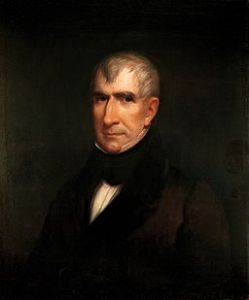
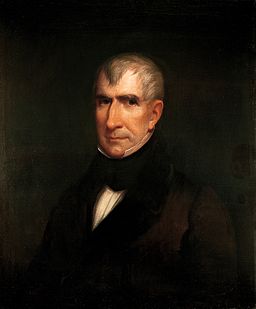
Official White House Portrait of William Henry Harrison

Official White House Portrait of William Henry Harrison

The election also gave birth to the American expression “O.K.” Democrats used O.K. as affectionate shorthand for Harrison’s opponent, Martin Van Buren, who was known as “Old Kinderhook” after the town in New York where he grew up.

Harrison was the first Whig party candidate to win a presidential election. The Whig party had formed out of opposition to President Jackson’s policies. Whigs wanted a strong federal government and social reforms.

Harrison was mainly nominated and elected because he had few political enemies and didn’t share his personal opinions. No one knows what kind of president he would have been because he died from pneumonia one month after his inauguration. He was the first president, though not the last, to die in office.

John Tyler

Tyler’s succeeding Harrison established the precedent of the vice-president taking over for a deceased president. Yet, since the Constitution didn’t specifically state what the vice-president’s role was in case a president died, not everyone thought Tyler should become president. John Quincy Adams referred to Tyler as “His Accidency.”
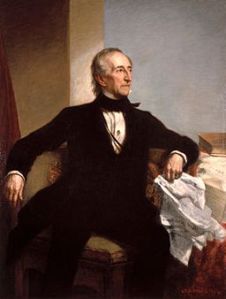
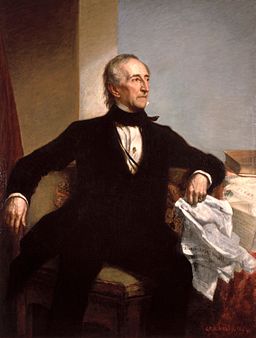
Official White House Portrait of John Tyler

Official White House Portrait of John Tyler

Shortly after taking the oath of office, Tyler’s wife died, which made him the first president to become a widower in office. Tyler soon married Julia Gardiner, a young woman thirty years younger than he.

In many ways, Tyler seemed like a natural fit for the presidency. At fifty-one he already had political experience serving as a governor and a congressman. His tall, thin frame made him stand out in a crowd, and he had an excellent speaking voice.

Tyler was a former Democrat who had switched over to the Whig party during Jackson’s presidency. Yet he still felt strongly about states’ rights. This feeling got him into trouble with his party, which favored a strong federal government. He vetoed bills that Whigs in Congress and in his cabinet wanted.

After vetoing a tariff bill introduced by Whigs, the first ever impeachment resolution of a president was made against Tyler. The resolution failed. Nevertheless, Tyler remained a mainly ineffectual executive.

Though he supported the annexation of Texas, the Senate would not approve it until Tyler’s successor James Polk was elected so that Tyler’s administration could not take credit. Tyler stated, “A Vice President, who succeeds to the Presidency by the demise of the President…has no party at his heels to sustain his measures.”
Andrew Jackson’s Apprentice: U.S. President Martin Van Buren

Martin Van Buren was the first president born in the official United States of America. His ancestors were Dutch. Van Buren’s father managed a tavern in Kinderhook, New York. Politicians often dropped by for a drink and talked about their ideas. Listening to them gave young Martin an early interest in politics. His family couldn’t afford to send him to law school, but he studied on his own while he worked as law office clerk. Soon he entered state politics.

Van Buren got his nickname “The Little Magician” for his talents as a shrewd negotiator and political organizer. By the election of 1836 Van Buren had already helped to organize the new Democratic Party. His former party, the Democratic-Republicans, was crammed with members who just wanted to argue with each other. The new Democratic platform extended Andrew Jackson’s policies of limited federal government and promotion of states rights.

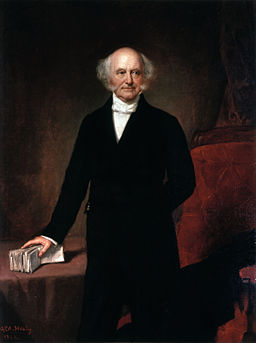
Official White House Portrait of Martin Van Buren

Official White House Portrait of Martin Van Buren

Though Van Buren was a gifted politician, he is largely regarded as a failure as president.

The economic crisis he inherited from Jackson only got worse under his watch. Not all of the factors were within his control: for example, England also had an economic depression and English banks stopped dealing with the United States. Unemployment among American workers soared and so did poverty.

Unlike future democratic president Franklin Roosevelt, Van Buren never offered the American people federal assistance. He thought the government should leave people alone. He did, however, want to make sure that the government had money. He proposed an independent treasury so the government wouldn’t have to keep its money in struggling individual banks.

The establishment of the U.S. Treasury would have been a victory for Van Buren, but it took him years to convince Congress to pass the bill. By then the public blamed him for the economic crisis and Van Buren was not re-elected.

Surprising Facts about U.S. President John Quincy Adams

Though he was the first son of a former president to be elected, John Quincy Adams’ presidency was undermined before he even got into office.

The 1824 election was crowded with four Republican candidates: Andrew Jackson, Adams, Henry Clay, and William Crawford. Jackson and Adams received the most votes but neither won outright, so the election results were decided in the House of Representatives where Clay was Speaker of the House. Clay threw his support behind Adams. Afterwards, Adams named Clay as his secretary of state. Jackson supporters claimed without proof that Adams had bribed Clay and did their best to discredit Adams.

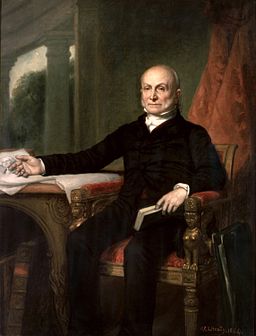
John Quincy Adams Official White House Portrait

John Quincy Adams Official White House Portrait

Adams had also inherited his father John Adams’ stubborn refusal to negotiate. His first annual message to Congress contained some good ideas, such as promotion of internal improvements and the creation of a national university. His insistence on broad federal powers and his assertion that government officials did not need to consider the opinions of their constituents made him very unpopular, however. As a result, Congress ignored President Adams’ domestic and foreign policies.

After being voted out of office and replaced by Andrew Jackson, Adams did not retire. Instead, he served as a member of the House of Representatives for 17 years. He was the only president to serve in the House after being president. His family objected to him serving in a lower office, but his election pleased him.

Nicknamed “Old Man Eloquent” for his speeches against slavery, Adams received more respect in the House than as president. He also accomplished more. For example, he helped repeal the gag rule that prevented the House from debating any criticisms of slavery.

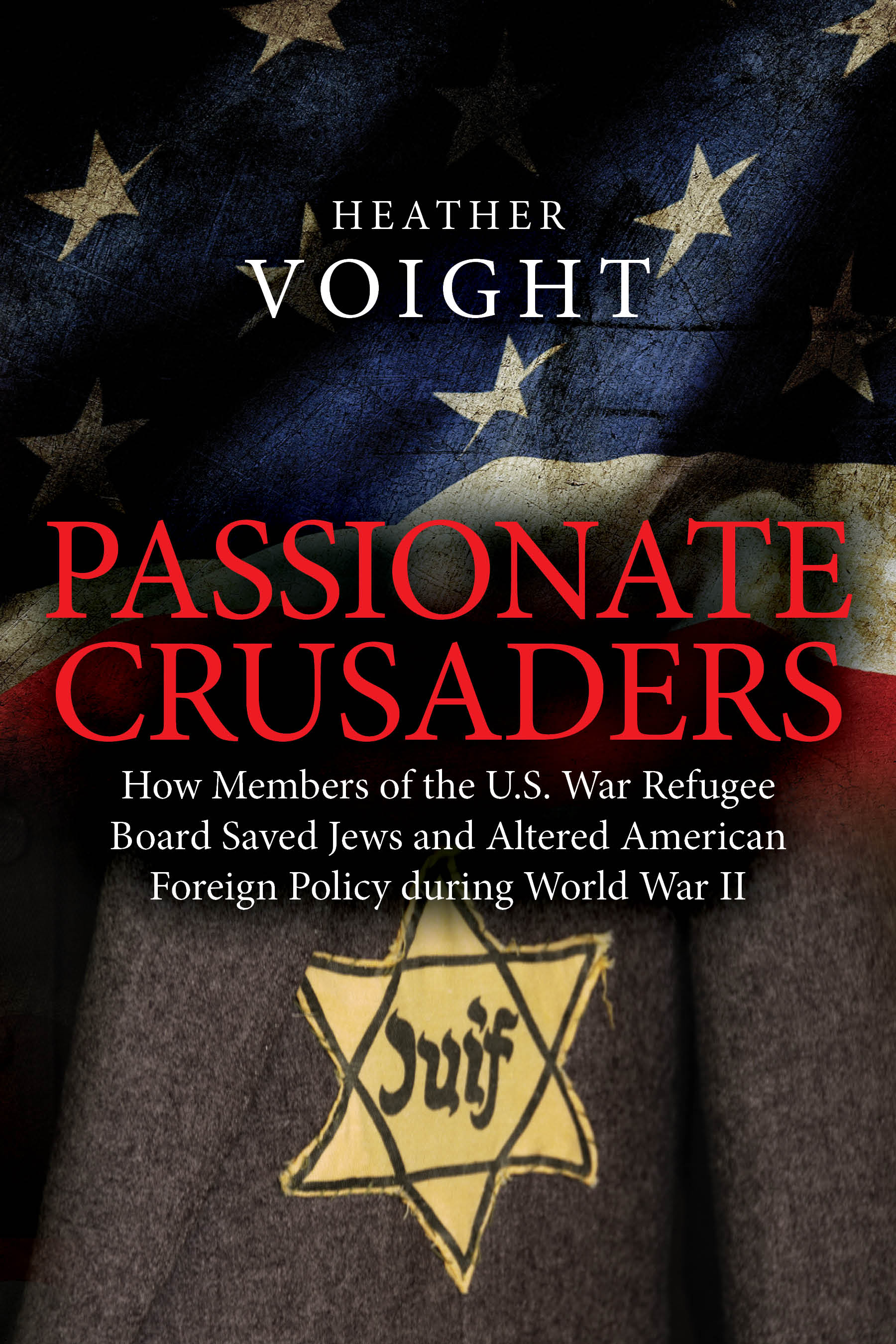
Heather Voight Talks about her Book Passionate Crusaders: How Members of the U.S. War Refugee Board Saved Jews and Altered American Foreign Policy during World War II on Back Porch Writer Podcast

Heather Voight on Back Porch Writer podcast. I talk about my history book and the process of writing it. http://www.blogtalkradio.com/backporchwriter/2015/09/15/author-heather-voight-joins-kori-on-the-back-porch

Passionate Crusaders Cover LARGE EBOOK

Surprising Facts about U.S. President James Monroe

James Monroe was the son of a Virginia plantation owner. He became an orphan in his mid-teens. Fortunately, he stayed with his uncle who liked James and his siblings. In 1774 Monroe attended William and Mary College in Williamsburg. Monroe and his friends found plenty to do outside the classroom. The Royal Governor had already left town due to the spirit of rebellion among some Virginians in the colony’s capital. Along with a few classmates, Monroe helped to raid the absent governor’s palace. The young men took 200 muskets and 300 swords which they gave to the Virginia militia. In the winter of 1776, Monroe joined the Virginia infantry.

By the time he became president, Monroe’s resume included service as a soldier in the Revolutionary War, U.S. senator, minister to France and England under President Washington, governor of Virginia, and positions as secretary of state and secretary of war under President Madison. He became friends with James Madison and Thomas Jefferson while the U.S. government was being formed. Together, the three of them opposed the policies of John Adams and other Federalists.

Portrait of James Monroe

Portrait of James Monroe

Though he often receives less attention from scholars than other presidents who came from Virginia, Monroe’s elections and administration were notable for several reasons. In the 1820 election Monroe got all the electoral votes except one. When elected, Monroe was the first president to hold his inauguration outdoors. He was also the first chief executive since Washington to take a national tour of the country. Unlike his friends Jefferson and Madison, Monroe had an outgoing personality that endeared him to the other Americans he met. His cross-country tour was such a success that he travelled several times while in office.

As president, Monroe utilized his agreeable personality to great effect. He had a talent for picking men with great minds to serve in his administration and maintained good relationships with his cabinet members. Despite his opposition to John Adams’ political views, Monroe chose Adams’ son, John Quincy Adams as secretary of state. Monroe’s easy going personality allowed him to get along with almost anyone, so the two men established a good working relationship. Adams encouraged Monroe to make a statement about European influence in the Western Hemisphere.

In his annual message to Congress, Monroe stated “the American continents, by the free and independent condition which they have assumed and maintain, are henceforth not to be considered as subjects for future colonization by any European powers.” This part of Monroe’s message came to be known as the Monroe Doctrine. The doctrine made it clear that America had a right to protect any nation in the Western Hemisphere against European aggression. As a product of both John Quincy Adams and Monroe’s ideals, the doctrine aptly demonstrated the president’s ability to partner with unlikely people for the good of the country.

US Presidents in the News: President Warren G. Harding

I was planning to do my series of blog posts on the presidents in chronological order, but as President Harding’s personal affairs have been making headlines lately I decided to move him up.

Although his presidency was marred by scandal after his death, Warren Harding was a popular president in his day. Even as a young boy Harding avoided conflict in order to please his peers. That habit caught up with him when he became president.

Warren G. Harding, circa 1920

Warren G. Harding, circa 1920

Before he got into politics Harding was a successful businessman who bought a bankrupt newspaper and made it profitable. His wife Florence served as his business partner. He called her “The Duchess” and feared rather than loved her. Their complex relationship pushed him into politics. His new profession allowed him to be away for long periods; it also enabled him to have affairs with other women. Perhaps the photographs don’t do him justice because women seemed to think he was very attractive. He did possess a magnetic personality and a great speaking voice.

During the Republican national convention in 1920, the party could not decide on a candidate. Party leaders looked for a compromise, so they asked Harding if there was any reason they shouldn’t nominate him. Though he didn’t actually want to be president, Harding told them there was nothing in his past that would prevent him from running. In the first presidential election in which women could vote, Harding won.

Harding promised voters that his presidency would mark a return to “normalcy,” or to the days before the war. Fortunately the country didn’t face any major crisis during his presidency. Unlike President Wilson who always thought his opinion was the right one, Harding was indecisive. After listening to both sides of an issue he often thought that each side was just as right as the other. Even Harding admitted that he was in over his head as president. Later historians would agree with him when he remarked, “I never should have been here.” Still, Harding remained a popular president until he died of food poisoning during his third year in office.

After his death rumors about his private life and corruption in his cabinet came out. Harding had always been a womanizer, and one woman claimed he had fathered an illegitimate son. Recent DNA evidence revealed he had an illegitimate daughter named Elizabeth Ann with his mistress Nan Britton.

His desire to be popular had caused him to cover up rather than publicize the scandals that plagued his administration. An illegal oil-rigging scheme led to the eventual arrest of his former secretary of the interior. It was the first time a cabinet member had been convicted of a crime. Ironically, the president who wanted to be loved by everyone became one of the country’s least respected presidents.