Frequently Forgotten U.S. President Chester Arthur

As President Garfield lay dying, his vice-president Chester Arthur tried to avoid being seen in public. Arthur was initially blamed for Garfield’s death. Of course it didn’t help that Garfield’s killer wrote to congratulate him on becoming president!

In addition, Arthur and Garfield had a strained relationship. As vice-president he opposed Garfield’s defiance of Roscoe Conkling. Conkling had helped Arthur get a post as New York’s Customs Collector during the Grant administration. While Arthur was never charged with corruption, he cheerfully allowed it. When he was fired from his post by the reform minded President Hayes, Arthur became the president of New York’s Republican committee.

256px-Carthur

Official Presidential Portrait of Chester A. Arthur, 1885

Despite the rumors Arthur didn’t want to become president. He genuinely wept when Garfield died. The job bored him so much that he lived for fishing and vacations.

Yet Arthur was determined to clean up his image. He decided to break with his old cronies and actually expanded civil service reform. He also took an interest in preserving the country’s natural resources and was especially concerned with deforestation in the West.

One of the few things Garfield enjoyed about being president was entertaining. He sold almost anything in the White House in order to pay for redecorating projects and hired Tiffany’s to help. Once he thought the place was presentable, the president held black tie dinners every week. The dinners included up to 14 courses and various wines. He had no hostess, though. His wife died before he became president.

Arthur could not run for re-election because he had contracted Bright’s disease. He died soon after leaving office.

Moving Toward Civil War: The Presidency of Franklin Pierce

As a young congressman, Franklin Pierce was fond of socializing and drank heavily. To please his wife who hated both Washington, D.C. and his drinking, he agreed to go back to his law practice in New Hampshire. He displeased her when he signed up for the Mexican War. Pierce wanted to serve his country but was a terrible general who suffered from multiple injuries and fainted often.

Portrait of Franklin Pierce

Portrait of Franklin Pierce

When the Democrats nominated him for president in 1852, his main advantage was that he had been out of politics for years and had no enemies. His journey to Washington turned tragic when he and his family were involved in a train wreck. He and his wife were unharmed, but their young son died. Mrs. Pierce refused to accompany her husband to his inauguration and returned to New Hampshire to grieve.

Though he was from a non-slave state, Pierce believed that the Constitution supported slavery. He made Jefferson Davis, future president of the Confederacy, a member of his cabinet. As president he enforced the Fugitive Slave Act that Northerners hated.

He also supported the Kanas Nebraska Act, which allowed people in the Kansas and Nebraska territories to decide whether they wanted slavery in those territories or not. Slave owners and abolitionists rushed into Kansas in an effort to influence the vote on slavery. The clashes between the slave owners and the abolitionists turned violent. Pierce was unable to unite the country or his party while the fighting continued.

Democrats passed over Pierce and nominated James Buchanan for the next election. When the South left the Union, Pierce wrote a letter of support to his friend Jefferson Davis. The letter became public and Pierce was viewed in his own state as a traitor. The increasingly reclusive former president drank so much after his wife’s death that he also died.

Not What their Party Ordered: The Surprising Presidencies of Zachary Taylor and Millard Fillmore

Zachary Taylor

Official White House Portrait of Zachary Taylor

Official White House Portrait of Zachary Taylor

Taylor was best known as a general rather than a politician. In fact, he had never voted in a presidential election. That was somewhat understandable since he was usually busy fighting battles. He earned his nickname “Old Rough and Ready” during the Seminole War in Florida. His men admired the fact that he fought beside them on the front lines. They also liked his independent spirit. Instead of a uniform Taylor wore a straw hat and civilian clothes.

At age sixty-one he led troops into Mexico in the fight for Texas. A new invention, the telegraph, was used for the first time to provide daily progress of the war. News of Taylor’s victories in the Mexican American War made him very popular. Despite or perhaps because his opinion on most issues was unknown, the Whigs chose him as their candidate in 1848.

Since Taylor was a slave owner, southerners expected him to support the expansion of slavery in the new territories of California and New Mexico. Taylor surprised almost everyone. He resolved to leave slavery in states where it existed but opposed its expansion. When Congressmen tried to work out a compromise, Taylor threatened to veto it. He said of the Union, “Whatever dangers may threaten it, I shall stand by and maintain it.”

Taylor never had a showdown with Congress. After a July 4th celebration he drank some tainted milk and died days later of gastritis.

Millard Fillmore

256px-Mfillmore

Official White House Portrait of Millard Fillmore

Taylor’s vice-president Millard Fillmore took office after Taylor’s death. Fillmore grew up in extreme poverty. He was mostly self-educated, but he was encouraged by a schoolteacher named Abigail to study law. Later, Abigail became his wife. Ironically, he was chosen to balance the Whig ticket as a non-slave owner from New York. Yet, unlike Taylor, he was prepared to allow the spread of slavery.

He supported the Compromise of 1850 under which California was made a free state while the New Mexico and Utah territories were left open to slavery. Slavery was abolished in the District of Columbia, but a new fugitive slave law offered $10 to anyone who handed over an African-American to federal authorities. Although Fillmore disliked slavery, he thought that states and not the federal government should decide where it would or would not exist.

After the passage of the Compromise of 1850, Fillmore thought the slavery issue was resolved. Yet both North and South were dissatisfied with the Compromise. The Whigs chose not to nominate Fillmore in the next election. Fillmore looked forward to a happy retirement with his beloved Abigail. Sadly she died before he left Washington.

Fillmore lived for over twenty years after his presidency. He even ran for the office one more time as a third party candidate but lost. During the Civil War he supported the Union. Nevertheless, some never forgot his support of the Fugitive Slave Law. After President Lincoln’s assassination a mob tried to paint Fillmore’s home black.

Presidential Workaholic James K. Polk

Before the election of 1844 former president Andrew Jackson requested James K. Polk to visit him. He told Polk that he wanted someone who favored the annexation of Texas to run for president and promised to back Polk for the job.

Polk had experience serving as governor of Tennessee and as a congressman, but more famous names were being considered. Still, Polk was nominated by the Democrats and won the election with his promise to acquire both Oregon and Texas for the U.S. At his inauguration “Hail to the Chief” was played for the first time.

Portrait of President James K. Polk

Portrait of President James K. Polk

Polk is well-known for accomplishing his expansionist goals. Under his administration Britain ceded Oregon to the U.S. After a costly war with Mexico, Texas, California, and New Mexico became part of the United States, too.

Not everyone was pleased with Polk’s tactics, however. Polk claimed that war with Mexico was forced upon the U.S. because Mexican forces attacked the American troops that, on Polk’s orders, happened to be near the border of the two countries. A new congressman named Abraham Lincoln introduced “spot resolutions,” demanding that Polk identify the spot where American blood was shed on American soil. Indeed, it was unclear whether the troops led by Zachary Taylor had been in Mexican or American territory when fired upon.

Polk’s pro-slavery views offended others who did not want slavery to extend to new U.S. territories. More anti-slavery northerners began to leave the Democratic Party and join the Whigs.

Polk had promised to serve only one term and refused to run for another. He couldn’t have run for office again anyway because he was physically drained by his four years as president. He believed that “No president who performs his duty conscientiously can have any leisure.” Polk refused to delegate tasks and was the first president to insist on staying all summer in the White House despite the heat in Washington. His nearly non-stop work ethic contributed to his death three months after he left office.

U.S. President Andrew Jackson: Surprising Facts about the Man on the Twenty Dollar Bill

When Andrew Jackson was elected president in 1828, he was the first to reach that office as a self-made man. He was born into a poor family in South Carolina. During the American Revolution, Jackson lost his mother and two brothers and was wounded by a British officer.

Family tragedy seemed to follow Jackson throughout his life. As he ran for president, his detractors claimed that Jackson had lived with his wife before their marriage. Actually, they were married for two years before they realized that Rachel’s divorce from her previous husband had not been finalized. Rachel Jackson died from an illness before her husband’s inauguration. Jackson blamed her death on the nasty comments made during the campaign.

Historians have dubbed Jackson’s presidency the “age of the common man.” He was certainly unlike any other president the country had elected.

White House Portrait of Andrew Jackson

White House Portrait of Andrew Jackson

After his inauguration Jackson invited members of the public to attend a reception at the White House. To the dismay of the staff, so many people tried to cram into the White House that items were broken. Shortly after becoming president, Jackson indulged his fondness for chewing tobacco by installing twenty spittoons in the East Room.

Despite his dislike of formalities, Jackson’s terms as president had little impact on the common man. It’s true that more people (at least white, taxpaying males) got to vote in the election that sent Jackson to the White House. Through the Indian Removal Act he gave more white men the opportunity to acquire Native American land.

He did not, however, believe that social or economic equality was desirable. He stated, “Distinctions in society will always exist under every just government. Equality of talents, or education, or of wealth cannot be produced by human institutions.”

Jackson established the office of president as the chief power in American government for the first time. He made it obvious that he was not going to allow others to tell him what to do. He used the presidential veto more often than any previous president. For example, he vetoed the re-charter of the National Bank and federal support for internal improvements.

His ignorance of financial matters led to an economic crisis which harmed his successor, Martin Van Buren.


Surprising Facts about U.S. President John Quincy Adams

Though he was the first son of a former president to be elected, John Quincy Adams’ presidency was undermined before he even got into office.

The 1824 election was crowded with four Republican candidates: Andrew Jackson, Adams, Henry Clay, and William Crawford. Jackson and Adams received the most votes but neither won outright, so the election results were decided in the House of Representatives where Clay was Speaker of the House. Clay threw his support behind Adams. Afterwards, Adams named Clay as his secretary of state. Jackson supporters claimed without proof that Adams had bribed Clay and did their best to discredit Adams.

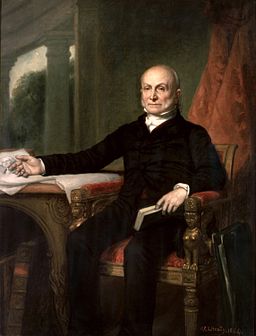
John Quincy Adams Official White House Portrait

John Quincy Adams Official White House Portrait

Adams had also inherited his father John Adams’ stubborn refusal to negotiate. His first annual message to Congress contained some good ideas, such as promotion of internal improvements and the creation of a national university. His insistence on broad federal powers and his assertion that government officials did not need to consider the opinions of their constituents made him very unpopular, however. As a result, Congress ignored President Adams’ domestic and foreign policies.

After being voted out of office and replaced by Andrew Jackson, Adams did not retire. Instead, he served as a member of the House of Representatives for 17 years. He was the only president to serve in the House after being president. His family objected to him serving in a lower office, but his election pleased him.

Nicknamed “Old Man Eloquent” for his speeches against slavery, Adams received more respect in the House than as president. He also accomplished more. For example, he helped repeal the gag rule that prevented the House from debating any criticisms of slavery.

Two Gentlemen from Virginia: Surprising Facts about US Presidents Thomas Jefferson and James Madison

Thomas Jefferson

The third President of the United States had a personality that was similar to George Washington’s in many ways. Like Washington, Jefferson was fond of dancing at parties and tended to be shy. Instead of addressing Congress in person, Jefferson sent his messages in writing. This tactic showed off his writing skills and helped him avoid his fear of public speaking. Known as an intellectual for his scientific and architectural pursuits, he thought he was also a good violin player, though some people who heard him play thought otherwise!

Official Presidential Portrait of Thomas Jefferson, 1800

Official Presidential Portrait of Thomas Jefferson, 1800

Official dinners were conducted in a manner different from the presidents who preceded him. He insisted on dressing simply to the point that one guest thought he was a servant. The dinners were served on a circular table so that no guest would feel superior or inferior to another. Jefferson did not eliminate all luxury in the executive mansion, however. Fancy French food was served regularly during his presidency.

As many people know, he sent Meriwether Lewis and William Clark to explore “Louisiana country” west of the Mississippi River. Jefferson and Lewis had been neighbors in Virginia, so Jefferson already knew how seriously Lewis would take the job. With Lewis and Clark’s help Jefferson purchased the Louisiana territory. While Jefferson added land to the United States, he also scaled back on some government departments. In a move that would delight many people today, he temporarily got rid of the Internal Revenue Service.

James Madison

Like his close friend Jefferson, James Madison also tended to be shy in public. Madison had the additional disadvantage of being the shortest president in history (he was 5’4″). He was also one of the skinniest, which led some people to believe he was always at death’s door.

His personal qualities may not have made him noticeable to others, but his wife Dolley made up for Madison’s awkwardness. The outgoing Dolley was Thomas Jefferson’s hostess while the widower was president. This gave her opportunities to mingle with members of Congress who would decide whether or not to elect Madison when he ran for president. When Madison was elected, he and Dolley held the first inaugural ball at a hotel on Capital Hill.

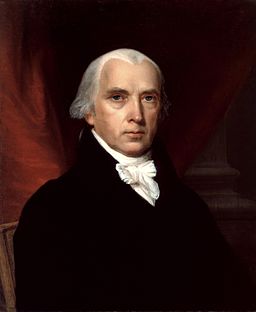
Portrait of James Madison, 1815

Portrait of James Madison, 1815

In many ways Madison served as Jefferson’s junior partner. He kept Jefferson informed of political matters in the states while Jefferson served as minster to France by writing coded letters to his mentor. Madison told Jefferson, “I shall always receive your commands with pleasure.” Yet Madison had his own opinions. While Jefferson was away, Madison helped draft the U.S. Constitution. His belief in a strong central government ran in opposition to Jefferson’s preference for individual rights. Madison did, however, have a flexible personality, which allowed him to see both sides of an issue. Just as he helped write the Constitution, Madison helped create the Bill of Rights that supported Jefferson’s individualistic views.

US Presidents in the News: President Warren G. Harding

I was planning to do my series of blog posts on the presidents in chronological order, but as President Harding’s personal affairs have been making headlines lately I decided to move him up.

Although his presidency was marred by scandal after his death, Warren Harding was a popular president in his day. Even as a young boy Harding avoided conflict in order to please his peers. That habit caught up with him when he became president.

Warren G. Harding, circa 1920

Warren G. Harding, circa 1920

Before he got into politics Harding was a successful businessman who bought a bankrupt newspaper and made it profitable. His wife Florence served as his business partner. He called her “The Duchess” and feared rather than loved her. Their complex relationship pushed him into politics. His new profession allowed him to be away for long periods; it also enabled him to have affairs with other women. Perhaps the photographs don’t do him justice because women seemed to think he was very attractive. He did possess a magnetic personality and a great speaking voice.

During the Republican national convention in 1920, the party could not decide on a candidate. Party leaders looked for a compromise, so they asked Harding if there was any reason they shouldn’t nominate him. Though he didn’t actually want to be president, Harding told them there was nothing in his past that would prevent him from running. In the first presidential election in which women could vote, Harding won.

Harding promised voters that his presidency would mark a return to “normalcy,” or to the days before the war. Fortunately the country didn’t face any major crisis during his presidency. Unlike President Wilson who always thought his opinion was the right one, Harding was indecisive. After listening to both sides of an issue he often thought that each side was just as right as the other. Even Harding admitted that he was in over his head as president. Later historians would agree with him when he remarked, “I never should have been here.” Still, Harding remained a popular president until he died of food poisoning during his third year in office.

After his death rumors about his private life and corruption in his cabinet came out. Harding had always been a womanizer, and one woman claimed he had fathered an illegitimate son. Recent DNA evidence revealed he had an illegitimate daughter named Elizabeth Ann with his mistress Nan Britton.

His desire to be popular had caused him to cover up rather than publicize the scandals that plagued his administration. An illegal oil-rigging scheme led to the eventual arrest of his former secretary of the interior. It was the first time a cabinet member had been convicted of a crime. Ironically, the president who wanted to be loved by everyone became one of the country’s least respected presidents.

John Adams: The Independent President

John Adams, like George Washington, did not enjoy his inauguration either, though for somewhat different reasons. His wife and political confidant, Abigail, was at home in Quincy, Massachusetts caring for John’s dying mother. In addition much of the attention that day was focused on Washington as people wept over the first president’s departure. Adams was also on the outs with his long time friend and now political enemy Thomas Jefferson.

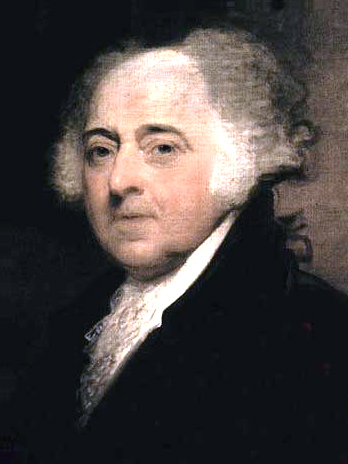
John Adams, 1823 by Gilbert Stuart

John Adams, 1823 by Gilbert Stuart

Adams had reason to feel lonely on his inauguration day, but most of his public career characterized him as a “loner.” While his daughter expressed concern over his narrow election victory in a letter (he won 71 votes to Jefferson’s 68), he wrote back that he didn’t believe in “extravagant popularity.” Adams never quite trusted public opinion and felt that the more unpopular an idea was, the more likely it was to be right. Before the presidency he never held an administrative position and tended to take on causes that were unpopular with the public, such as defending British soldiers after the Boston Massacre.

Any politician who is unwilling to negotiate with others is unlikely to be successful for long, and Adams lost his re-election bid in 1800 to Thomas Jefferson. At the time, however, Adams was more concerned about family matters than election results. His son Charles, an alcoholic, had died. Since he was no longer president, John and Abigail would have more time to care for Charles’ widow and their grandchildren. Adams did live long enough, however, to see his son John Quincy Adams elected as President of the United States.