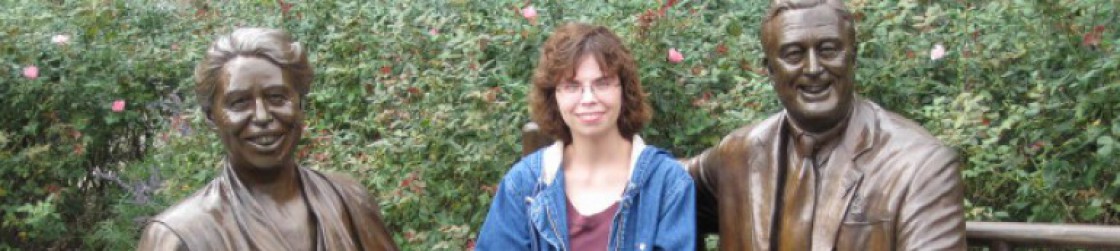
Presidential Pets: U.S. President James Buchanan’s Dogs

Though he had political skills that propelled him to the presidency, James Buchanan is one of the United States’ most unpopular presidents. He happily left problems like slavery and the secession of the Southern states to his more gifted successor, Abraham Lincoln.
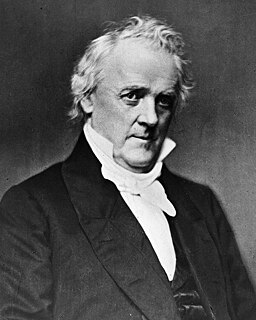
U.S. President James Buchanan

Yet President Buchanan’s dogs did not share their master’s unpopularity. In fact, he helped to popularize the Newfoundland dog breed by bringing one to the White House. Buchanan acquired his 170 pound Newfoundland Lara prior to serving as U.S. ambassador to Great Britain. While he was away, he wrote to his niece Harriet Lane and asked, “How is Lara?” Harriet said that he sounded homesick.

During their coverage of the presidential campaign of 1856, reporters for Frank Leslie’s Illustrated Newspaper visited Buchanan’s Wheatland estate in Pennsylvania. The magazine’s March 1857 issue describes Lara: “Prominent also [at Wheatland] is Mr. Buchanan’s Newfoundland dog Lara, remarkable for his [sic] immense tail and his attachment to his master.” The magazine predicted that “This dog will hereafter become historical as a resident of the White House.”

In the 1850s, Lara’s breed was only fifty years old. As the president’s dog, Lara was the most famous dog in America and probably the largest to occupy the White House. She slept next to Buchanan and viewed herself as his protector. Visitors remarked that Lara looked like a bear who slept with one eye open.
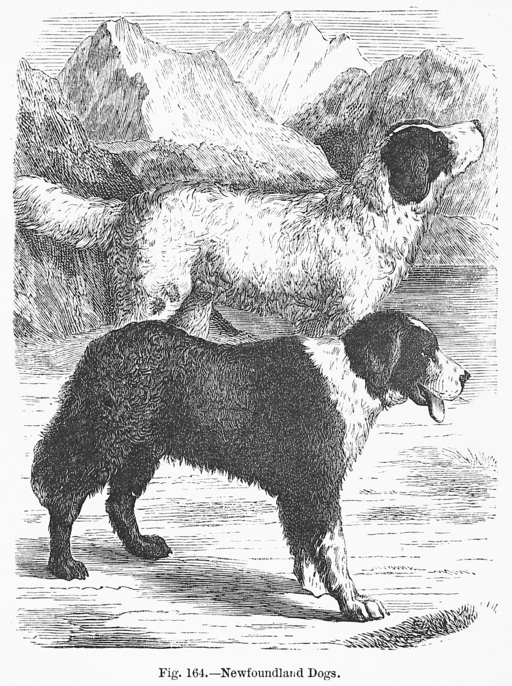
Newfoundland Dogs, 1870

Buchanan’s time in office saw the biggest dog and also one of the smallest in the White House. Since Buchanan was unmarried, his niece Harriet Lane served as First Lady. Harriet received a toy terrier named Punch from the U.S. consul in South Hampton, England. She named the dog Punch because it could supposedly fit under a down turned punch bowl. A writer covering social life in Washington wrote, “the little stranger was a nine-days’ curiosity at the White House where it was exhibited to all who were on visiting terms with Miss Lane.”

Though the press were Punch fans, Buchanan was not. While Harriet traveled, he wrote that he was trying to avoid Punch as much as possible.

Unfortunately, there are no accounts of the antics between Lara and Punch during their time in the White House. One can imagine the giant dog and the diminutive one running through the stately rooms of the house, perhaps chasing each other. Given Lara’s size, she may have broken an object or two.

President Buchanan did not run for a second term. In March 1861, he, Harriet, and the dogs returned to Wheatland. Lara’s time in the White House had a lasting impact though. The breed’s popularity grew in later decades and a Newfoundland named Faithful arrived with President Grant in 1869.

Sources:

All-American Dogs: A History of Presidential Pets from Every Era by Andrew Hager

First Dogs: American Presidents and Their Best Friends by Roy Rowan and Brooke Janis
The Childhood of U.S. President Jimmy Carter

On October 1, 1924, Jimmy Carter was the first future U.S. president to be born in a hospital. Most women at the time still gave birth at home, but Jimmy’s mother was a registered nurse.

Jimmy’s family lived in Plains, Georgia on South Bond Street. Their neighbors included Edgar and Allie Smith. When the Smith’s daughter Rosalynn was born in 1927, Jimmy went next door to see the baby. That marked the first time Jimmy saw his future wife.

In 1928, Jimmy’s father became a full time farmer. Jimmy and his sisters were raised on a farm two and a half miles from Plains in Archery. The town had a population of around 200 people. At first the farmhouse had no electricity or plumbing. Jimmy’s most vivid memories were of the cold because his room was the farthest from the stove and fireplaces.

Jimmy’s brother Billy wasn’t born until Jimmy turned twelve so he received a lot of attention from his father. He followed his dad around the farm whenever possible. His father encouraged him to earn money at an early age. Jimmy sold peanuts in Plains when he was only five years old. He maintained ten regular customers and also sold to shoppers visiting the town.

Most of Jimmy’s duties on the farm meant working in the field. He chopped cotton and hoed weeds. Jimmy felt restless doing small chores though. He wanted to “escape from the company of other children and women in just hoeing, picking cotton, and shaking peanuts and to graduate to the exalted status of a skilled plowman who could cultivate a crop.” In his father’s opinion, Jimmy never fully reached his goal. He was permitted to break land in the field at age twelve, however. Others viewed it as boring work, “but to me it was a great achievement.”

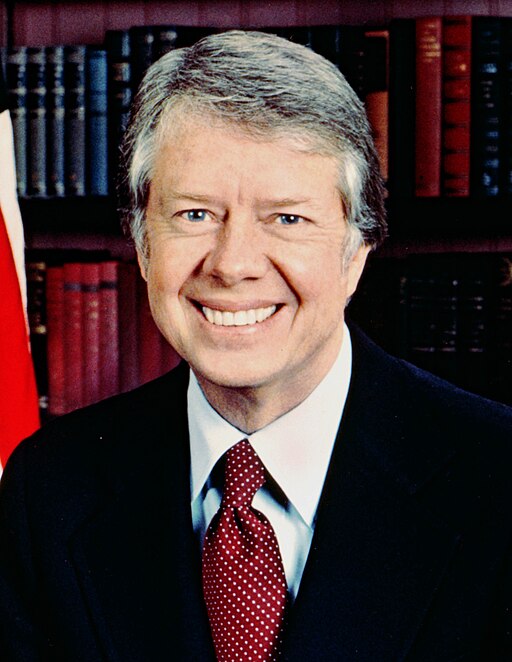
U.S. President Jimmy Carter, 1977

As Jimmy grew, he especially enjoyed doing carpentry with his dad. “I relished the repair of houses, barns, and storage places, and was eager to help when new farrowing pens were built for our sows and pigs,” Jimmy wrote years later.

In addition to his chores, Jimmy also played on the farm. Since the Carters were the only white family in Archery, his playmates were African American. They made their own toys, such as hoops, slingshots and guns. Even when he started school in Plains, Jimmy felt “more at home” with his black friends. The only rankings among him and the other kids revolved around who caught the biggest fish or performed best in the last baseball game.

At six years old Jimmy attended Plains High School where he had only white classmates. The school was one of the best in the state thanks to its superintendent. She took a special interest in Jimmy and gave him extra reading assignments. Jimmy’s parents also encouraged their children to bring books to the dinner table.

Jimmy was content on the farm, but his parents wanted him to finish high school, go to college, and join the navy. His mother’s youngest brother was in the navy and sent Jimmy souvenirs from countries like Australia and Japan. A naval appointment could only come from a senator or congressman, so Jimmy had to work hard in high school to get good grades. He didn’t receive an appointment when he graduated high school in 1941. Instead, he enrolled in Georgia Southwestern College and became a lab assistant.

The bombing of Pearl Harbor in December 1941 changed Jimmy’s life. After his sophomore year in college, he finally received his appointment and entered the Naval Academy in 1943.

Sources:

Jimmy Carter A Full Life: Reflections at Ninety by Jimmy Carter

Gift of Peace: The Jimmy Carter Story by Elizabeth Raum

The Early Life of President Richard Nixon

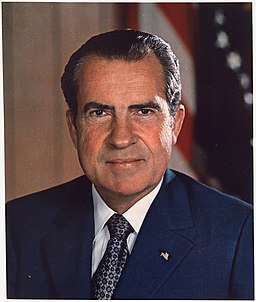
Most people remember Richard Nixon for being the only President of the United States to resign from office. Yet when I was researching this blog post, I realized that I knew almost nothing about his childhood and education. Like most leaders, his early experiences shaped what he did later in life.

256px-Richard_M._Nixon,_ca._1935_-_1982_-_NARA_-_530679

Official White House Photo of President Richard Nixon

Richard Nixon was born in 1913 in Yorba Linda, a small town east of Los Angeles. His father Frank planted lemon groves, but these failed and the family moved to Whittier, California. Here Frank ran a grocery store and gas station. Richard Nixon said of his childhood, “we were poor, but the glory of it was we didn’t know it.”

Although Frank and Hannah Nixon had five children, they lavished most of their attention and what little money they had on their oldest son, Harold. They bought Harold a Boy Scout uniform but couldn’t afford to get one for Richard. Richard and his other brothers stayed home while Harold was sent to a Christian boarding school in Massachusetts.

Harold and Richard were opposites. Harold was popular with other kids and girls “swooned over him.” In contrast, Richard felt uncomfortable around people he didn’t know well and the other boys teased him. Instead of fighting the bullies, Richard kept his anger bottled up. Realizing he would never be as popular as Harold, Richard threw himself into his schoolwork. He became his grammar school’s valedictorian and joined the debate team in high school. Richard also had big dreams. His grandmother gave him a framed portrait of Abraham Lincoln, which he hung over his bed.

Richard_Nixon_HS_Yearbook

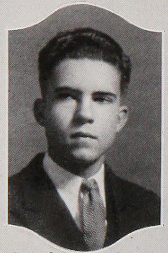
Photo of Richard Nixon as a senior in high school, 1930

While Richard Nixon could literately look up to Abraham Lincoln, his parents’ volatile personalities had the most influence on him. Frank Nixon had a terrible temper. Richard and his brothers were rapped on the head by their father at various times. At his grocery store, Frank subjected customers to his conservative political opinions whether they wanted to hear them or not. He also blamed others for his bad luck.

In contrast, Richard’s mother, whom he called “a saint,” smiled and bottled up her frustrations. Hannah Nixon had a gentle voice but punished her children by not speaking to them. Though deeply religious, she was not affectionate.

As a result of his childhood experiences, Richard developed a dislike of conflict and a sense that he was not good enough, especially when compared with Harold. When Harold died of tuberculosis in 1933, Frank Nixon said, “Why is it, that the best and finest of the flock has to be taken?” Richard, as the second oldest son, would always be trying to live up to his dead brother’s potential.

After high school, Richard was offered a scholarship to Harvard but ended up at Whittier College to save money on living expenses. Determined to distinguish himself, Richard participated in school debates and was eventually elected president of the student body. While he excelled in debates and in his studies, Richard remained somewhat of a loner. One former classmate recalled that “I don’t think he had anybody you would call a close friend.” He had an on and off relationship with a young woman which she described as “stormy.” Even she said she didn’t feel that she really knew him.

At the end of college, Nixon received and accepted a scholarship to Duke University Law School. He told his girlfriend that he hoped to do something important with his life. Clearly, Richard Nixon was ready to make his mark on the world.

Sources:

Being Nixon: A Man Divided by Evan Thomas

The American President by Phillip B. Kunhardt, Jr., Phillip B. Kunhardt III, Peter W. Kunhardt

https://www.biography.com/people/richard-nixon-9424076


Book Review of Doris Kearns Goodwin’s Leadership in Turbulent Times

Let me start this review by explaining what Leadership in Turbulent Times is NOT. It is not a commentary on the current White House; Donald Trump’s name is never even mentioned. The book is also not as lengthy as Doris Kearns Goodwin’s other titles. Without notes, Leadership is 370 pages. In contrast, Goodwin’s previous book The Bully Pulpit is 752 pages without notes.

Now for what Leadership in Turbulent Times IS. It is a survey of four presidents who, though imperfect, displayed extraordinary leadership qualities during their time in office. The men included are Abraham Lincoln, Theodore Roosevelt, Franklin Roosevelt, and Lyndon Johnson. Goodwin spent years writing about each of these leaders.

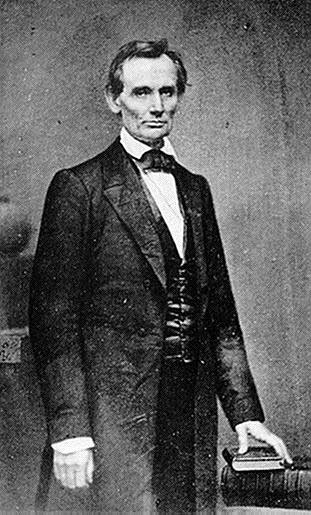
The book is divided into three main sections. In Ambition and the Recognition of Leadership, Goodwin shows how important early ambition and the desire to take charge are to successful leadership later in each man’s life. Abraham Lincoln’s famous thirst for knowledge helped him walk for miles to borrow a book. He got no encouragement from his father, who thought a strong young man like Abe should be helping with the family farm. Yet Lincoln was determined to get ahead of other young people. A contemporary recalled how Lincoln would devote himself to books while the other kids played. Years later, when a law student asked him for advice, Lincoln said, “Always bear in mind that your own resolution to succeed is more important than any other thing.”

abrahamlincoln

Abraham Lincoln, Feb. 1860 by Mathew Brady

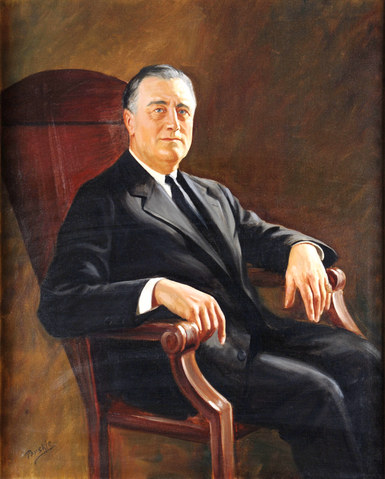
The second section of the book, Adversity and Growth, demonstrates how each of these men became better leaders as a result of overcoming challenges. For example, Franklin Roosevelt came from a wealthy family and appeared to be living a charmed life until he contracted polio. Suddenly the pampered FDR had to work hard just to manipulate a wheelchair. He went to Warm Springs, Georgia after hearing about a man who gained strength in his legs by swimming in the warm mineral water. FDR invested money in a rundown hotel and turned it into a resort and treatment center for polio patients. He took an active interest in his investment and became known to other patients as Doc Roosevelt. Spending time listening and sharing his own struggles with others who had polio changed Roosevelt. According to his future cabinet member Frances Perkins, the experience made him “completely warmhearted, with humility of spirit and with a deeper philosophy.” FDR’s newfound empathy would later help him to understand what other people were going through as he worked to get the U.S. out of the Great Depression.

385px-froosevelt

Gubernatorial portrait of FDR, Dec. 1940

In the third section of the book, The Leader and the Times: How They Led, Goodwin shows how the ambition and personal trials of each man made him a better leader. She presents case studies from each of their presidencies to show how effectively they led their country at challenging times. For Lincoln, she uses the introduction of the Emancipation Proclamation during the Civil War. Theodore Roosevelt’s chapter discusses his response to The Great Coal Strike of 1902. For FDR, his first 100 days in office dealing with the Great Depression are examined. Finally, Goodwin discusses Lyndon Johnson’s work on behalf of civil rights.

I recommend this book for readers who want a relatively quick introduction to these four presidents and want to learn how they became great leaders. Leadership in Turbulent Times is also a good choice for people who may be hesitant about starting one of Goodwin’s larger tomes. If readers decide they want to learn more about a particular president, they can check out Goodwin’s other excellent books.

Presidential Pets: Herbert Hoover’s Dogs

President Hoover and his wife enjoyed having dogs in the White House. They had some trouble keeping pets in the busy executive mansion, however.

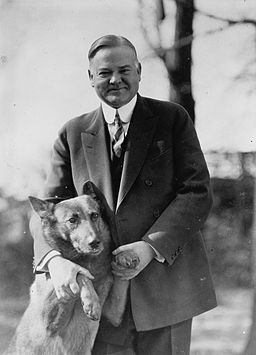
Hoover’s favorite dog was a Belgian shepherd named King Tut. King Tut met the future US President while Hoover was on assignment in Belgium for President Wilson. Hoover adopted the dog and brought him back to the US.

When Hoover ran for president in 1928, his political advisors looked for a way to soften the public servant’s stiff image. Hoover fished wearing a full suit, so his advisors had their work cut out for them. Their solution was to photograph Hoover with King Tut. In the photograph, a smiling Hoover holds up the dog’s front paws, as if he were begging for votes. After Hoover autographed the photo, it was sent to thousands of voters. King Tut and his master became more popular as a result. The New York Times called it “one of the happiest photos ever made” of Hoover. With the help of man’s best friend, Hoover was elected president.

256px-Herbert_Hoover_and_King_Tut

Herbert Hoover with his dog King Tut before the 1928 election

After he arrived at the White House, King Tut took on the responsibility of guarding both the president and the grounds around his new home. The White House security chief considered Tut “a sergeant, not merely a sentry” as Tut made his rounds each night.

Unfortunately, being on guard 24/7 started to stress the dog out. Tut sulked and stopped eating. Hoover sent him to a quieter residence in the hope that King Tut would improve, but he died in late 1929.

Hoover didn’t make the dog’s death public for several months. The stock market had already crashed and people were feeling the effects of what would be called the Great Depression. Under those circumstances, Hoover didn’t think it was appropriate to grieve publicly over a dog.

Like her husband, First Lady Lou Hoover also liked dogs. She received an Irish wolfhound from a breeder and school friend when she moved into the White House. The friend thought the dog’s enormous size would make him a good guard dog for the president and his family. Sadly, the dog, whose name was Patrick, passed away from an infection shortly after his arrival.

To compensate for this loss, Mrs. Hoover’s friend sent another Irish wolfhound named Patrick II. A contemporary newspaper reported that Patrick was “sensitive, shy, and shaggy.” Mrs. Hoover decided the dog was too shy for the busy White House and traded him for Shamrock, another Irish wolfhound. Shamrock was definitely not shy, but he wasn’t friendly, either. He bit one of the Marine guards at Camp Rapidan. The Hoovers eventually gave Shamrock to a colonel.

Ultimately, neither President Hoover or his dogs stayed long at the White House. In 1932, Hoover ran for reelection without King Tut and lost to fellow dog lover Franklin Roosevelt.


Presidential Pets: George Washington’s Dogs

George Washington was both the founder of the United States and the founder of the American foxhound. He crossed seven larger hounds given to him by the Marquis de Lafayette with his smaller Virginia hounds to develop the new breed. Around 1785, Lafayette sent his hounds to America on a ship. They were placed in the care of a young John Quincy Adams, who appeared to have misplaced the dogs at one point. Washington got rather worked up over the incident, but fortunately the dogs were located.

Washington wrote that he wanted to create “a superior dog, one that had speed, scent and brains.” Washington’s fondness for foxhunting caused his search for a superior hound. In the winter he went foxhunting several times a week. He gave his hounds mischievous-sounding names like Drunkard, Mopsey, Taster, Tipsy, Tipler, and Lady Rover.

Washington and dogs

Lithograph of George Washington and General Lafayette at Mount Vernon, Library of Congress

In addition to foxhounds, Washington also wished to breed Irish wolfhounds to protect the sheep at his plantation Mount Vernon. Unfortunately, the wolfhound was so rare even in Ireland at the time that Washington had to give up the idea.

Washington enjoyed owning many other breeds of dogs throughout his life. In 1786 he bought a Dalmatian named Madame Moose. The next year he bought a male to breed with her. He recorded the arrival of the second dog: “A new coach dog [arrived] for the benefit of Madame Moose; her amorous fits should therefore be attended to.”

Fox hunting and breeding dogs were only two of Washington’s passions. Washington also enjoyed duck hunting. For this purpose, he took his poodle named Pilot with him. Other dogs included spaniels which were used to flush out birds and retrieve them when they were shot. Terriers hunted on their own for rats at Mount Vernon, a service Mrs. Washington undoubtedly appreciated.

Though he owned many dogs, Washington didn’t think that his slaves should have the same privilege. Eventually any dogs owned by his slaves were hanged.

Presidential Pets: Dogs in the Kennedy White House

President John F. Kennedy and wife Jackie loved dogs, which meant that First Kids Caroline and John-John had several furry playmates in the White House.

The most famous Kennedy dog was Pushinka, whose name meant fluffy in Russian. Soviet Premier Nikita Khrushchev gave the mixed breed dog to Caroline as a gift after the Cuban Missile Crisis. After the Secret Service checked the dog for bugs to make sure the Soviets weren’t using it as a spy, Pushinka became part of the family. JFK Jr. remembered that he and Caroline taught Pushinka to go down the slide on the White House playground. “Sending the dog down that slide is probably my first memory,” he said.

st-c235-3-63.jpg

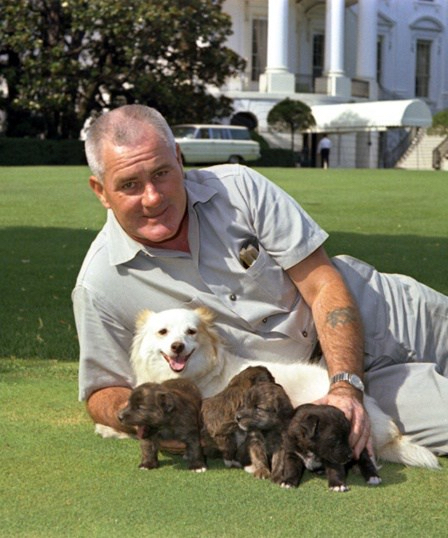
White House dog handler Traphes Bryant with Pushinka and puppies, July 1963

Pushinka struck up a romance with the Kennedy’s Welsh terrier, Charlie. In June 1963, Pushinka had puppies. Caroline and John-John named them Butterfly, White Tips, Blackie, and Streaker. JFK referred to the puppies as “pupniks” since Pushinka was the daughter of a dog who had been to space on the Russians’ Sputnik 2. When the puppies were two months old, the First Lady picked two children from the thousands that had written to the White House asking for one of the pups. That’s how Butterfly and Streaker got adopted. The other puppies were given to family friends.

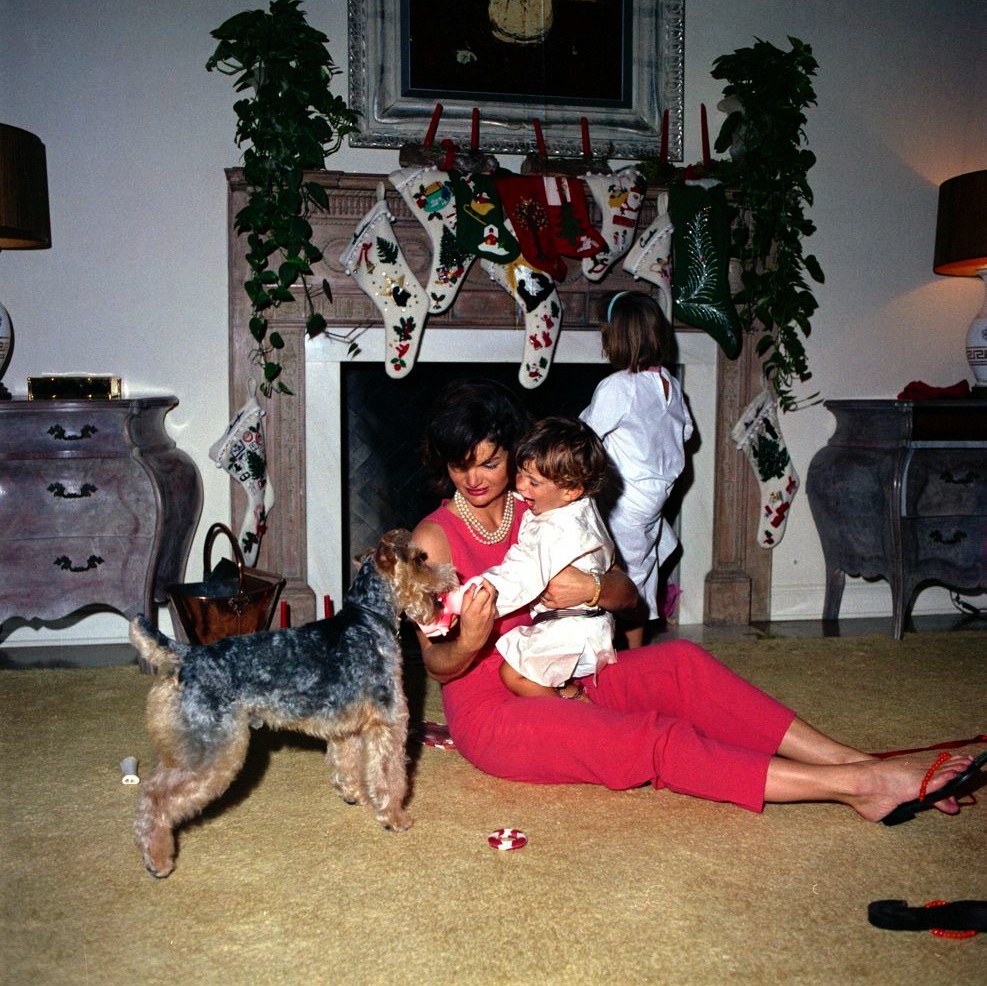
The father of the puppies, Charlie, was “large and in charge.” He bossed the other dogs around and made sure he got first dibs at dinnertime.  When given the chance, he showed humans who was boss, too. If a visitor ignored him, Charlie peed on that person. Although he was not an official watchdog, he growled if someone got too close to JFK.

JFKWHP-ST-C72-8-62

First Lady Jackie Kennedy with children and dog Charlie, Dec. 25, 1962


Charlie loved to play fetch, but he got so obsessed with the game that the president got annoyed. Fortunately, Charlie and the president both enjoyed swimming and long walks.

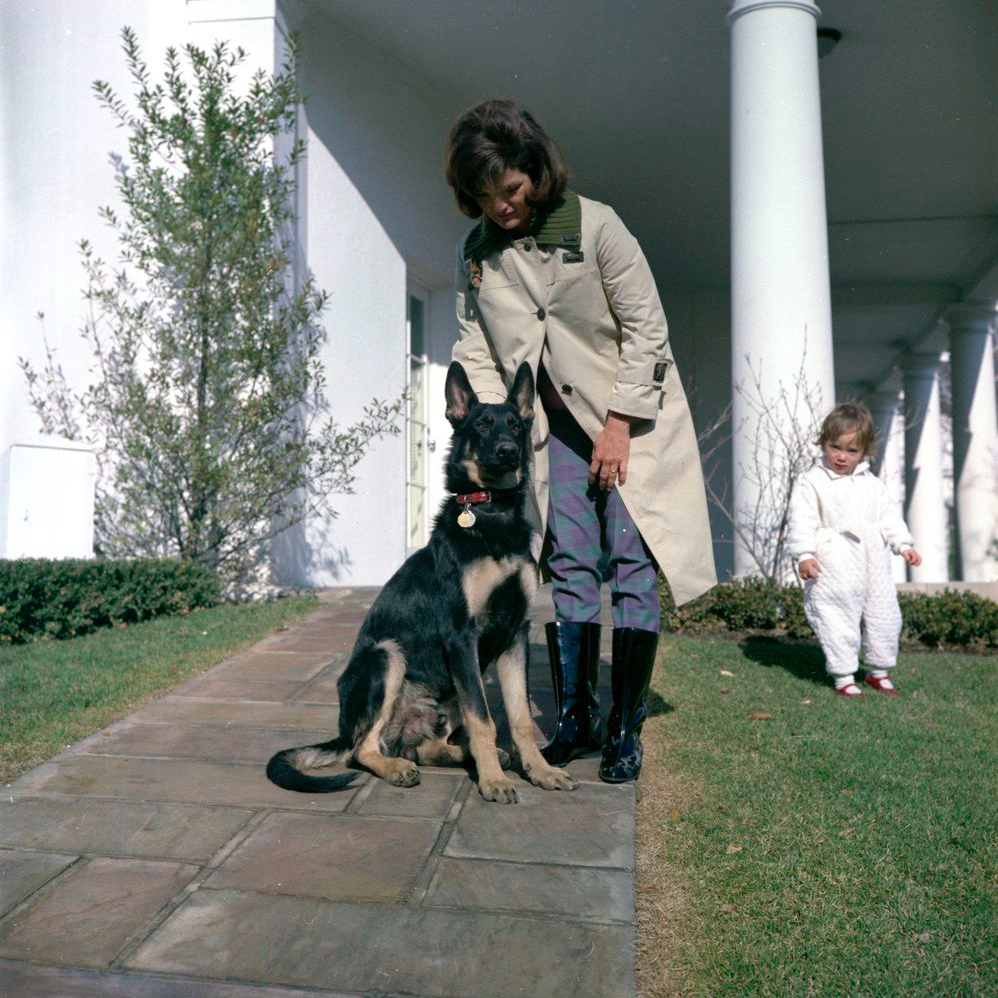
Charlie may have been one of JFK’s favorite dogs, but the First Lady preferred a German shepherd named Clipper. A gift to the family from JFK’s father John Kennedy, Clipper velcroed himself to the First Lady’s side. He was the only Kennedy family dog to get formal obedience training. Caroline and John-John enjoyed tagging along with their mom to watch Clipper and other German shepherds at the training site.

jfkwhp-st-c10-17-63.jpg

First Lady with Clipper, Jan. 15, 1963


Mrs. Kennedy valued her privacy and Clipper helped her with that, too. Sometimes the president and Mrs. Kennedy walked the dogs outside the White House grounds in the evenings so no one would recognize them. Mrs. Kennedy walked Clipper and the president usually took Charlie. The Secret Service car had to follow at a distance, but it relaxed both humans to have that little bit of freedom.

Note: this is not a complete list of the Kennedy presidential pets, but includes some of the most popular ones.

Presidential Pets: George W. Bush’s Dogs Spot, Barney, and Miss Beazley

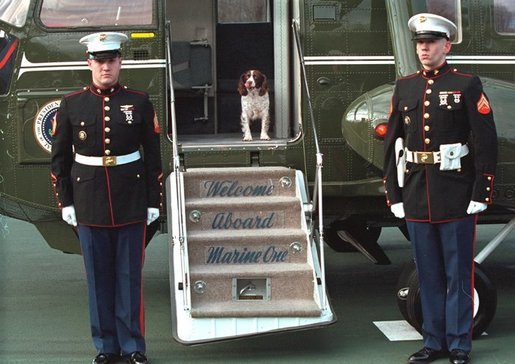
President George W. Bush came into office with a dog who was already very familiar with the White House. Spot, or Spotty as family members called her, was the daughter of the first president Bush’s English springer spaniel Millie. Spot was named after Scott Fletcher, the shortstop on the Texas Rangers baseball team. She loved the outdoors and chased birds grasshoppers and anything else she could find at the Bush ranch in Crawford, Texas. Like many White House dogs she welcomed visitors to the Oval Office. President Bush said, “Spot understands the decorum of the Oval Office, so she gets to go in.”

Spot_and_Marine_One

Spot aboard Marine One

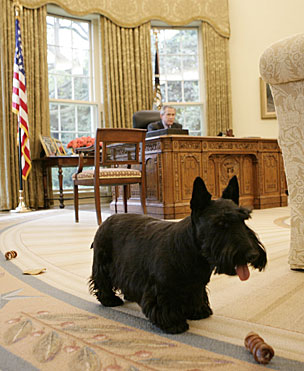
In 2001 Spotty was no longer the Bush family’s only dog. Barney the Scottish terrier arrived shortly after the 2000 presidential election. Though he was more hyperactive than Spot, the dogs became fast friends. Barney lost his companion in 2004. Spot was euthanized at age 14 after having several strokes.

Barney_oval_office

Barney in Oval Office, 2005

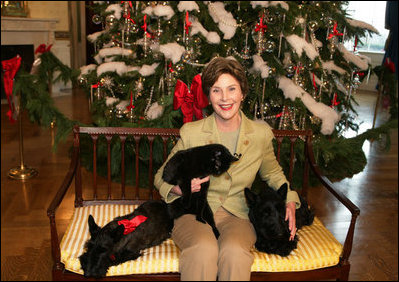
During his master’s time in office, Barney became a media star. He had his own website and “Barney cam” showed videos from his perspective of White House visitors and staff. The public looked forward to these videos on YouTube during Christmas time. President Bush called First Dog Barney “the son I never had.” Barney loved to play ball on the White House lawn and his favorite activity at Camp David was chasing golf balls. Though he was happy-go-lucky with the family, he didn’t like all humans. As First Dog he bit a reporter and another White House visitor. In contrast, he did get along with Miss Beazley, a Scottish terrier puppy given to Laura Bush from her husband as a birthday gift in 2004.

P120106SC-0073.JPG

Laura Bush with Barney, cat India, and Miss Beazley, Dec. 2006

Miss Beazley was named after a character in the children’s book The Enormous Egg. Perhaps Barney liked her because she was actually Barney’s niece. Anyway the feeling was mutual and Miss Beazley was a great friend to Barney. After Barney’s death from cancer at age 12 Laura Bush said, “Miss Beazley really seems to be sad… She seems a little lost looking for Barney.” After her own fight with cancer, Miss Beazley died in May 2014. George W. Bush gave Miss Beazley credit for never holding a grudge against Barney even though he got so much of the nation’s attention.


President Abraham Lincoln, The Moral Politician

In honor of Presidents’ Day weekend and African-American History Month, I am revisiting this post from last year on Abraham Lincoln.

Until the 1850s Abraham Lincoln was a frustrated one-term congressman who had decided to focus on his law practice. Lincoln was drawn into politics again during the Kanas Nebraska Act controversy. While he accepted slavery where it existed, he couldn’t abide its expansion into new territories.

He was not in favor of giving blacks full citizenship, however. In 1840 he criticized Martin Van Buren for voting to enfranchise blacks, and he did not support giving blacks the vote in his bid for the U.S. Senate against Stephen Douglas. He believed that blacks had the right to earn their own living without it being taken away by their masters. Though he lost to Douglas, the debates helped raise Lincoln’s political profile.

Although he did not officially campaign for the nation’s highest office, Lincoln cleverly placed himself in the public eye. Prior to the election he had the debates with rival Stephen Douglas published; the volume became a national bestseller. He also travelled to New York so people in that part of the country could listen to his arguments and see his talent as a public speaker.

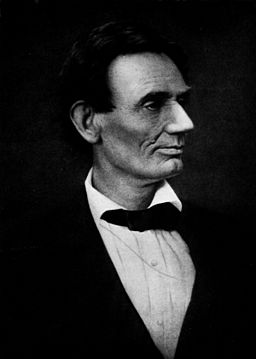
256px-Abraham_Lincoln_-_Clara_Barton_Centenary

Photo of President-elect Abraham Lincoln, 1860

While in New York he had his photograph taken so it could be handed out just in case his name was mentioned at the Republican convention. After he was elected, more than sixty photos were taken of Lincoln, making him the most photographed president up to that time. Though opponents often made fun of his plain, slightly unkempt appearance, Lincoln also poked fun at himself. After being called two-faced, Lincoln said, “If I had another face, do you think I would wear this one?”

Unlike Buchanan, who claimed that he could do nothing if a state wanted to leave the Union, Lincoln refused to bargain with secessionists and sent supplies to the federal fort in South Carolina. He also rejected the idea that the president could do nothing about slavery. While maintaining the Union was his first objective, he said that if freeing the slaves would save the Union he would free them.

Lincoln remained a great politician during the Civil War. He gave out contracts and government offices in exchange for votes. Yet he also knew how to unite people behind a moral cause such as the constitutional amendment that abolished slavery.

As the war drew to an end, he offered friendship to the defeated Southerners “with malice toward none, with charity to all.” Americans can only imagine what Lincoln would have accomplished during his second term in office. On April 14, 1865, he was the first president to be assassinated.